



Overseas Vietnamese community in Germany contribute ideas to Draft Documents for the 14th National Party Congress
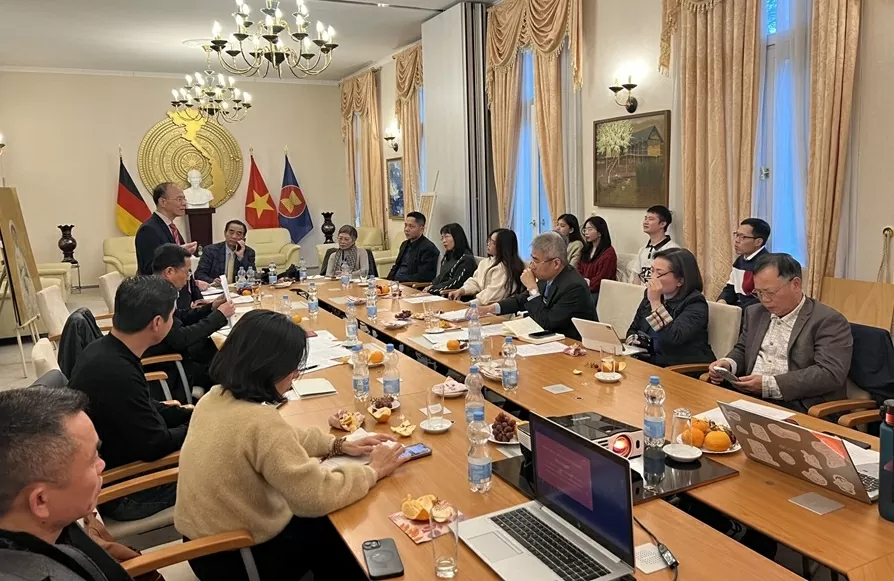
WVR - On November 8, the Party Committee and the Vietnamese Embassy in Germany organized a seminar titled "Gathering Contributions from Vietnamese Intellectuals, Entrepreneurs, and Overseas Community in Germany on the Draft Documents for the 14th Party Congress".
Latest
Previously, on October 3, the Embassy directed the Vietnamese Student Association in Berlin Brandenburg to coordinate with the Berlin-Potsdam Student Branch, Ruhr, and Giessen to organize an online seminar to gather feedback from the Vietnamese student community and party members studying and living in the Federal Republic of Germany on the draft documents for the 14th Party Congress.
The seminar was a significant political – social activity, reflecting the solidarity and attachment of the Vietnamese community in Germany to the nation's construction and development in the new era.
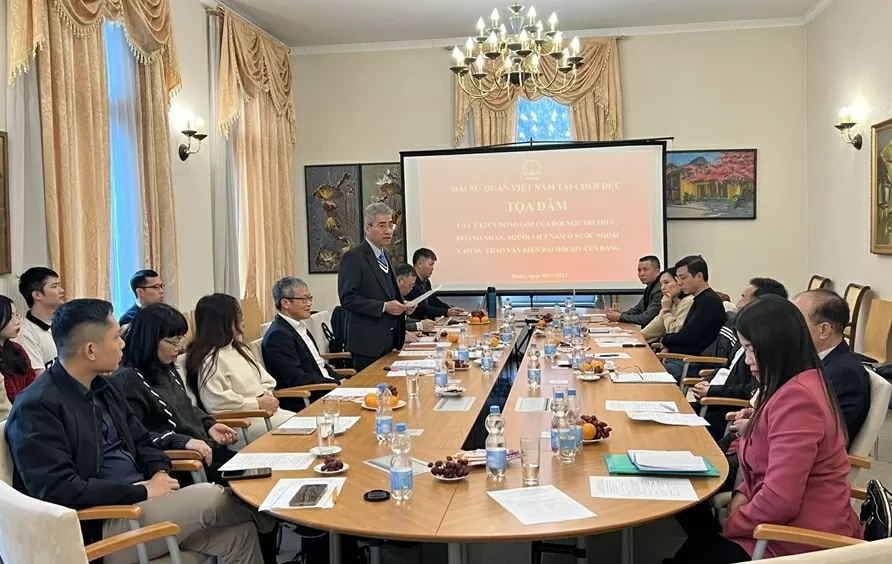 |
| Vietnamese Ambassador to Germany Nguyen Dac Thanh delivering the opening speech at the seminar. |
A meaningful event, spreading the spirit of innovation
Attending the seminar were Vietnamese Ambassador to Germany Nguyen Dac Thanh, representatives from various embassy departments; representatives of the Vietnamese Union in Germany, Vietnamese community associations in Germany; along with numerous professors, doctors, entrepreneurs, intellectuals, experts, and representatives from the Vietnam–Germany Innovation Network. Additionally, the seminar was attended by Vietnamese students, young entrepreneurs – the next generation of intellectuals, studying and working at major institutes, schools, and corporations in Germany.
In his opening remarks, Vietnamese Ambassador to Germany Nguyen Dac Thanh emphasized the special significance of the 14th National Party Congress – a major political event with strategic importance for the country's development direction in the coming period, with a vision towards 2045.
The Ambassador affirmed: “Our Party and State always value and listen to the heartfelt contributions of our overseas compatriots – especially intellectuals, experts, and entrepreneurs – who possess modern knowledge, international experience, and deep patriotism. This is an important resource contributing to the nation's construction and development, deep and sustainable integration.”
The seminar was seen as an intellectual forum and policy dialogue for the Vietnamese community in Germany, aiming to contribute to the completion of the Draft Documents for the 14th Party Congress in a scientific, practical manner, with a long-term vision that accurately reflects the aspiration for a prosperous and happy nation.
Many heartfelt, constructive, and internationally-minded opinions
In a lively, open, and receptive atmosphere, many valuable opinions were presented by Vietnamese intellectuals, entrepreneurs, scientists, and students in Germany.
Prof. Dr. Nguyen Xuan Thinh, Chairman of the Vietnam–Germany Innovation Network, began the discussion with a presentation on the role of science, technology, and innovation in national development orientation.
The professor emphasized that Vietnam should continue to regard innovation as a key driver of growth, while building a linkage mechanism between the State – enterprises – research institutes – the global Vietnamese community to promote the national innovation ecosystem.
The professor stated that he had printed and studied all 50 pages of the Draft Documents, considering it “a grand strategic project for the country's development not only in the current phase but also long-term until 2030, 2045, and beyond.”
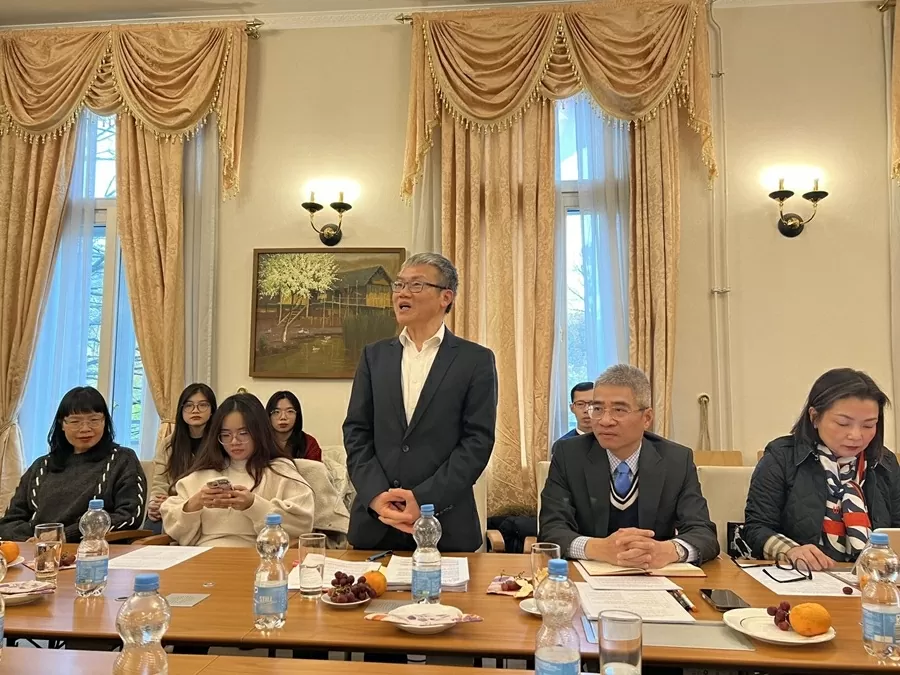 |
| Prof. Dr. Nguyen Xuan Thinh, Chairman of the Vietnam–Germany Innovation Network, sharing at the seminar. |
Following, Dr. Nguyen Thai Chinh, Chairman of the Vietnamese Student Association in Berlin–Brandenburg, proposed several solutions to attract high-quality young human resources from the overseas community to participate in national development programs, especially in high-tech, green energy, digital transformation, and modern education sectors.
He stated: “If there are clear mechanisms for recognizing qualifications, creating a working environment, and appropriate incentive policies, many young Vietnamese intellectuals abroad will be willing to return or engage in long-term cooperation with their homeland.”
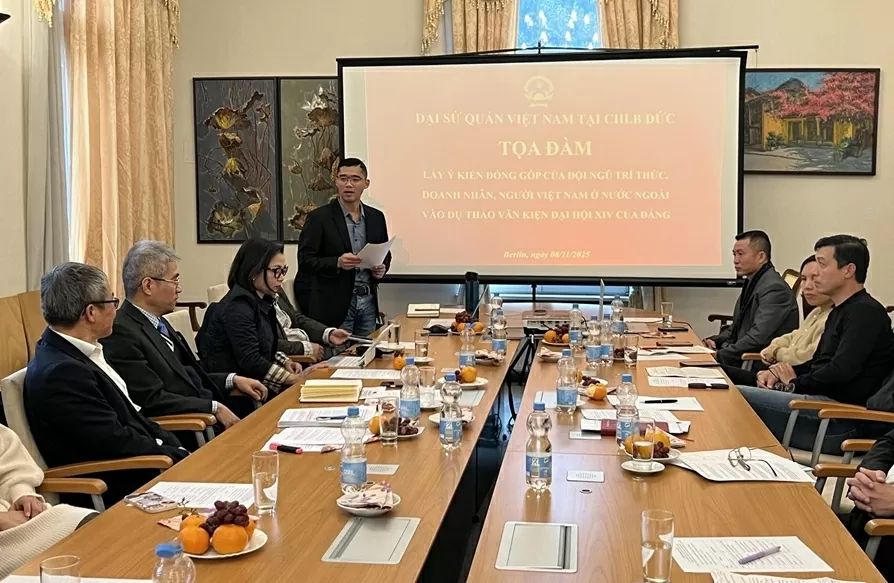 |
| Dr. Nguyen Thai Chinh, Chairman of the Vietnamese Student Association in Berlin–Brandenburg, proposing solutions to attract high-quality young human resources. |
From the perspective of the younger generation, researcher Nguyen Bang Tu, Vice Chairman of the Vietnamese Student Association in Germany, expressed the aspirations and responsibilities of Vietnamese youth abroad in the national development endeavor.
Nguyen Bang Tu emphasized the spirit of learning, integration, and contribution of Vietnamese students, wishing to contribute more to innovative startup projects, knowledge transfer, and promoting a youthful, dynamic image of Vietnam on the international stage.
The young generation of Vietnam hopes the State and Government will further promote administrative reform, popularize national digital features; build a national information portal providing recruitment information of corporations, and public administrative procedures, etc.
Dr. Nguyen Viet Tuan from Teantamus Group suggested that technology autonomy is crucial; while cooperation and application of foreign technology are necessary, the ultimate goal should be mastery rather than dependency.
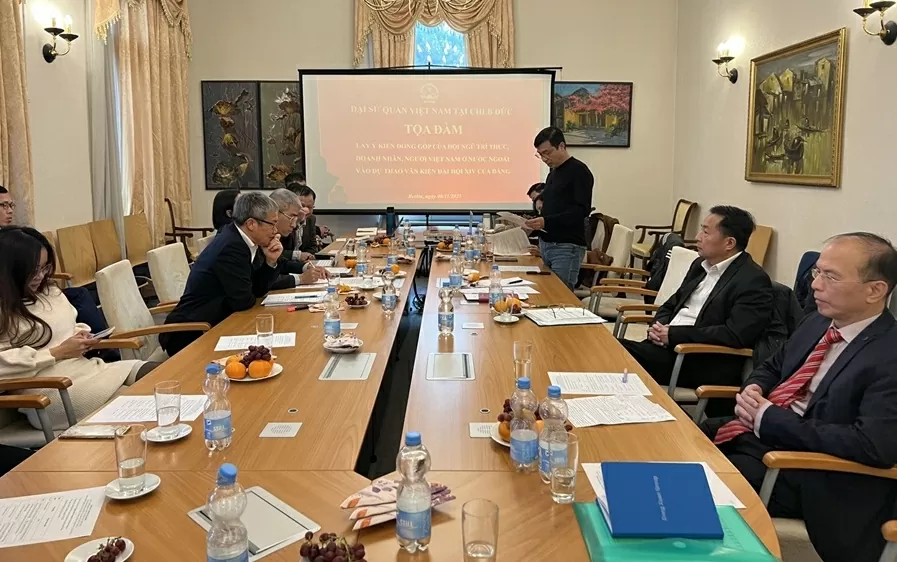 |
| Dr. Nguyen Viet Tuan suggested specific policy packages to attract more overseas experts and intellectuals in the future. |
Many Vietnamese students and engineers possess strong technical skills and good thinking but choose to stay abroad for study and work due to a favorable working environment, clear career paths, transparent employment mechanisms, simple procedures, and a work culture that values efficiency and creativity. The draft documents have outlined solutions for this issue.
"However, we need specific policy packages such as competitive incentives, development paths based on capability, strong research and data infrastructure, 'one-stop' procedures for experts; along with programs to attract repatriation, short-term secondments according to objectives, which will motivate talented individuals to return and contribute long-term to the country," proposed Dr. Nguyen Viet Tuan.
Spreading wisdom and a spirit of national devotion
Representing the Vietnam–Germany Innovation Network, Dr. Chu Thi Thu Phuong focused on research cooperation and knowledge transfer between Vietnam and Germany. She suggested establishing bilateral research funds and creating a legal framework to encourage enterprises from both countries to collaborate in fields such as biotechnology, artificial intelligence, renewable energy, and higher education. She argued that in section 6 on building a national education system, the term "on par" should not be used, but rather we should build a globally integrated national education system that develops comprehensive human beings.
From the perspective of community connection, Mr. Nguyen Son Thu, Chairman of the Vietnam–Germany Bridge Association, shared about the socio-economic cooperation model between the two countries, in which the Vietnamese community in Germany plays an important "bridge" role.
He proposed establishing Vietnam–Germany trade promotion centers managed by overseas Vietnamese, to help promote Vietnamese products and support startup businesses oriented towards their homeland.
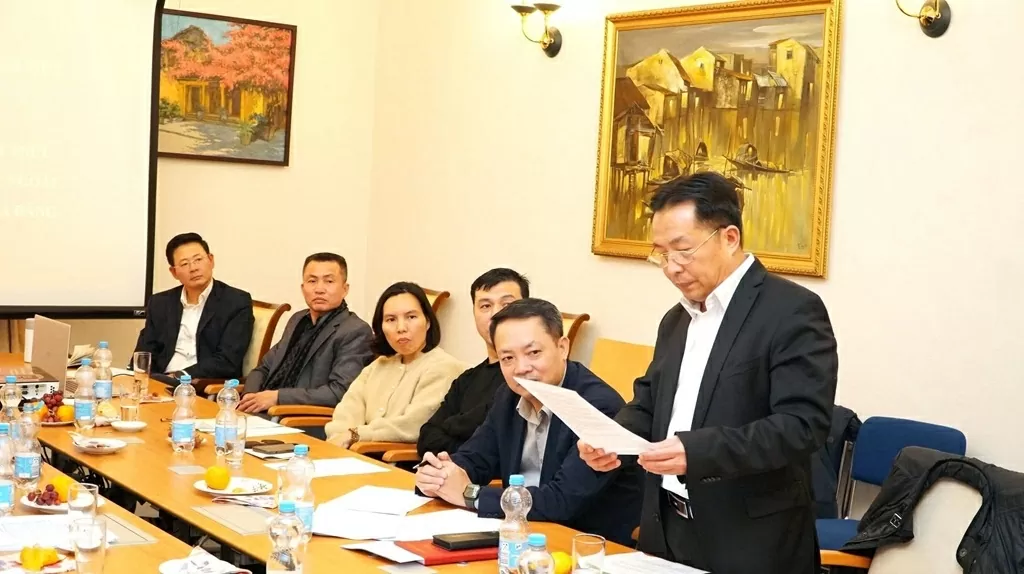 |
| Mr. Nguyen Son Thu, Chairman of the Vietnam–Germany Bridge Association, proposed establishing Vietnam–Germany trade promotion centers managed by overseas Vietnamese. |
Opinions from public administration and policy expert Dr. Vu Thi Thanh Huong suggested continuing to improve the functions, tasks, powers, organizational structure, staffing, and working relationships between levels of government.
Strengthening decentralization and delegation towards increasing the autonomy and accountability of local governments with the motto "local decisions, local implementation, local responsibility." Legalizing individual responsibility in all administrative decisions. Continuing to improve the operation of two-level local governments, effectively exploiting development space, and promoting the potential and advantages of localities and regions in line with the specific characteristics of each area, linked to regional development and regional connectivity...
At the same time, building a modern, effective state management and national governance system that serves and creates development, building a digital government and digital administration. Enhancing regional connectivity. Continuing to promote scientific, reasonable decentralization, delegation, and authorization, coupled with increased responsibility, ensuring resources, suitable to the capacity to perform tasks; strengthening inspection and supervision; ensuring the unified management of the Central Government, while promoting the proactive, creative, and responsible role of localities.
Spatial planning expert Dr. Nguyen Huu Kiet suggested: Quickly establish a resource management, environmental protection, and climate change adaptation institution. Implement the "Sponge City" model in major cities to reduce urban flooding. (Sponge City: Based on a natural rainwater circulation system).
Establish a new economic growth model, restructure the economy, and promote industrialization and modernization. Synchronize and focus the data system on land, environment, and climate to develop smart cities and increase the competitiveness of the economy.
 |
| Prof. Dr. Nguyen Hong Thai suggested the role of family should be added to the Documents. |
Concluding the discussion, Prof. Dr. Nguyen Hong Thai (University of Stettin) emphasized the role of scientific knowledge in national policy development. The professor proposed increasing the participation of overseas experts in the State's policy advisory councils, especially regarding science – technology development strategies and human resource training.
Prof. Dr. Nguyen Hong Thai suggested adding the role of family in the Documents – Family is the foundation for maintaining national culture and patriotism, considering it a core factor to preserve and maintain Vietnamese cultural identity in the context of globalization.
The opinions at the seminar all reflected the attachment, national pride, and responsibility of Vietnamese intellectuals, entrepreneurs, and students in Germany towards the homeland. The in-depth analyses and specific recommendations from the overseas community will be compiled by the Embassy and sent back home to assist in completing the Draft Documents for the 14th Party Congress.
The organizers affirmed that the seminar was not only an opportunity to listen to the opinions of the Vietnamese community in Germany but also opened a path for stronger connections between the Vietnamese State and the overseas intellectual community, contributing to harnessing global intellectual resources for rapid and sustainable national development.
At the end of the program, all delegates took commemorative photos, capturing meaningful moments in the journey of accompanying the homeland.
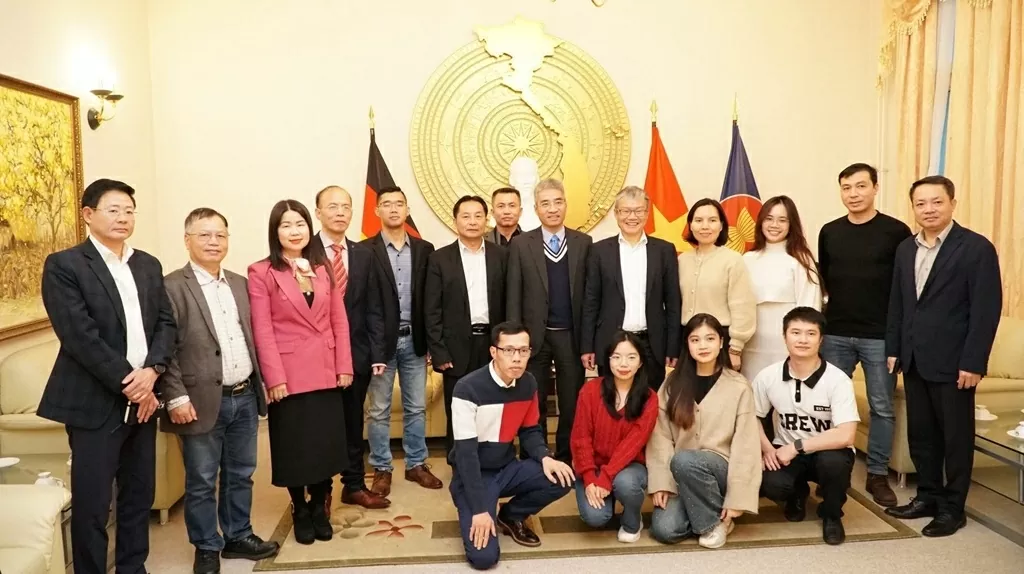 |
| Delegates attending the program. |
Amidst enthusiastic applause, everyone left with pride and responsibility – continuing to be Vietnam's "knowledge ambassadors" in Germany, joining hands to build a prosperous, civilized, and happy homeland.
The seminar at the Vietnamese Embassy in Berlin once again affirmed: the overseas Vietnamese community is always an inseparable part of the Vietnamese nation, a vital resource in the country's renewal, integration, and development.
From the heartfelt opinions and proposals at this forum, it is clear the burning aspiration of global Vietnamese – the desire to contribute intellect and effort to the homeland, aiming to build a strong, prosperous, sustainably developing Vietnam deeply integrated with the world.
(Source: Embassy of Vietnam in Germny)