



MOFA co-hosts Meet Australia 2026 in Ho Chi Minh City
WVR - On May 19, in Ho Chi Minh City, the Ministry of Foreign Affairs coordinated with the People's Committee of Ho Chi Minh City, Becamex Corporation, and the Australia-ASEAN Business Council to organize the "Meet Australia" event.
Latest
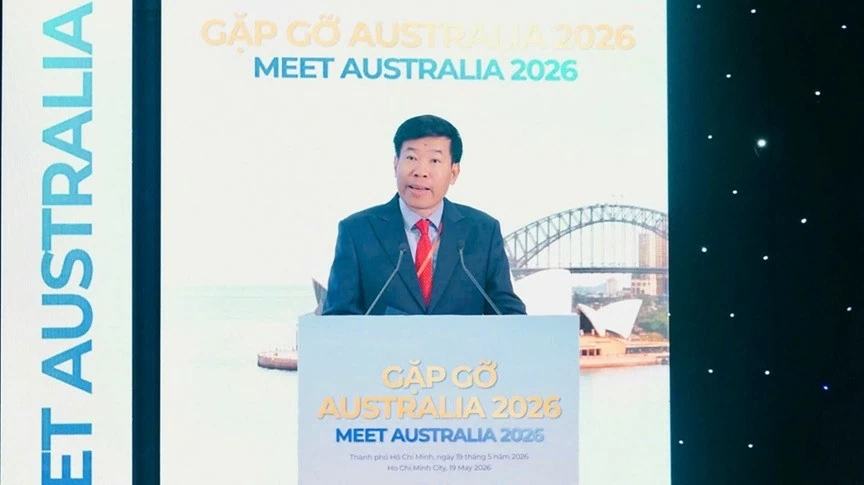 |
| Member of the Party Central Committee, Standing Deputy Secretary of the Party Committee of the Ministry, Deputy Minister of Foreign Affairs Nguyen Manh Cuong speaks at the event. (Photo: Bao Chi) |
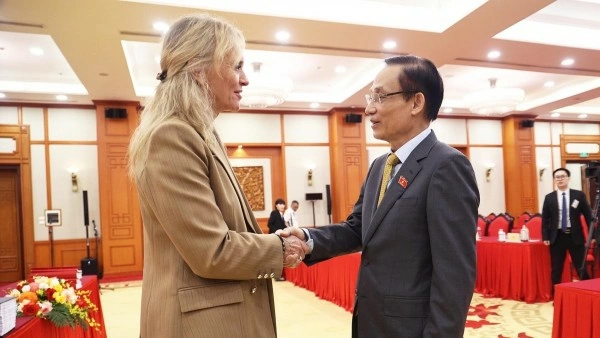
Member of the Party Central Committee, Standing Deputy Secretary of the Party Committee of the Ministry, Deputy Minister of Foreign Affairs Nguyen Manh Cuong, attended and spoke at the Opening Session of the event.
Also in attendance were Nguyen Loc Ha, Standing Vice Chairman of the People's Committee of Ho Chi Minh City, Australian Ambassador to Vietnam Gillian Bird, Consul General, representatives of Australian Trade in Vietnam, representatives from relevant agencies, ministries, and nearly 200 Vietnamese and Australian businesses.
Speaking at the event, Deputy Minister Nguyen Manh Cuong emphasized that Vietnam and Australia are facing significant opportunities to expand cooperation as the two countries have upgraded their relationship to a Comprehensive Strategic Partnership since March 2024. Vietnam is entering a new development phase with the goal of becoming a developed, high-income country by 2045, implementing new development strategies that focus on people and businesses, and considering science and technology, innovation, and the private economic sector as key growth drivers.
Deputy Minister Nguyen Manh Cuong highly appreciated Australia's role as a reliable and important partner of Vietnam; the bilateral relationship is developing very positively in many fields with bilateral trade exceeding 15 billion USD and aiming for 20 billion USD.
Australia is also vigorously implementing the "Southeast Asia Economic Strategy to 2040", opening up numerous opportunities to enhance strategic connectivity with Vietnam in areas such as trade, investment, education, innovation, and green transition.
The Deputy Minister highlighted the complementary nature of the two economies, with Australia having strengths in finance, technology, education, modern governance, and innovation; while Vietnam is a dynamic economy with a young workforce, stable political and social environment, and a network of 17 new-generation free trade agreements connecting with over 60 major economies.
Based on this, the Deputy Minister proposed several suggestions to strengthen cooperation between the two countries in digital technology, food processing, renewable energy, logistics, strategic minerals, and sectors serving the green transition, education, and training.
The Deputy Minister urged Australian businesses to expand cooperation and long-term investment in Vietnam, becoming strategic partners in areas such as green transition, digital transformation, creating startup and innovation ecosystems, research and development, and training high-quality human resources.
Deputy Minister Nguyen Manh Cuong affirmed that the Ministry of Foreign Affairs of Vietnam will continue to prioritize promoting economic diplomacy, technology diplomacy, and will accompany ministries, sectors, localities, and businesses to enhance partner connectivity, promote policy dialogue, resolve difficulties, and further expand cooperation opportunities with Australia.
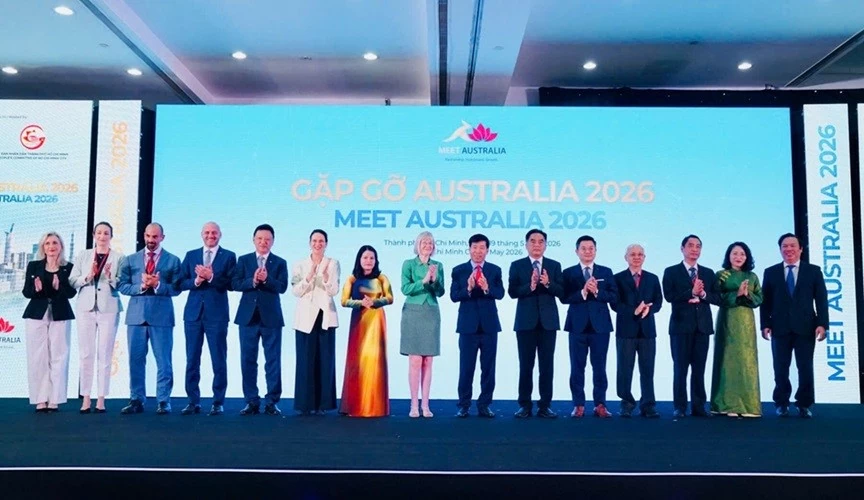 |
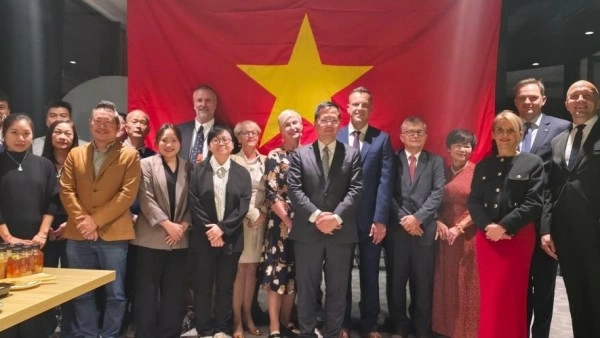
| Delegates take a group photo at the event. (Photo: Bao Chi) |
Nguyen Loc Ha, Member of the Standing Committee of the Party Committee, Standing Vice Chairman of the People's Committee of Ho Chi Minh City, emphasized that the potential for cooperation between Vietnam and Australia remains vast, especially in digital transformation, innovation, clean energy, logistics, education and training, and developing high-quality human resources. The current priority is for the two countries to quickly turn cooperation potential into specific projects, transforming goodwill into practical, effective, and sustainable cooperation mechanisms.
Ho Chi Minh City, with its large market, dynamic business environment, and strong regional connectivity, offers significant cooperation potential with Australian localities and businesses. Especially after the merger, as a major urban center, economic-financial-logistics hub of the region, Ho Chi Minh City is ready to become an important connection center between Australia and the Southern region, as well as other localities in Vietnam.
Nguyen Loc Ha affirmed the City's commitment to continue improving the investment-business environment, enhancing service quality for people and businesses, promoting digital transformation, and strengthening dialogue and cooperation with international partners. Ho Chi Minh City not only seeks to attract investment but also aims to create a long-term cooperation ecosystem with Australian partners, turning vision into specific projects and development values for both sides.
Ambassador Gillian Bird highly appreciated Vietnam's impressive economic development achievements with one of the highest growth rates in Asia; affirming that Australia considers Vietnam one of the most dynamic and potential economic partners in the region; emphasizing the commitment to promote substantive economic cooperation through the Southeast Asia Economic Strategy to 2040, investment support mechanisms, business connectivity, and initiatives to promote innovation. Australia is currently implementing numerous programs to support Vietnam in energy transition, climate change adaptation in the Mekong Delta, low-emission agricultural development, and enhancing economic resilience.
Besides economic cooperation, education and people-to-people exchanges continue to be important pillars of the bilateral relationship. Currently, there are over 37,000 Vietnamese students studying in Australia and more than 160,000 Vietnamese alumni who have studied at Australian educational institutions, creating a deep network of connections between the two countries. Australia reaffirms its desire to continue accompanying Vietnam in building a more prosperous, sustainable, and connected future in the new development phase.
Australian businesses highly appreciate the cooperation potential in Vietnam, valuing Vietnam's policies on innovation, institutional reform, infrastructure investment, and human resource development, which are creating a stable, favorable business environment, providing a foundation for long-term investment. Australian businesses express strong interest in cooperation in the financial sector, especially green finance, clean energy, energy transition, green transition adapting to climate change, and training high-quality human resources.