



Ministry of Foreign Affairs seeks feedback on draft Decree regarding Honorary Consuls
WVR - The Ministry of Foreign Affairs is seeking feedback on a draft decree concerning honorary consuls in Vietnam, set to replace Decree No. 26/2022/ND-CP. The draft includes several proposals aimed at refining regulations on the establishment of consular offices, standards, terms, approval processes, and responsibilities of honorary consuls.
Latest
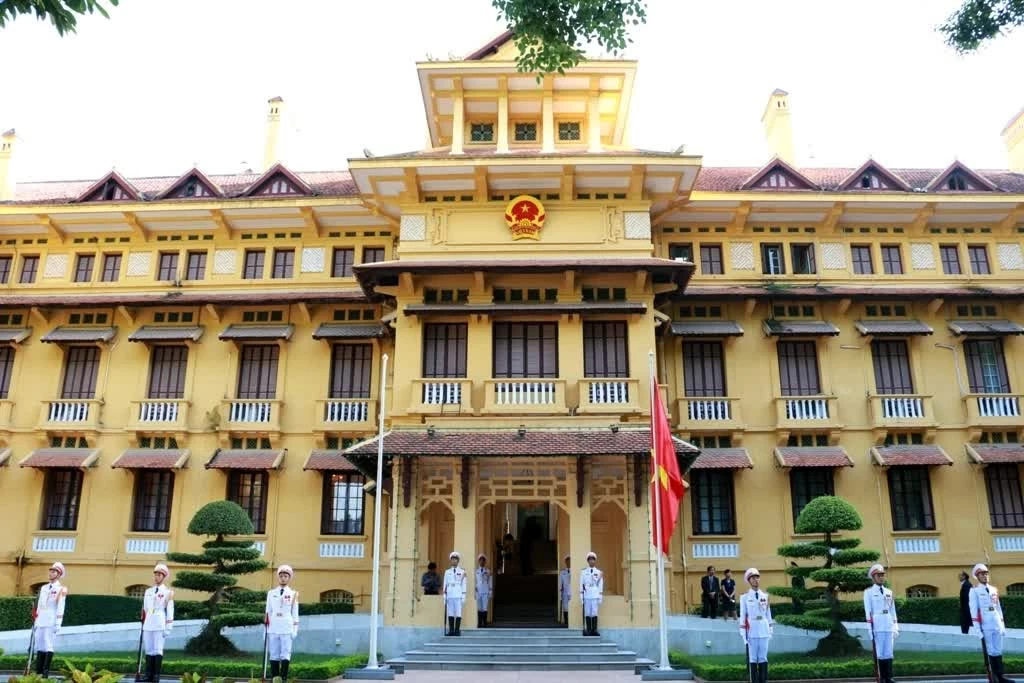 |
| The Ministry of Foreign Affairs is seeking feedback on a draft decree concerning honorary consuls in Vietnam. (Source: Ministry of Foreign Affairs) |
The development of the decree aims to enhance the legal framework for the approval procedures and operational regulations of honorary consuls in Vietnam. It seeks to address issues and obstacles encountered during the implementation of Decree No. 26/2022/ND-CP, improve the effectiveness and efficiency of state management, and facilitate consular activities, thereby strengthening cooperative relations between Vietnam and other countries.
The draft comprises 4 chapters and 20 articles, inheriting existing applicable regulations while focusing on amending and supplementing six main areas.
Firstly, refining regulations on the establishment of consular offices headed by honorary consuls and consular areas. The draft provides more specific guidelines on the basis and content of establishment proposals. It also introduces solutions for cases where a consular office has been approved but lacks an active honorary consul for an extended period, thus addressing the issue of legally existing but inactive consular offices.
The draft stipulates that, in principle, a consular area should not exceed one provincial administrative unit, except in necessary cases reviewed by the Ministry of Foreign Affairs based on input from relevant agencies. It should also not overlap with the administrative unit where the diplomatic mission of the sending state is located or with the consular area of another consular office of the sending state.
Secondly, setting more specific, stringent, and transparent standards for honorary consuls. The draft replaces certain qualitative standards and clarifies requirements regarding nationality, residence, occupation, criminal record, and legal compliance. Nominees are also prohibited from concurrently holding or being nominated for honorary consul positions of another country.
Thirdly, refining regulations on terms and term extensions. The draft stipulates that the term for honorary consuls is a maximum of three years. It also introduces a simpler process for term extensions compared to initial approvals, and provides transitional regulations for current honorary consuls previously approved with indefinite or unspecified terms.
Fourthly, simplifying the documentation and approval process. According to the draft, nominees are no longer required to submit a judicial record issued by Vietnamese authorities. Instead, the responsibility of the sending state in providing and verifying information is clarified. The documentation for term extensions is also simplified, focusing on information and documents that have changed since the previous approval.
Fifthly, refining the operational regulations and responsibilities of honorary consuls. The draft clarifies the rights and obligations of honorary consuls, regulations on performing consular functions outside the consular area, and the responsibility to notify changes in relevant information. Additionally, it includes provisions for terminating the activities of honorary consuls and consular offices headed by honorary consuls.
Sixthly, continuing decentralization and enhancing coordination mechanisms in state management. The draft inherits the decentralization of authority from the Prime Minister to the Minister of Foreign Affairs in deciding on the approval or disapproval of establishing consular offices headed by honorary consuls.
Moreover, the responsibilities of the Ministry of Foreign Affairs, Ministry of Public Security, Ministry of National Defense, other ministries, ministerial-level agencies, and the People's Committees of provinces and centrally-run cities in managing the activities of honorary consuls in Vietnam are more clearly defined to ensure coordination in implementation and enhance the effectiveness and efficiency of state management.
The development of the new decree aims to both refine the legal framework for the activities of honorary consuls in Vietnam and facilitate consular activities, thereby promoting cooperative relations between Vietnam and other countries.
The draft decree is published for agencies, organizations, and individuals to study and provide feedback as per regulations.
The consultation period begins on August 13 and will continue until the decree is issued.