




Ministry of Foreign Affairs holds training course 'Artificial Intelligence: From Data to Decision'
WVR - On the morning of August 18, in Hanoi, the Department of External Affairs and Cultural Diplomacy, the Personnel Organization Department (Ministry of Foreign Affairs), in collaboration with the Asia Foundation, organized the training course "Artificial Intelligence: From Data to Decision".
Latest
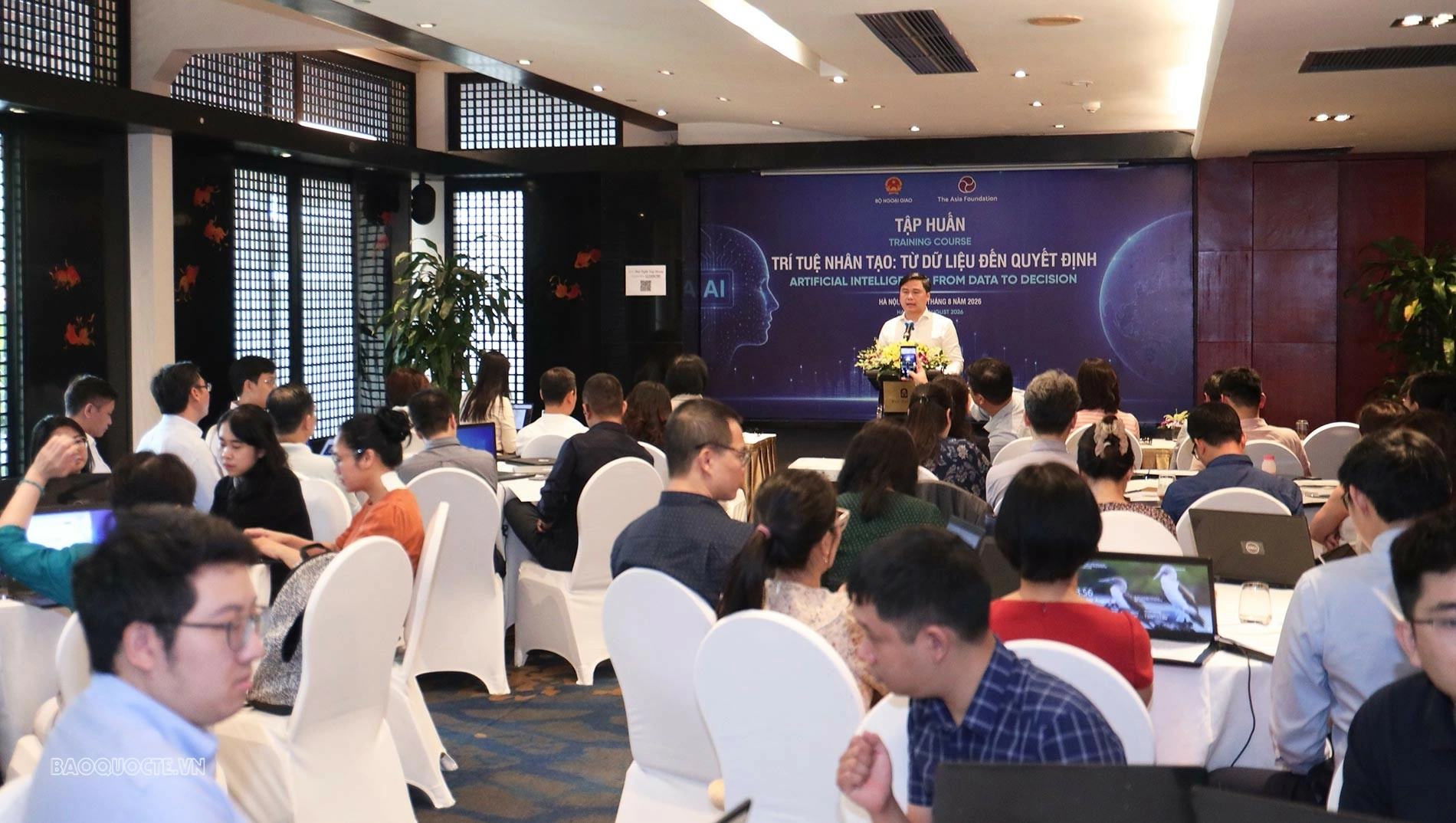 |
| Overview of the training course “Artificial Intelligence: From Data to Decision”. (Photo: Thanh Long) |
In the context where science, technology, innovation, and digital transformation are becoming crucial drivers for nations, artificial intelligence increasingly opens up new possibilities in advisory, synthesis, analysis, and decision-making support. Simultaneously, the use of AI in the public sector also demands high standards for information security, data governance, and user accountability. The training course aims to contribute to implementing major policies of the Party and Government on the development of science, technology, innovation, digital transformation, and enhancing digital skills for the team of officials, civil servants, and public employees.
Welcoming the participants of the training course, Deputy Director General of the Department of External Affairs and Cultural Diplomacy Nguyen Dong Trung stressed that the program is organized with the hope to create opportunities for a large number of Ministry of Foreign Affairs officials to access, enhance understanding, and improve skills in applying artificial intelligence (AI) in their work.
Mr. Nguyen Dong Trung expressed his hope that the Asia Foundation will continue to collaborate with the Ministry of Foreign Affairs in the future, contributing to enhancing digital capabilities for the team of foreign affairs officials in the Ministry's units, as well as in localities, ministries, and related sectors.
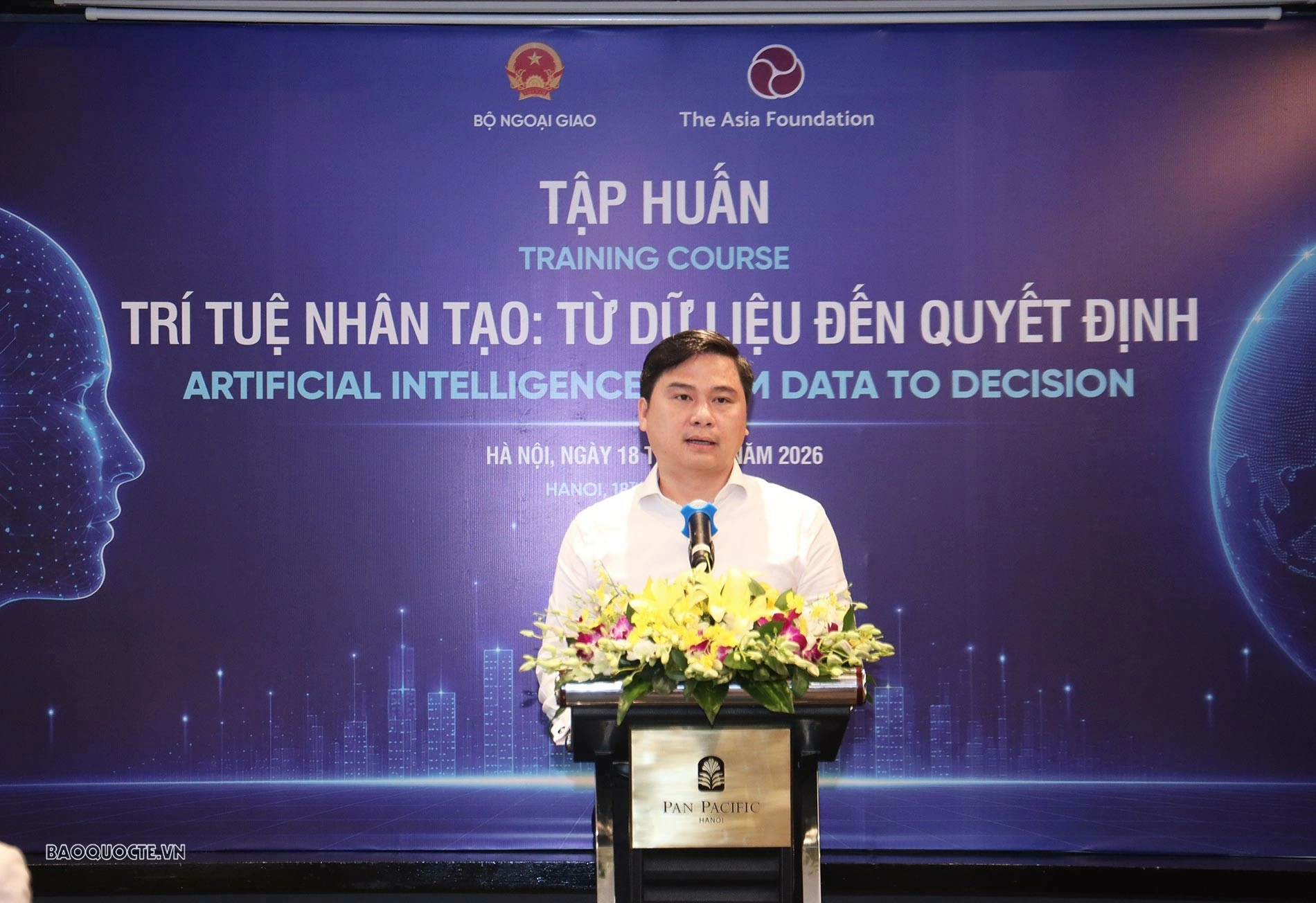 |
| Deputy Director of the Department of Foreign Affairs and Cultural Diplomacy Nguyen Dong Trung delivers a welcome speech to the training course participants. (Photo: Thanh Long) |
He also urged participants to make the most of the opportunity to exchange with experts, actively absorb the knowledge and skills shared during the training course to effectively apply AI in practical work.
According to Dong Trung, besides the opportunities that AI brings, officials also need to equip themselves with knowledge about security, information safety, and appropriate AI usage. These are the topics he hopes experts will focus on sharing with participants during the training course.
In her opening remarks, Phuong Pham Steinhauer, Chief Representative of the Asia Foundation, noted that the amount of information that diplomatic officials have to monitor is rapidly increasing, from reports, data, news to information on social media, amidst increasingly complex geopolitical developments.
According to Ms. Phuong Pham Steinhauer, the requirements for diplomatic officials are also becoming higher. They not only need to grasp what has happened but also analyze why it is important, what might happen next, and what Vietnam needs to do in response to these developments.
Sharing about the application of artificial intelligence (AI), she stated that this technology can assist in processing, organizing large amounts of information, comparing lists, evaluating, and quickly identifying arguments for or against each option.
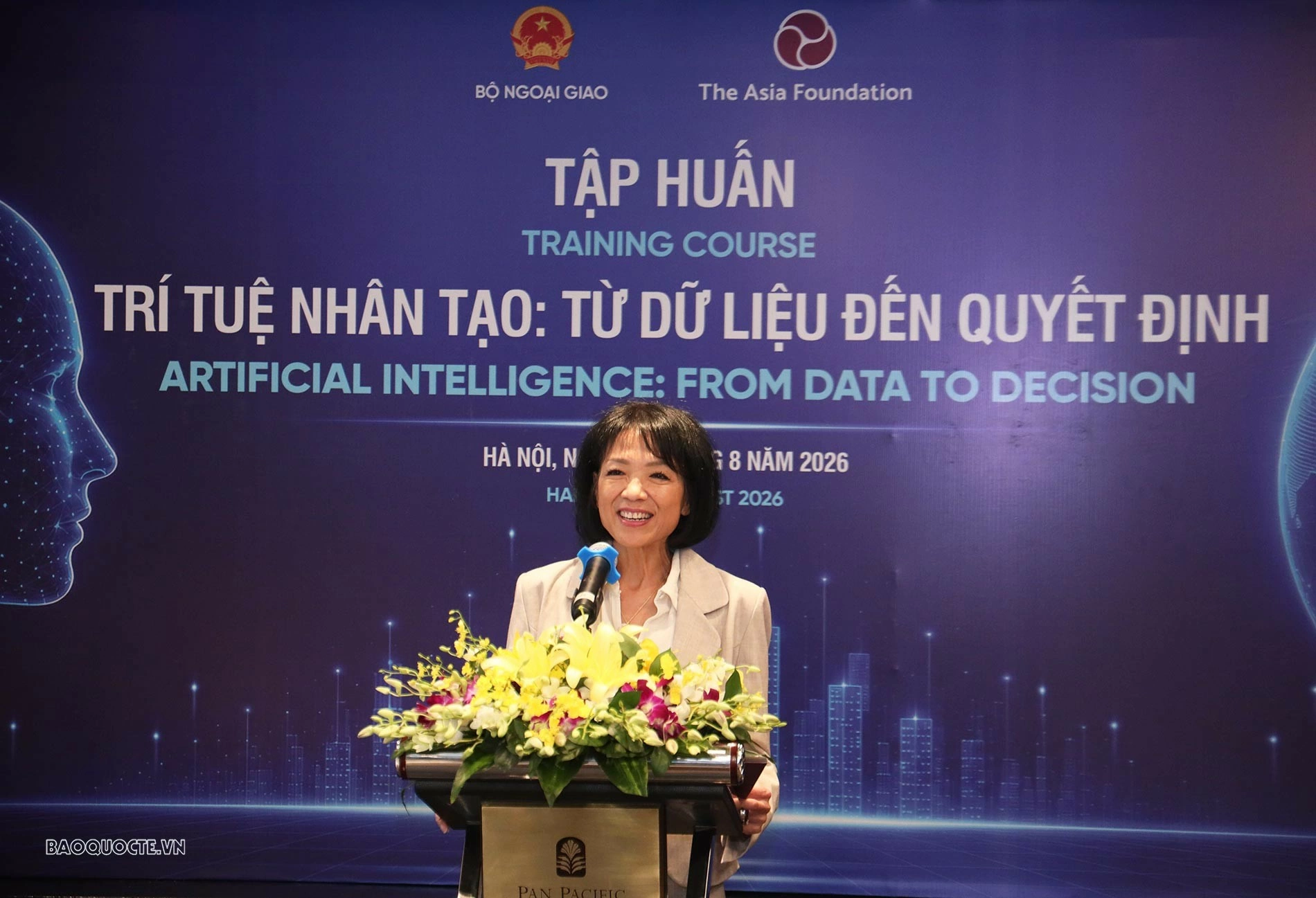 |
| Phuong Pham Steinhauer, Chief Representative of the Asia Foundation, delivers the opening speech of the training course. (Photo: Thanh Long) |
According to her, the value of AI does not always lie in providing answers, but in many cases, more importantly, in helping users quickly identify the right questions to ask.
However, the Chief Representative of the Asia Foundation emphasised that the application of AI needs to be accompanied by a full awareness of the risks, including issues of confidential information, data security, accuracy, bias, and the possibility of AI providing highly confident but completely incorrect answers.
Therefore, an important factor in using AI effectively is knowing when to use AI and when to identify information that should not be input into the system.
Phuong Pham Steinhauer believes that AI can help create higher-quality initial drafts and also help users recognize areas where humans still have an advantage over machines.
Expressing expectations about the role of AI in diplomatic work, she believes that technology not only helps improve work efficiency but also contributes to reducing workload, creating more time for diplomatic officials to focus on tasks that machines find difficult to replace, such as thinking, judgment, negotiation, building trust, and representing Vietnam.
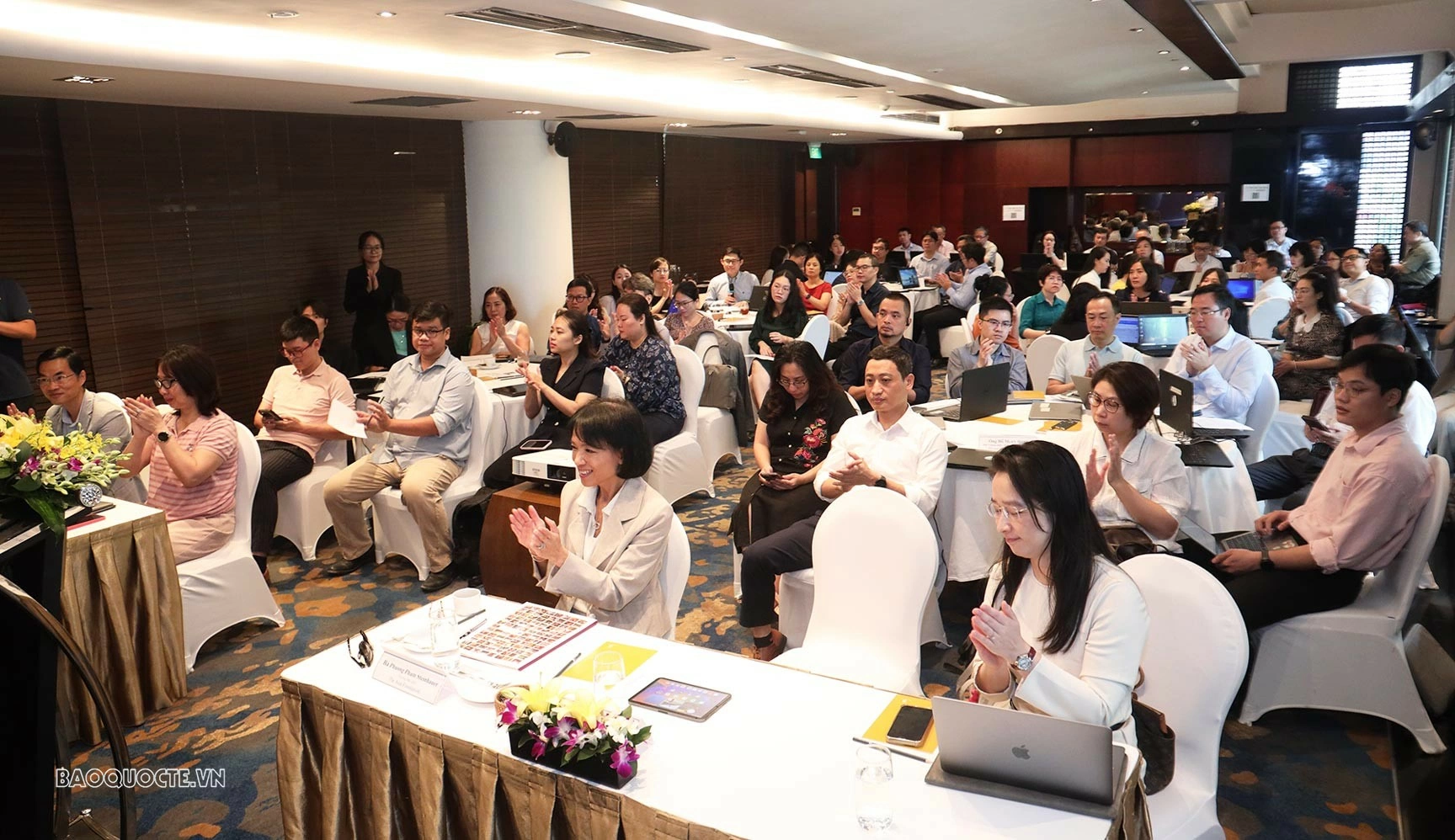 |
| The training course includes 10 specialized presentations conducted by experts in the fields of AI, technology, and governance. (Photo: Thanh Long) |
The training course equipped participants with relatively comprehensive knowledge and skills about artificial intelligence, from awareness, strategic thinking to practical application capabilities in public administration and foreign affairs. The program includes 10 specialized presentations conducted by experts in the fields of AI, technology, and governance, combining foundational knowledge provision and practical guidance, helping participants gain a multi-dimensional perspective on opportunities, challenges, and the potential application of AI in the public sector.
The topics focused on updating Vietnam's policies on innovation, while helping participants understand the operation, capabilities, and limitations of AI. Besides foundational knowledge, the course delved into the application of AI tools in work, particularly emphasizing the requirements of information security, cybersecurity, and data governance in the digital environment.
Through 10 topics and practical activities, the training course not only enhanced participants' awareness, knowledge, and skills in using AI but also provided the fundamental principles for effective, safe, and responsible technology application, contributing to improving the quality of advisory, synthesis, and work efficiency in the public sector.