



'Learning to create value' with the iHub incubator at the University of Science
On February 6, Havina Group, in collaboration with the University of Science (Vietnam National University, Hanoi), organised a seminar titled "Lab to Life and Value" (L2LV), offering fresh and practical perspectives.
Latest
In the context of higher education facing a demand for tighter integration between research, application, and the market, bringing academic knowledge into real-life practice has become an inevitable direction.
In this spirit, the seminar not only helped students better understand the models of learning, working, and generating profit that Havina implements but also provided essential skills for young people in the new era of development.
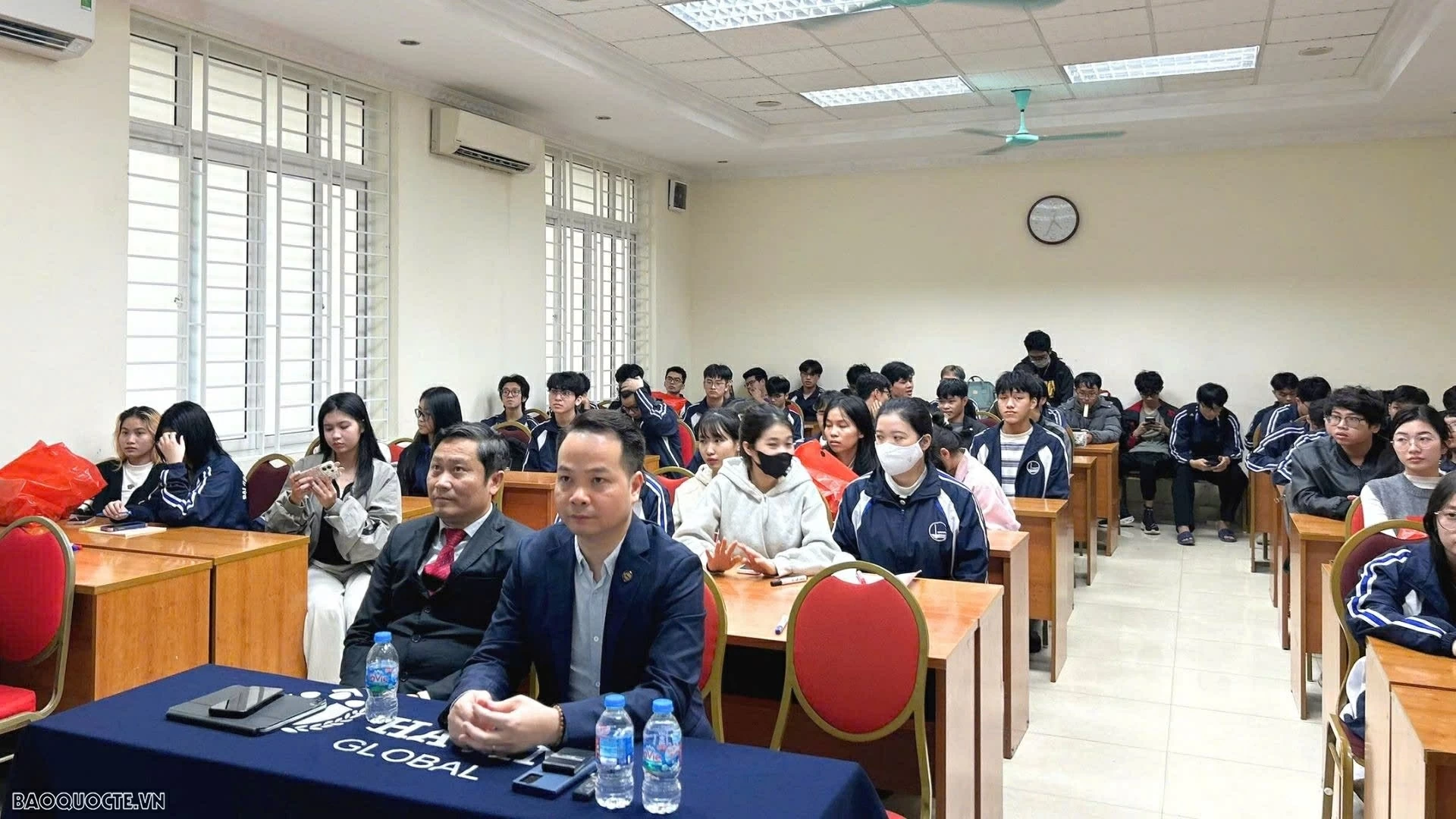 |
| Overview of the seminar titled "Lab to Life and Value". (Photo: Yen Vi) |
Opening the workshop, Mr. Nguyen Do Ha, a representative from Havina Group, clarified that the L2LV (Lab to Life and Value) mindset is a decisive shift because “when students bring knowledge into life, pressure from customers and the market forces them to actively explore, correct mistakes, and improve”, thereby creating value.
“Working while studying helps students identify themselves: Knowing what they have, what they lack, and what they need more of. This is the core of transforming knowledge into life value,” he emphasised.
Thus, the iHub student incubator model was born, with a development roadmap comprising five strategic branches at the University of Science: Fintech, nutrition, geo-environment, regular testing, and plant care, promising a diverse, practical ecosystem for students in the natural sciences.
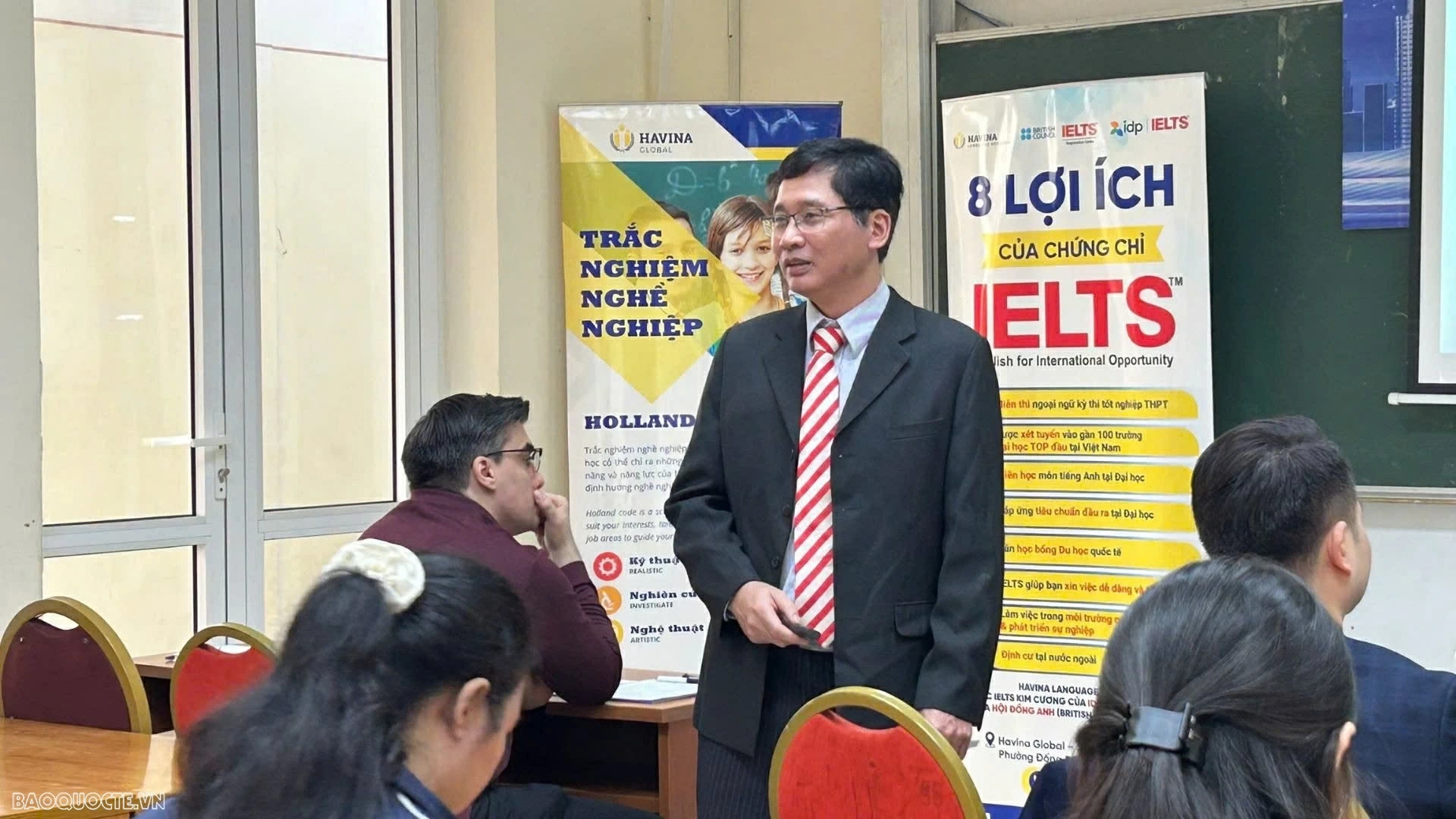 |
| Mr. Nguyen Do Ha shares with students about the significance of the iHub incubator model. (Photo: Yen Vi) |
Specifically, the iHub (Incubator Hub) model is a safe, startup-stepping stone, designed to transform academic knowledge at the University of Science into practical value, following the L2LV (Lab to Life & Value) philosophy.
Unlike traditional startups, which operate under high pressure and risk, iHub uses a resource-sharing model and a “no loss” approach, allowing students to confidently experiment with projects aligned with their academic expertise and personal passions.
Here, every student can find a suitable role, turning lab research hours into a journey of creating valuable products for society and generating real economic value.
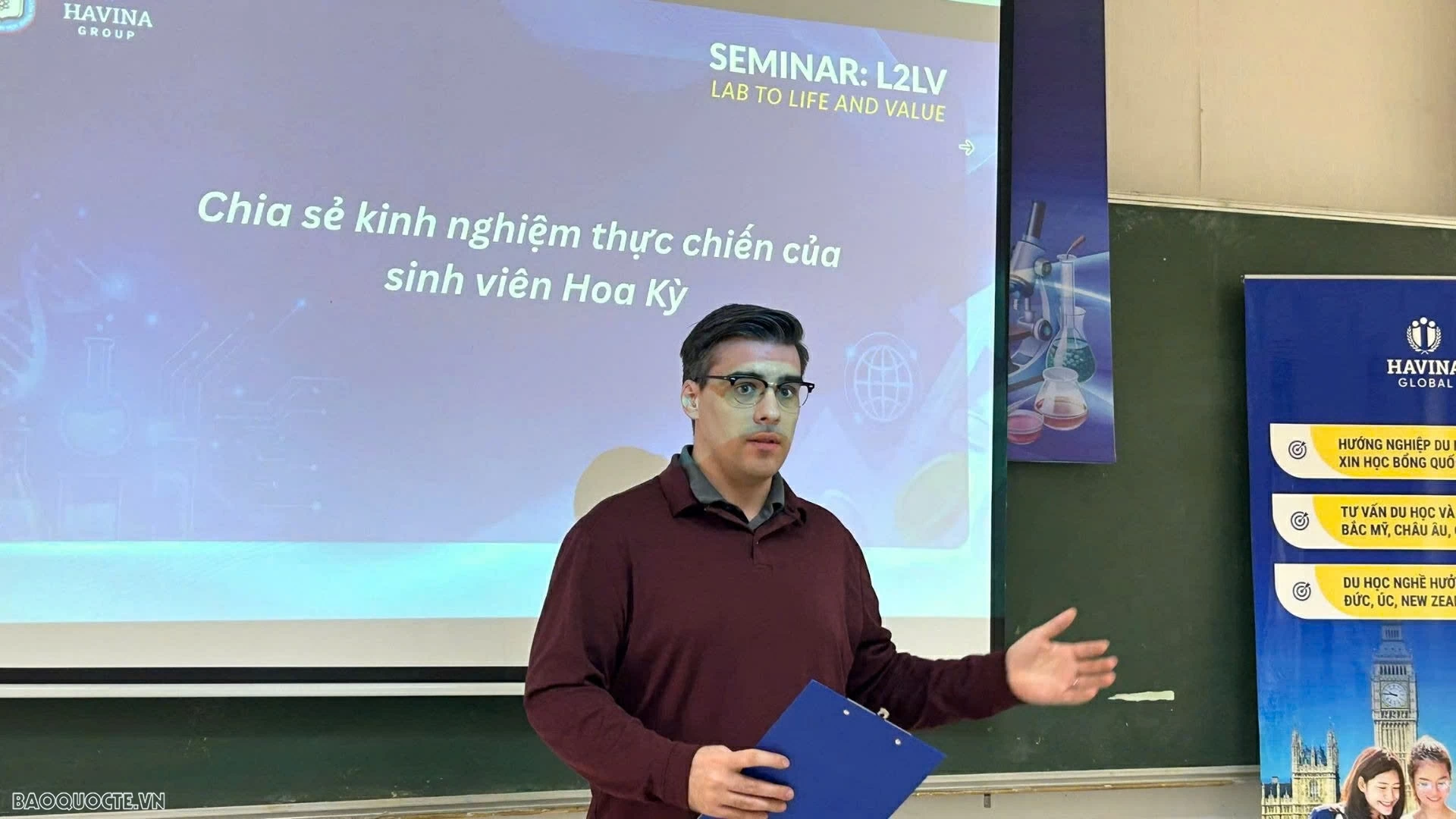 |
| Mr. Nathan Myer shares practical experiences of American students. (Photo: Yen Vi) |
Mr. Nathan Myer, a language expert from Mxyx, affirmed the crucial role of English in scientific research and international integration. He noted that at major universities like MIT, Stanford, and Harvard, the entrepreneurial spirit is highly valued. Still, it is accompanied by extensive, in-depth research based on international reports and scientific studies.
To avoid falling behind, Vietnamese students need to develop strong English reading skills to quickly keep their knowledge up to date.
Especially for students of the University of Science, exploring and learning from scientific research articles in various languages, most commonly English, becomes extremely important for their professional development.
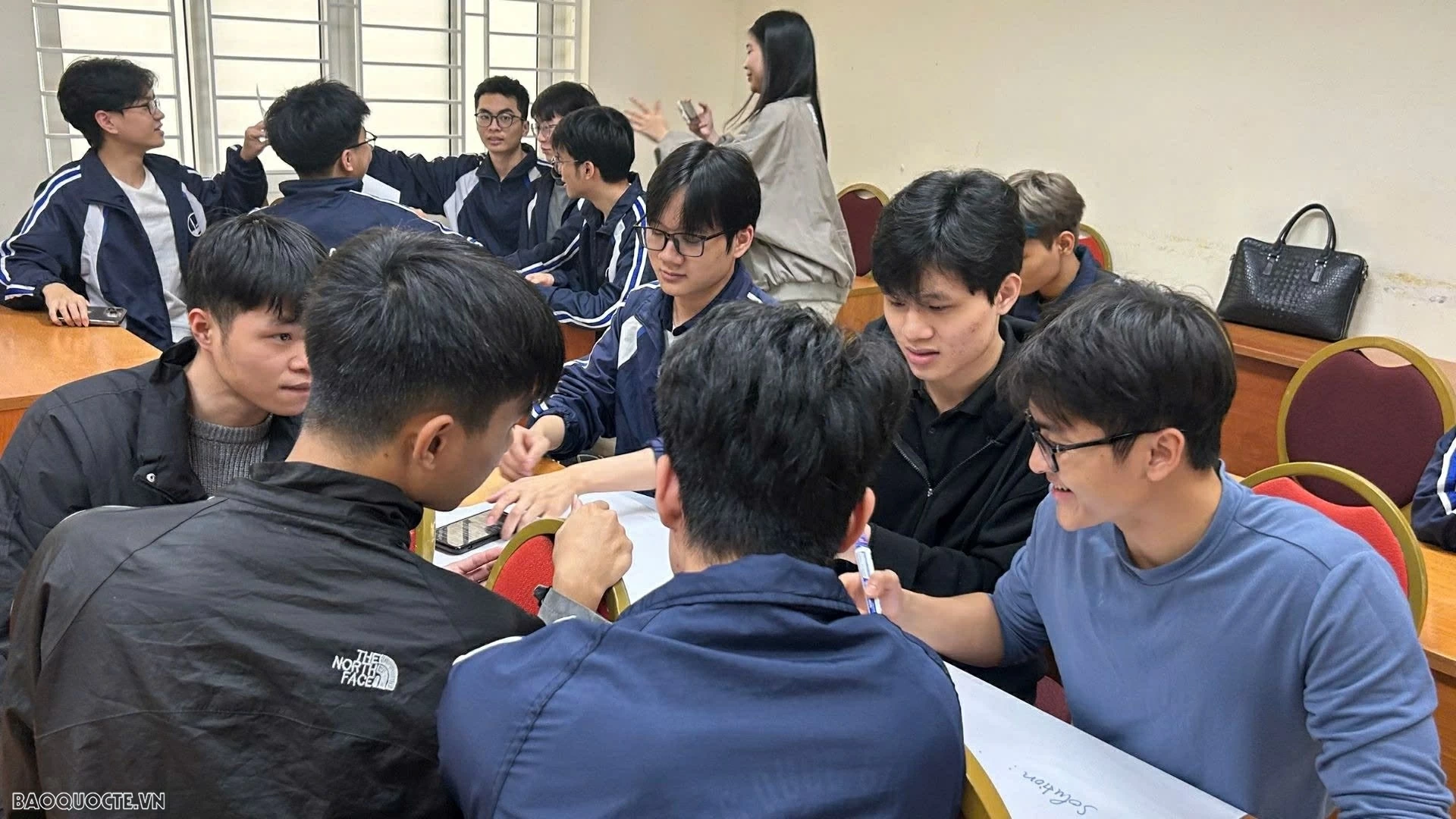
One of the most notable and lively highlights of the seminar was the interaction and sharing session with Mr. Nguyen Van Dung, Founder and CEO of Havina Group.
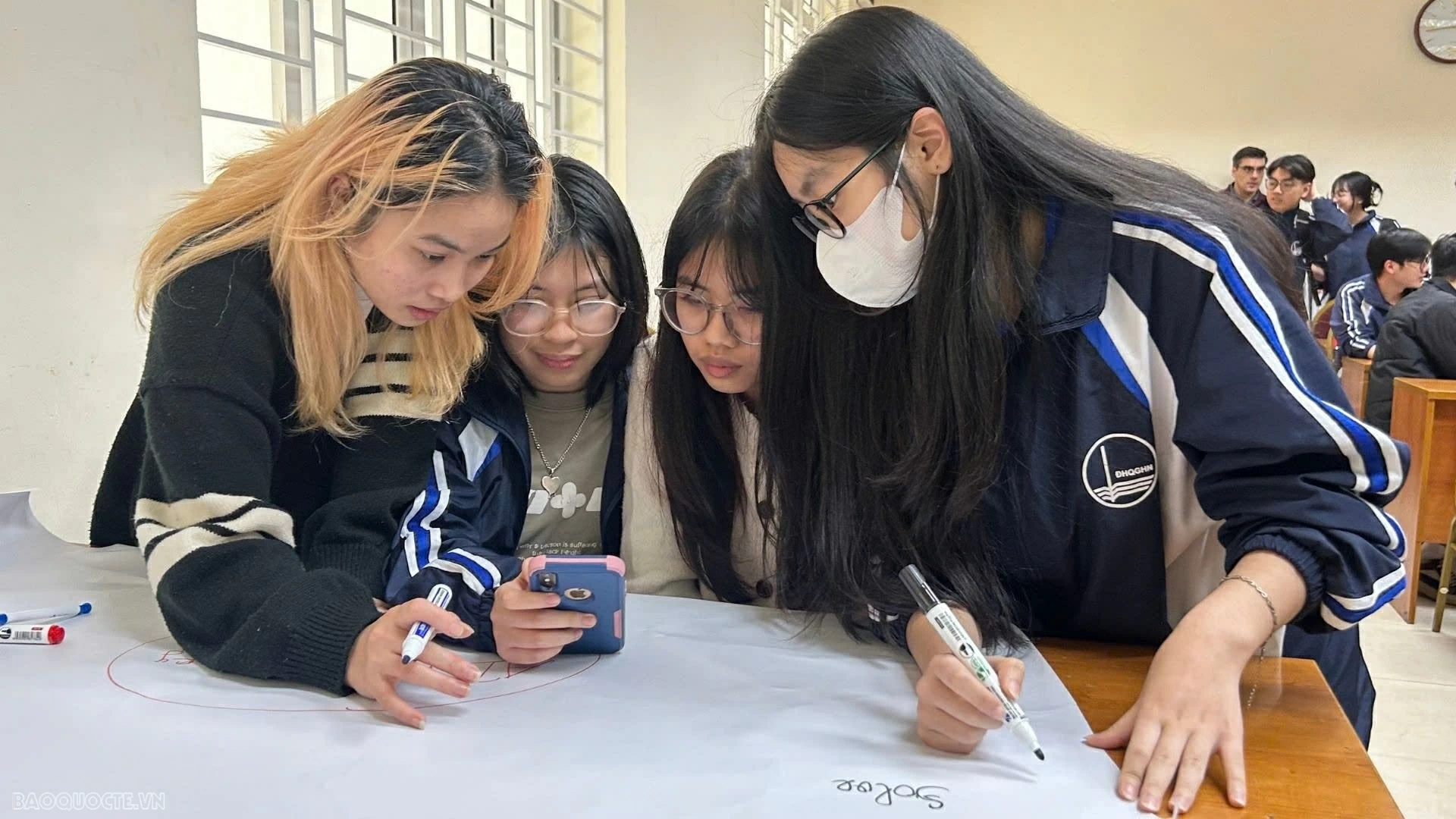
For him, if English is the global language, then in the future, artificial intelligence (AI) will be a new language with a similar role. Student groups continuously discussed AI in key areas such as healthcare, climate change, education, cybersecurity, and scientific research.
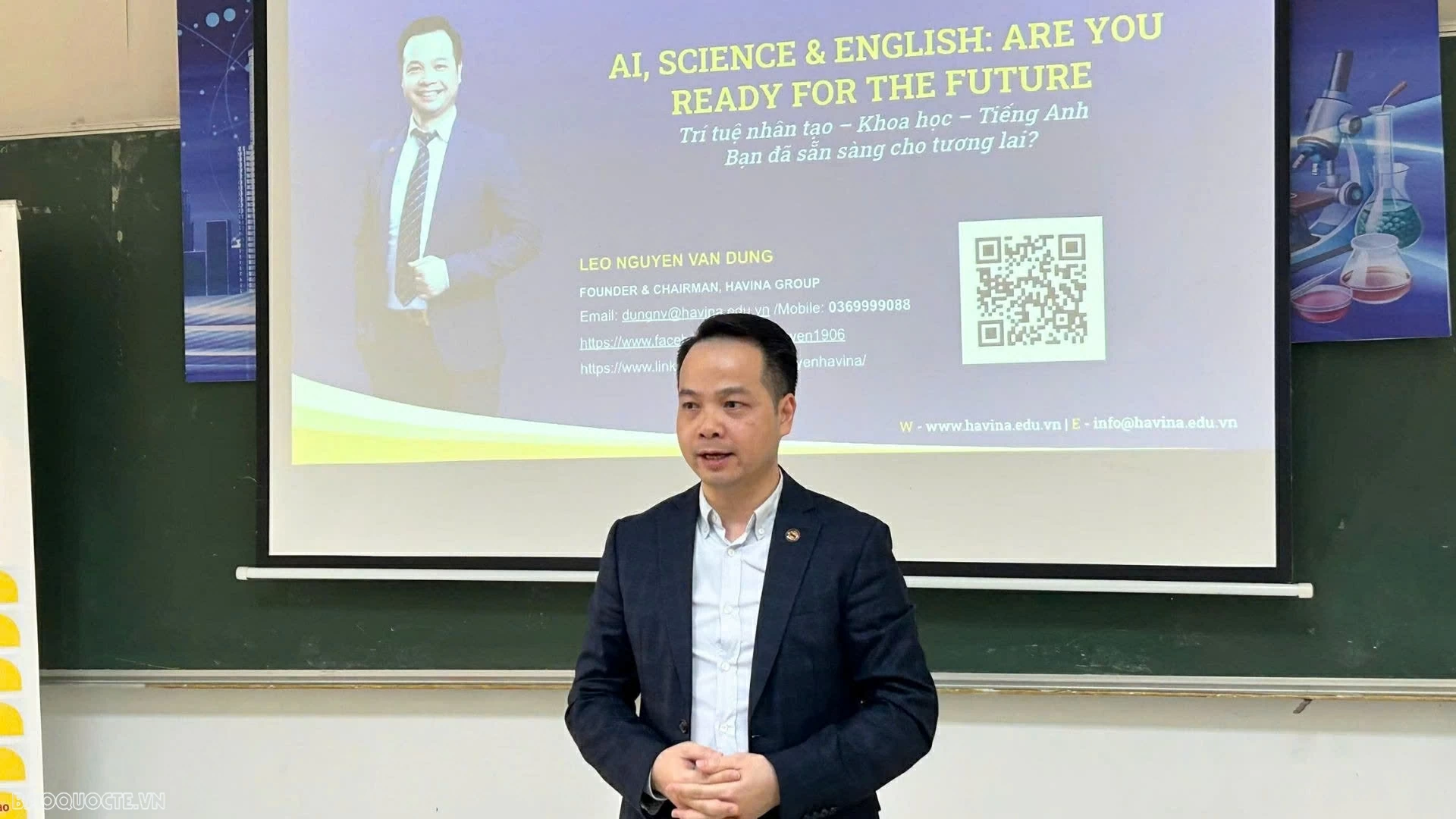 |
| With an approachable style, Mr. Nguyen Van Dung, Founder and CEO of Havina Group, created a highly interactive environment that encouraged each student to share and express their thoughts on technology and AI. (Photo: Yen Vi) |
Regarding Havina Group's strategy and commitment, he affirmed that the national university system is a leader in international cooperation, digital transformation, and knowledge transfer, with over 80,000 students.
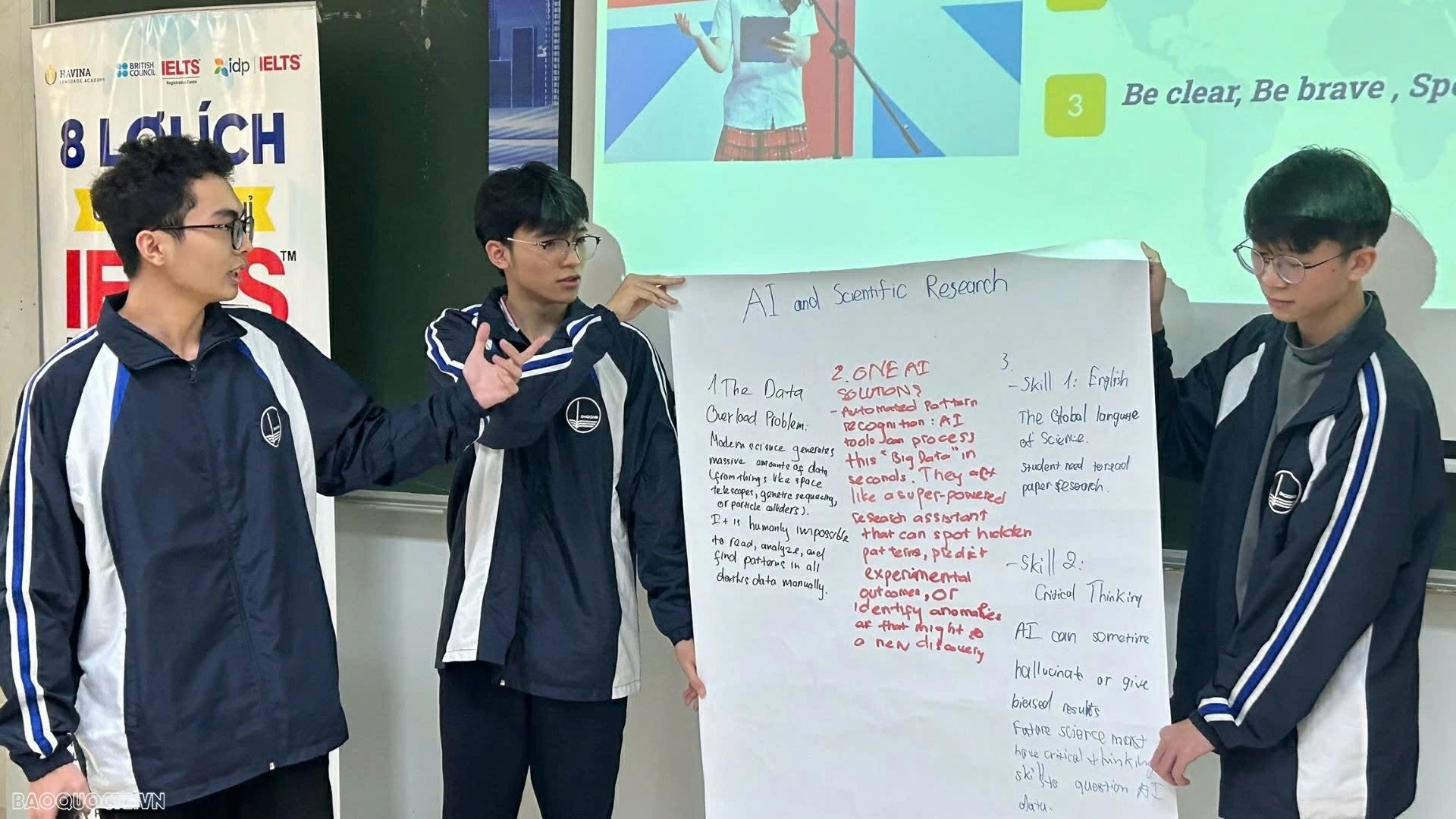 |
| Students from the University of Science confidently present on AI in scientific research. (Photo: Yen Vi) |
In particular, the University of Science has strengths in the basic sciences, with students who possess excellent qualities and potential. Therefore, Havina aims to introduce the iHub model and international standard training programs to the university to create competitive advantages for students and help them improve their thinking, language, and 21st-century soft skills for global integration.
He also shared information about Havina's diverse network of domestic and international FDI enterprises and corporations, which enables Havina to support student connections with businesses and create internship, paid work, and career development opportunities.
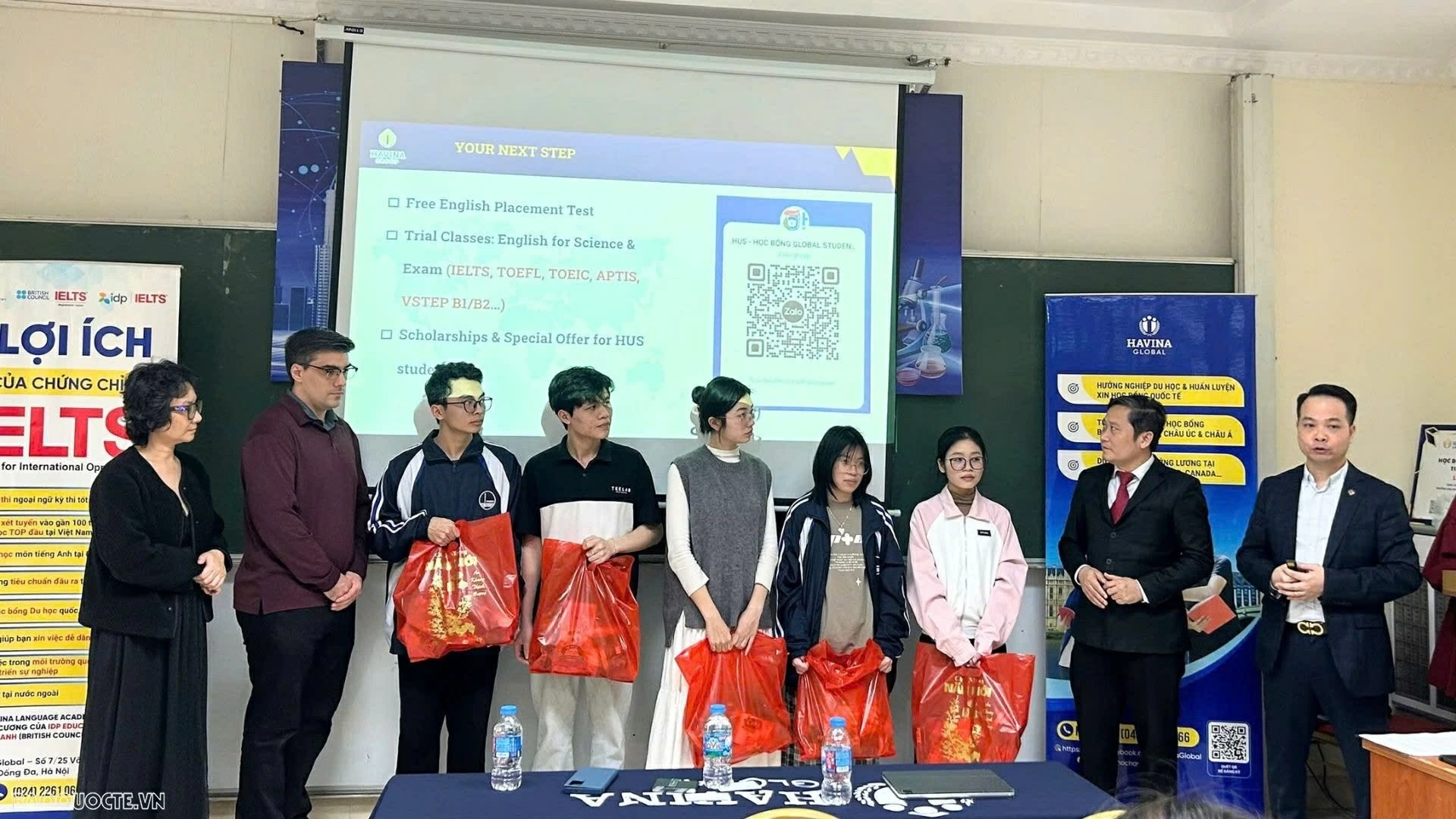 |
| Gifts and scholarships awarded to students by the Havina Group. (Photo: Yen Vi) |
“After completing the program, students will have a strong profile and connections with businesses, ensuring high-income jobs in the future,” he confidently stated.
Sharing his thoughts after the seminar, Ha Ba Hung, a student of the Semiconductor Technology program (Materials Science, Physics Department), believed that today's experience was an opportunity for students to freely express their views on applying AI to scientific research.
Ba Hung also emphasised the role of language and soft skills in his upcoming four-year university journey: “English is crucial for us to unlock knowledge. Combined with critical thinking skills, we can master technology. Although AI is intelligent, it can still provide incorrect answers; at that point, our thinking and expertise will help us critique and standardise information.”
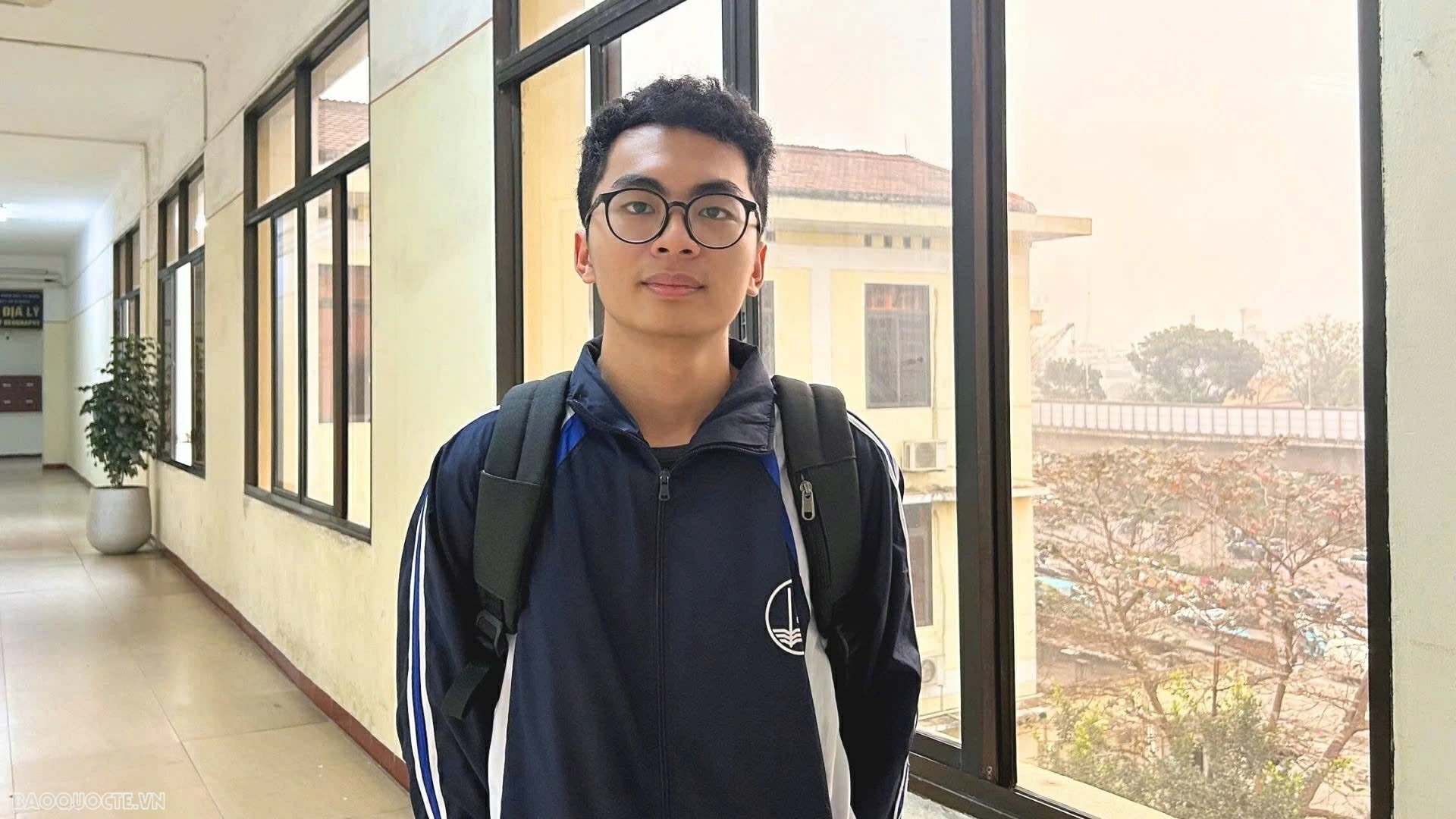 |
| Ha Ba Hung, a first-year student of the Semiconductor Technology program (Materials Science, Physics Department), boldly proposes expanding the iHub model. (Photo: Yen Vi) |
Notably, from the perspective of a student in a leading-edge technology field, Hung straightforwardly proposed expanding the iHub ecosystem. While appreciating the existing five models, Hung expressed a desire for Havina Group to develop an iHub specifically for semiconductor technology: “Semiconductors are currently the backbone of global industry and a key area of focus for the government. Vietnam is deeply involved in this value chain, so a practical environment like an iHub for semiconductors would be an essential launchpad for us students.”
 |
 |
The seminar concluded with many open exchanges, clearly reflecting the need for learning connected with practical realities for students of natural sciences. From the "Lab to Life and Value" philosophy, the iHub model is opening up new approaches in university education, where knowledge does not stop in the classroom but continues to be nurtured and developed by generations of students through practical projects.
| Van Lang University: A lasting partnership with the EU Over the past 35 years of cooperation between Vietnam and the EU, education has consistently been one of the most enduring pillars, where knowledge transcends ... |
| University of Economics Ho Chi Minh City – From Sustainable University to Urban Innovation Hub Universities today cannot stand apart from the major challenges facing contemporary cities and society. Climate change, transformation of growth models, innovation, social inequality, and ecological ... |