



Joint civil defence exercise by the Armies of Vietnam, Laos, and Cambodia
WVR - On the morning of October 14, at Brigade 249 (Corps of Engineers), the Ministry of National Defence of Vietnam organized a joint civil defence exercise involving the armies of Vietnam, Laos, and Cambodia for the year 2026.
Latest
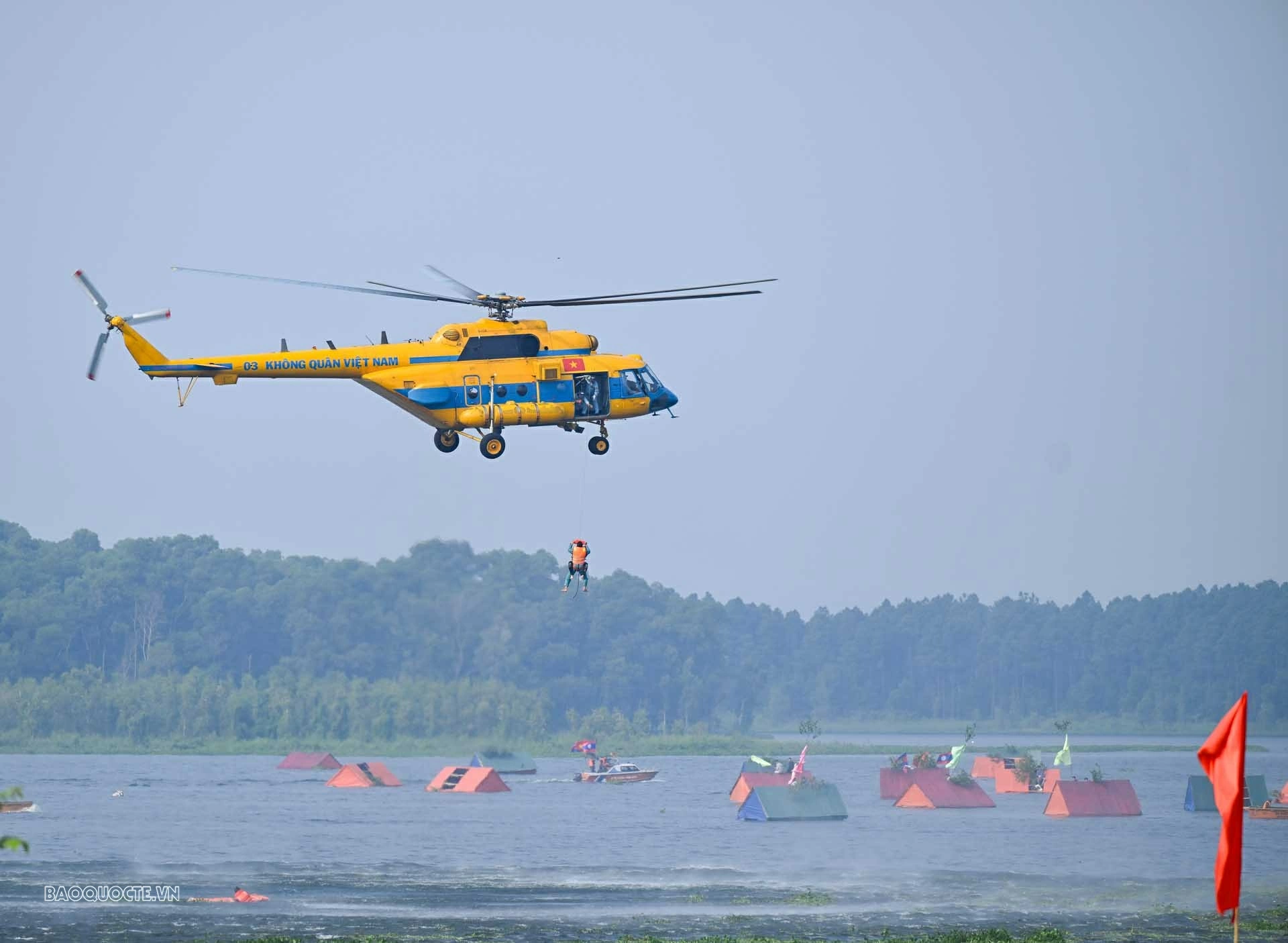 |
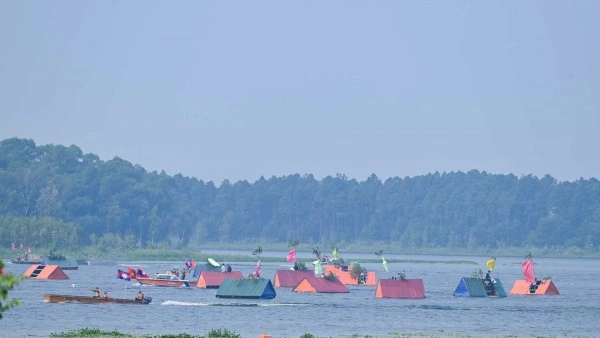
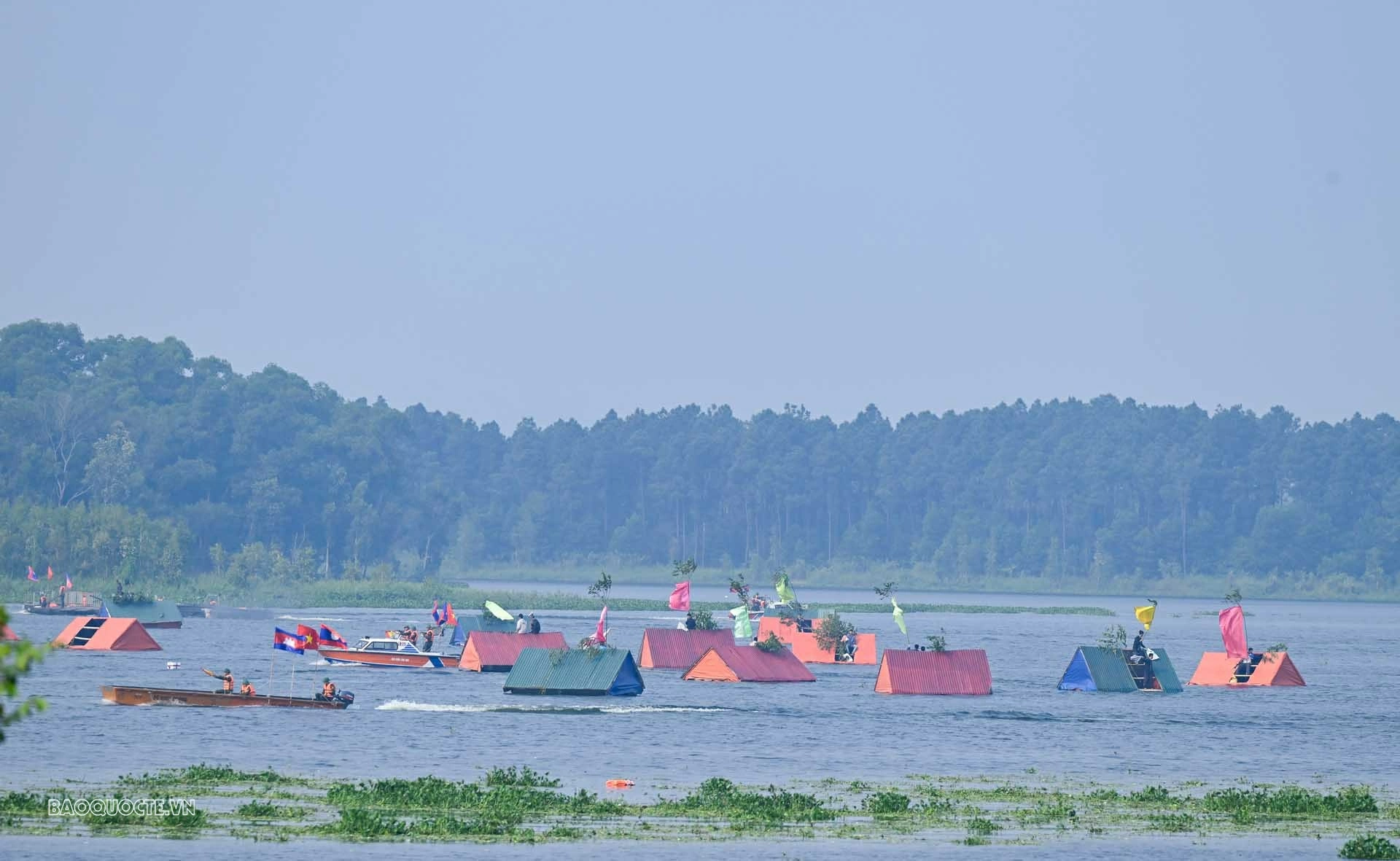
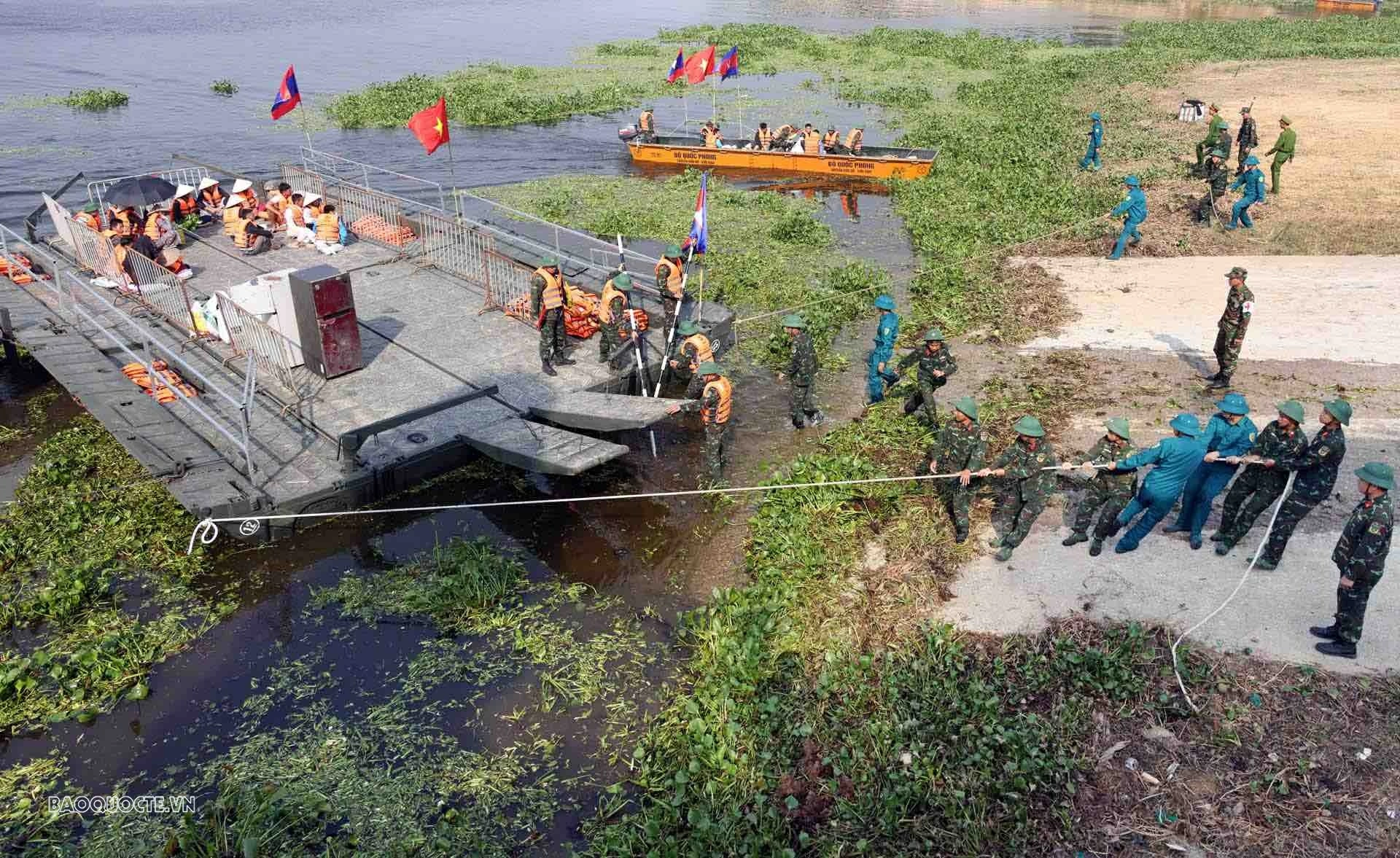
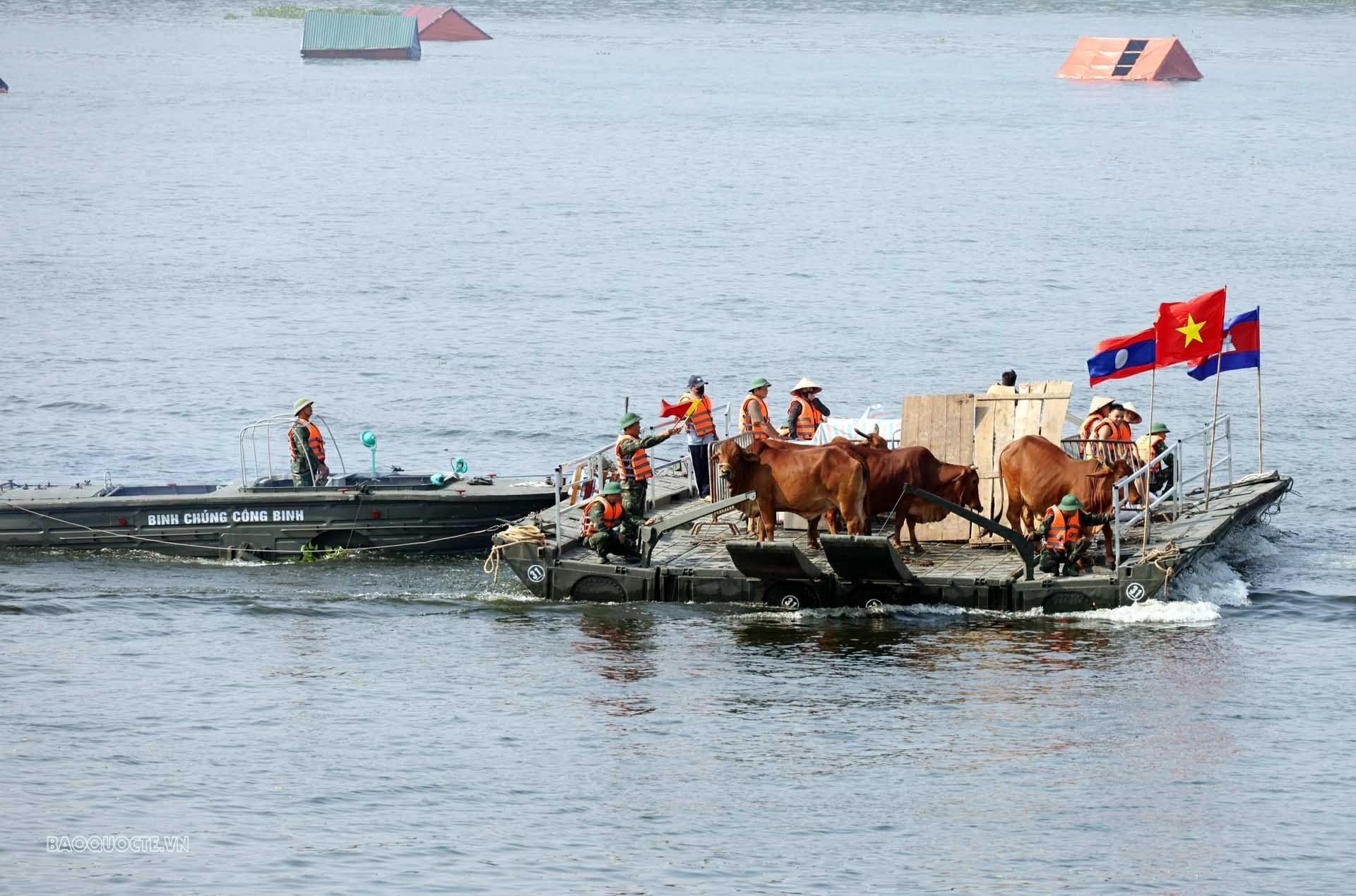
| The armies of Vietnam, Laos, and Cambodia conduct emergency rescue operations for people in flooded areas. |
In accordance with the agreement of the Ministers of Defence of Vietnam, Laos, and Cambodia at the Ministerial Conference in 2019, and the 2026 Defense Cooperation Plan between the Ministries of Defence of Vietnam-Laos and Vietnam-Cambodia, the Ministry of National Defence of Vietnam organized a joint civil defense exercise involving the armies of the three countries at Brigade 249 (Corps of Engineers).
Attending and directing the exercise were: General Phan Van Giang, Deputy Prime Minister, Minister of National Defence of Vietnam; General Khamliang Outhakaysone, Deputy Prime Minister, Minister of National Defence of Laos; and General Tea Seiha, Deputy Prime Minister, Minister of National Defence of Cambodia.
Under the theme: “Civil Defence Forces of the Armies of Vietnam, Laos, and Cambodia Coordinate to Respond and Mitigate the Consequences of a Super Typhoon”, the exercise aims to enhance the organizational and command capabilities, and coordination among the armies of the three countries in disaster relief and natural disaster response. This contributes to strengthening international cooperation in civil defense, consolidating and developing the traditional friendship, solidarity, and comprehensive cooperation of the armies of the three countries, maintaining political security, and building a peaceful, friendly, cooperative, and developing region.
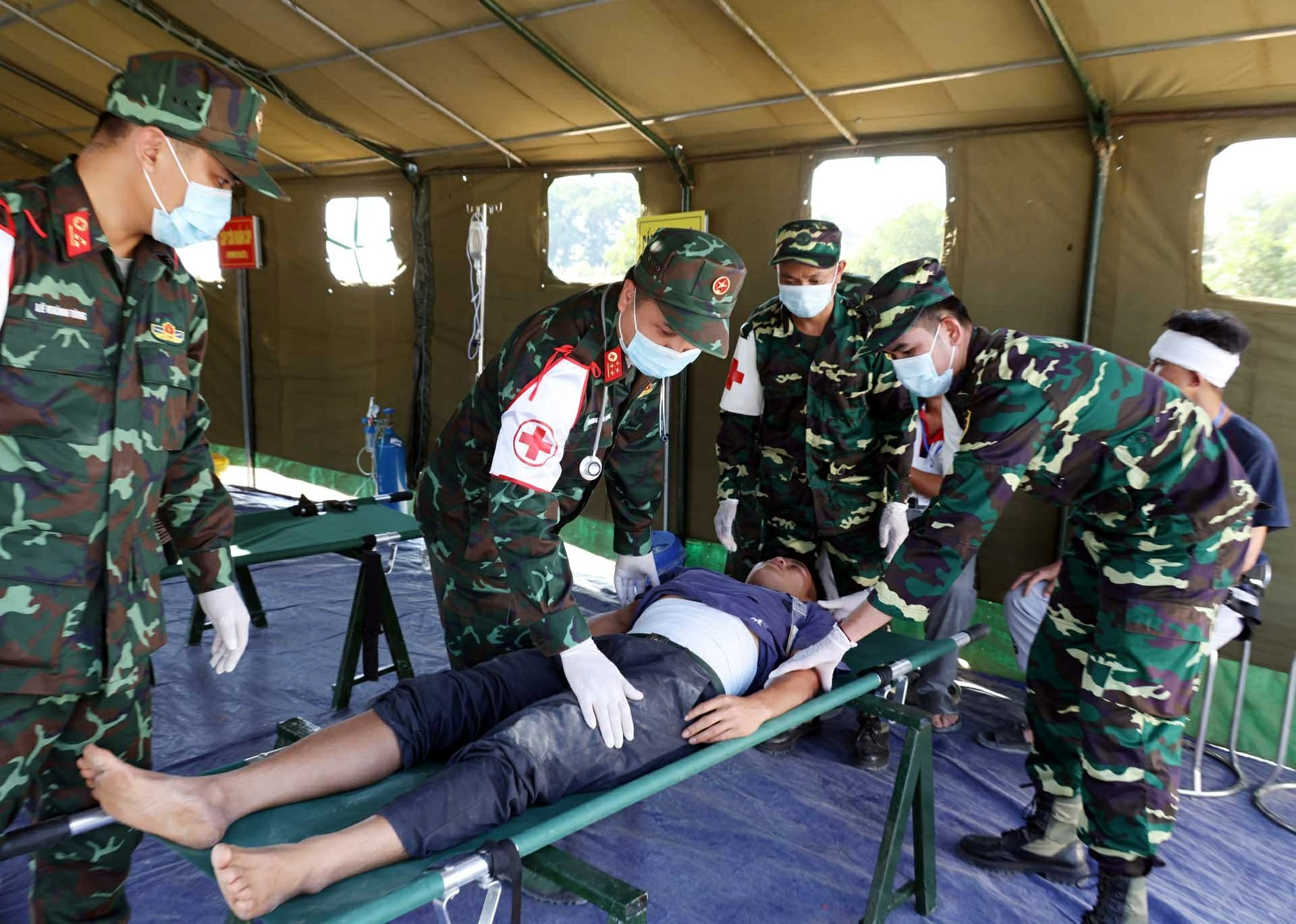 |
| Deployment of a field hospital during the exercise. |
Units from the Vietnam People's Army (Corps of Engineers; Chemical Corps; Signal Corps; Air Defense - Air Force; Military Medical Department, General Department of Logistics - Technical; Border Guard); the Lao People's Army and the Royal Cambodian Armed Forces directly participated in the exercise scenarios.
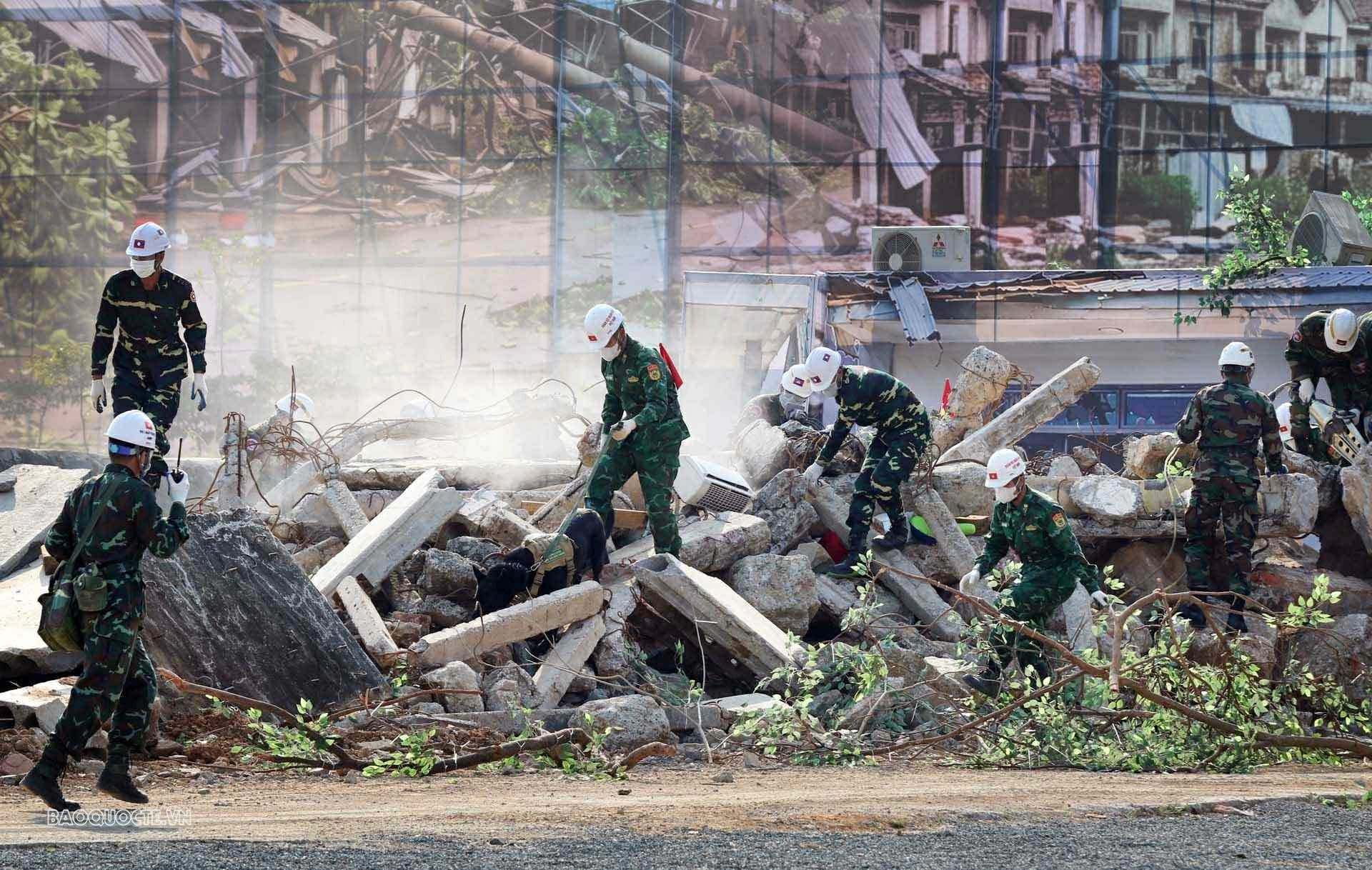
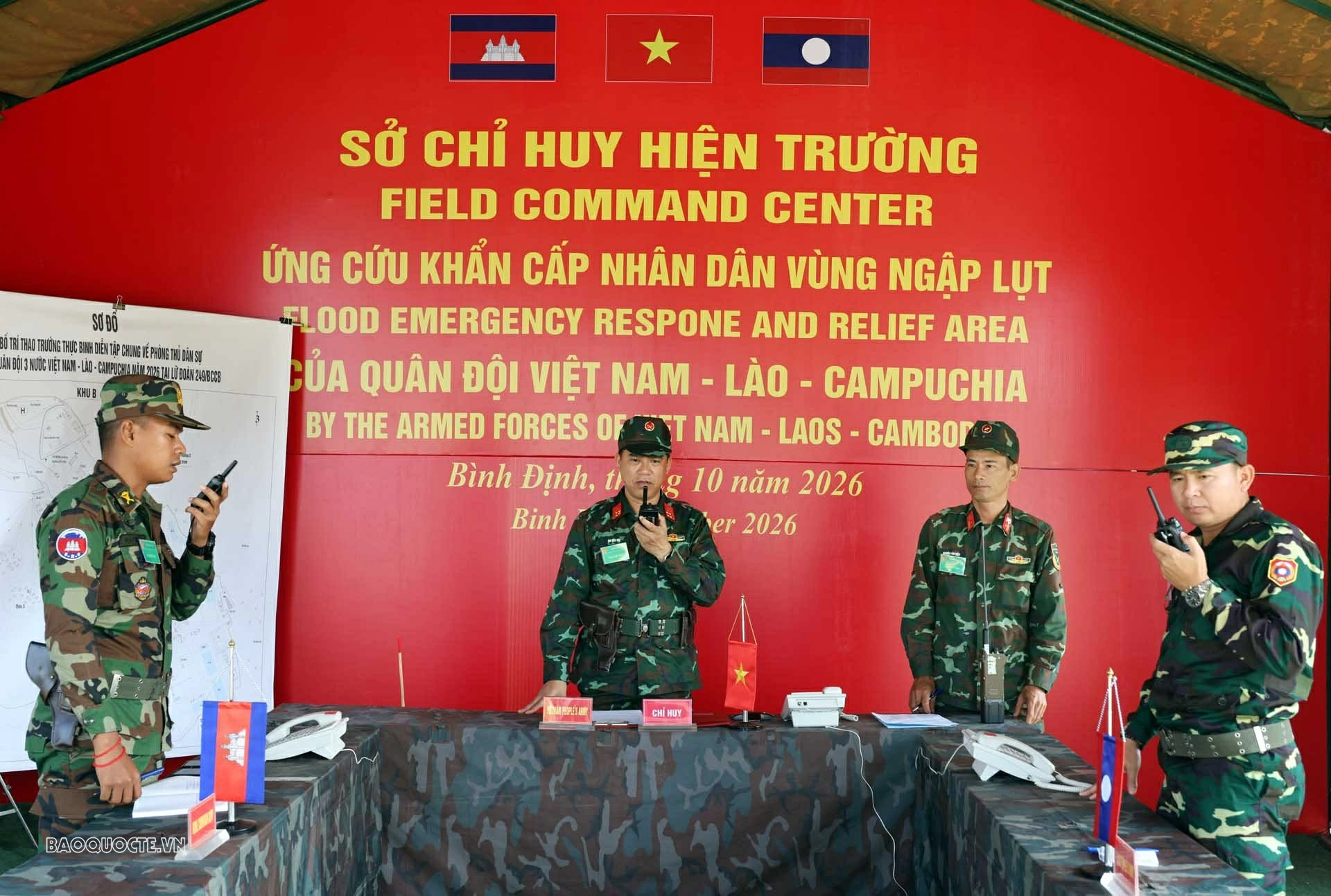
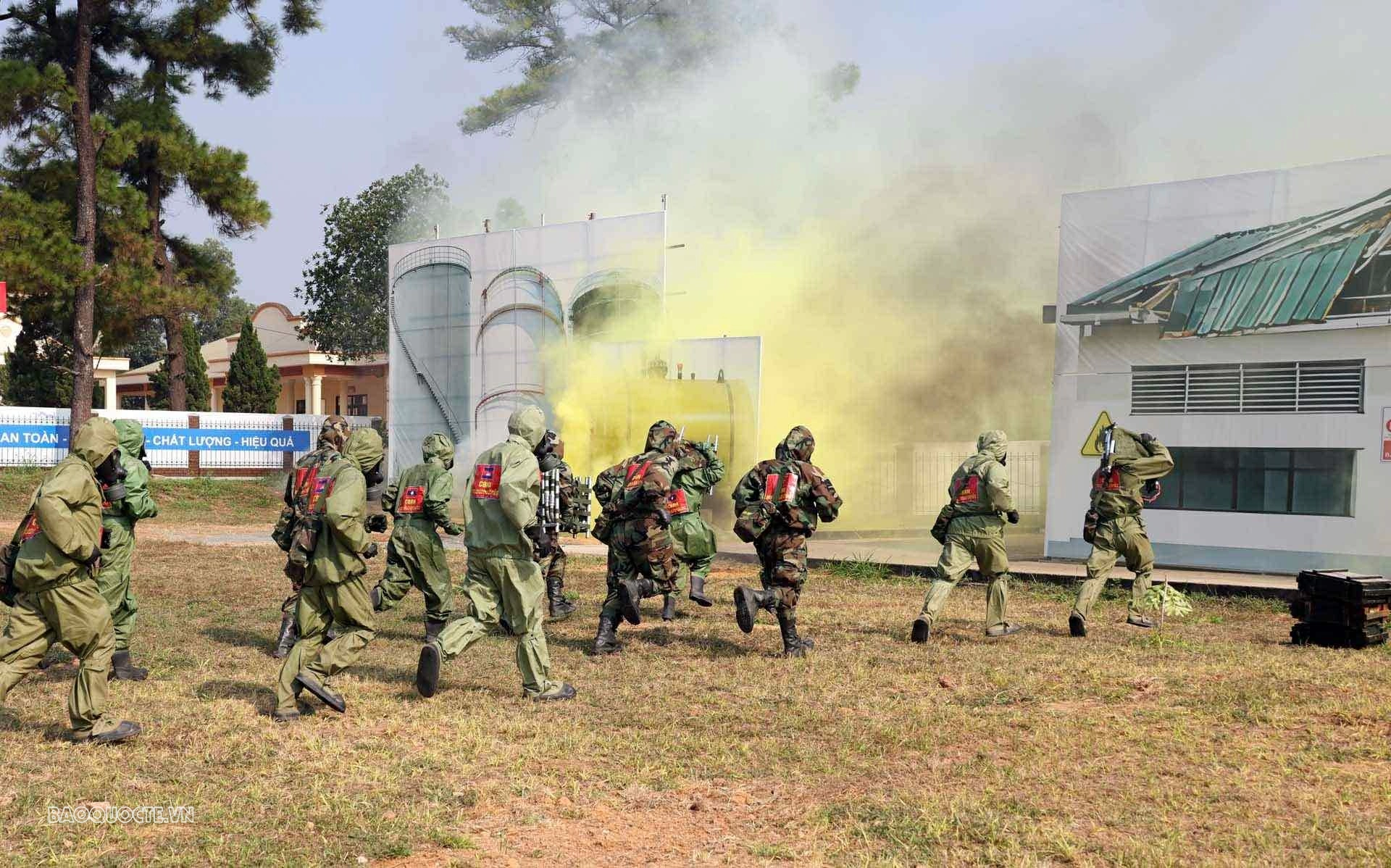
The exercise was divided into two main phases. Phase I: Organizing preparations to respond to a super typhoon disaster with two training issues: establishing a joint command headquarters; assigning tasks and organizing coordination. Phase II: Practicing response to a super typhoon disaster, including three training issues: emergency rescue for people in flooded areas and deploying a field hospital; rescuing collapsed structures; responding to hazardous chemical leaks and dispersals.
In Phase I, the armies of the three countries established a joint command headquarters, assigned tasks, and organized coordination, agreeing on a response plan for the hypothetical super typhoon disaster. Notably, coordination was implemented under a common command mechanism with the direct participation of the military forces of the three countries, thereby enhancing coordination capabilities, sharing experiences, and being ready to support each other in emergency situations.
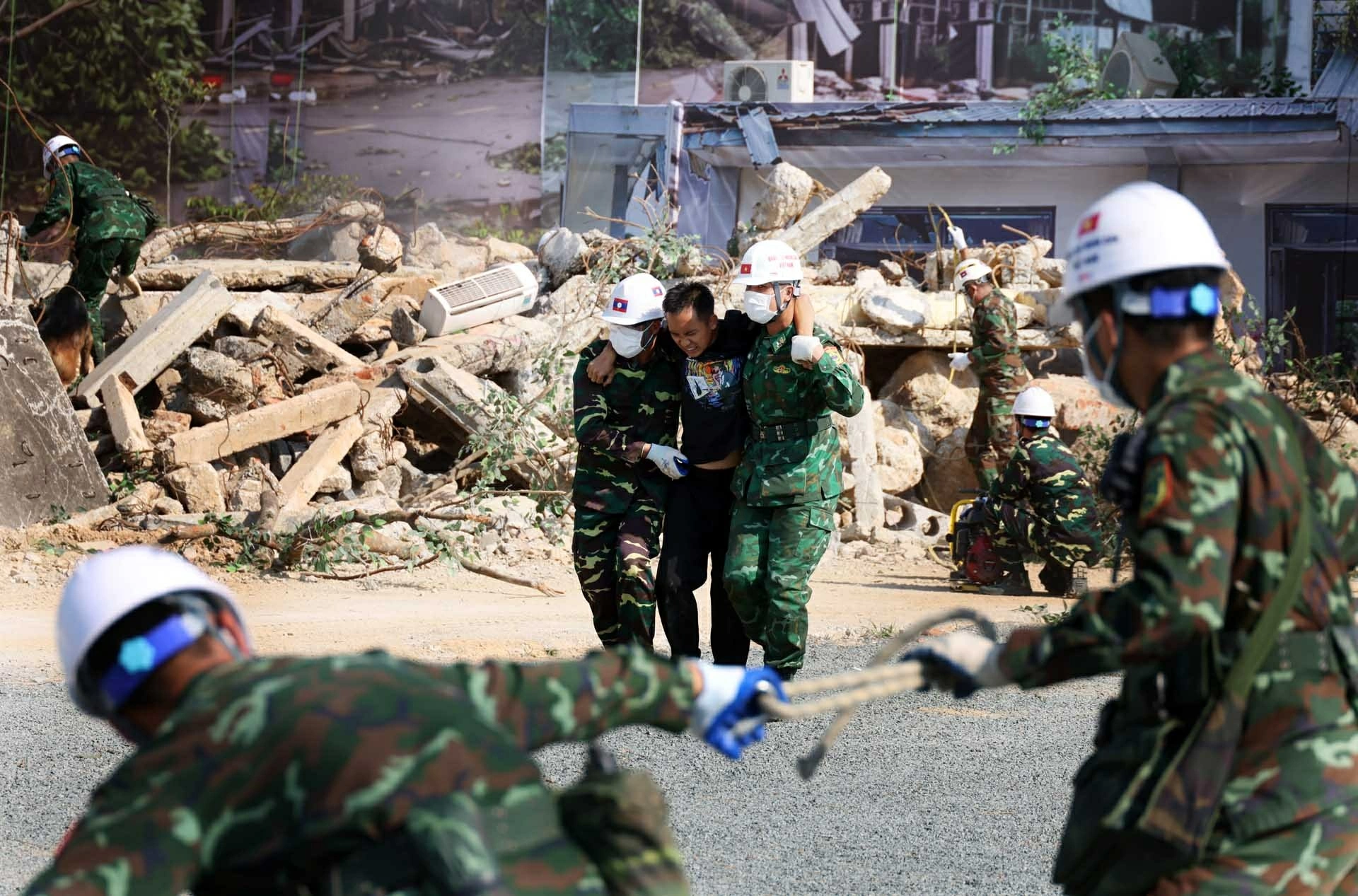 |
| Rescue operation for collapsed structures during the exercise. |
In the live-action phase, the forces coordinated to rescue people in flooded areas, deploy a field hospital, conduct rescue operations at collapsed structures, and respond to hazardous chemical leaks and dispersals. Each exercise content required tight coordination and unified collaboration among the forces, means, and specialties of the armies of the three countries. The coordination plans were tested under realistic conditions, providing a basis for each country's army to continue drawing lessons, perfecting organizational and command capabilities, and responding to disaster scenarios.
Regarding personnel, the Vietnam People's Army participated with 2,682 officers and soldiers; the Lao People's Army with 74 officers and soldiers; and the Royal Cambodian Armed Forces with 72 officers and soldiers.
In terms of equipment, the Vietnam People's Army mobilized 3 helicopters, 286 vehicles, and 66 specialized vehicles; the Lao and Cambodian armies mobilized specialized rescue and relief equipment.
In his opening remarks, General Phan Van Giang emphasised that the world and the region are currently facing increasingly significant challenges; climate change, natural disasters, epidemics, and environmental incidents and disasters, as well as non-traditional security issues, have become global concerns. Enhancing civil defence capabilities is not only an urgent task for each country—Vietnam, Laos, and Cambodia—but also a significant contribution to regional security.
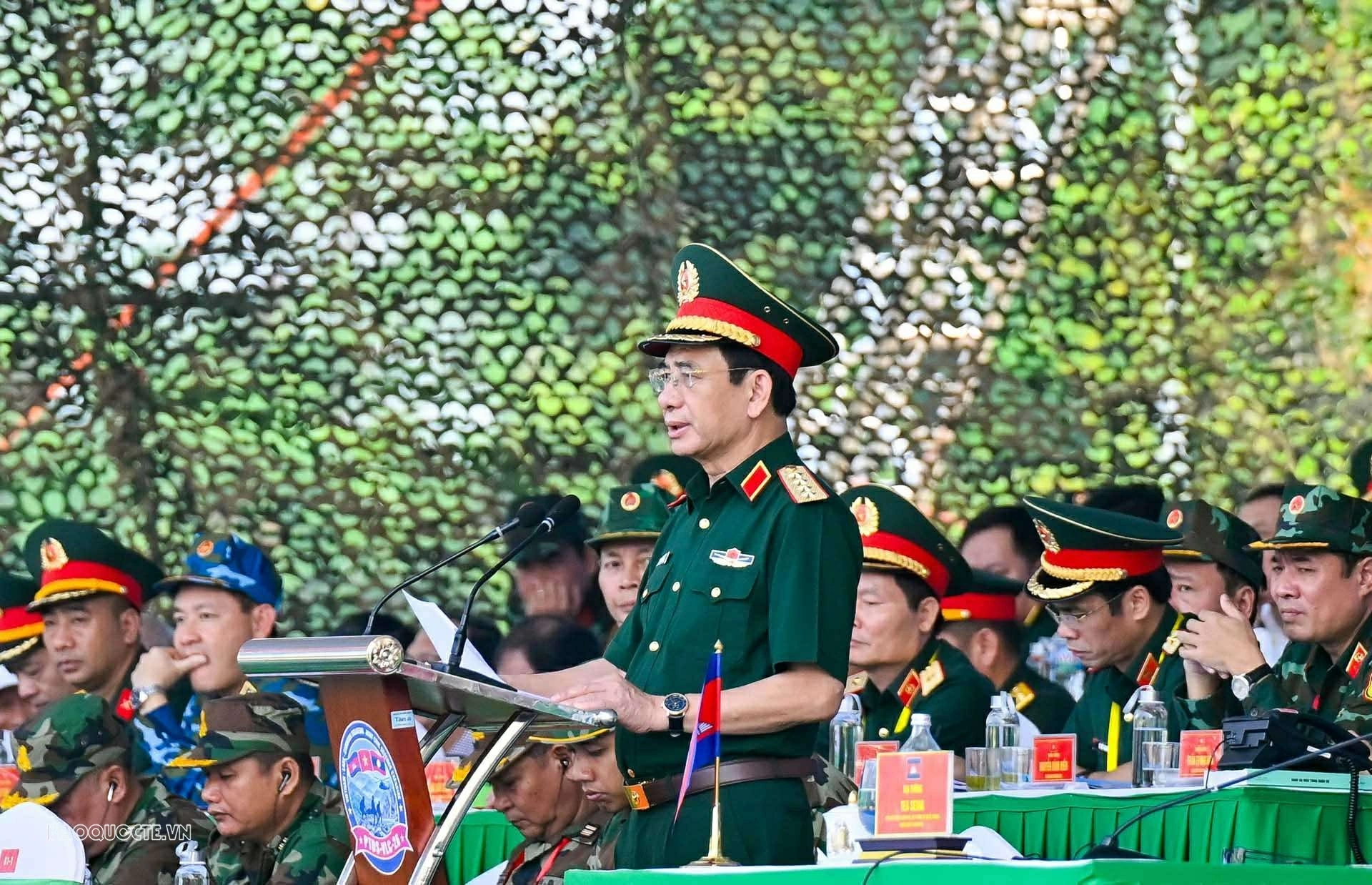 |
| General Phan Van Giang delivers a directive and opens the joint civil defense exercise between the armies of Vietnam, Laos, and Cambodia in 2026. |
General Phan Van Giang affirmed that this joint exercise is a continuation of a fine tradition, a vivid testament to the strong commitment of the armies of the three countries in being ready to coordinate in addressing non-traditional security issues in the region, protecting the lives, property, and peaceful lives of the people of each country. The Deputy Prime Minister, Minister of National Defence of Vietnam, stated that this is a valuable opportunity for the armies of the three countries to exchange and learn from each other's experiences, enhancing coordination and collaboration capabilities in responding to cross-border emergencies, incidents, and disasters.
To achieve the exercise's goals and requirements, General Phan Van Giang requested the Steering Committee and its agencies to deeply grasp the purpose, significance, and requirements of the exercise, organize and conduct it tightly, according to the intended plan; flexibly handle situations, especially arising situations, ensuring the exercise is realistic and suitable to the current situation. The participating forces are to uphold a sense of responsibility, discipline, and proactive coordination to excellently complete each training issue; execute the exercise contents according to the intent and management of the Steering Committee and its agencies; ensure absolute safety for personnel and equipment.
General Phan Van Giang emphasized the importance of ensuring logistical support for the exercise, especially in terms of training grounds, communication, cryptography, and logistics and technical support for the live-action forces. Additionally, General Phan Van Giang suggested that through the exercise, each country's army should organize to draw lessons, propose solutions to enhance organizational and command capabilities and practice responding to situations; continue to research, supplement, and complete response plans and strategies suitable to the mission requirements of each country's army. The participating forces should further strengthen solidarity, viewing this as an opportunity to exchange, deepen understanding of the cultural beauty and people of the three nations, contributing to further embellishing the friendship between the armies and peoples of the three countries.
Some images from the joint exercise between Vietnam, Laos, and Cambodia:
 |
 |
 |
 |
 |
 |