


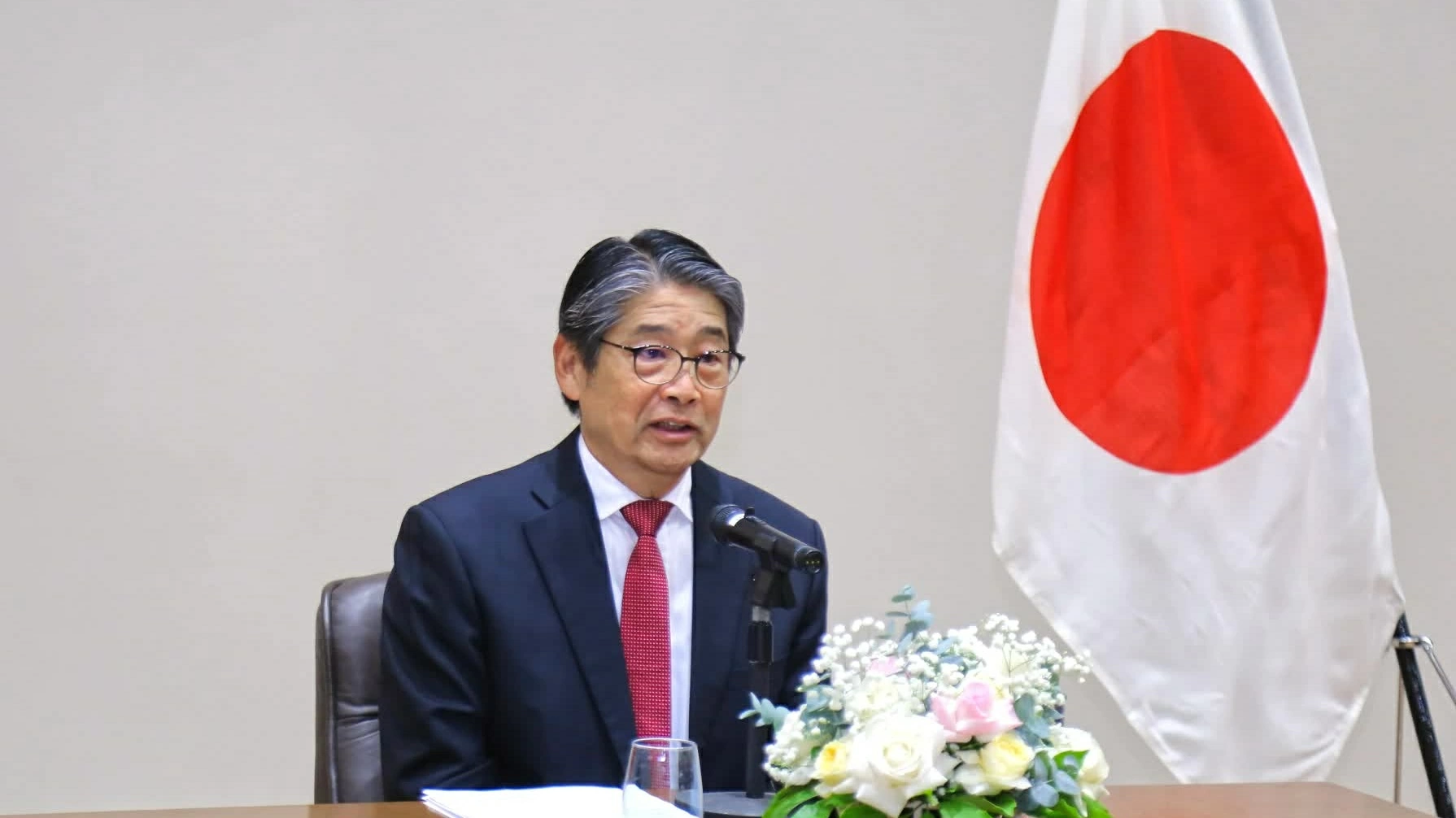
JICA to continue supporting Vietnam in entering a new growth cycle in a new era
WVR - Kobayashi Yosuke, Chief Representative of the Japan International Cooperation Agency (JICA) in Vietnam, affirmed that JICA is ready to continue supporting Vietnam's localities in development through key pillars, including promoting digital transformation and international integration; building and enforcing laws; and developing the private sector.
Latest
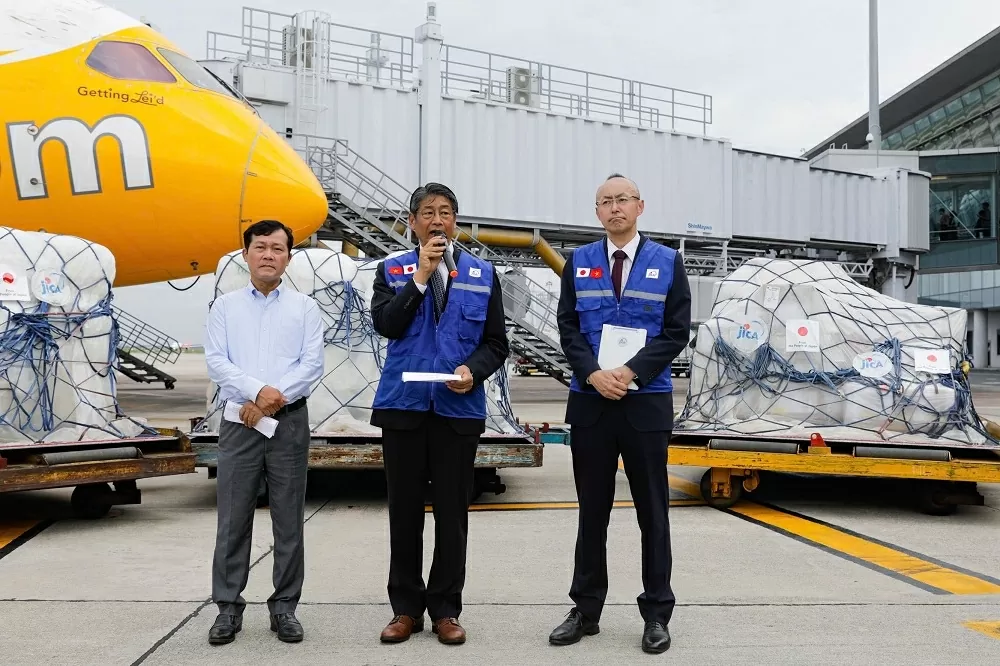 |
| Representatives of Vietnam and Japan at the emergency relief handover ceremony from the people and government of Japan to the people of Vietnam through the Japan International Cooperation Agency (JICA). (Source: JICA) |
Could you please share the results of JICA’s development assistance to Vietnam in recent years, particularly during the first half of fiscal year 2025 (from April 1, 2025 to September 30, 2025)?
During the first half of fiscal year 2025, JICA has continued to support Vietnam’s socio-economic development through both people-to-people cooperation and financial cooperation.
Currently, 46 long-term experts and 41 JICA volunteers from various localities in Japan are working with Vietnamese counterparts across various provinces in Vietnam.
Through collaboration with businesses, universities, local governments, and Japanese NGOs, these individuals, in collaboration with Japanese enterprises, universities, local governments, and NGOs, are contributing to Vietnam's development efforts in diverse sectors and have achieved notable accomplishments as follows:
Regarding climate change response, the northern mountainous regions of Vietnam frequently experience landslides due to heavy rains, becoming a serious issue. In April 2025, JICA completed the construction of Vietnam's first SABO dam in Son La province, transferring Japanese technology to mitigate natural disaster risks.
In terms of aging society support, Vietnam is facing rapid population aging. In this context, JICA dispatched volunteers to support this field, for example, a ST (speech therapist) volunteer working at the National Geriatric Hospital in Hanoi to train medical staff the skills like assessment of swallowing of patients.
We also supported the introduction of Japanese-style nursing care techniques at Bach Mai Hospital, and facilitated collaboration between institutions in both countries to develop care and prevention programs.
Regarding infrastructure development, JICA has been implementing 5 grant aid projects and 15 ODA loan projects. In August, the Yen Xa Wastewater Treatment Plant—one of Southeast Asia’s largest—began operation, contributing to flood mitigation in Hanoi.
Additionally, Ho Chi Minh City’s Metro Line No. 1, inaugurated in December last year, has significantly improved urban mobility.
These efforts reflect JICA’s commitment to improving the quality of life for Vietnamese people and enhancing resilience against emerging challenges.
Furthermore, JICA has two special programs – JICA Partnership Program (JPP) and JICA Biz - for accepting proposals from local governments, businesses, and other entities in Japan to implement projects with Vietnamese local counterparts.
| The following are some of such local-to-local projects in implementation during the first half of fiscal year 2025: Under the JPP framework, Fukuoka Prefecture is collaborating with Hue City to share expertise aimed at ensuring the proper operation and maintenance of waste treatment facilities. Within the JICA Biz framework, a Japanese SME is helping improve garlic farming in Nghe An Province, Vietnam, through technology transfer. The project enhances local livelihoods and promotes sustainable rural development. It is part of JICA’s support for inclusive growth in mountainous regions. |
In your opinion, what are the key pillars of JICA’s development assistance orientation for Vietnam in the second half of fiscal year 2025 (from October 1, 2025 to March 31, 2026)? What should both sides do to help Vietnam enter a new growth cycle in the new era?
In the second half of fiscal year 2025, JICA will continue to align its cooperation with Vietnam’s strategic goal of becoming a high-income country by 2045. Our support will focus on the four key pillars of reform, including: Promotion of science-technology, innovation, and digital transformation; advancement of international integration; law-making and law enforcement; and private sector development.
In relation to the upcoming Vietnam-Japan Local Development Cooperation Forum, I believe one of the keys to Vietnam’s success lies in the social and economic development of various localities in Vietnam, and we will continue to help Vietnam’s localities develop through various means under the pillars I mentioned above.
Firstly, promoting local cooperation. Under our JPP and JICA Biz, we will continue to create new opportunities for local-to-local cooperation, whereby local entities in Japan and Vietnam share their knowledge and/or create business opportunities that lead to the social and economic development of both sides.
There are many issues that localities in Japan and Vietnam face in common, such as the aging population, and working together to tackle such issues benefits localities in both countries through mutual learning. The notion that cooperation runs both ways is a very important aspect of our development cooperation, especially in the field of local-to-local cooperation.
Secondly, sharing knowledge about the two-tier local government system. One of the keys to Vietnam’s local development lies in the effective management of the two-tier system. During the second half of the fiscal year, we have actively supported research and studies on the two-tier system in Vietnam. Specifically, a Japanese expert with extensive knowledge in this field delivered lectures to the Vietnamese side.
We are honoured that Japan’s experience can serve as a useful reference for Vietnam, and we remain committed to providing relevant information and cooperation in response to Vietnam’s needs going forward.
Thirdly, enhancing local infrastructure. To develop local economies, the strengthening of local infrastructure is a must. A project that contributes to climate change adaptation through irrigation in the Mekong Delta region.
During the second half of the fiscal year, we hope to finish the formulation of our Yen Loan Project to develop access roads, improve irrigation systems, and strengthen river embankments to protect citizens in the northern provinces from the effects of climate change and to reduce inequality between rural and urban areas of Vietnam.
We also plan to start a survey for a potential project that contributes to climate change adaptation through irrigation in the Mekong Delta region.
Fourthly, strengthening local human resources. High-quality human resources are the foundation of development. We will continue our cooperation with local universities, such as Can Tho University, to support the development of human resources that can accelerate Vietnam’s innovation, international integration, and private sector development at the local level.
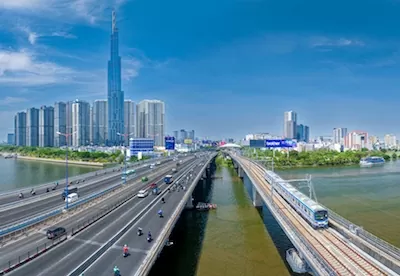 |
| Ho Chi Minh City Metro Line 1 Ben Thanh – Suoi Tien. (Source: JICA) |
Through this Forum, what opportunities can Vietnamese enterprises expect to find, and how can they best take advantage of these opportunities?
The Vietnam–Japan Local Development Cooperation Forum offers Vietnamese enterprises valuable opportunities to connect with Japanese partners and explore new areas of collaboration.
I believe the main cooperation opportunities between the two countries will include business networking with Japanese companies, local governments, and institutions, which could lead to JICA’s local-to-local cooperation programs, such as JICA Biz.
Additionally, Vietnamese localities can access Japanese technology and expertise in fields like semiconductors, AI, elderly care, and climate-resilient infrastructure.
To take advantage of these opportunities, Vietnamese enterprises should actively engage with Japanese stakeholders during and after the Forum, and seek to identify shared goals on which they can establish a long-term relationship based on trust. In doing so, Vietnamese enterprises should understand that most Japanese stakeholders value long-term human resource development over short-term gains and are willing to transfer necessary technology and knowledge to Vietnamese partners.
JICA will continue to support Vietnam in achieving its goal of becoming a high-income country by 2045, including through social and economic development of localities and partnerships with Japanese stakeholders.
Thank you very much!
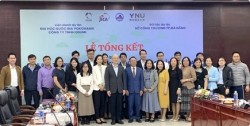
| SSC and JICA promote efficiency of Vietnamese equity market WVR - Launching seminar of the Japan International Cooperation Agency (JICA)’s Technical Cooperation Project for “Capacity Building on Promoting Efficiency of Vietnamese Equity Market” was ... |
| JICA, Da Nang develop energy saving The Japan International Cooperation Agency (JICA), in co-operation with the central city and partners from Japan, has helped build up an awareness in energy saving ... |
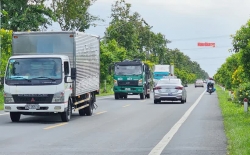
| Hau Giang province and JICA to upgrade National Highway 61C National Highway 61C linking Can Tho city with Hau Giang province will feature four lanes for motor vehicles and two for non-motorized traffic, with an ... |
| JICA plans to fund some 225.4 million USD for transport project in Can Tho The 8.78 trillion (362 million USD) Mekong DPO project, funded by JICA, includes upgrading and expanding National Highway 61C's section running through Can Tho, and ... |
| Da Nang and its journey of integration with the APEC Community: From the 2017 milestone to the 2030 Vision Since the landmark APEC 2017 Leaders' Week, Da Nang has not only affirmed its position as a "livable city" but has also emerged as a ... |