




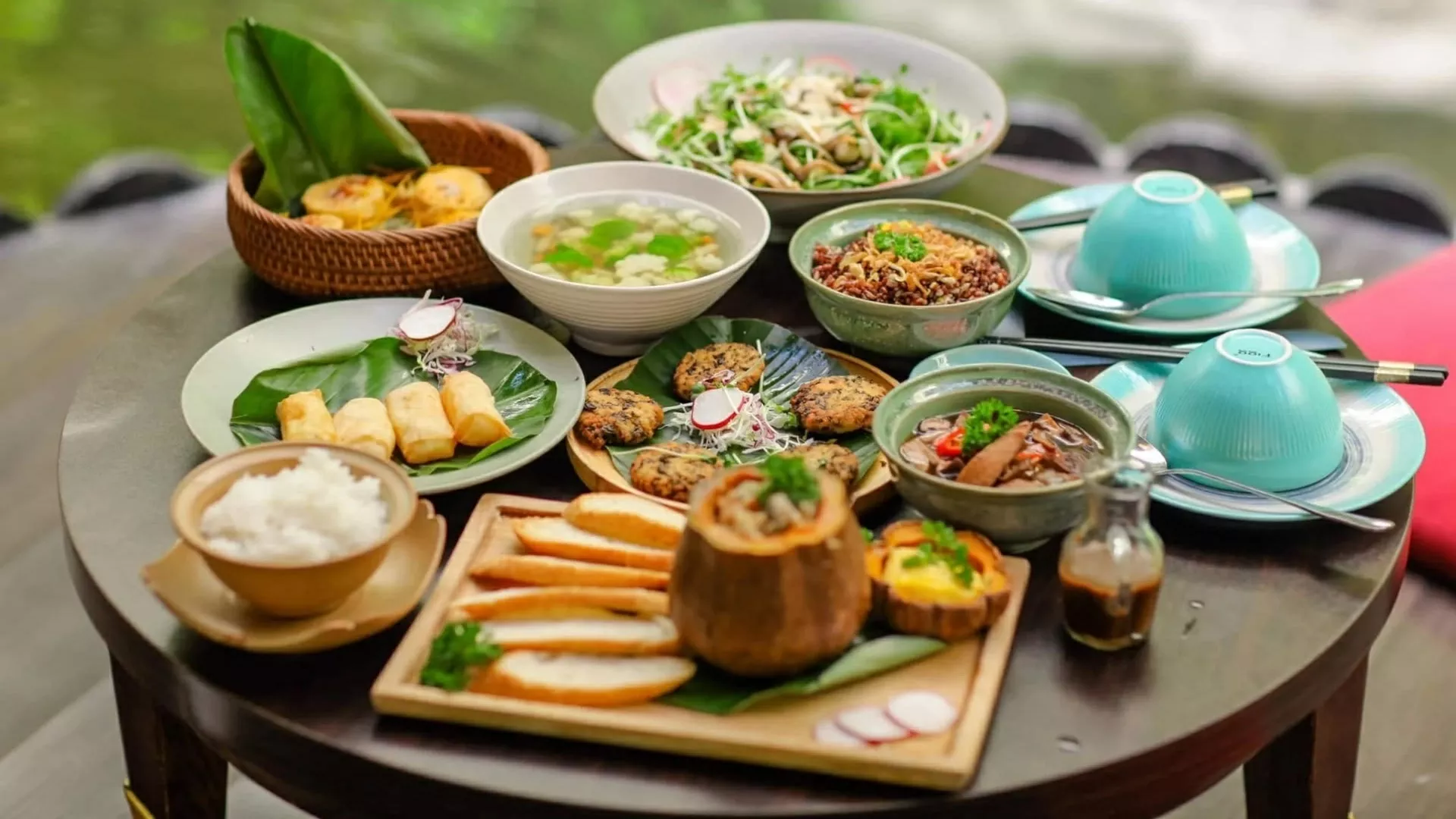
International Culinary Culture Festival 2026: Flavours of the mountains tell the story of Co Tu culture
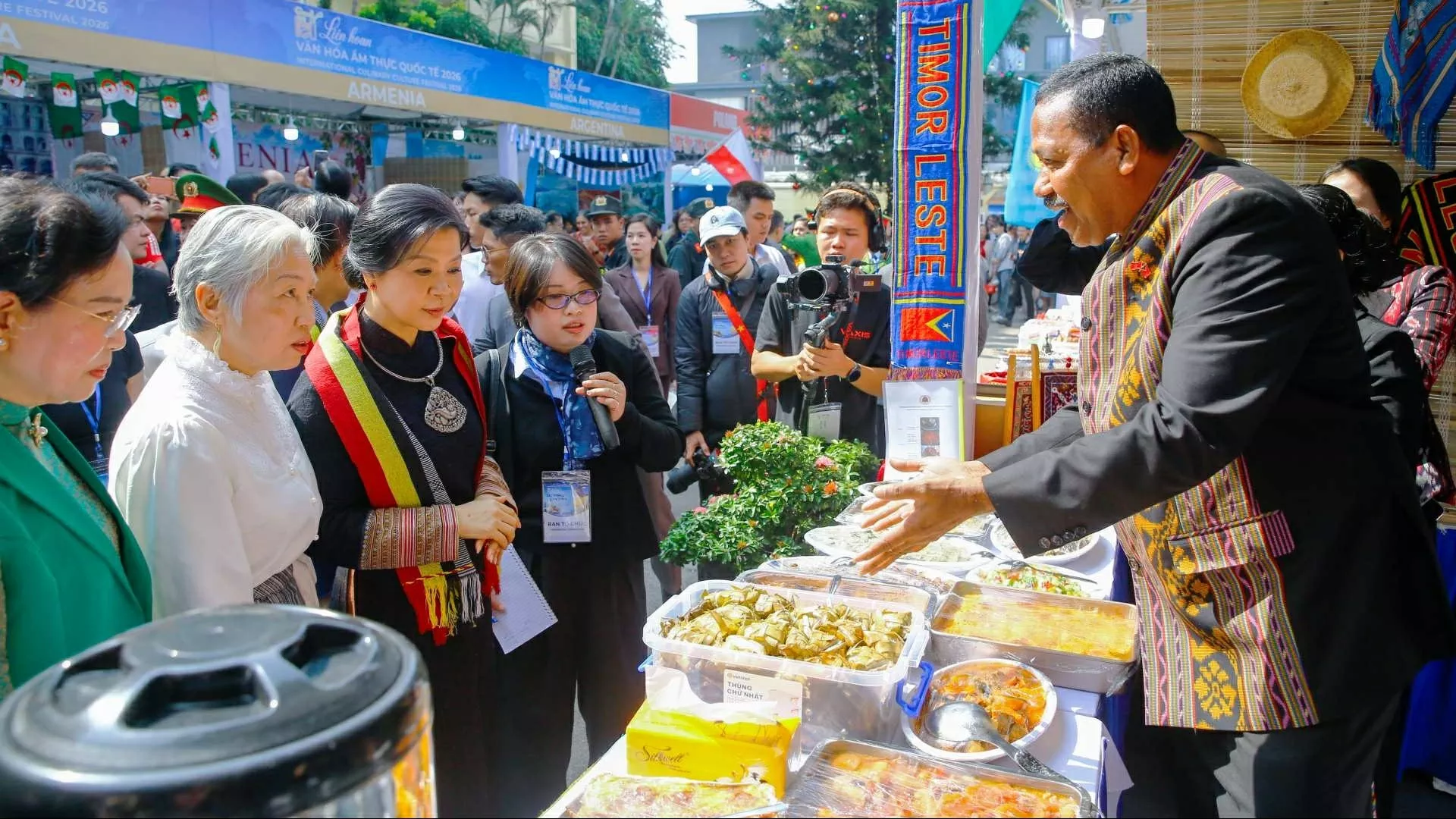
WVR - At the International Culinary Culture Festival 2026, the pavilion of the Dong Giang Heaven’s Gate Ecotourism Area offered a glimpse into the cultural life of the Co Tu ethnic community in Da Nang. Traditional delicacies such as buffalo horn-shaped sticky rice cakes, bamboo-cooked rice and zo ra, alongside brocade weaving, basketry and the Tung tung da da dance, were introduced to Madame Ngo Phuong Ly and international friends, showcasing the distinctive heritage of an ethnic community living in the western reaches of the majestic Truong Son mountain range.
Latest
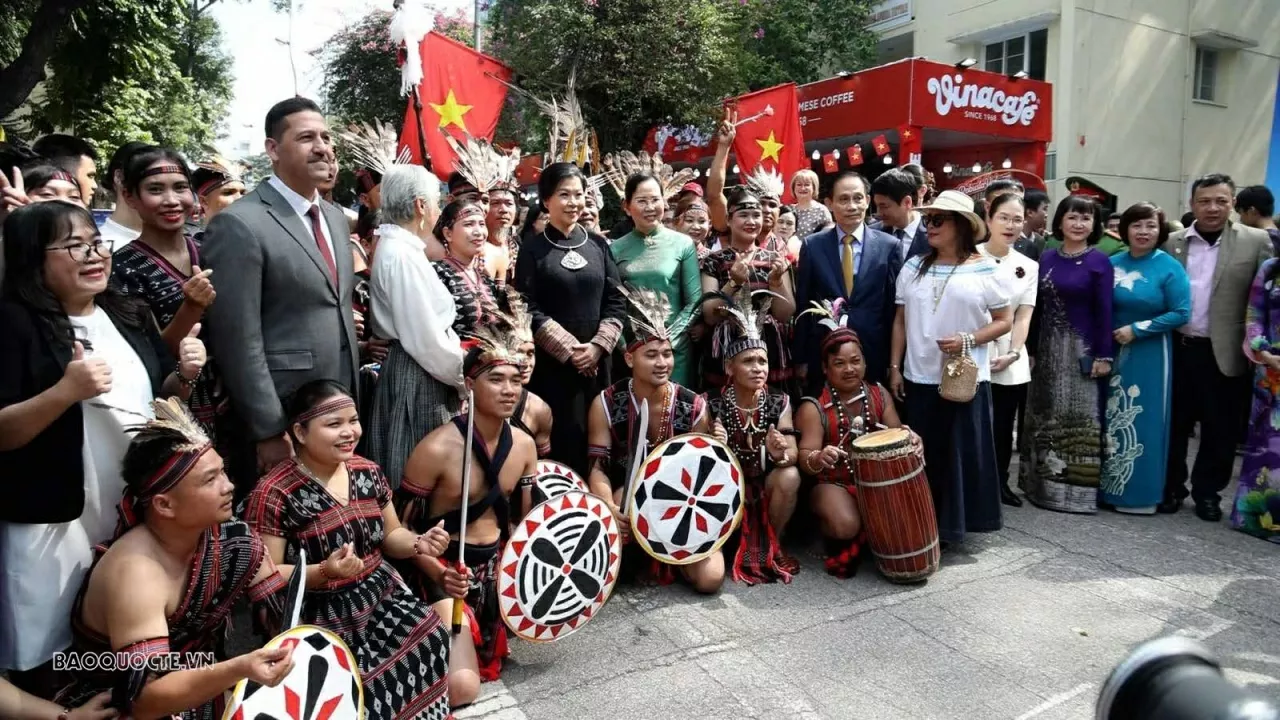 |
| Madame Ngo Phuong Ly poses for a photograph with members of the Co Tu ethnic community from Da Nang. (Photo: Thanh Long) |
Flavours from the Truong Son mountains
Speaking to The World and Vietnam Report, Ms. Dang Pham Trieu Van, Director of the Dong Giang Heaven’s Gate Ecotourism Area, said that the delegation’s greatest aspiration in attending the International Culinary Culture Festival was to bring the distinctive cultural heritage of the Co Tu people closer to international friends.
From traditional dances to brocade weaving, basketry and dishes rich in local flavours, each exhibit was carefully selected to tell part of the story of a community living along the Truong Son mountain range.
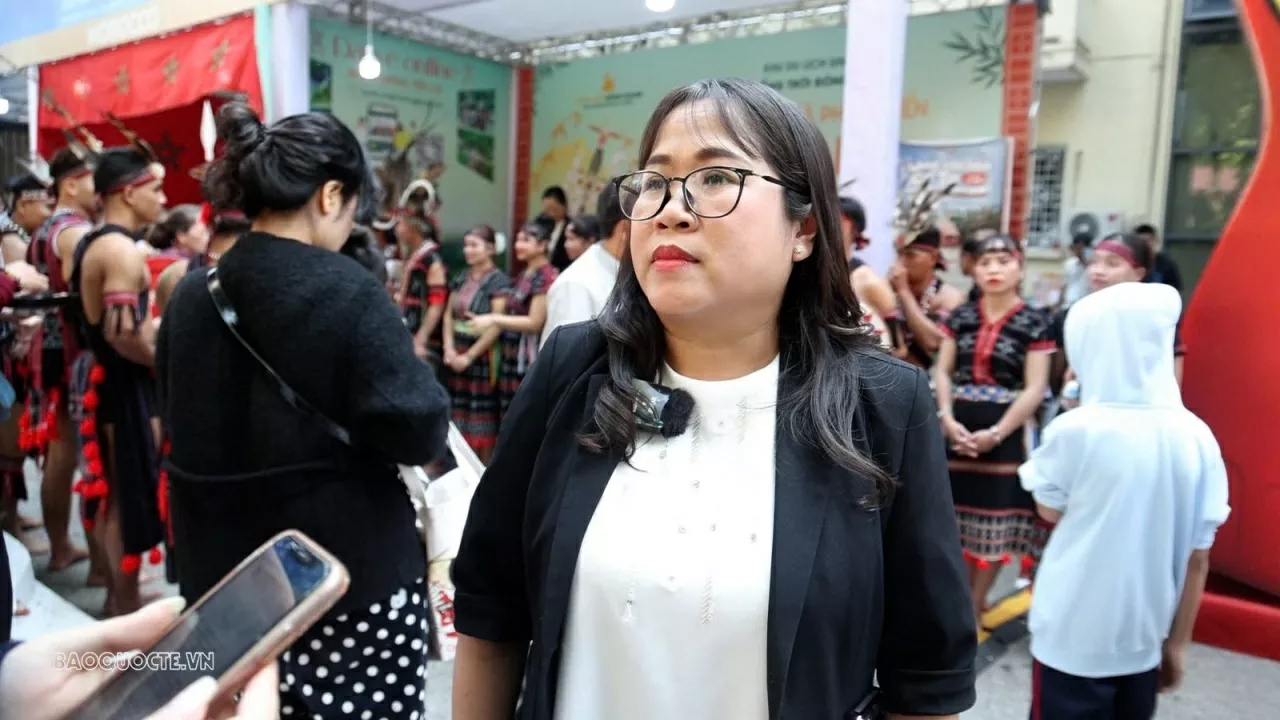 |
| Ms. Dang Pham Trieu Van, Director of the Dong Giang Heaven’s Gate Ecotourism Area, speaks to The World and Vietnam Report. (Photo: Thanh Long) |
“We have always wanted to share the most distinctive aspects of Co Tu culture with our international friends,” Ms. Dang Pham Trieu Van said.
In Co Tu cuisine, ingredients readily available in the mountains have given rise to dishes with a distinctive identity. These include rice cooked in bamboo tubes, grilled dishes infused with the natural flavours of the mountains and forests, and buffalo horn-shaped sticky rice cakes, also known as a quat in some communities, made from glutinous rice and wrapped in forest leaves. Through culinary techniques passed down within families and villages, these simple ingredients have become familiar flavours at family gatherings, festivals and occasions when honoured guests are welcomed.
Buffalo horn-shaped sticky rice cakes are particularly striking for their compact, slender and curved appearance, created by skilfully folding the wrapping leaves. To achieve the desired shape, the maker must carefully select and prepare the leaves before wrapping the right amount of glutinous rice. Once cooked, the soft, fragrant rice blends its rich flavour with the delicate aroma of the leaves, creating a simple delicacy imbued with the warmth of home. Although names and preparation methods may vary across regions and communities, the cakes evoke the diligence of women in mountainous areas and the close relationship between people and the natural resources around them.
Bamboo-cooked rice also tells a story of mountain life. Rice is placed inside bamboo tubes with just the right amount of water before being cooked over an open fire. Using readily available ingredients, local people have created a convenient meal for days spent working in upland fields, journeys into the forest and communal gatherings. Today, when introduced to visitors, bamboo-cooked rice offers a glimpse into the rhythm of mountain life, where the warmth of the hearth and the sharing of meals are closely intertwined.
Another dish highlighted by Ms. Dang Pham Trieu Van was zo ra, a traditional delicacy of the Co Tu people. Together with buffalo horn-shaped sticky rice cakes and bamboo-cooked rice, it enriches the community’s culinary heritage. Each dish has its own ingredients, preparation methods and distinctive flavours, reflecting knowledge accumulated over generations. Cuisine is therefore an integral part of culture, embedded in everyday life, in the way people make use of local produce and preserve their community’s customs.
Seen from this perspective, the Co Tu pavilion was more than a showcase of local specialities. It offered visitors an opportunity to discover the cultural world behind each dish, where nature provides the ingredients, people develop creative ways of preparing them, and communities preserve familiar flavours as part of their collective memory.
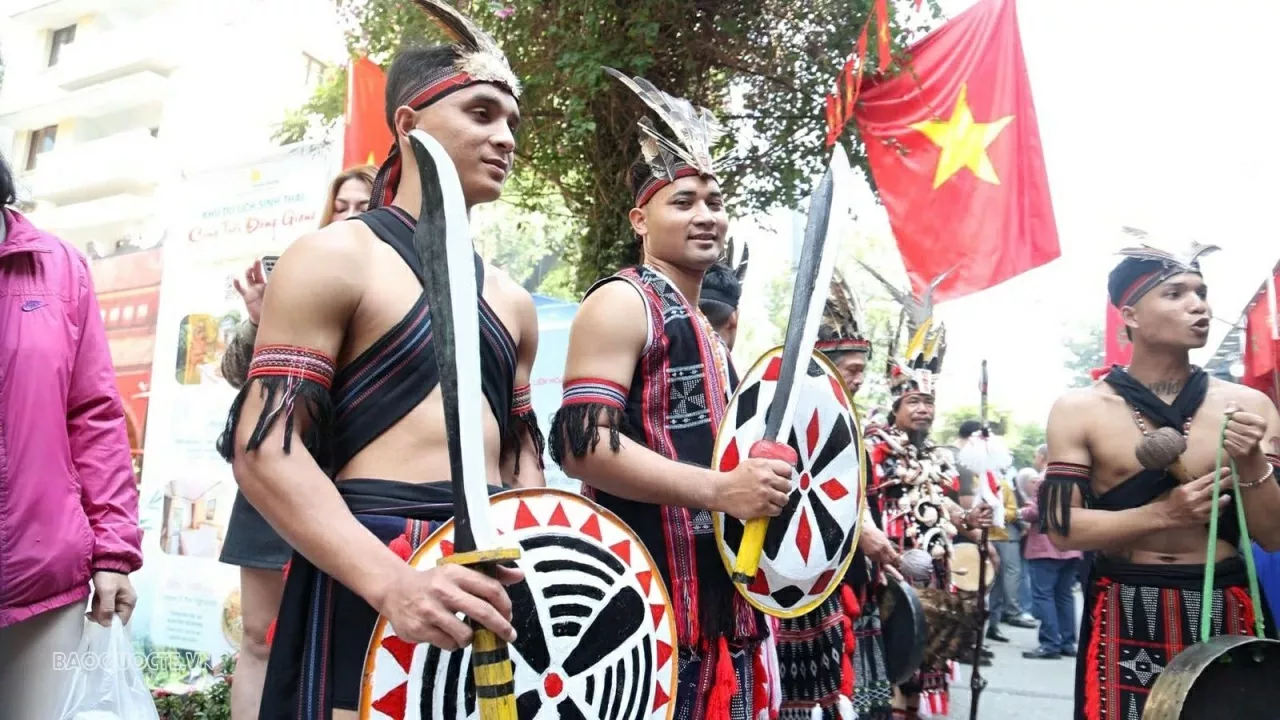 |
| The distinctive cultural heritage of the Co Tu people is vividly showcased at the International Culinary Culture Festival. (Photo: Thanh Long) |
Colours of brocade, rhythms of community life
While cuisine offers an accessible introduction to Co Tu culture, brocade textiles and traditional dances reveal other dimensions of the community’s spiritual and cultural life.
According to Ms. Dang Pham Trieu Van, in selecting exhibits and presenting the pavilion at the Festival, the delegation sought to preserve the warmth, sincerity and simplicity characteristic of the Co Tu people. In traditional Co Tu life, brocade weaving embodies patience, craftsmanship and artistic sensibility. By interlacing threads on a loom, artisans create textiles with distinctive designs, patterns and colours. Brocade features prominently in traditional attire, festivals and important community occasions. Each piece is the result of painstaking craftsmanship and reflects aesthetic traditions passed down from one generation to the next.
Alongside brocade weaving, bamboo and rattan basketry is closely intertwined with the everyday lives of the Co Tu people. Using bamboo, rattan and other natural materials, they create practical items for farming, forest journeys and domestic life. Behind every back basket, woven basket and handcrafted object lies a deep understanding of natural materials, careful selection and techniques refined over time.
These traditional crafts also face the challenge of adapting to modern life. As mass-produced goods become increasingly commonplace, preserving traditional craftsmanship requires more than a love of heritage. Artisans need opportunities to practise their skills, younger generations need to learn the crafts, and handmade products need to find a place in contemporary life. Initiatives that integrate traditional crafts with tourism, product showcases and hands-on experiences can provide fresh impetus for their continuation while creating livelihood opportunities for local people.
Another distinctive cultural symbol of the Co Tu people is the Tung tung da da dance. Accompanied by the rhythms of drums and gongs, the dancers’ footsteps and movements come together to create a lively atmosphere, expressing joy and aspirations for a peaceful and prosperous life. Recognised as national intangible cultural heritage, the dance is deeply rooted in the spiritual beliefs and communal life of the Co Tu people.
The dance is far more than a performance. It is a means through which the community expresses its beliefs, joy and sense of unity, often featuring at important traditional festivals. When presented at cultural exchange events, Tung tung da da brings the rhythms of village life to wider audiences. Yet its deeper significance remains rooted in the communal setting that has sustained the dance for generations.
Within this cultural landscape, the Guol, or traditional communal house, occupies an important place in the spiritual life of the Co Tu people. It serves as a gathering place where community members meet, discuss shared matters and hold traditional ceremonies and festivals. Its carved patterns, decorative motifs and architecture reflect the community’s worldview and the relationship between people, nature and their ancestors. A fuller understanding of Co Tu culture therefore requires looking at its dances, crafts and cuisine in relation to the living environment, customs and communal bonds that have shaped them.
Keeping cultural heritage alive in contemporary life
For Mr. Briu Chon, a member of the Co Tu ethnic community attending the International Culinary Culture Festival 2026, the opportunity to showcase his people’s culture at the event was a great honour. He hopes that more people will take an interest in discovering Co Tu culture and the land the community calls home.
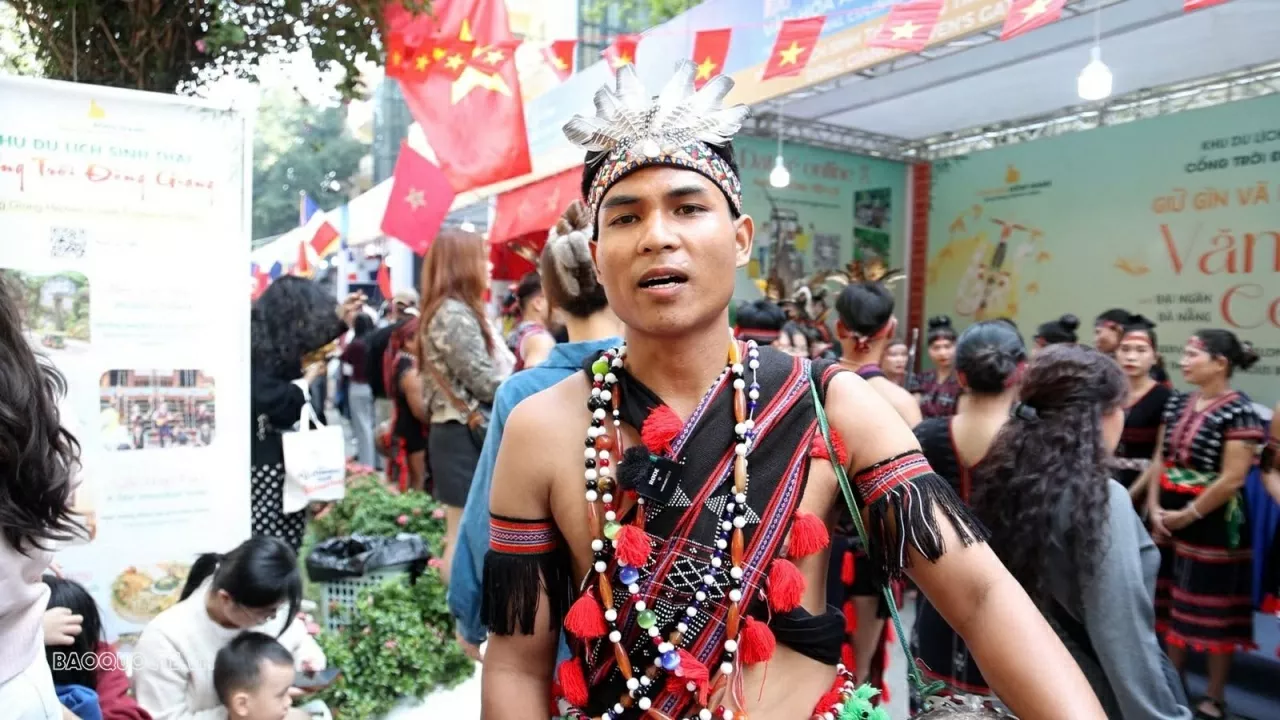 |
| Mr. Briu Chon, a member of the Co Tu ethnic community, speaks to The World and Vietnam Report. (Photo: Thanh Long) |
“We are very happy and honoured to be here in the capital and to share our ethnic culture with all visitors,” Mr. Briu Chon said.
His simple words capture the significance of cultural encounters. When a community has the opportunity to tell its own story, the values that have long been part of local life gain greater recognition and appreciation, creating further opportunities for their preservation. For the Co Tu people, promoting their culture is also a way of bringing traditional dishes, crafts, dances and customs beyond their villages to those who have never visited the mountainous areas of western Da Nang.
However, participation in cultural exchange events is only one part of the journey towards meaningful cultural preservation. More importantly, these traditions must continue to thrive within the community itself. Elders need to pass their skills on to younger generations, artisans need opportunities to practise their crafts, traditional dishes should remain part of family gatherings, and dances and rituals must be sustained within their appropriate cultural settings. When heritage remains closely connected to everyday life and brings tangible benefits to local people, its preservation gains a firmer foundation.
Cultural tourism can contribute to this journey when developed with respect for local communities. Experiences at Dong Giang Heaven’s Gate, from discovering brocade weaving and basketry to sampling traditional cuisine and enjoying cultural performances, can help visitors engage with Co Tu culture through multiple senses. More importantly, each experience should foster a deeper understanding of the people, their customs and cultural context, rather than simply offering an appreciation of their outward beauty.
Ms. Dang Pham Trieu Van hopes that the distinctive cultural features of every country and region will serve as bridges, helping people from around the world better understand one another and grow closer. This was also the message conveyed by the Co Tu pavilion through the local produce and cultural heritage showcased at the Festival. In a setting where diverse cultures come together, differences need not create distance, but can instead become a starting point for curiosity, sharing and empathy.
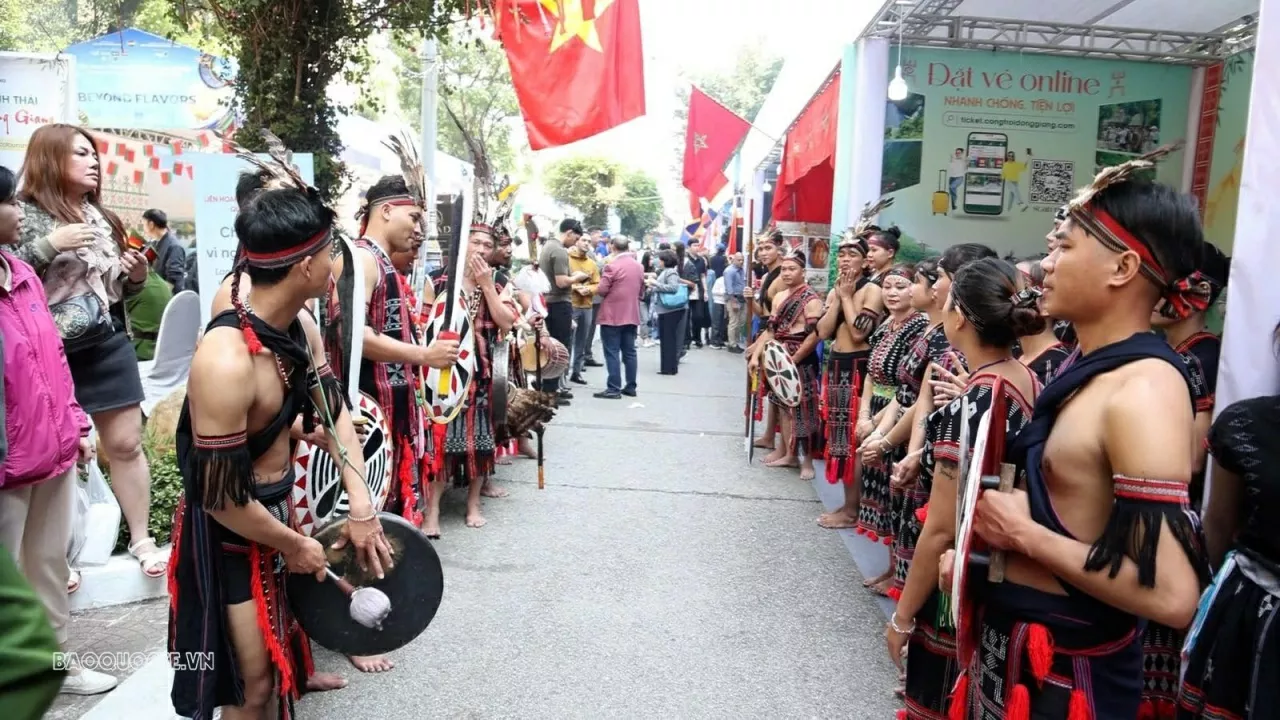 |
| The pavilion of the Co Tu ethnic community from Da Nang. (Photo: Thanh Long) |
From leaf-wrapped buffalo horn-shaped sticky rice cakes and fragrant bamboo-cooked rice to colourful brocade textiles and dances accompanied by the resonant sounds of gongs, the story of the Co Tu people is told through the most familiar elements of their daily lives. It is the story of a community deeply connected to the mountains and forests, cherishing its ancestral heritage and striving to preserve its identity amid the changing rhythms of modern life.
At the International Culinary Culture Festival, the cultural stories of the Co Tu people come alive in the flavours of every dish and the movements of every dance. When these stories are heard with genuine appreciation, the majestic Truong Son mountains no longer seem distant to international friends. Instead, they become familiar through the people themselves and the simple yet enduring values that embody the very soul of Co Tu culture.