


Building international media literacy: From civic awareness to professional competence
WVR - In a world where a fifteen-second video can shake the reputation of an entire brand, understanding how information operates across borders is no longer the exclusive domain of journalists or diplomats. It is a vital skill for every knowledgeable worker, according to Dr. Ly Thi Hai Yen, from Diplomatic Accademy of Vietnam. The World and Vietnam Report is pleased to present her article.
Latest
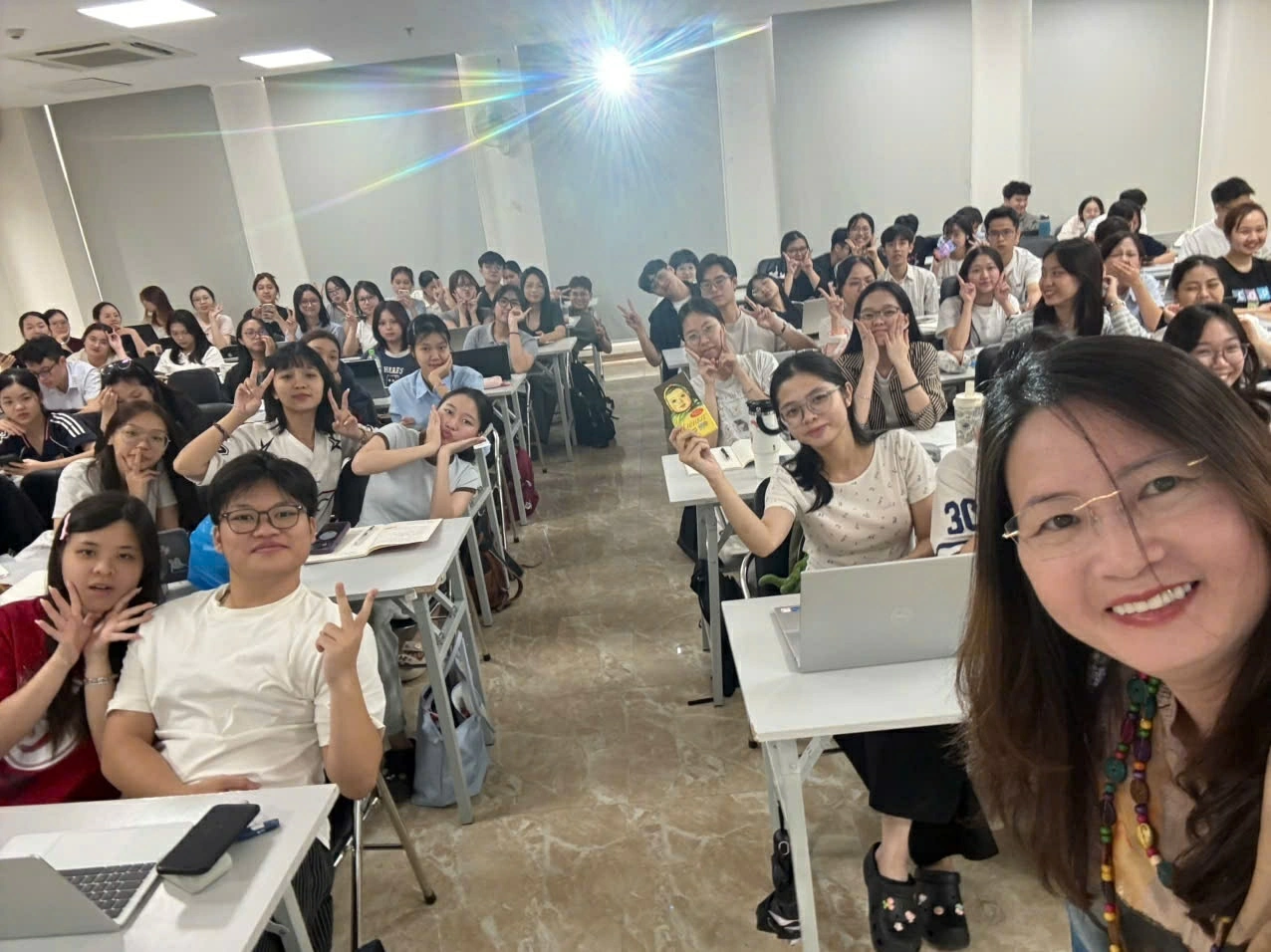 |
| The author with students. (Photo: L.Y) |
When international media is mentioned, many still envision it as the realm of foreign correspondents, external information officers, or students at journalism and diplomacy schools. This perception was once reasonable when international information flowed through a limited number of official channels.
However, today, when a software engineer in Hanoi, a durian farmer in Dak Lak, or a medical student in Hue can become both a sender and receiver of global information with just a phone, the question is no longer “who should learn to have international media skills,” but “who can stand outside of it.” And when no one can truly stand outside, the concern is how each person can maintain independent awareness and have the reflective ability to avoid being manipulated by international media.
Borders have shifted
Researcher Benedict Anderson, in his book Imagined Communities (first published in 1983), described a nation as an “imagined community,” bounded by borders beyond which lie other nations.
In the book International Communication: A Media Literacy Approach, Silverblatt and Zlobin (2004) pointed out that technological innovations like the Internet and telecommunications satellites have blurred these traditional borders. More than twenty years later, this observation is truer than ever: digital platforms, content recommendation algorithms, and generative artificial intelligence have made it so that any message, regardless of origin, can reach anyone.
It is noteworthy that physical borders can no longer constrain human imagination. Understanding the world lies within each person's awareness: between those who can read and understand international messages and those who only passively receive them.
Access does not mean “understanding”
In English, the word “literacy” originally referred to the ability to read and write. When combined into “media literacy,” often translated into Vietnamese as media competence, this concept expands: Knowing how to read no longer stops at recognizing letters but involves decoding media messages. A person can watch hundreds of news reports daily and still be “illiterate” in this sense, just as holding a book does not guarantee the ability to read it. Access is only a necessary condition; understanding is the sufficient one.
This distinction is also central to Silverblatt and Zlobin's (2024) book. According to the authors, universal access to media should not be confused with media competence; those with competence maintain a critical distance to decide which content to accept and how to interpret information. Today, this competence is formed not just through courses but primarily through individual awareness of information reception.
The young generation today is not lacking in information. They have language skills, read international news, watch foreign films, and follow Republic of Korean artists or American content creators daily. What needs enrichment is the ability to question: Who created this message, what interests does it serve, through whose cultural lens is it framed, and what has been omitted? Without this ability, the vast amount of information does not make people more knowledgeable but rather makes them more susceptible to manipulation.
A small exercise I often assign to students in the U.S. Media Communication course illustrates this quite clearly. They choose two articles on the same topic, such as climate change, from two American newspapers with different political leanings—one leaning towards the Republican Party and the other towards the Democratic Party—and compare them.
The same event, but one side focuses on damage and responsibility for action, while the other emphasizes economic costs and the uncertainty of forecasts; the sources cited, illustrative images, and even the order of information presentation differ. Many students are surprised because they had never noticed these differences before and realize they had been passively consuming news.
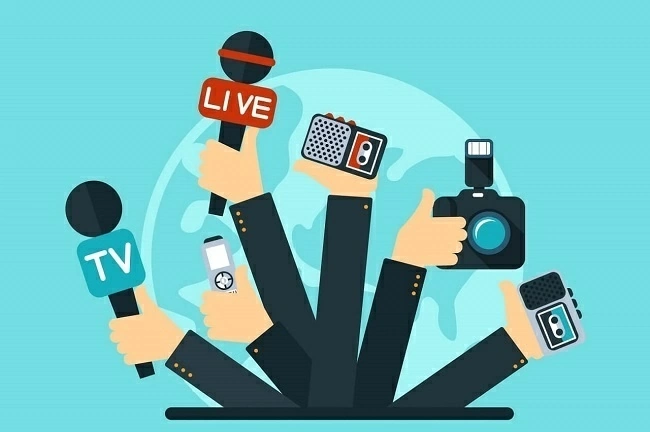 |
| The seamless integration of traditional and digital media in a global network. (Illustrative photo: Internet) |
For most people, it is not necessary to go through courses; simply paying attention to news can teach many meanings behind each line of news. That is when media literacy gradually forms. And this will awaken us to the dangers of fake news at a much higher alert level than in previous decades.
More than twenty years ago, after the 9/11 events, a rumor spread through the Internet in Indonesia that 4,000 Jews were forewarned to take the day off at the World Trade Center on September 11, 2001, implying that Jews were behind the attack. This was a completely fabricated conspiracy theory, yet many believed it simply because it was “on the internet.” If those internet lines back then were replaced by AI-generated fake videos today, the risks posed by such fake news would multiply many times over.
Understanding the world linked to choosing peace
Authors Art Silverblatt and Nikolai Zlobin in International Communication: A Media Literacy Approach cite that before 9/11, international news accounted for only 6% of news on American television, and studies showed that the less Americans knew about the world, the more they tended to support sanctions over diplomacy against challenging countries.
This lesson is not only true for the United States. Everyone needs the ability to evaluate information from social media and unreliable sources, rather than passively accepting it. A generation of citizens who view the world through a one-dimensional lens, or through an algorithmic bubble within their own circle of reception, will easily fall into prejudice, believe in fake news, and be incited by extreme nationalism on social media.
Conversely, those who verify and compare multiple international news sources will see their own country's perspective, understand why others think differently, and choose dialogue over confrontation. In other words, international media is not just a professional skill but also part of a culture of peace formed from each young citizen until they become policymakers.
The competence of a new ceneration
If international media competence is a civic foundation, it is also a specific professional skill in various fields.
In economics and business, Vietnamese enterprises are exporting to hundreds of markets. Misinformation about food safety, an advertising campaign inadvertently offending local culture, or a boycott wave on foreign social media can erase years of brand-building achievements. In such an environment, the advantage often belongs to businesses that understand how international audiences receive messages, not just how good their products are.
In finance and banking, trust is a core asset and also the most vulnerable to rumors. Many countries, including Vietnam, have witnessed bank runs starting from a single false online rumor. When global capital markets are interconnected, a rumor originating elsewhere can also affect domestic financial stability, and those who understand how rumors form and spread are often the calmest and most timely responders.
For the legal profession, trade, investment, or sovereignty disputes today occur on two fronts: the courtroom and international public opinion. A strong legal argument in the courtroom can have a very different meaning when recounted in foreign media, and the gap between these interpretations can sometimes affect the outcome as much as the verdict itself.
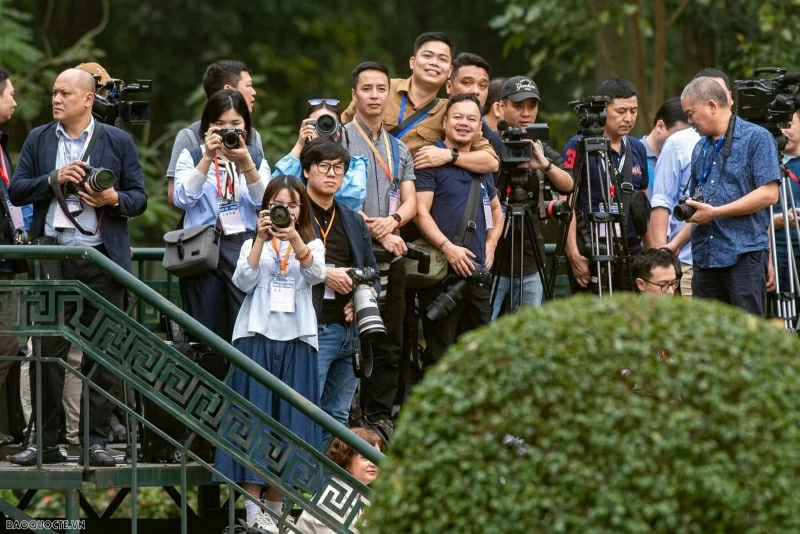 |
| If international media literacy is a foundation of civic competence, it is also a specific professional competency in every field.(Photo: WVR) |
In science, technology, and information technology, those designing algorithms, digital platforms, and AI systems are shaping the global flow of information, often in ways they themselves have not fully envisioned. A content recommendation feature that operates smoothly in one market can create unexpected social consequences in another culture, and understanding international media helps technologists foresee these outcomes.
In healthcare, the COVID-19 pandemic has demonstrated what the World Health Organization calls an “infodemic”: misinformation about vaccines and treatments spreads as quickly as the virus, often originating from abroad. In this context, healthcare professionals who can communicate risks and explain in relatable language have become an important line of defense, no less than hospitals.
In culture and the arts, this is perhaps the most vivid example. The Republic of Korean cultural wave shows that music, cinema, and cuisine can become soft power tools, elevating national image and boosting tourism and exports.
In recent years, many Vietnamese artists' music products have been well-received by international audiences. To turn these isolated successes into a sustainable cultural industry, what is needed is not only talent or the right policies but also an understanding of how a Vietnamese story is told, heard, and interpreted in other cultures.
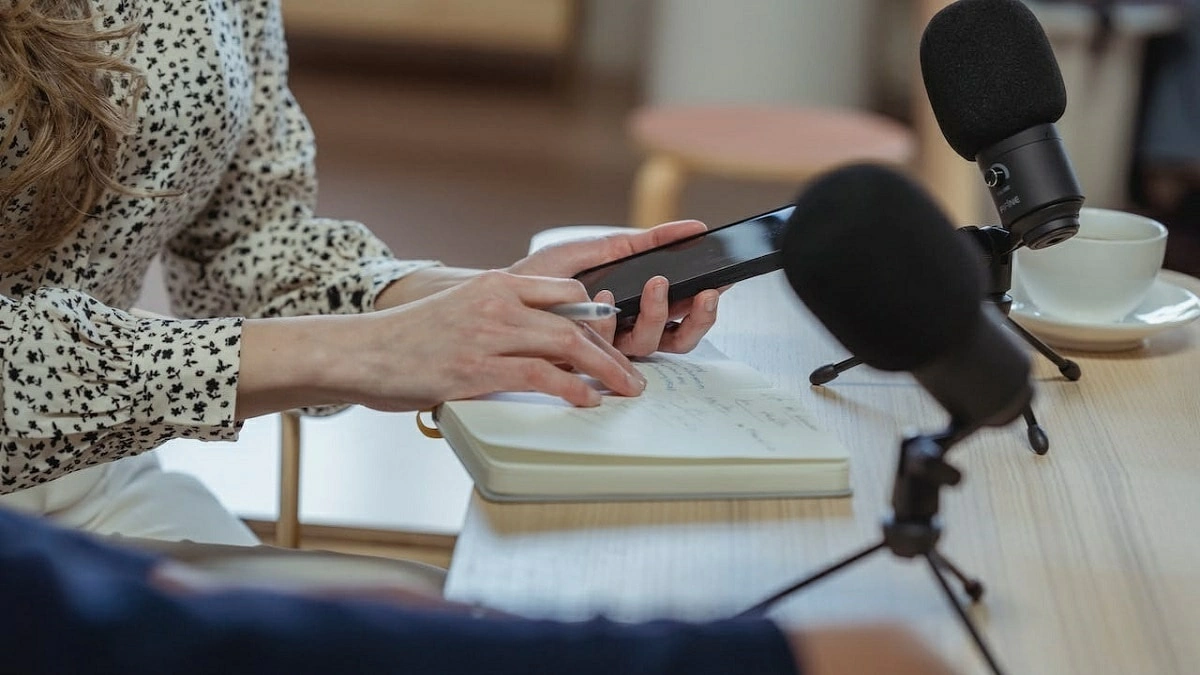 |
| Internet)International media literacy is also a specific professional competency in each field. (Illustrative photo: Internet) |
Policy foundations and international experience
This requirement does not only stem from academic observation. Resolution No. 59-NQ/TW dated January 24, 2025, of the Politburo on international integration in the new situation identifies integration as a national endeavor, not just for the diplomatic sector.
The Politburo’s Conclusion No. 57-KL/TW, issued in 2023 on improving the quality of external information work, also emphasises mobilizing the broad participation of social forces. When every citizen and every business becomes an “ambassador” for the country’s image in cyberspace, international media literacy needs to be widely cultivated rather than confined to a few specialized fields.
Globally, UNESCO laid the foundation for media education in 1982 by bringing together educators, media professionals, and researchers from 19 countries in Grünwald (Germany) to adopt the Grünwald Declaration on Media Education, a document calling for the inclusion of this content in the education system from preschool to adult education.
To date, the organization continues to promote media and information literacy frameworks for all educational levels. Finland, a country that has consistently led the European Media Literacy Index, does not teach this content as a separate subject but integrates it into various subjects, from language and history to mathematics. This experience suggests that the important thing is not to add another module to an already overloaded curriculum but to build a pervasive competence.
Steps to take
The question “why is international media literacy necessary” might need to be reframed: What young people need is not necessarily in-depth knowledge of media theory but a foundational competence consisting of three hierarchical layers: First, an understanding of the cultural, political, and economic contexts behind different media systems; Second, the ability to critically read cross-border messages. Third, the skill to tell one's own story, that of one's industry, and one's country in a way that international audiences understand and believe.
 |
| Understanding international media is becoming increasingly indispensable. (Illustrative photo: Internet) |
Universities and non-specialized programs in international media can implement a combined approach: A concise foundational module in the general knowledge block, along with international media scenarios integrated into specialized modules, such as brand crisis in management courses, market news in finance courses, or strategies for bringing cultural products to the world in arts programs.
To become an informed and discerning recipient of information, an understanding of international media is increasingly indispensable. In an era when a country’s image is shaped every day on the screens of billions of people, international media literacy should be regarded as part of the qualities of a global citizen and, therefore, as everyone’s responsibility.
* Dr. Ly Thi Hai Yen is currently an expert in teaching politics and international media at the Vietnam Diplomatic Academy (DAV). She has experience in both practical journalism and research-teaching activities.