





Border management cooperation as evidence of Vietnam-Laos trust and depth
WVR - Vietnamese Ambassador to Laos Nguyen Minh Tam affirmed that the greatest achievement of Vietnam-Laos border management cooperation is not only maintaining a peaceful and stable border line but also establishing an effective coordination mechanism and strong trust between the functional forces, local authorities, and people on both sides.
Latest
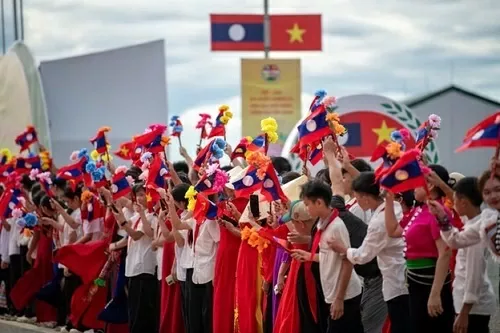 |
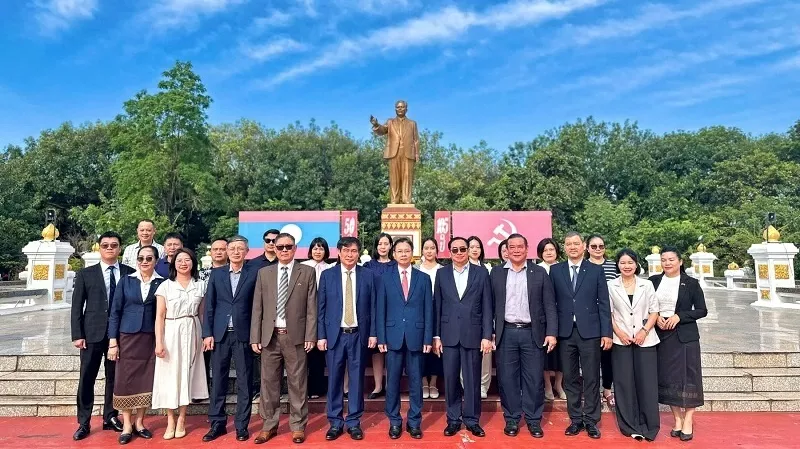
| The 3rd Vietnam-Laos Border Defense Friendship Exchange on July 9. (Photo: Ninh Co) |
Ambassador Nguyen Minh Tam, could you highlight the key aspects of Vietnam-Laos border management cooperation in recent times?
It can be said that border management cooperation has always been one of the areas that most clearly reflects the depth and level of trust in Vietnam-Laos relations. Over the years, the two countries have not only coordinated to firmly manage and protect the shared border line of over 2,300 km but have also gradually developed the border area into a space of peace, friendship, cooperation, and development. These results are even more significant as the two countries actively implement the concretization of the “strategic linkage” relationship, in which bilateral cooperation and addressing border-related issues continue to be areas of special interest to both sides.
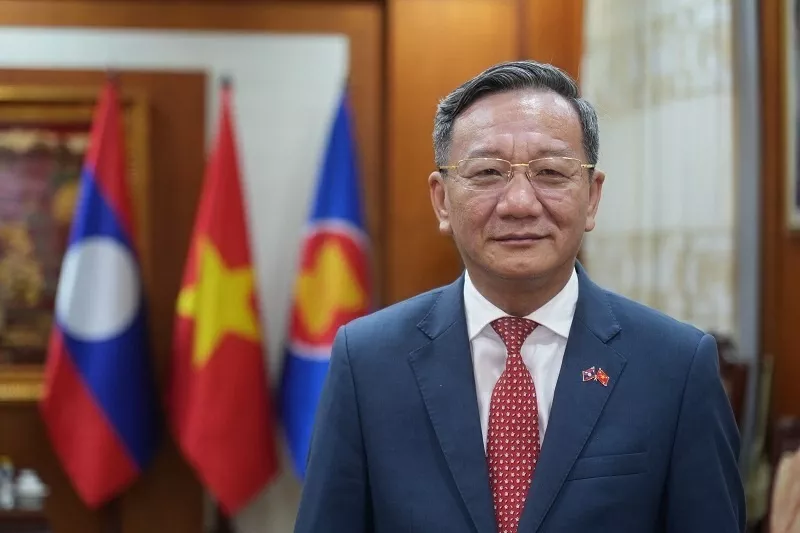 |
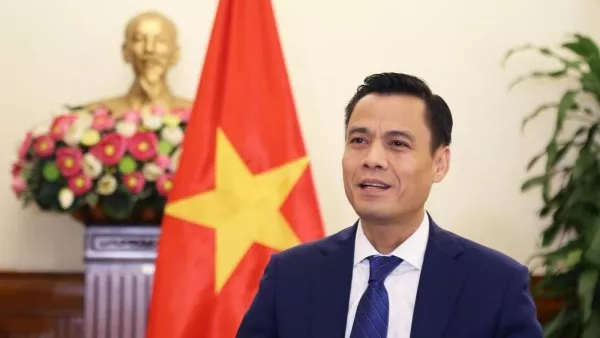
| Vietnamese Ambassador to Laos Nguyen Minh Tam. (Photo: Chu Van) |
First of all, the two countries continue to consolidate and effectively promote the legal framework on borders. After completing the work of increasing density, embellishing the national border marker system, Vietnam and Laos have effectively implemented the Protocol on Borderlines and National Border Markers, the Agreement on Border Management Regulations and Land Border Gates in 2016, along with related agreements. These legal documents on borders not only create a solid legal basis for border management and protection but also serve as a foundation for the functional forces and local authorities on both sides to coordinate in promptly handling arising issues, in the spirit of respecting signed treaties and agreements and maintaining the great friendship and special solidarity between the two countries.
Along with perfecting the legal framework, the coordination mechanisms between the two sides are increasingly becoming substantive. The two countries regularly maintain meetings of the Border Delegation, dialogues between border management and protection forces at all levels, and information exchange mechanisms between functional agencies from the central to local levels. Through these mechanisms, many arising issues are exchanged and handled right from the grassroots level in the spirit of respecting the signed legal documents on borders, understanding, and close coordination, preventing any impact on the special solidarity relationship between the two countries.
On that basis, the work of managing and protecting the border line and the national border marker system is implemented comprehensively and effectively along the entire line. Bilateral patrol activities, border line inspections, national border marker checks, information exchange, and coordination between the border management and protection forces of the two countries are regularly maintained, contributing to the timely detection and handling of arising issues and ensuring the uniform implementation of legal documents on borders.
These results are clearly demonstrated by the fact that the entire Vietnam-Laos border line has basically remained stable in recent years; the national border marker system is managed and protected safely; arising issues are promptly exchanged and handled by both sides right from the grassroots level, preventing the formation of hotspots or complex disputes. This is evidence of the effectiveness of the coordination mechanisms that the two countries have persistently built and maintained.
Additionally, cooperation in ensuring security and order in the border area continues to be strengthened. The two countries always closely coordinate in combating drug crimes, cybercrime, human trafficking, smuggling, commercial fraud, illegal immigration, and transnational crimes. Information exchange, coordination in verification, investigation, and handling of cases are increasingly timely and effective. Notably, all arising issues are exchanged by both sides in the spirit of mutual understanding and respect, complying with legal documents on borders, thereby contributing to consolidating trust and maintaining a peaceful and stable environment along the entire border line between the two countries.
Another important result is that border management and protection work is increasingly tied to the goal of developing the border area. The two countries continue to coordinate in upgrading the border gate system, improving infrastructure connectivity, facilitating immigration, trade, and exchanges between localities sharing a border. The twinning models between provinces and provinces, villages and villages, residential clusters, and border protection forces on both sides continue to be effectively maintained, contributing to strengthening solidarity, consolidating trust, and creating a solid social foundation for border management and protection.
Alongside this, the work of propaganda and dissemination of border laws is always given attention. Local authorities and functional forces on both sides regularly coordinate to propagate legal documents on borders, mobilize people to strictly comply with border management regulations, actively participate in protecting the border line, border markers, and maintaining security and order in the border area. This is a long-term meaningful factor, as the people are both the beneficiaries of cooperation achievements and the direct force contributing to maintaining a peaceful, friendly, cooperative, and developing border line.
It can be said that the greatest achievement of Vietnam-Laos border management cooperation is not only maintaining a peaceful and stable border line but also establishing an effective coordination mechanism and strong trust between the functional forces, local authorities, and people on both sides. This will continue to be an important foundation for the two countries to build the Vietnam-Laos border line into a border of peace, friendship, cooperation, and development, contributing to deepening the great friendship, special solidarity, comprehensive cooperation, and strategic linkage between the two countries.
 |
| The great friendship, special solidarity, comprehensive cooperation, and strategic linkage between Vietnam and Laos is a valuable asset of the two nations. (Photo: Chu Van) |
How is border economic cooperation between the two countries being promoted, and what significance does border economy hold in contributing to building a peaceful, friendly, cooperative, and developing Vietnam-Laos border, Ambassador?
For Vietnam and Laos, the border is not only a territorial boundary but also a space for connection and joint development. Over the years, alongside firmly managing and protecting the border, the two countries have always regarded the development of the border economy as one of the important drivers to strengthen friendship, improve people's lives, and build a peaceful, stable, cooperative, and sustainably developing border line.
A firmly protected border is not only secured by the system of border markers or border management forces but also by the shared development benefits between the two sides. When border residents have stable livelihoods, businesses have conditions to expand cooperation, and localities benefit from economic connectivity, peace, stability, and friendship become the inherent interests of the border community itself. This is also the most sustainable foundation for the two countries to jointly manage, protect, and promote the value of the shared border line.
In recent years, Vietnam and Laos have been promoting border economic cooperation in a more substantive and effective manner. The two countries actively implement the Vietnam-Laos Trade Agreement and the Border Trade Agreement; coordinate in upgrading the border gate system, developing border gate economic zones, enhancing logistics connectivity, and facilitating import-export and immigration activities. At the same time, many new cooperation mechanisms such as local currency payments (VND - LAK), cross-border QR payment connectivity, electronic customs, and digital transformation in border gate management are gradually being implemented, contributing to reducing transaction costs and creating more favorable conditions for businesses and people of both countries.
What is more significant is the clear shift in the cooperation mindset between the two countries. If previously, border economy was mainly associated with cross-border trade activities, now the two countries are aiming towards cross-border development linkage. The border is not only a place where goods pass through but is gradually becoming a shared development space, where localities on both sides exploit their advantages to form production, processing, trade, logistics, and service linkages. This is a direction consistent with the policy of strengthening strategic linkage between the two countries in the new development phase.
To realize this orientation, the two countries are prioritizing the promotion of strategic infrastructure connectivity projects. Projects such as the Vientiane - Vung Ang railway, the Hanoi - Vientiane expressway, upgrading international border gates, developing East-West economic corridors, upgrading roads connecting the two sides of the border, border gate trade economic zones, border roads, and developing residential clusters not only facilitate the circulation of goods and people's travel but also expand the development space for the border area. For Laos, this is an important condition to leverage the advantage of a landlocked country through connection with Vietnam's seaport system; for Vietnam, it is also an opportunity to expand economic linkage with Laos and the region further.
Along with transportation infrastructure, digital infrastructure will become a new driver of the border economy in the coming time. Expanding digital payments, connecting customs data, smart logistics, and online public services not only help shorten clearance times, reduce costs for businesses but also contribute to enhancing the competitiveness of the two countries' border gates and border gate economic zones. This is an area with much potential for Vietnam and Laos to continue to closely coordinate in the future.
These efforts are yielding positive results. In 2025, bilateral trade turnover reached nearly 3 billion USD, an increase of over 30% compared to the previous year; in which trade through the border area continues to play an important role. In the first months of 2026, Vietnam's investment in Laos continued to increase sharply with 13 new projects, with a total registered capital of about 306 million USD; accumulated to date, Vietnam has 289 valid projects in Laos with a total registered capital of nearly 7 billion USD. These figures show that economic cooperation between the two countries is continuing to develop substantively and is increasingly interconnected.
More important than trade or investment figures, border economic cooperation is contributing to building a sustainable social foundation for Vietnam-Laos relations. When infrastructure is better connected, trade and investment develop, the lives of border residents improve, and localities on both sides benefit from cooperation, peace, stability, and friendship are not only common goals of the two States but also become the inherent interests of the border community itself. This is also an important condition for the two sides to more effectively coordinate in managing, protecting the border line, combating transnational crimes, and maintaining a stable environment for development.
With the high political determination of the leaders of the two Parties and States, along with the close coordination between ministries, sectors, localities, and the business community, the border economy will continue to be one of the important drivers promoting Vietnam-Laos relations to develop more substantively and effectively. The goal of raising bilateral trade turnover to 5–10 billion USD in the near future is entirely feasible if both sides continue to effectively leverage the complementary nature of the two economies, accelerate infrastructure connectivity, and facilitate trade, investment, and digital transformation. Then, the border area will not only be a place of territorial connection but truly become a space of cooperation, development, and shared prosperity, making a practical contribution to further deepening the great friendship, special solidarity, comprehensive cooperation, and strategic linkage between Vietnam and Laos.
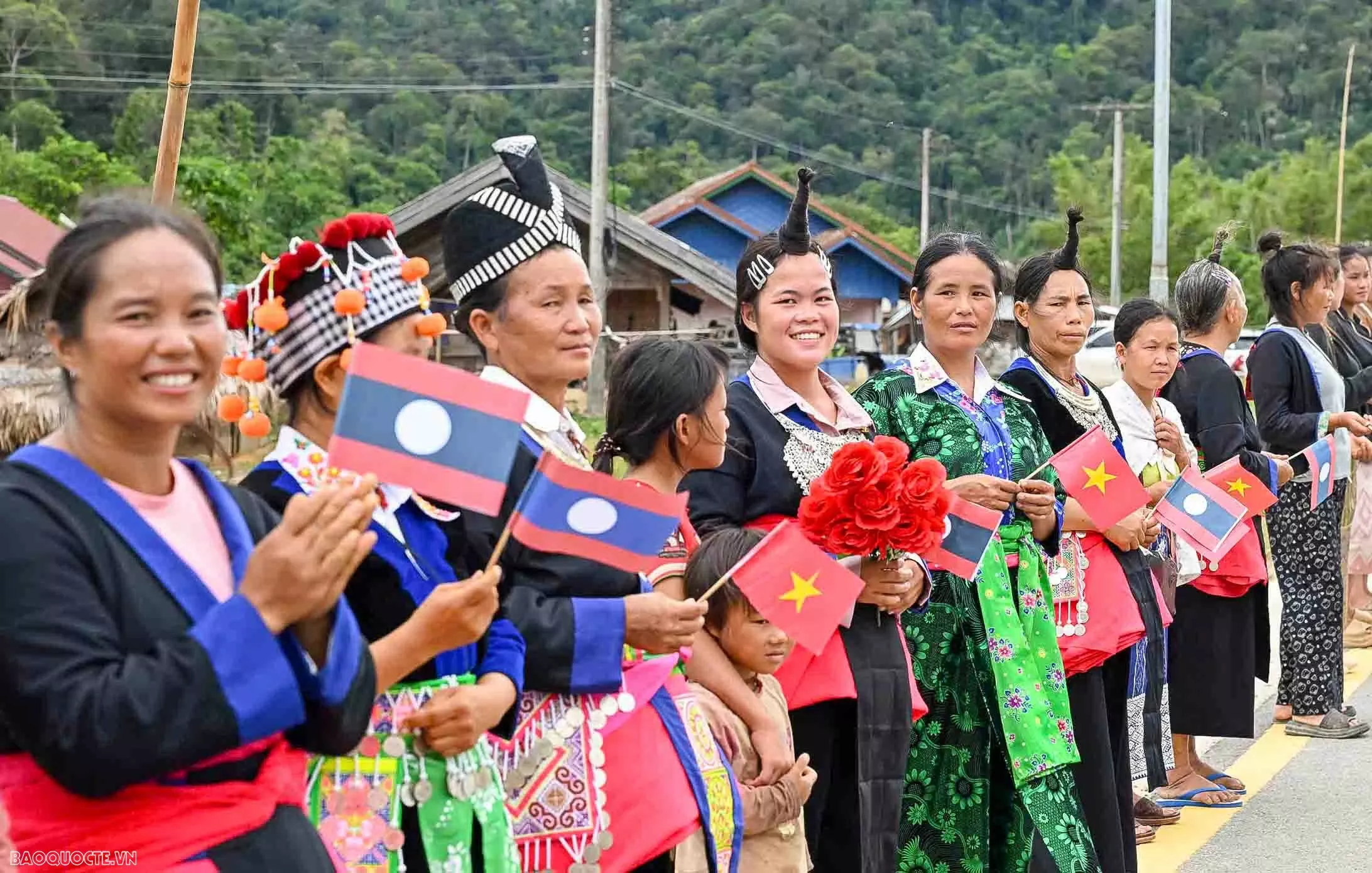 |
| Vietnam and Laos share a border of over 2,300 km, connecting 9 provinces/cities of Vietnam with 10 provinces of Laos. |
Ambassador, could you share the measures to effectively promote friendly exchanges between the people of the Vietnam-Laos border provinces, thereby fostering pride and a sense of responsibility in preserving and promoting the peaceful, friendly border between the two countries?
Vietnam and Laos share a border of over 2,300 km, connecting 9 provinces/cities of Vietnam with 10 provinces of Laos. Over the years, friendly exchanges between the people in the border area have always been one of the important foundations of the bilateral relationship. The bond between localities, communities, and grassroots forces has contributed to nurturing the great friendship and special solidarity between Vietnam and Laos and maintaining a peaceful, stable, cooperative, and developing border line. To continue to effectively promote this work in the future, it is necessary to focus on several key areas:
First, for exchange activities to continue to be effective in the new phase, it is essential to innovate the content and organization forms in a practical direction, with people at the center. Besides traditional exchange activities, it is necessary to expand exchange programs between youth, teenagers, women, businesses, schools, border protection forces, and mass organizations of both sides, as well as youth volunteer activities. The important thing is that each activity must create more opportunities for people to meet, understand each other better, and jointly participate in developing the border area.
Second, it is necessary to continue to enhance the effectiveness of propaganda and education on the tradition of great friendship, special solidarity, comprehensive cooperation, and strategic linkage between Vietnam and Laos, as well as the significance of building a peaceful, friendly, cooperative, and developing border line. The content of propaganda should be suitable for each target group, especially the younger generation, so that each person not only understands the historical value of the bilateral relationship but also clearly sees their responsibility in protecting the border line, border markers, and maintaining a peaceful, stable environment in the border area.
Third, it is necessary to continue to effectively promote the twinning models between provinces, communes, villages, residential clusters, and border protection forces on both sides. Practical experience over the years has shown that this is one of the most effective cooperation models, contributing to strengthening trust, supporting socio-economic development, and coordinating in promptly handling arising issues right from the grassroots level. The important thing is that twinning activities need to be regularly maintained, with practical content suitable to the needs of each locality, so that cooperation truly comes to life.
Fourth, friendly exchanges will be more sustainable when linked with development. Therefore, along with enhancing cultural, sports, and people-to-people exchange activities, the two countries need to continue to invest in border area infrastructure, facilitating trade, tourism, education, healthcare, and cooperation activities between localities. When people's lives improve and development opportunities expand, each person will become a natural bridge of Vietnam-Laos friendship and be more active in maintaining a peaceful, stable border line.
Fifth, another important content is to better promote the role of local authorities, border protection forces, and political-social organizations in organizing exchange activities. At the same time, it is necessary to encourage the proactive participation of people, businesses, and social organizations, as this is the decisive factor for cooperation programs to have long-lasting vitality and bring about substantial effectiveness.
With the attention of the leaders of the two Parties and States, along with the close coordination of ministries, sectors, and localities on both sides, friendly exchange activities in the border area will continue to be implemented more practically and effectively. More importantly, each exchange activity will contribute to fostering the bond between the people of the two countries, especially the younger generation, so that each border resident is not only a beneficiary of cooperation achievements but also a direct participant in maintaining a peaceful, friendly border and jointly nurturing the great friendship, special solidarity, comprehensive cooperation, and strategic linkage between Vietnam and Laos to develop more sustainably.
Ambassador, could you specify the specific orientations of the Vietnamese Embassy in Laos in border and territorial work to promote practical and effective Vietnam-Laos border cooperation, bringing practical benefits to the people in the border areas of the two countries?
In line with the high-level leadership's policy of the two Parties and States on building a peaceful, friendly, stable, cooperative, and sustainably developing Vietnam-Laos border line, the Vietnamese Embassy in Laos will continue to play its role as a bridge, closely coordinating with the functional agencies of the two countries to effectively implement border management and protection work in the new phase. The overarching goal is to both manage and protect the border line well and create favorable conditions for the border area to develop, thereby bringing practical benefits to the people of both countries.
First, the Embassy continues to closely coordinate with the National Border Committee, the Ministry of Foreign Affairs of Laos, border management and protection forces, and the authorities of border provinces to effectively implement the legal documents on borders signed by the two countries; maintain information exchange, consultation, and coordination in promptly handling arising issues in the spirit of respecting international law, bilateral agreements, and the great friendship and special solidarity between Vietnam and Laos.
Along with that, the Embassy will actively promote border cooperation linked with socio-economic development, supporting connectivity between localities, facilitating trade, investment, transportation, tourism, and people-to-people exchanges; at the same time, coordinate in addressing difficulties in immigration, import-export activities, and border gate connectivity. With the spirit of managing well to develop and through development, continue to consolidate a peaceful, stable environment in the border area.
The Embassy will also continue to focus on promoting exchange activities between localities, twinning models, and cooperation between the border protection forces of the two countries; at the same time, coordinate in propagating and disseminating legal documents on borders, raising awareness among the people, especially the younger generation, about the tradition of special solidarity between Vietnam and Laos and the responsibility to jointly maintain a peaceful, friendly border line.
In the context of the two countries implementing the cooperation framework of “great friendship, special solidarity, comprehensive cooperation, strategic linkage,” the Embassy will continue to proactively perform advisory work, strengthen connectivity between ministries, sectors, and localities of the two countries, contributing to effectively implementing cooperation programs on infrastructure connectivity, digital transformation in border gate management, combating transnational crimes, and responding to non-traditional security challenges. The Embassy believes that, with the close coordination of functional agencies and the companionship of authorities and people on both sides, the Vietnam-Laos border line will continue to be a symbol of peace, friendship, and cooperation, making a practical contribution to the development of each country as well as the special solidarity relationship between Vietnam and Laos.
Thank you very much, Ambassador!