

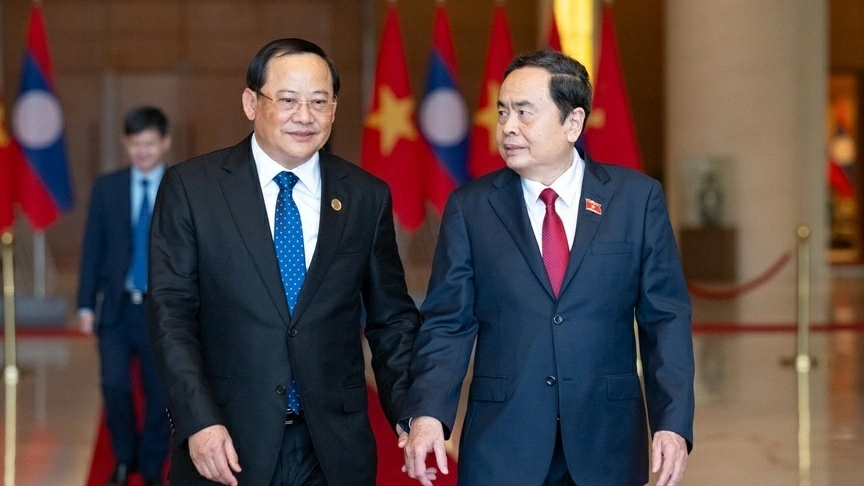
Lao NA President's visit to Vietnam: Highlighting strategic inheritance and continuity, strengthening bilateral ties
WVR - On the occasion of Lao National Assembly President Sonexay Siphandone and his spouse's official visit to Vietnam (November 2-5), Vietnamese Ambassador to Laos Nguyen Minh Tam shared with The World and Vietnam Report about the focus of the visit as well as the role of parliamentary cooperation in the overall Vietnam-Laos relationship.
Latest
Ambassador, could you elaborate on the significance and main content of the official visit to Vietnam by Lao National Assembly President Sonexay Siphandone?
At the invitation of the President of the National Assembly of the Socialist Republic of Vietnam Tran Thanh Man and his spouse, the President of the National Assembly of the Lao People's Democratic Republic Sonexay Siphandone and his spouse are making an official visit to Vietnam from November 2-5, 2026.
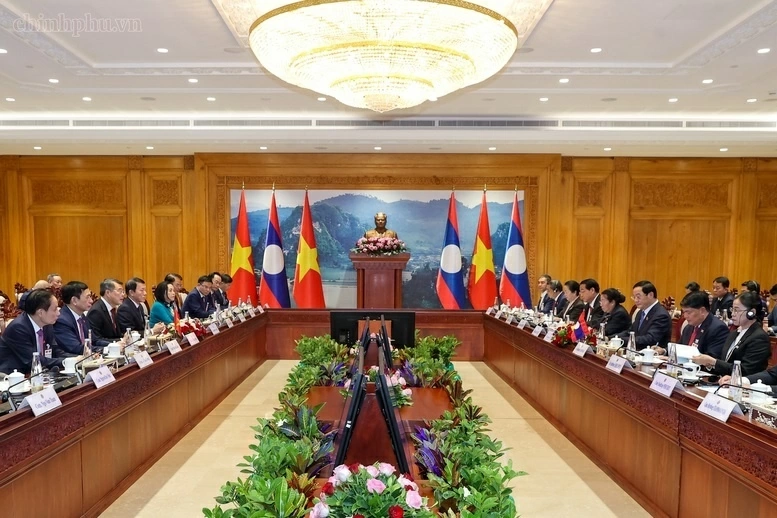 |
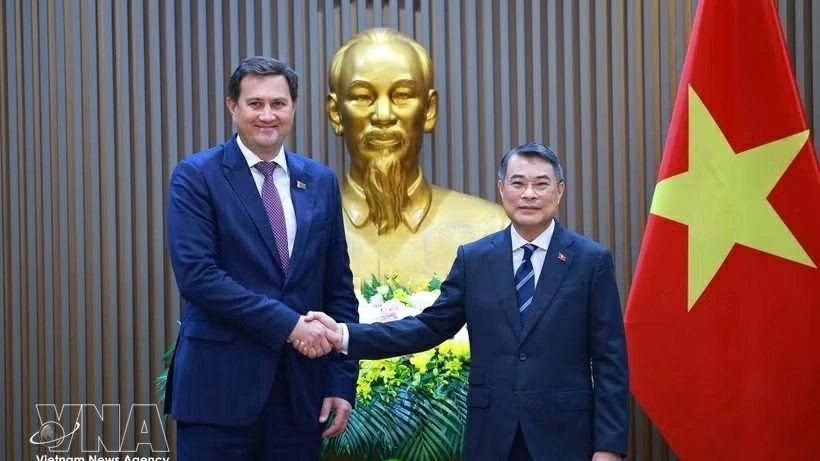
| Prime Minister Le Minh Hung meets with Lao National Assembly President Sonexay Siphandone during an official visit to Laos in October 2026. (Source: VNA) |
This is Sonexay Siphandone's first official visit to Vietnam in his capacity as the President of the Lao National Assembly, and it is also his first bilateral overseas visit since being elected by the 10th National Assembly to this position.
The visit takes place as both Parties and States are actively implementing the resolutions of the 14th Congress of the Communist Party of Vietnam and the 12th Congress of the Lao People's Revolutionary Party, concretizing development goals for the new phase. This poses increasing demands on legislative work, institutional perfection, and enhancing the effectiveness and efficiency of state management in each country.
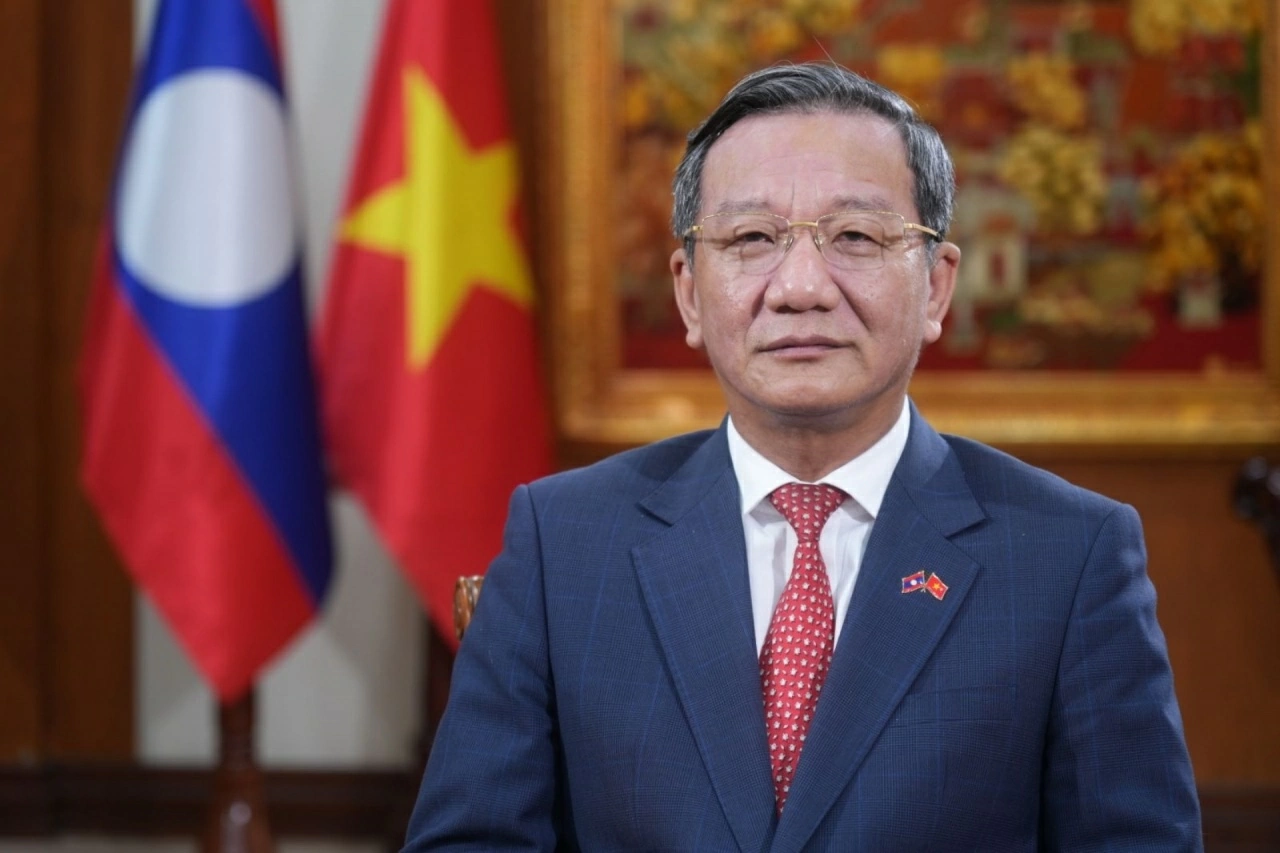 |
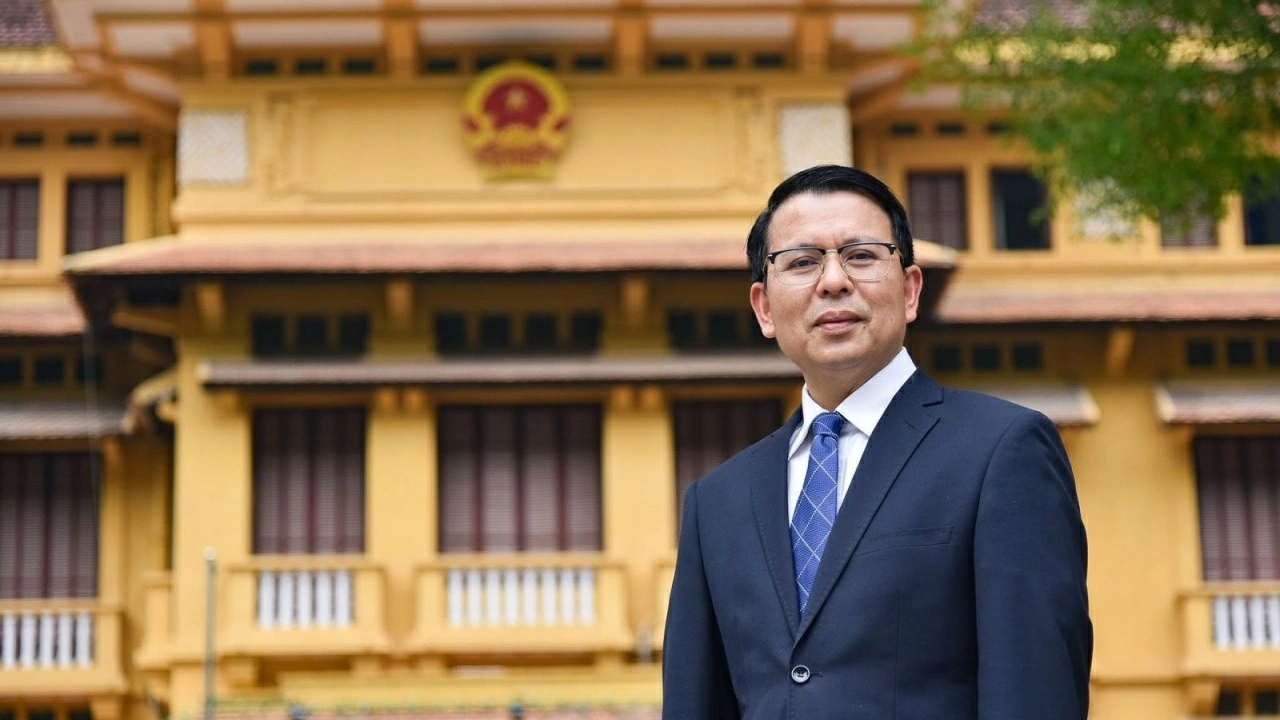
| Vietnamese Ambassador to Laos Nguyen Minh Tam. (Source: Vietnamese Embassy in Laos) |
In this context, strengthening cooperation between the two National Assemblies is of utmost importance, not only contributing to the completion of the legal framework, creating a favorable environment for each country's development, but also enhancing the role of the legislative body in supervising and urging the implementation of high-level policies, guidelines, and agreements between the two Parties and States.
The prominent significance of the visit lies first in the strategic inheritance and continuity agreed upon by the high-level leaders of both countries. Therefore, this visit holds special importance, demonstrating the proactive and positive role of the head of the National Assembly, thereby clearly conveying the message about Laos' foreign policy priorities in the new term.
Moreover, the visit reflects the special emphasis that the leaders of the two countries place on each other, reaffirming that Vietnam and Laos always prioritize preserving and developing their great friendship, special solidarity, comprehensive cooperation, and strategic connectivity.
At the strategic level, the visit is significant in continuing to concretize the content of "strategic connectivity", making it a consistent orientation in Vietnam-Laos relations. Accordingly, the two countries will continue to strengthen political trust, enhance coordination on strategic issues related to each country's development, especially in the fields of economy, defense-security, infrastructure connectivity, energy, and human resource development.
Through this, not only will they continue to accompany, support, and share experiences on the path of development, but the two countries will also gradually enhance interconnection, complementarity, and intertwining interests, creating additional momentum and development space for each country while closely linking the strategic interests of the two nations.
| At the strategic level, the visit is significant in continuing to concretize the content of "strategic connectivity", making it a consistent orientation in Vietnam-Laos relations. |
What is the position of Vietnam-Laos parliamentary cooperation in the overall bilateral cooperation in the current context, and how are the highlights of parliamentary cooperation reflected within the framework of the visit?
In the overall Vietnam-Laos relationship, cooperation between the two National Assemblies holds an important position and role, contributing to strengthening the political, legal, and institutional foundation for comprehensive cooperation between the two sides. Built on a foundation of political trust, special solidarity, loyalty, and the close bond between the two peoples, the relationship between the two National Assemblies is continuously strengthened and developed.
In this context, the visit is an important occasion for the two National Assembly Presidents to exchange and agree on directions and measures to promote increasingly substantive and effective parliamentary cooperation. Both sides will evaluate the results of implementing the Cooperation Agreement between the two National Assemblies, identify the contents that need continued implementation, and enhance the exchange of experiences in law-making, institutional perfection, organizational renewal, and the activities of the National Assembly, performing the supreme supervisory function and deciding on important national issues.
Another important area of cooperation is enhancing coordination in supervising the implementation of high-level agreements, cooperation programs, and projects between the two countries, especially in the fields of transportation connectivity, energy, trade, and investment.
Through supervisory activities and coordination between the two National Assemblies, both sides can promptly identify legal, mechanism, and policy difficulties and obstacles to propose competent authorities to consider and address; at the same time, urge the implementation progress, contributing to ensuring that commitments and agreements are implemented synchronously and effectively, bringing practical benefits to the people and businesses of both countries.
Within the framework of the visit, Lao National Assembly President Sonexay Siphandone will hold talks, meetings, and interactions with key Vietnamese leaders. This is an important occasion for the leaders of the two countries to exchange extensively on strategic issues, orient major directions, and create consensus in leadership and management, thereby promoting the effective implementation of cooperation agreements from the central level to ministries, sectors, and localities.
The visit also contributes to promoting exchanges and cooperation between committees, specialized agencies, friendship parliamentary groups, and National Assembly deputies of the two countries; at the same time, enhancing exchanges and sharing experiences between local People's Councils, especially those with shared borders.
These are practical cooperation channels, helping both sides to closely grasp the actual situation, share experiences in solving arising issues, especially those directly related to people's lives, thereby enhancing the connection and cooperation between localities of the two countries.
On a multilateral level, the two National Assemblies continue to enhance exchanges, coordination, and mutual support at regional and international parliamentary forums, especially the ASEAN Inter-Parliamentary Assembly (AIPA) and the Inter-Parliamentary Union (IPU). Through this, they contribute to protecting the legitimate interests of each country, strengthening ASEAN solidarity, promoting ASEAN's central role, and making positive contributions to maintaining peace, stability, and promoting cooperation and development in the region and the world.
I believe the visit will be a great success, continuing to strengthen trust and bonds between the leaders of the two countries, creating new momentum to bring the cooperation relationship between the two National Assemblies deeper, more substantive, and effective.
With their roles, functions, and responsibilities, the two National Assemblies will continue to play their role in concretizing, institutionalizing, and supervising the implementation of high-level policies, orientations, and agreements between the two Parties and States; thereby making practical contributions to consolidating, nurturing, and developing the great friendship, special solidarity, comprehensive cooperation, and strategic connectivity between Vietnam and Laos, which is increasingly strong, evergreen, and everlasting.
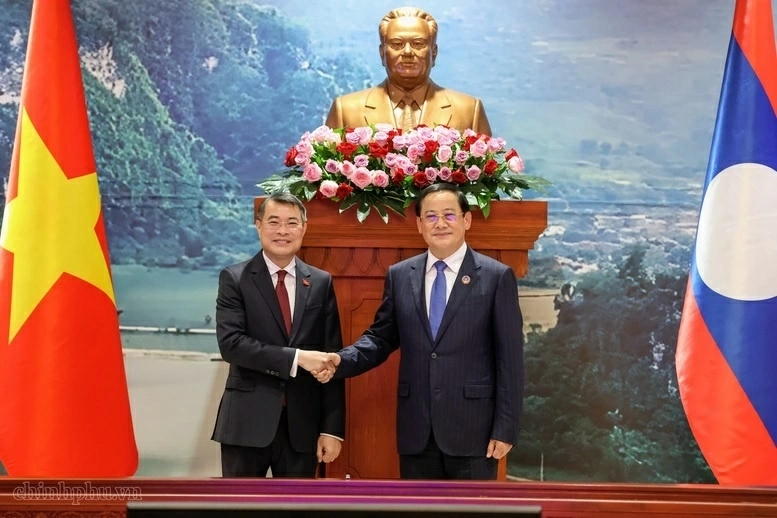 |
| Prime Minister Le Minh Hung meets with Lao National Assembly President Sonexay Siphandone during an official visit to Laos in October 2026. (Source: VGP) |
What are your expectations for parliamentary cooperation between the two countries in the future?
Cooperation between the National Assembly of Vietnam and the National Assembly of Laos has always been maintained regularly, increasingly going deeper, practical, and effective, reflecting political trust and a sense of responsibility towards the relationship between the two countries.
Through delegation exchanges, interactions between National Assembly leaders, cooperation between committees, specialized agencies, sharing experiences in legislative activities, supervision, and coordination at regional and international parliamentary forums, both sides gradually consolidate increasingly comprehensive and effective cooperation mechanisms.
Through this, the two National Assemblies enhance understanding, share experiences, and support each other in effectively performing the functions and tasks of the highest representative body of the people, the highest state power body in each country. In the new development phase, with increasingly high goals and requirements, cooperation between the two National Assemblies will continue to be elevated in quality, fully promoting the role of the legislative body in building, perfecting institutions, laws, and supervising the implementation of high-level commitments and agreements between the two Parties and States.
This is not only a requirement from the practical development of each country but also an important contribution of parliamentary cooperation in concretizing the content of "strategic connectivity" in Vietnam-Laos relations. Accordingly, the two National Assemblies need to focus on four major orientations:
Firstly, continue to consolidate cooperation mechanisms, improve the quality and effectiveness of exchanges between the two National Assemblies. Maintain regular interactions between the leaders of the two National Assemblies, while promoting the proactive role of committees, specialized agencies, friendship parliamentary groups, and National Assembly deputies of the two countries.
Exchange activities should focus on issues of mutual concern, associated with specific tasks, and have mechanisms to monitor the results of implementation. Through this, parliamentary cooperation should not only stop at exchanging information and sharing experiences but also provide more practical support for the activities of each National Assembly.
Along with that, attention should be paid to promoting cooperation in training and fostering National Assembly deputies and advisory staff; enhancing the sharing of experiences in research, policy-making, law project appraisal, supervision organization, and technology application in parliamentary activities. These are important factors contributing to enhancing the operational capacity of each National Assembly and laying the foundation for long-term cooperation between the two sides.
Secondly, improve the effectiveness of cooperation in the field of legislation and supervision, associated with the implementation of high-level agreements between the two Parties and States. The two National Assemblies need to enhance the exchange of experiences in building, amending, and perfecting the legal system, ensuring synchronization, feasibility, and suitability with the development requirements of each country.
For areas directly related to bilateral cooperation, early exchanges and consultations will help both sides better understand each other's legal systems, mechanisms, and policies, promptly identify inappropriate points, and research solutions.
Especially, the supervisory role of the two National Assemblies should be promoted in the implementation of high-level agreements, key cooperation programs, and projects between the two countries.
For contents that are slow to implement or face difficulties and obstacles, coordination in supervision should be strengthened to clarify causes, responsibilities, and propose appropriate solutions. Through this, it contributes to enhancing the responsibility of relevant agencies, ensuring that commitments and agreements are implemented synchronously and effectively.
Thirdly, promote the role of the two National Assemblies in perfecting institutions, mechanisms, and policies, creating a favorable legal corridor for Vietnam-Laos economic linkage. In the context of expanding economic cooperation between the two countries, the requirement is to enhance the synchronization of the legal system, improve the investment and business environment, and enhance the effectiveness of coordination between functional agencies.
According to their functions, tasks, and authority, the two National Assemblies need to pay attention to reviewing and perfecting regulations related to investment, trade, transportation connectivity, energy, logistics, and new cooperation fields, promptly removing institutional and policy bottlenecks affecting the cooperation process.
Continue to focus on issues arising from the practical activities of businesses and people such as investment procedures, goods circulation, project implementation, and cross-border trade. Clearly defining difficulties arising from legal regulations or from the implementation stage will help identify the right solutions and competent authorities to handle them.
Through this, the two National Assemblies contribute to creating a stable and favorable legal environment, promoting connectivity and mutual support between the two economies, bringing practical benefits to the people and businesses of both countries.
Fourthly, expand cooperation between local elected bodies, while enhancing coordination at regional and international parliamentary forums. Cooperation between local People's Councils, especially those with shared borders, should continue to be focused on, associated with supervising the implementation of cooperation agreements, promoting border economic development, infrastructure connectivity, and addressing issues directly related to people's lives.
Through experience exchange, enhancing interactions, and grasping practical situations, local elected bodies can contribute more positively to implementing cooperation programs suitable to the conditions, strengths, and needs of each locality, thereby consolidating the social foundation of the bilateral relationship.
At multilateral parliamentary forums, the two National Assemblies continue to exchange information, consult, and coordinate closely on issues of mutual concern; support each other in line with the interests of each country and the common principles agreed upon.
Coordination and mutual support based on respecting the legitimate interests of each country and common principles will contribute to enhancing the voice and position of each National Assembly, strengthening ASEAN solidarity, promoting ASEAN's central role, and making positive contributions to peace, stability, cooperation, and development in the region and the world.
Besides specific cooperation orientations, what is fundamentally and long-term meaningful is that the two National Assemblies need to continue to inherit, preserve, and promote the values that make up the identity of the special Vietnam-Laos relationship, which are loyalty, purity, sincerity, trust, and mutual assistance.
These precious values continue to be promoted and creatively applied in new conditions, based on equality, respect for independence, sovereignty, harmonized interests, and mutual development.
With the foundation of a great friendship, special solidarity, and political trust carefully nurtured by generations of leaders and people of the two countries, the National Assembly of Vietnam and the National Assembly of Laos will continue to effectively play their roles, functions, and responsibilities, constantly innovating, enhancing the quality and effectiveness of cooperation, making practical contributions to the construction and development of each country.
More importantly, the two National Assemblies will continue to be a solid bridge, contributing to strengthening the bond between the two Parties, the two States, and the people of the two countries, elevating the special Vietnam-Laos relationship to new heights.
Thank you very much, Ambassador!