
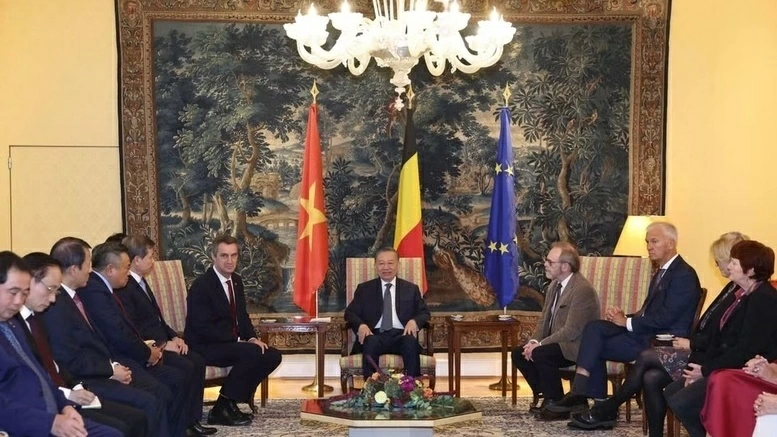
Ambassador Le Quang Long: Cuban top legislator's visit materializes high-level agreements
WVR - On the occasion of President of the National Assembly of People's Power and President of the Council of State of Cuba Esteban Lazo Hernández's official visit to Vietnam, Vietnamese Ambassador to Cuba Le Quang Long spoke with The World and Vietnam Report about the significance and highlights of this visit.
Latest
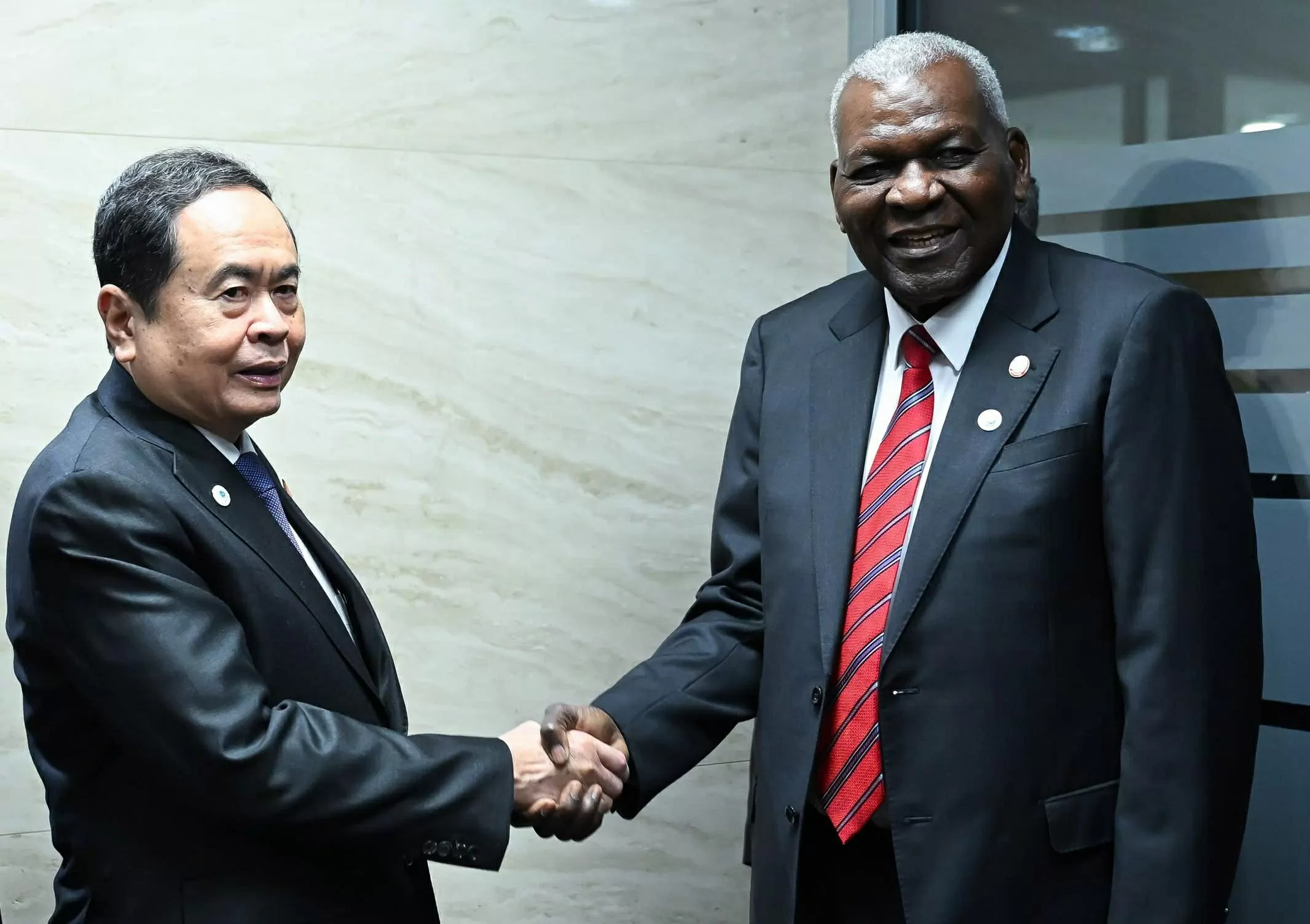 |
| National Assembly Chairman Tran Thanh Man meets Cuban National Assembly President Esteban Lazo Hernández on the sidelines of the 6th World Conference of Speakers of Parliament in Geneva, Switzerland, on July 30, 2025. (Source: Nhan Dan Newspaper) |
President of the National Assembly Esteban Lazo Hernández is set to visit Vietnam and co-chair the second session of the Vietnam-Cuba Inter-Parliamentary Cooperation Committee. Could you share the significance of this visit and the key highlights of the agenda?
The official visit to Vietnam by the President of the National Assembly of People's Power and the President of the Council of State of the Republic of Cuba Esteban Lazo Hernandez, at the invitation of National Assembly Chairman Tran Thanh Man from September 30 to October 5, holds great significance on many fronts. This is not only an annual high-level delegation exchange between the two National Assemblies but also a major political-diplomatic event that contributes to further strengthening and developing the special traditional solidarity and friendship between Vietnam and Cuba.
Firstly, the visit reaffirms the steadfast bond between the two nations. The Cuban National Assembly President is the first high-ranking Cuban leader to officially visit Vietnam since the state visit of First Secretary and Cuban President Miguel Díaz-Canel Bermúdez at the invitation of General Secretary To Lam. This visit thus serves to continue and materialize high-level agreements, promoting substantive cooperation across various fields.
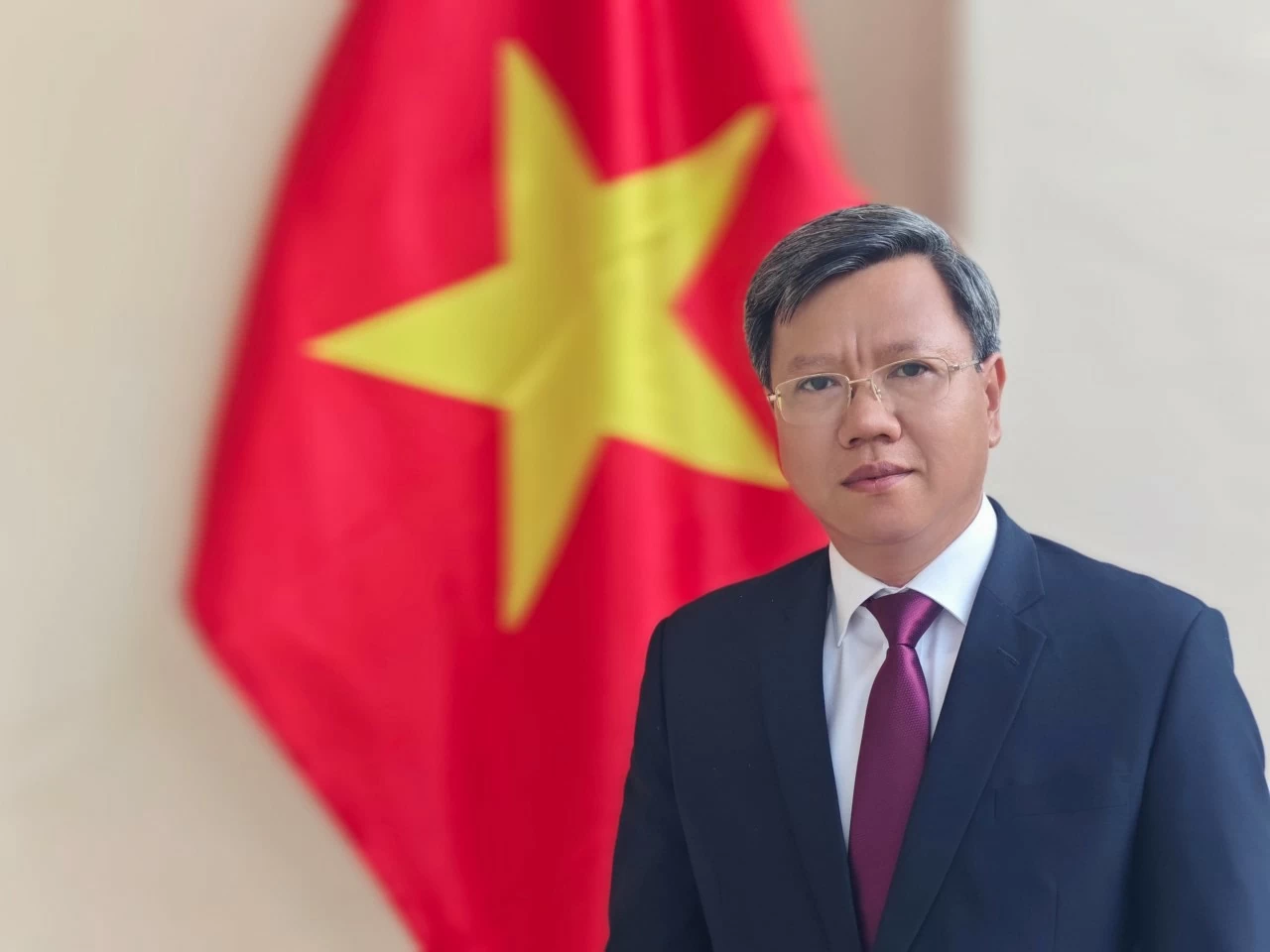 |
| Vietnamese Ambassador to Cuba and concurrently to the Dominican Republic, Le Quang Long. (Source: Vietnamese Embassy in Cuba) |
A special highlight of the visit is the co-chairing of the second session of the Vietnam-Cuba Inter-Parliamentary Cooperation Committee. This mechanism was established to create a regular, direct cooperation framework between the two legislative bodies, serving as an important supplement to the Party, State, and Government relations channel. This session, held in Hanoi following the success of the first session in Havana (September 2024), will review achieved results, assess the effectiveness of agreed recommendations, and discuss measures to address obstacles to deepen parliamentary cooperation.
According to the planned agenda, the Cuban National Assembly President will engage in several important activities: laying wreaths at the Ho Chi Minh Mausoleum and the José Martí Monument; meeting with General Secretary To Lam, President Luong Cuong, and Prime Minister Pham Minh Chinh; holding talks and attending a banquet hosted by National Assembly Chairman Tran Thanh Man. Additionally, the delegation will visit and work in Hanoi, Ho Chi Minh City, and Hung Yen, exploring development experiences in biotechnology, clean energy, telecommunications, and high-tech agriculture.
This comprehensive and practical working program demonstrates the strong desire of both countries' leaders to expand and deepen parliamentary cooperation while connecting with key areas such as economy, trade, investment, and science and technology – crucial pillars for the sustainable development of Vietnam-Cuba relations in the new phase.
In the Joint Statement during the state visit of First Secretary and Cuban President Miguel Díaz-Canel Bermúdez, the two leaders emphasized the importance of the Vietnam-Cuba Inter-Parliamentary Cooperation Committee mechanism. Could you elaborate on the role and significant contributions of this mechanism in the overall special traditional relationship between the two countries?
The Vietnam-Cuba Inter-Parliamentary Cooperation Committee is a new cooperation mechanism that has quickly demonstrated its effectiveness and important role in the overall special relationship between the two countries. This initiative reflects the strategic vision of the leaders of the two National Assemblies, aiming to create a direct, regular, and organized exchange channel between the legislative bodies of the two countries.
During the first session in Havana (9/2024), both sides listened to reports from relevant agencies, especially the Vietnam-Cuba Inter-Governmental Committee, on the state of bilateral cooperation. Practical recommendations were made, focusing on improving the legal system to address difficulties and obstacles in cooperation, particularly in the fields of economy, trade, investment, and finance. Both sides also shared experiences in policy-making and implementation in essential areas such as energy, science and technology, healthcare, education, and high-tech agriculture. These are strategic topics that directly serve the development needs of both Vietnam and Cuba.
A notable highlight is that, during the first session, both sides agreed to explore the possibility of coordinating supervision over the implementation of signed cooperation documents, ensuring that high-level agreements are not just on paper but are effectively realized in practice. This is the unique added value that the Inter-Parliamentary Committee mechanism brings: creating a discussion forum while also helping to monitor and supervise to increase the feasibility and sustainability of cooperation.
Therefore, the second session in Hanoi is expected to continue promoting this practical spirit, proposing more specific solutions to support the governments and relevant agencies of both countries in implementing cooperation. Thus, the Committee not only contributes to strengthening political-diplomatic relations but also directly connects with economic-trade, scientific-technical cooperation, creating additional momentum for Vietnam-Cuba relations.
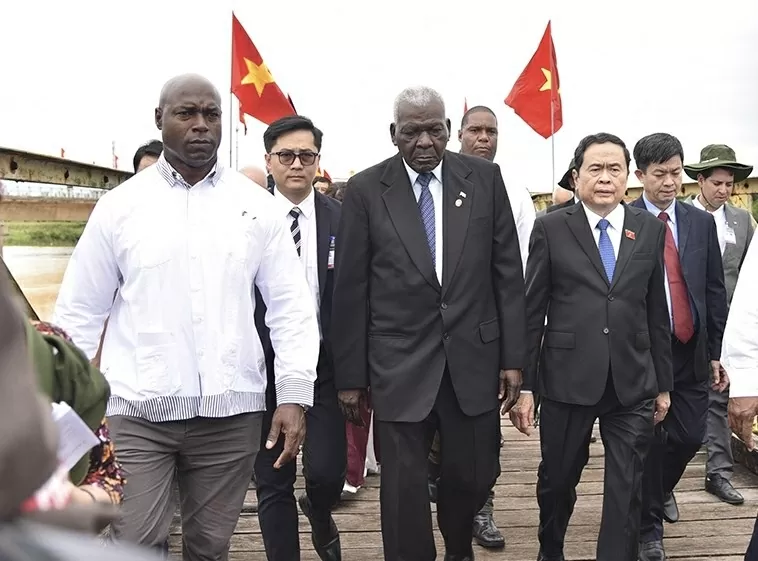 |
| Cuban National Assembly President Esteban Lazo Hernández and delegates visit Hien Luong Bridge, Quang Tri, on the occasion of the 50th anniversary of Leader Fidel Castro's visit to the liberated zone of Southern Vietnam, September 2023. (Photo: DK) |
How do you assess the cooperation between the two National Assemblies in recent times, particularly in delegation exchanges, coordination at international parliamentary forums, and in promoting the completion of the legal system to create a favorable legal corridor for economic-trade cooperation and sustainable monitoring of bilateral agreements?
Over the years, cooperation between the National Assembly of Vietnam and the National Assembly of Cuba has always been a highlight in bilateral relations. This cooperation channel plays a very important complementary role to the relations between the two Parties and the two States.
In terms of delegation exchanges, both sides regularly maintain high-level visits and contacts as well as at the level of specialized committees. Vietnamese National Assembly delegations have visited Cuba many times, participating in international parliamentary activities in Havana, while the Cuban National Assembly frequently sends delegations to conferences and seminars in Vietnam and the Asia-Pacific region. These trips have contributed to maintaining political trust and strengthening the special solidarity between the two National Assemblies and the peoples of both countries.
In international coordination, the National Assembly of Vietnam and the National Assembly of Cuba always support each other at multilateral parliamentary forums such as the Inter-Parliamentary Union (IPU), the Asia-Pacific Parliamentary Forum (APPF), and many other frameworks. This coordination not only reflects traditional solidarity but also helps both sides protect their legitimate interests while promoting shared values of peace, justice, and sustainable development.
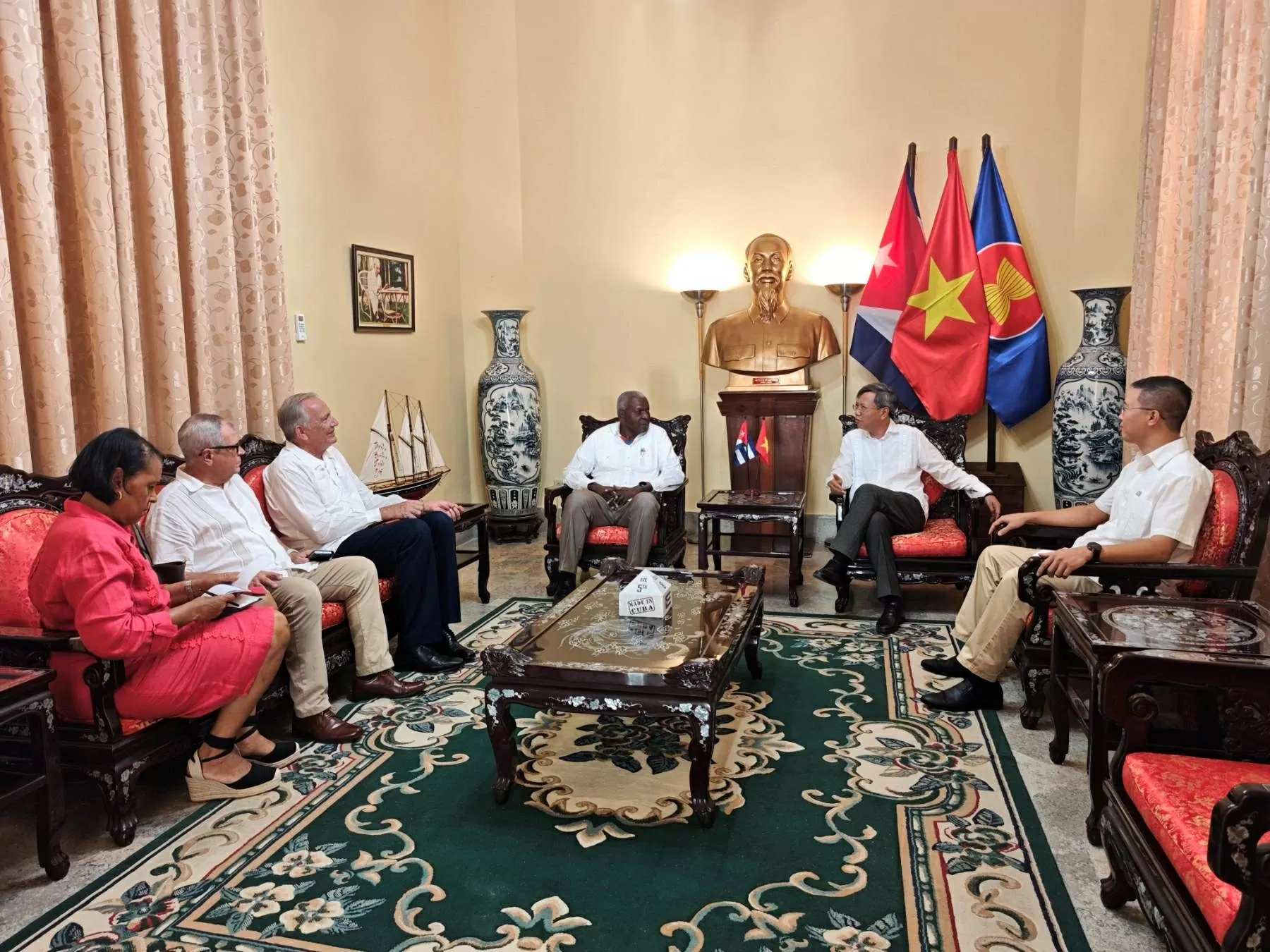 |
| Cuban National Assembly President Esteban Lazo Hernández visits the Vietnamese Embassy in Cuba. (Source: Vietnamese Embassy in Cuba) |
In terms of completing the legal system, the exchanges and discussions between the two National Assemblies have contributed to sharing experiences in policy and law-making suitable to the specific conditions of each country. Notably, discussions within the framework of the Inter-Parliamentary Cooperation Committee have been aimed at creating a more open legal corridor, supporting businesses in both countries to exploit the potential for economic-trade cooperation, investment, energy, healthcare, and biotechnology. These are areas where Cuba has strengths, while Vietnam seeks cooperation and resource supplementation.
Significantly, both sides have agreed to coordinate research on a joint supervision mechanism for the implementation of bilateral agreements, ensuring that cooperation documents are effectively implemented, avoiding the situation of "signing many, doing little". This approach demonstrates the proactive and creative nature of the two National Assemblies in accompanying the governments of both countries, contributing to deepening and sustaining cooperative relations.
I am confident that with the special political foundation, mutual trust, and steadfast solidarity, parliamentary cooperation between Vietnam and Cuba will continue to play an important role. In the coming period, the two National Assemblies will coordinate more closely to enhance exchanges and experience sharing while promoting the construction and completion of a favorable legal framework for economic-trade cooperation and investment. Additionally, both sides will continue to support each other on the international stage, protecting their legitimate interests and jointly promoting the goal of building a world of peace, stability, fairness, and sustainable development.
The official visit to Vietnam by National Assembly President Esteban Lazo Hernández and the co-chairing of the second session of the Vietnam-Cuba Inter-Parliamentary Cooperation Committee is a significant milestone in the relations between the two countries. This event holds profound political significance, opening up real cooperation prospects in many fields, from parliamentary, political to economic, trade, science-technology, and high-tech agriculture. It is a vivid testament to the special, steadfast, and pure traditional friendship between Vietnam and Cuba – a priceless asset that today's and future generations must continue to preserve and promote.
Thank you very much, Ambassador!