




VEFTA Agreement: Expanding cooperation space, elevating integration quality
WVR - The signing of the free trade agreement between Vietnam and the European Free Trade Association (VEFTA) opens a new chapter in economic relations between Vietnam and countries in the bloc such as Norway, Switzerland, Iceland, and Liechtenstein.
Latest
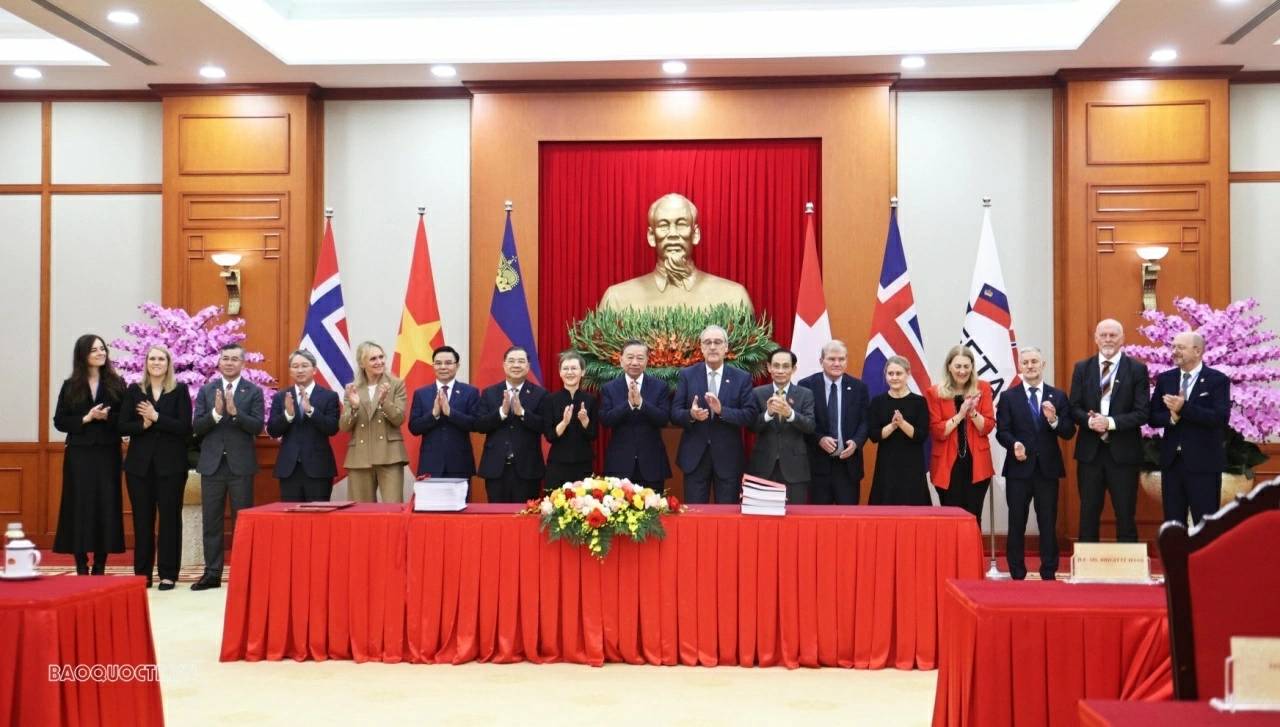 |
| General Secretary, President To Lam witnesses the signing ceremony of the free trade agreement between Vietnam and the member countries of the European Free Trade Association (EFTA) on October 18 in Hanoi. (Photo: Thanh Long) |
On October 18, in Hanoi, General Secretary, President To Lam witnessed the signing of the FTA between Vietnam and EFTA member countries. This historic signing event marks a significant milestone in the relationship between Vietnam and four highly developed European economies, while also demonstrating the parties' determination to promote free trade, enhance economic cooperation, and strengthen the international rules-based trading system.
The agreement is considered a new-generation FTA with comprehensive commitments and very deep openness. The content of the agreement covers core areas including trade in goods (including tariffs, technical barriers to trade TBT, sanitary and phytosanitary measures SPS, customs, and trade defense), trade in services, investment, intellectual property, government procurement, competition, support for small and medium enterprises (SMEs), dispute resolution, as well as trade and sustainable development.
Promoting cooperation from complementary strengths
EFTA is an intergovernmental organization currently comprising Norway, Switzerland, Iceland, and the Principality of Liechtenstein. Despite having a population of only about 15 million people, this bloc brings together high-income economies with advanced technology, financial capabilities, and innovation, along with extensive experience in clean energy and sustainable development.
In recent years, trade between EFTA and Vietnam has consistently grown, with bilateral trade turnover averaging nearly 2 billion USD annually. By 2025, bilateral trade turnover is expected to reach 4.8 billion Euros, with Vietnam recording a trade surplus of 2.5 billion Euros, highlighting the increasingly important role of this cooperative relationship mechanism.
The structure of goods exchanged between the two sides is highly complementary, aligning with each side's strengths and needs. Vietnam exports to EFTA countries items such as seafood, footwear, textiles, machinery, electronic equipment, and components; while importing from these markets machinery, industrial equipment, chemicals, pharmaceuticals, and raw materials for production. This exchange structure indicates that cooperation potential lies not only in increasing the volume of traded goods but also in connecting production, technology, and investment sectors.
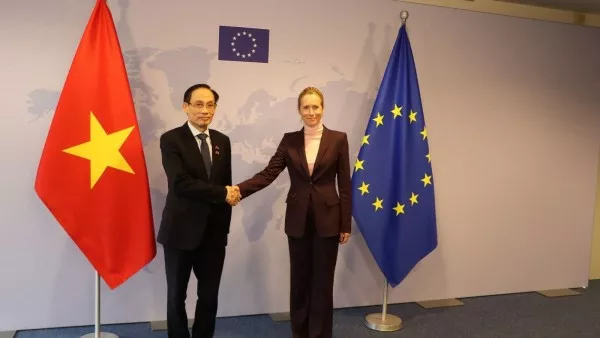
Deputy Minister of Foreign Affairs Le Thi Thu Hang assessed that VEFTA is an important milestone in economic linkage. Once in effect, the Agreement will facilitate businesses in accessing markets and expanding operations according to the agreed commitments.
For Vietnam, the long-term significance also lies in the opportunity to connect with technology, knowledge, and quality business networks, thereby enhancing competitiveness and deeper participation in the value chain. Conversely, Vietnam offers prospects for cooperation with a dynamic market, production capacity, and increasing integration with regional and global economies.
This combination also opens up many practical opportunities for the Vietnamese business community. The agreement contributes to diversifying export markets, creating conditions for Vietnamese goods to access high-purchasing-power markets with top-quality requirements worldwide. Meanwhile, with a market of over 100 million people, a strategic location in the Asia-Pacific region, and a network of 17 established FTAs, Vietnam also aims to become a reliable partner and a bridge for EFTA businesses to expand their presence in ASEAN and regional markets. This will create long-term investment, production, and business cooperation opportunities, benefiting businesses on both sides.
Notably, under the Agreement, EFTA countries commit to continuing the elimination of all import tariffs on industrial goods, seafood, and marine products originating from Vietnam. Conversely, Vietnam will reduce and eliminate tariffs on most industrial and seafood products originating from EFTA within a maximum period of 11 years.
For agricultural products, the parties apply an opening schedule suitable to each country's trade interests and sensitivity levels. Some EFTA products such as cheese, coffee, chocolate, baby food, and supplements enjoy a tax-free schedule in Vietnam for up to 16 years. Meanwhile, EFTA countries provide preferences for Vietnamese agricultural products with export interests, in line with each country's agricultural policy.
These commitments create additional conditions for Vietnamese businesses to exploit high-purchasing-power markets, but tariff preferences do not automatically guarantee a foothold for goods. The ability to leverage the Agreement depends on product quality, pricing, supply capacity, and compliance with technical requirements, rules of origin, food safety, and environmental standards.
Driving force for trade, investment, and innovation
Along with trade, investment is an important cooperation potential that the Agreement can further motivate. With a legal framework expected to be more transparent, stable, and predictable, the Agreement is expected to attract high-quality investment flows from EFTA countries into areas that Vietnam is prioritizing such as high technology, processing industries, clean energy, green transition, innovation, and human resource development.
This is not just about capital but also an opportunity to receive advanced technology, management experience, and sustainable development models. More importantly, the goal should not stop at attracting capital but should open up new cooperation opportunities, driving economic growth, innovation, and sustainable development, thereby bringing practical benefits to the people and business communities of Vietnam and EFTA member countries.
By the end of 2025, Switzerland has 234 investment projects in Vietnam with a total registered capital of over 2.4 billion USD; Norway has 62 projects with a total registered capital of over 201 million USD. Many EFTA businesses have been present in Vietnam in industries such as industry, food, pharmaceuticals, energy, and technology. EFTA businesses and investors are also planning to cooperate and invest in many large projects in Vietnam in areas such as innovation, high technology, logistics, precision mechanics...
According to Swiss Ambassador to Vietnam Thomas Gass, Swiss companies like Schindler, ABB, Bühler, and Nestlé have been operating in Vietnam for decades, with cooperation ranging from coffee processing, energy equipment, smart grids to quality inspection, flavors, and banking software.
On the Norwegian side, Ambassador Stein Iversen stated that there are currently about 40 Norwegian businesses operating in Vietnam. Maritime, shipbuilding, and aquaculture are areas of cooperation with a solid foundation. Research institutes and businesses from both countries are collaborating on many stages of the seafood value chain, from breeding, feed, equipment to techniques and services, combining Vietnam's experience with Norway's capital and expertise. The signing of the FTA will help strengthen investor confidence, motivate existing businesses to expand operations, and encourage other investors to enter the Vietnamese market.
Furthermore, cooperation prospects are also expanded thanks to the high level of commitment in the Agreement, including trade in goods and services, rules of origin, investment, intellectual property rights, competition, trade defense measures, government procurement, as well as trade and sustainable development. Regulations on transparency, customs facilitation, minimizing technical barriers, and enhancing cooperation between parties contribute to building a legal framework for business activities.
Ambassador Stein Iversen emphasised that the FTA provides a legal basis for trade and investment, a green partnership framework guiding cooperation priorities in areas such as offshore wind power, low-emission shipping, marine aquaculture, circular economy, and forest protection.
Meanwhile, Ambassador Thomas Gass also highly appreciated Vietnam's commitment to the goal of net-zero emissions by 2050, while emphasizing the need to access markets with purchasing power and consumers willing to pay a fair price for quality, environmentally friendly products. According to him, EFTA countries can open opportunities in this direction, while motivating Vietnamese businesses to upgrade production processes and increase product value.
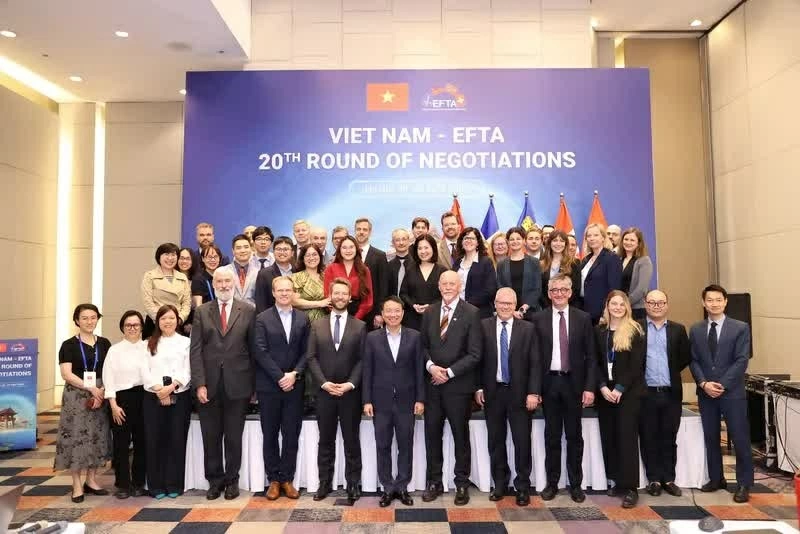 |
| Vietnam and EFTA member countries officially concluded negotiations on the Vietnam-EFTA Free Trade Agreement on July 2. (Source: Ministry of Industry and Trade) |
Elevating integration quality, affirming the position of a reliable partner
Compared to the Vietnam-EU Free Trade Agreement (EVFTA) with a scale of over 450 million people, VEFTA is considered a “small playing field”, but it is where the world's strictest standards converge. Meeting the requirements of this market will motivate businesses to improve production processes, increase transparency, and enhance product value.
Many international organizations such as the International Monetary Fund (IMF), the World Trade Organization (WTO), or the Organization for Economic Cooperation and Development (OECD) all believe that the new generation of FTAs is shifting focus from trade liberalization to improving institutional quality and enterprise competitiveness. Therefore, meeting EFTA's high standards means Vietnamese businesses also raise their “playing standards” to access many other developed markets. When businesses conquer EFTA's strictest standards, the door to many other developed markets will open wider.
Nguyen Thi Hoang Thuy, Commercial Counselor of Vietnam in Sweden, concurrently in Denmark, Norway, Iceland, and Latvia, stated that VEFTA goes beyond a tariff reduction agreement. It is a message affirming Vietnam's continued commitment to deep international economic integration, market diversification, partner diversification, and enhancing trade relations with developed economies.
According to Nguyen Thi Hoang Thuy, what businesses need to see is not just the opportunity to increase exports but also the opportunity to upgrade themselves. The EFTA market sets very high standards, but those standards align with Vietnam's new development direction of enhancing added value, growth quality, and deeper participation in sustainable supply chains.
It can be said that the greatest value of the Vietnam-EFTA FTA is not simply in market size or reduced tariff lines, but in the opportunity to upgrade integration quality. With comprehensive commitments and high standards, the agreement will help create a stable, transparent, and predictable business environment, further facilitating the flow of trade, investment, technology, and knowledge between the two sides; becoming an important driving force for Vietnam to delve deeper into the global value chain, while affirming its position as a reliable, proactive, and responsible partner in the international economy.
| “In the context of global instability, strengthening relations with reliable trade partners becomes more important than ever. This 'ambitious and forward-looking' agreement will significantly improve market access for goods and services, while enhancing cooperation in areas such as trade and sustainable development, as well as intellectual property rights.” Norwegian Foreign Minister Espen Barth Eide |
| “Vietnam has a dynamic market, increasingly enhanced production capacity, and an expanding integration network. Meanwhile, EFTA countries have strengths in technology, innovation, finance, and quality. Leveraging the complementarity between the two sides will create opportunities to form more efficient and sustainable value chains. With a broad scope of commitments and diverse cooperation content, VEFTA is expected to open new opportunities for Vietnam in diversifying export and import markets. From there, enhancing the competitiveness of Vietnamese enterprises, paving the way for businesses to participate more deeply in the global value chain.” Minister of Industry and Trade Le Manh Hung |


