





Transforming CLMV and ACMECS cooperation into a substantial development resource: FM Le Hoai Trung
WVR - On the afternoon of November 28, Politburo Member and Minister of Foreign Affairs Le Hoai Trung chaired an international press conference on the 12th Cambodia-Laos-Myanmar-Vietnam (CLMV) Cooperation Summit and the 11th Ayeyawady-Chao Phraya-Mekong Economic Cooperation Strategy (ACMECS) Summit.
Latest
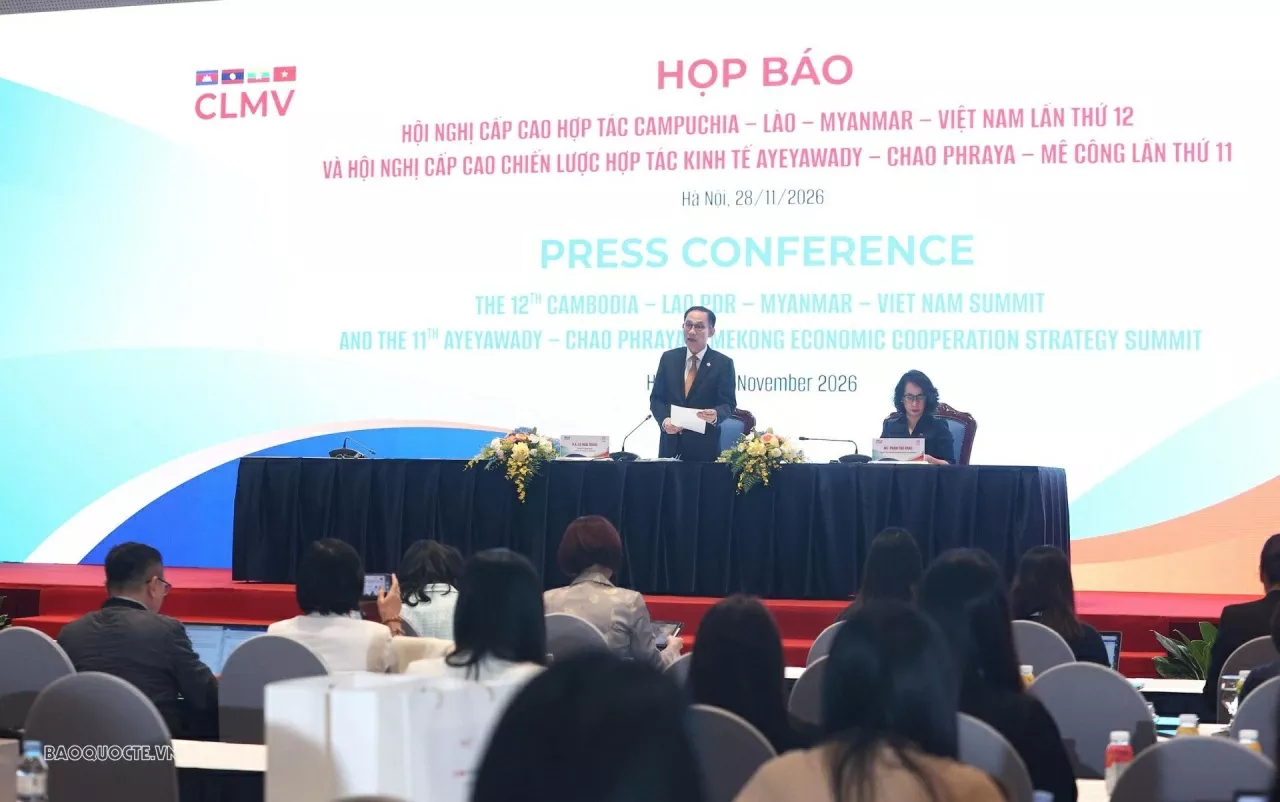 |
| Politburo Member and Minister of Foreign Affairs Le Hoai Trung chaired the international press conference announcing the results of the CLMV and ACMECS Summits on the afternoon of November 28. (Photo: Thanh Long) |
In his opening remarks at the press conference, on behalf of the member countries of CLMV and ACMECS, as well as the organizations and nations participating in the two Summits today, Minister of Foreign Affairs Le Hoai Trung was pleased to announce that the CLMV and ACMECS Cooperation Summits were highly successful.
Minister Le Hoai Trung stated that Prime Minister Le Minh Hung chaired the 12th CLMV Cooperation Summit. Vietnam coordinated with Myanmar, the ACMECS Chair, to organize the 11th ACMECS Summit, chaired by Myanmar's President Min Aung Hlaing.
Attendees of the two Summits included Cambodian Prime Minister Hun Manet, Lao Prime Minister Sonexay Siphandone, Thai Prime Minister Anutin Charnvirakul, and ASEAN Secretary-General Kao Kim Hourn. Notably, for the first time, several partners were invited, including China, Republic of Korea, Japan, Australia, Singapore, and India. Additionally, the Summit saw the participation of financial institutions and business representatives.
Minister Le Hoai Trung emphasized that a key highlight of the two summits was the leaders' agreement to continue promoting the roles of CLMV and ACMECS, while appreciating the significant contributions of these mechanisms in recent times. Accordingly, CLMV and ACMECS cooperation has contributed to enhancing connectivity among economies, achieving ASEAN goals, and strengthening relations among member countries. CLMV has played a role in narrowing the income gap between countries, while sub-regional cooperation mechanisms have promoted solutions to sustainable development challenges in the Mekong River basin.
Over time, the scope of cooperation has expanded, aiming for larger goals such as maintaining peace, stability, and friendly relations among countries, promoting rapid and sustainable development, and improving the lives of the people.
The leaders engaged in profound and substantive discussions on priority cooperation directions and implementation methods to create new advancements and breakthroughs in sub-regional cooperation. One of the top priorities agreed upon was enhancing strategic connectivity among countries in the region, thereby creating new development spaces, particularly in the Mekong area. Additionally, improving the effectiveness of addressing common challenges, focusing on priority issues of the two mechanisms, was emphasized.
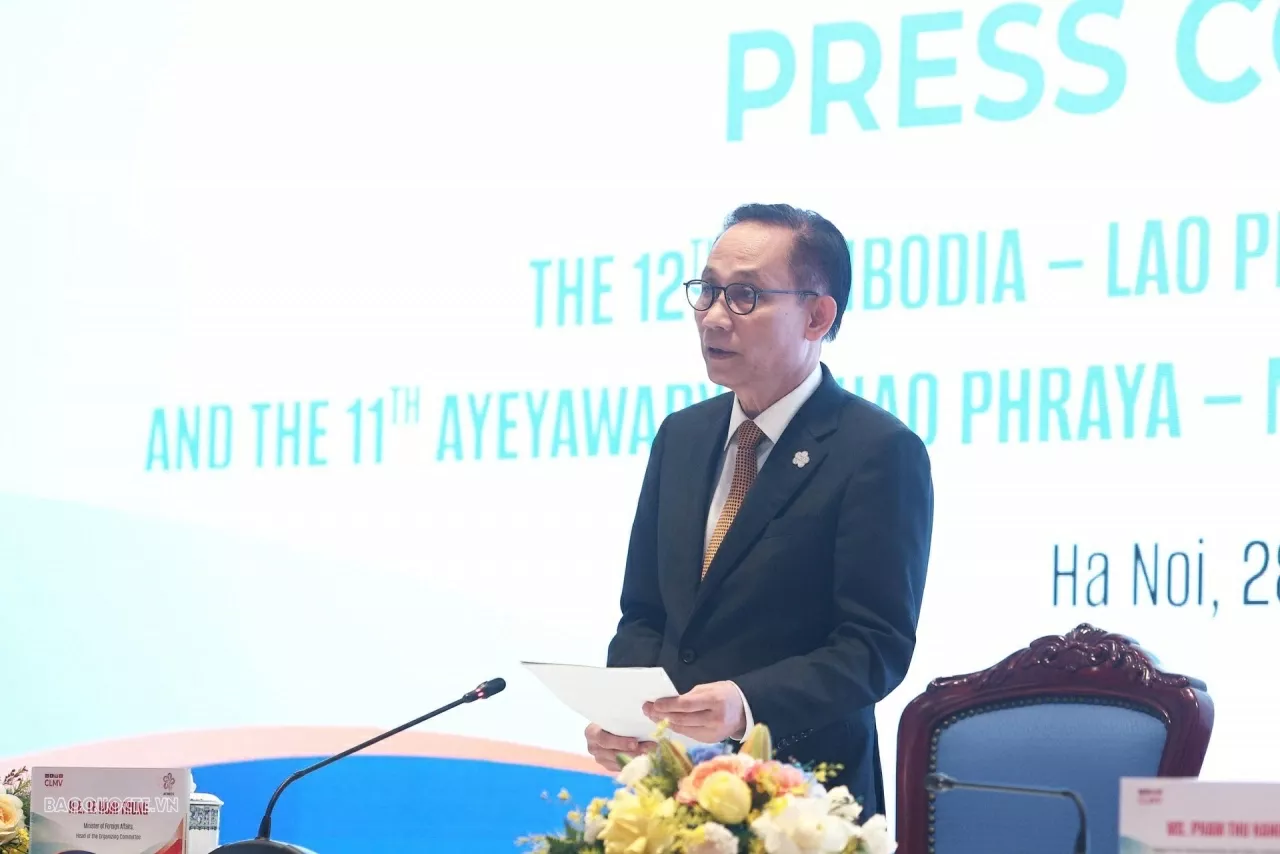 |
| Minister Le Hoai Trung emphasized that a key highlight of the two summits was the leaders' agreement to continue promoting the roles of CLMV and ACMECS, while appreciating the significant contributions of these mechanisms in recent times. (Photo: Thanh Long) |
Connectivity as a consistent priority
At the 12th CLMV Cooperation Summit, under the theme “Connecting CLMV, Harnessing Potential, Creating a Prosperous Future”, the leaders agreed on several specific cooperation directions.
Firstly, the four countries identified connectivity as a consistent priority for the 2027-2028 period and beyond. The focus is on connecting economic corridors, striving to realize the goal of making CLMV a logistics hub of the region. The leaders tasked ministers with exploring the feasibility of establishing a common production base for CLMV, promoting the formation of a unified ASEAN market, and coordinating to resolve issues related to customs clearance, logistics costs, and facilitating deeper business participation in supply chains.
Secondly, besides developing existing cooperation areas, countries need to innovate cooperation fields, focusing on areas that create new development drivers. The leaders discussed and promoted specific, practical initiatives, including enhancing digital connectivity, implementing smart border gates, developing cross-border economic cooperation zones, and agricultural supply chains.
Notably, at the Summit, two initiatives proposed by Vietnam were approved, including the CLMV Four-Country Smart Dry Port Corridor and the CLMV Four-Country Heritage Journey.
Regarding the CLMV Four-Country Smart Dry Port Corridor initiative, Minister Le Hoai Trung clarified that this model aims to connect border gates, airports, and seaports, forming integrated centers linked with infrastructure development and goods movement activities through ports. The second initiative is the CLMV Four-Country Heritage Journey, aimed at promoting tourism through connecting heritage destinations. Initially, the initiative aims to connect Bagan, Luang Prabang, Trang An, and Angkor.
The Summit also welcomed the CLMV 2.0 Scholarship Program implemented by Vietnam for Cambodia, Laos, and Myanmar, with a direction to expand to English-language training, postgraduate training, and vocational training. The leaders highly appreciated Vietnam's two initiatives and welcomed the scholarship program that has been implemented in recent times.
Thirdly, the leaders agreed to innovate resource mobilization and implementation methods. Countries are encouraged to involve businesses in the cooperation process, even from the early stages of projects.
Ministers and senior officials will work with the ASEAN Secretariat to develop programs and projects in the upcoming cooperation plan. Each project needs to clearly define outcomes, responsible focal points, timelines, funding sources, and solutions to facilitate business investment and operations in the region.
According to Minister Le Hoai Trung, the participation of international partners at the two summits also reflects interest in promoting sub-regional cooperation.
Additionally, according to the head of Vietnam's Foreign Affairs, at the 11th ACMECS Summit, leaders agreed to promote ACMECS's role as an important sub-regional cooperation mechanism, complementing the ASEAN Community-building process.
Based on the achievements during Myanmar's ACMECS Chairmanship, leaders aimed to enhance socio-economic development, moving towards a smart and sustainable ACMECS. They also discussed ways to promote infrastructure connectivity, digital connectivity, and institutional connectivity; strengthen environmental protection, water resource management cooperation, and air pollution control, aiming for sustainable development in the region.
Notably, the Minister informed that the Summit adopted the Nay Pyi Taw Declaration and the Terms of Reference (TOR) for the Special Working Group on reviewing ACMECS priority projects, while welcoming efforts to develop a master plan. At the conclusion of the two Summits, Vietnam handed over the CLMV Chairmanship to Cambodia; Myanmar transferred the ACMECS Chairmanship to Thailand for the upcoming term.
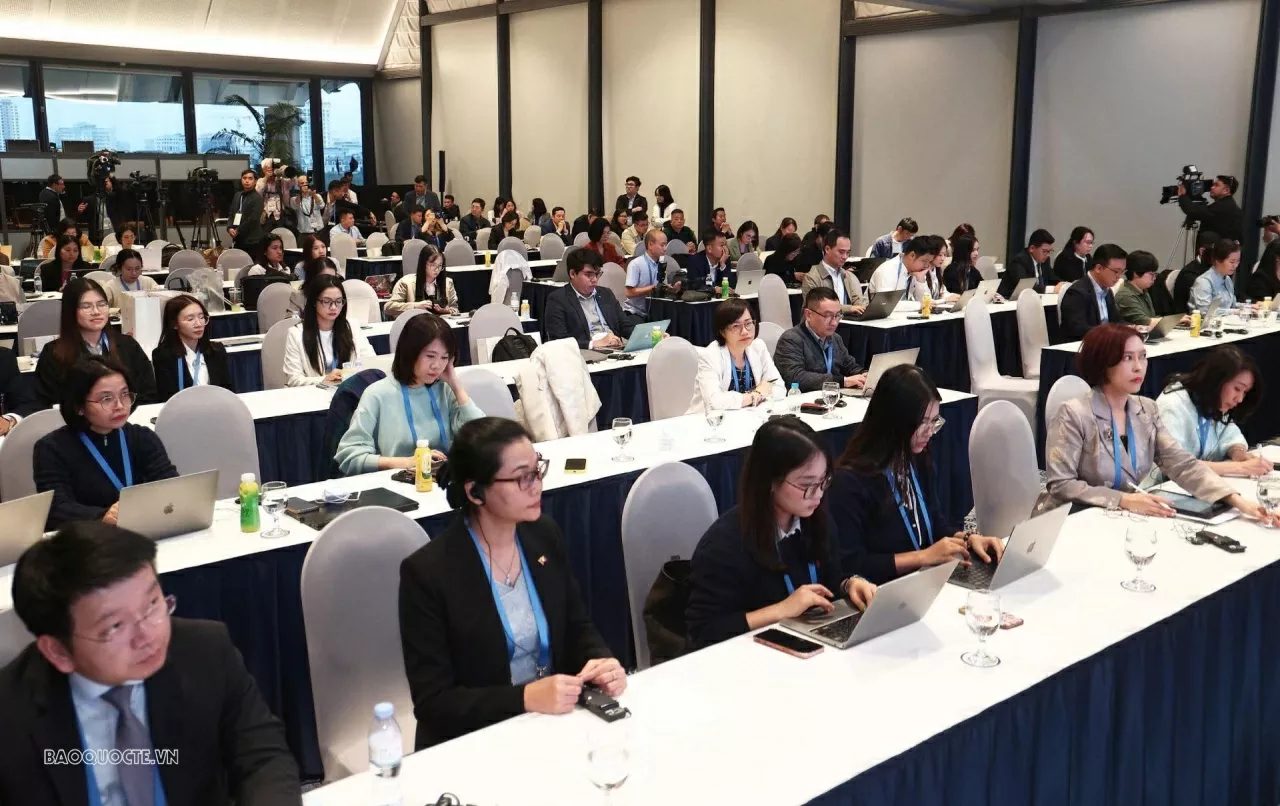 |
| Domestic and international journalists attended the press conference. (Photo: Thanh Long) |
Positive contributions to regional and international cooperation
Minister Le Hoai Trung emphasized that Vietnam, along with member countries, organizing the two summits reflects a foreign policy of peace, friendship, cooperation, development, resilience, and autonomy; while affirming a desire to contribute positively to regional and international common affairs.
Through this, Vietnam aims to work with countries to promote the role of multilateral institutions, primarily cooperation mechanisms in Southeast Asia and the Mekong sub-region; while turning cooperation into a driving force for socio-economic development, leveraging opportunities and addressing challenges in the coming time, not only in the current phase but also towards long-term goals.
On behalf of the Government and people of Vietnam, Minister Le Hoai Trung expressed gratitude to regional countries, including Cambodia, Myanmar, and Thailand; the ASEAN Secretariat; regional partners and countries for participating and contributing to the cooperation process, promoting the roles of CLMV and ACMECS in the overall linkage with ASEAN and other regional cooperation mechanisms.
The Minister affirmed that thanks to the proactive preparation by relevant ministries and sectors, direct guidance from Prime Minister Le Minh Hung, media support, and coordination from CLMV and ACMECS member countries, the two summits effectively completed the agenda set during the organization period.
The Summits evaluated the results and achievements, while identifying directions and specific implementation plans for the future, aiming to achieve the goals of the two mechanisms and promote relations among member countries within the framework of sub-regional, ASEAN, and regional cooperation in general.
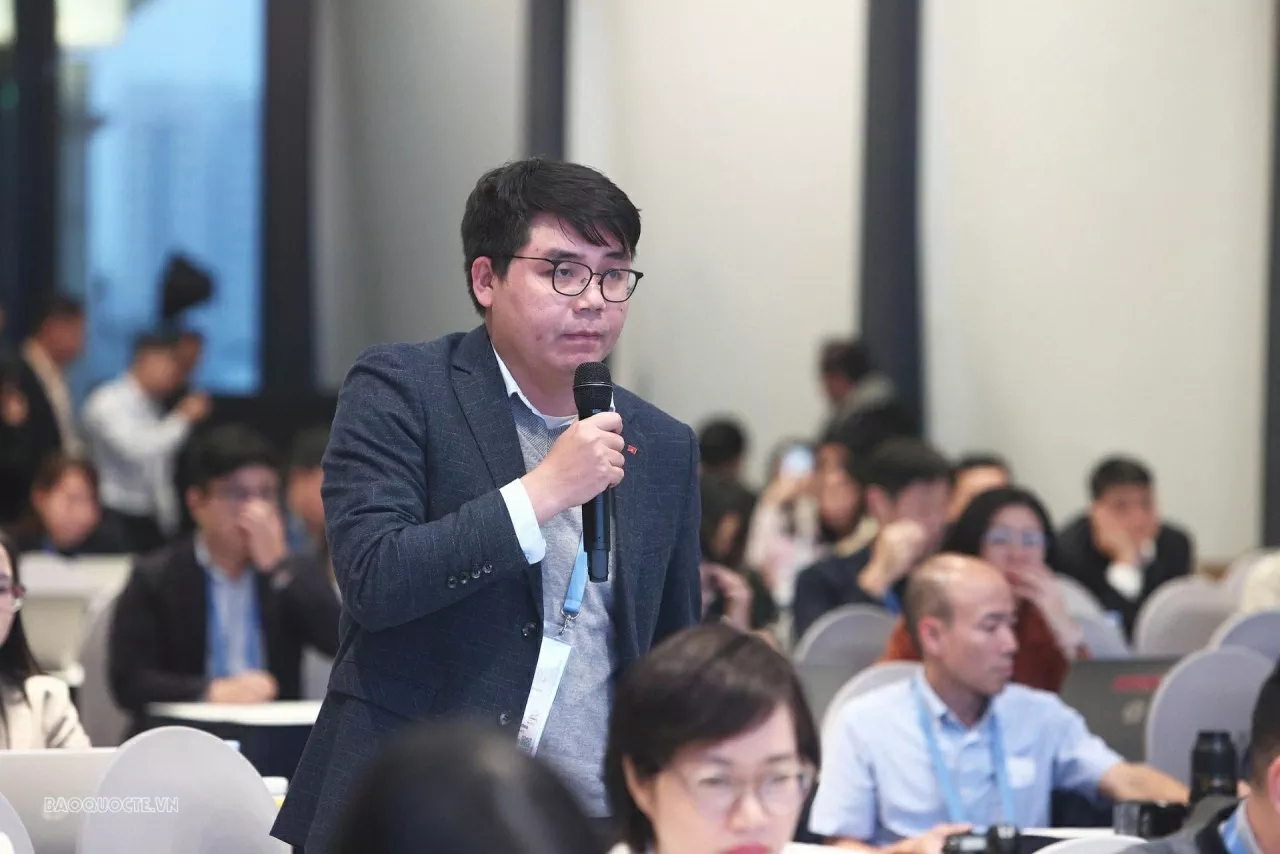 |
| Vietnamnet journalist asked about Vietnam's contributions and specific initiatives at the Summits, as well as Vietnam's role and impact in promoting consensus and enhancing cooperation among member countries. (Photo: Thanh Long) |
Vietnam actively contributes specific initiatives
Answering questions about Vietnam's contributions and specific initiatives at the Summits, as well as Vietnam's role and impact in promoting consensus and enhancing cooperation among member countries, Minister of Foreign Affairs Le Hoai Trung stated that as the host country and Chair of the CLMV cooperation mechanism, Vietnam has researched and consulted with member countries and relevant organizations on CLMV and ACMECS cooperation fields, thereby proposing directions for member countries to approve.
A very important aspect of this process is that Vietnam has consulted with member countries to develop documents that both assess past cooperation and propose specific directions for the future. Additionally, Vietnam has contributed through participating with member countries in implementing programs and projects within the framework of the two mechanisms in recent times.
Notably, at this Summit, Vietnam proposed two initiatives that were unanimously approved by member countries, including the CLMV Four-Country Smart Dry Port Corridor and the CLMV Heritage Journey. According to the Minister, both initiatives relate to areas that member countries value, addressing issues of concern to the countries, and are highly specific. The initiatives clearly outline goals, key activities, monitoring processes, and implementation promotion.
Regarding Vietnam's role in the two mechanisms, Minister Le Hoai Trung noted that, first and foremost, Vietnam is a country located in the Mekong River basin. Additionally, Vietnam is one of the developing economies that has achieved socio-economic development successes in areas of interest to ACMECS and CLMV member countries, thereby contributing to major directions and activities of the two mechanisms.
ACMECS comprises five countries: Vietnam, Laos, Cambodia, Myanmar, and Thailand, with a population of over 250 million, an area of over 1.9 million km², a GDP of over USD 1,200 billion, and a trade volume of nearly USD 1,500 billion. Meanwhile, CLMV includes four countries: Vietnam, Laos, Cambodia, and Myanmar, with an area of 1.37 million km², a GDP of USD 563 billion, and a trade volume of nearly USD 900 billion.
Through these figures, the Minister believes that Vietnam's position and socio-economic development are contributing factors to the development of ACMECS and CLMV.
Throughout the cooperation process, Vietnam has been recognized by member countries for actively working with them to propose directions and proactively implementing them. Vietnam has also proposed many initiatives and suggestions that have been studied and supported by countries, contributing to guiding the activities of the two mechanisms in the future.
A concrete example is Vietnam's collaboration with member countries to develop and approve two documents for the two Summits, as well as two specific initiatives proposed by Vietnam.
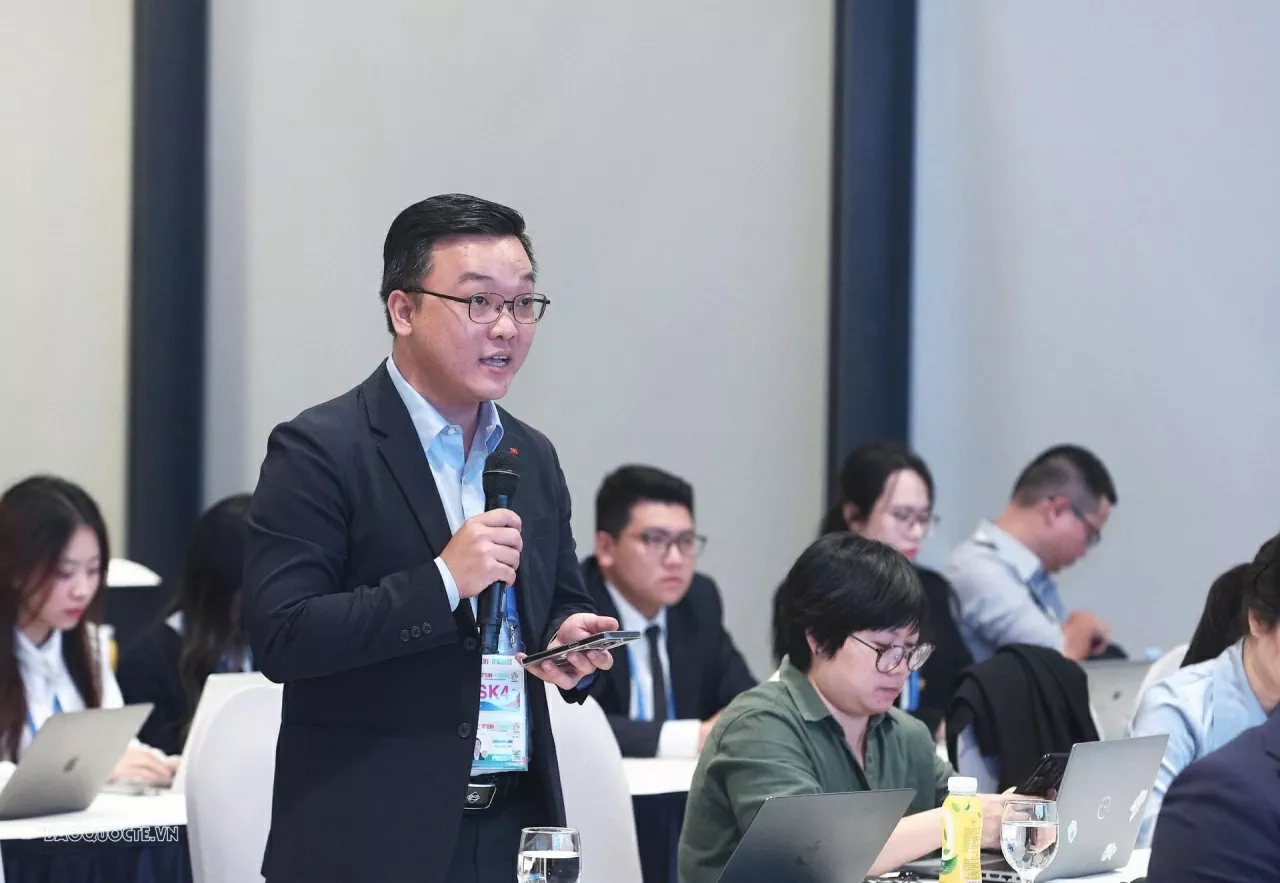 |
| Tuoi Tre Newspaper journalist asked about the implementation of the Summit results in the future. (Photo: Thanh Long) |
Bringing Summit results into practice
Answering questions about the implementation of the Summit results in the future, Minister of Foreign Affairs Le Hoai Trung informed that the documents approved by the Summit clearly outline the objectives, content, and implementation process.
Implementation requires agencies and localities of each country to effectively carry out tasks within their national scope, while coordinating with member countries, partners, and the ASEAN Secretariat.
To achieve this, each government needs to have an action program and specific plan. Based on this, businesses and related organizations also need to proactively develop plans and propose specific implementation measures.
Another important aspect emphasized by the Minister is the coordination among member countries and partners during the implementation process.
For instance, this Summit proposed the establishment of the ACMECS Business Council. The head of Vietnam's Foreign Affairs expressed appreciation for this initiative, as currently, member countries have investors in Vietnam, and Vietnam also has investors in these countries.
The establishment of the ACMECS Business Council will facilitate investor activities in member countries and promote coordination among investors.
 |
| Journalist from Mekong-ASEAN Magazine asked about the practical outcomes of the Summit for Vietnam. (Photo: Thanh Long) |
Answering a journalist's question about the practical outcomes for Vietnam, Minister Le Hoai Trung stressed that although ACMECS and CLMV have various cooperation fields, overall, these fields are very suitable for Vietnam's socio-economic development needs, growth model, and development model. The aim is to achieve a peaceful, stable environment; rapid and sustainable development, especially leveraging the role of science and technology, while promoting existing growth drivers and fostering new development drivers; and improving people's living standards.
Based on this, the Minister affirmed that, firstly, the directions and approaches in the cooperation of the two mechanisms are highly suitable for Vietnam.
Secondly, through the two mechanisms, Vietnam will enhance cooperation not only at the government level but also through cooperation between governments, promoting collaboration with organizations and businesses of other countries.
Thirdly, from this cooperation, when cooperation activities among businesses, people, and scientists in identified fields yield results, these outcomes are expected to become substantial development resources in practice.
Minister of Foreign Affairs Le Hoai Trung expressed hope that these transitions will meet Vietnam's development requirements in the new phase, as well as the development needs of other member countries in CLMV and ACMECS.


