





UNCLOS remains the cornerstone for order at sea: Canadian scholar
WVR - Captain Hugues Canuel, Adjunct Assistant Professor, Royal Military College of Canada suggested that, long-term interest of Canada like-minded partners among East Sea (internationally known as South China Sea) littoral states lies in strengthening compliance and implementation of UNCLOS.
Latest
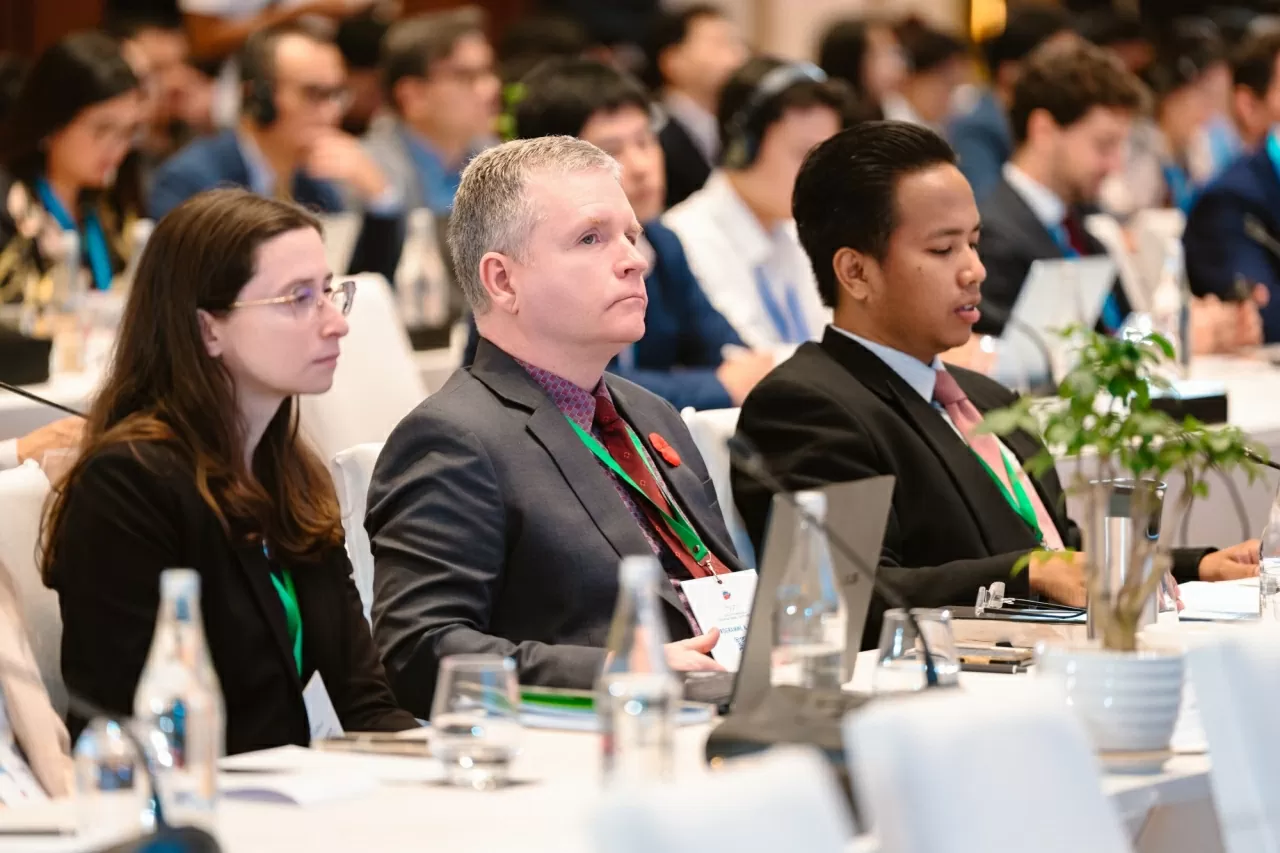 |
| Captain Hugues Canuel, Adjunct Assistant Professor, Royal Military College of Canada at the 17th East Sea International Conference taking place from November 3-4 in Da Nang. (Source: Diplomatic Academy of Vietnam) |
How would you evaluate this year’s Conference theme - “Unity in Uncertainties” - in the context of evolving situation in East Sea and increasingly complex regional security environment?
The theme “Unity in Uncertainties” is very appropriate for the East Sea today. The region faces accelerating strategic competition, rapid maritime technological disruption and higher uncertainty over escalation management.
In this context, solidarity should not mean alignment with any single great power—it should mean commitment to shared principles, shared understanding and shared responsibility to reduce risk. For coastal and middle powers in particular, solidarity is a way to preserve agency, reinforce the rules-based maritime order and resist having outcomes defined exclusively through great power rivalry.
At the same time, uncertainty also creates space for constructive innovation. Practical cooperation on maritime governance, information-sharing, environmental protection and scientific data exchange allows states to build stability through behaviour, not just rhetoric.
“Unity in Uncertainties” therefore captures both the challenge and the opportunity: through transparent cooperation that does not prejudice sovereignty, states can collectively shape conditions for stability and prevent uncertainty from becoming a vector for coercion or miscalculation.
How does Canada view the role of international law, particularly the 1982 United Nations Convention on the Law of the Sea (UNCLOS), in maintaining peace, stability and order in the East Sea?
Canadians believe that UNCLOS remains the cornerstone for order at sea. For Canada, as a trustworthy Pacific nation and a dependable trading partner, international law provides predictability and reduces the risk that disputes evolve into force.
The rules-based maritime domain is also essential for smaller and middle powers who depend on global sea lines of communication. UNCLOS and UNCLOS-based rulings, such as the 2016 Permanent Court Arbitration (PCA) award regarding the dispute between the Philippines and the People’s Republic of China, provide legal clarity in the East Sea and should guide state behaviour.
However, international law is not only a legal instrument, it also provides the institutional framework through which stability can be sustained. UNCLOS allows disagreements to be managed without escalation, it allows states to communicate claims in a mutually understandable language, and it provides a framework for legitimate expectations.
The long-term interest of Canada like-minded partners among the East Sea littoral states lies in strengthening compliance and implementation of UNCLOS through practical cooperation, whether through capacity-building, information-sharing or supporting regional maritime governance initiatives that reinforce the universality of the Convention.
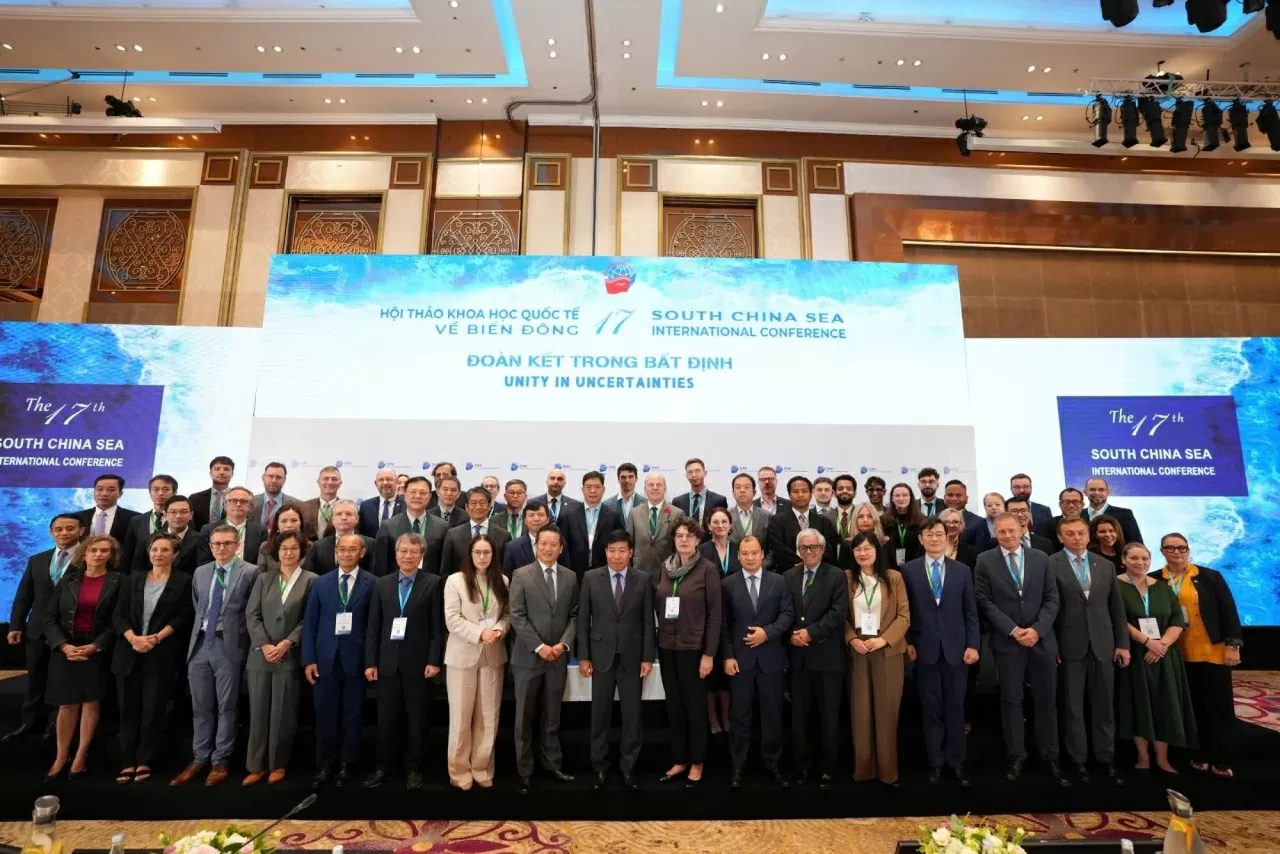 |
| Delegates take a group photo. (Source: Diplomatic Academy of Vietnam) |
In your opinion, what should the international community do to build trust and promote cooperation in the East Sea – a region of strategic importance to global trade?
The international community should broaden cooperation beyond sovereignty and deterrence and invest more in practical, functional initiatives that reduce risk and enhance maritime governance. This includes expanded maritime scientific cooperation, enhanced domain awareness information-sharing, more multilateral exercises, as well as wider access to climate and fisheries data.
These are areas where littoral states, ASEAN partners, and responsible extra-regional actors can cooperate constructively without prejudicing sovereignty claims or maritime entitlements.
Such functional collaboration builds trust not through political slogans but through shared operational work. The East Sea is too important for global trade for this cooperation to wait until every major strategic issue is resolved.
By prioritizing transparency, predictable rules and responsible stewardship of the maritime domain, the region progressively reduces uncertainty, limits the risk of miscalculation and strengthens an order consistent with international law — an order that empowers littoral states and protects the common global interest in safe and lawful navigation.
| The role of ITLOS in the legal order for the seas and oceans WVR - Over nearly 30 years, the International Tribunal for the Law of the Sea (ITLOS) has played a significant role in upholding the integrity ... |
| Vietnam calls for full adherence to UNCLOS legal standards, obligations WVR/VNA - All countries, regardless of size, must fully comply with the legal standards and obligations under the United Nations Convention on the Law of ... |
| Vietnam remains committed to protecting PwDs’ rights VNA/WVR - As an active member in implementing the CRPD, Vietnam hopes to receive technical support from the committee and development partners to further promote ... |
| UNCLOS 1982: A Comprehensive Legal Framework for the Seas, Enduring Through Time WVR - In an interview with The World and Vietnam Report, to mark the 31st year since UNCLOS came into effect, Associate Professor Dr. Nguyen ... |
| UNCLOS 1982 – the 'backbone' for Vietnam in formulating maritime policies and legal frameworks WVR - As one of the first 107 countries to sign the 1982 United Nations Convention on the Law of the Sea (UNCLOS) and the ... |


