


Roundtable discussion on promoting sustainable development through International cooperation in science and education
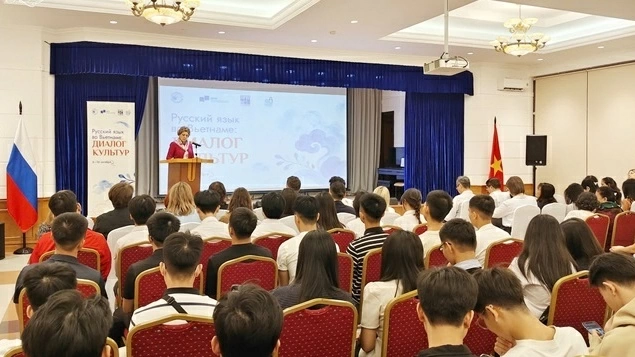
WVR - On the afternoon of August 26, a roundtable discussion themed “International Cooperation in Science and Education as a Driver for Sustainable Development” was held in Hanoi, attracting experts, scientists, educators, and delegates from both domestic and international spheres.
Latest
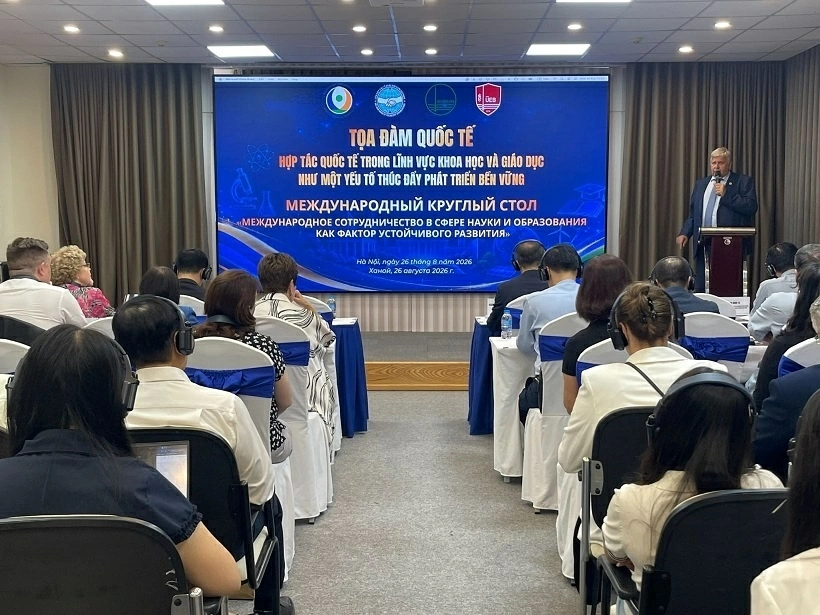 |
| The Roundtable discussion created a dialogue space for experts from both domestic and international backgrounds (Photo: Tran Dung) |
The event was organized by the Vietnam Union of Friendship Organizations and the World People's Council in collaboration with the University of Economics - Vietnam National University, Hanoi, as part of the activities “World People's Council Days in Vietnam 2026”.
Attending the seminar from Vietnam were representatives from the Vietnam Union of Friendship Organizations, Vietnam National University, Hanoi, Vietnam Academy of Science and Technology, University of Economics - Vietnam National University, Hanoi, along with representatives from universities, research institutes, businesses, and Vietnamese experts, scholars, and scientists.
From the Russian Federation, attendees included Mr. Andrey Belyaninov, Secretary-General of the World People's Council; Ms. Yulia Petrova, Deputy Secretary-General of the World People's Council; Ms. Alexandra Ochirova, UNESCO Goodwill Ambassador; Mr. Viktor Pavlovich Timonkin, Counselor of the Russian Embassy in Vietnam, along with other delegation members.
Cooperation in education and science for sustainable development goals
In his opening remarks, Assoc. Prof. Dr. Le Trung Thanh, Vice Rector of the University of Economics - Vietnam National University, Hanoi, emphasised: “Sustainable development goals cannot be realized by a single nation or isolated organizations but require international cooperation networks, especially in science and education.”
According to Assoc. Prof. Dr. Le Trung Thanh, the seminar focused on three core areas: educational cooperation; scientific cooperation, research, and technology application; and the connecting role of international organizations. These are essential fields that contribute to expanding academic networks, sharing knowledge, and finding practical cooperation initiatives in a constantly changing world.
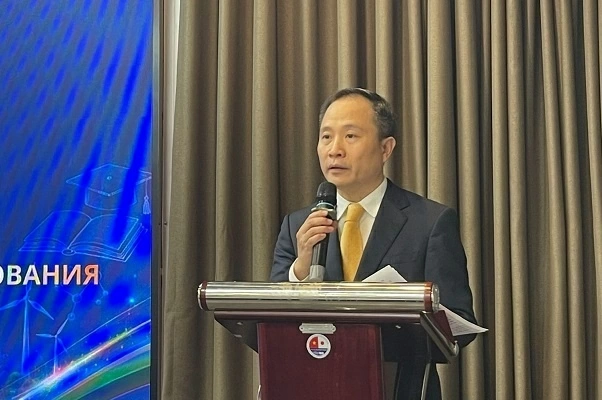 |
| Assoc. Prof. Dr. Le Trung Thanh, Vice Rector of the University of Economics - Vietnam National University, Hanoi, speaking. (Photo: Tran Dung) |
During the seminar, Vietnamese and Russian speakers shared perspectives on the role of international cooperation in education, science, and sustainable development, while emphasising the connection between knowledge, culture, peace, and human development.
Ms. Alexandra Ochirova, UNESCO Goodwill Ambassador, presented a paper titled “Educational Cooperation as a Pillar for Sustainable Development - A Framework for Multilateral Cooperation”.
The paper highlighted the role of education in shaping human resources, fostering understanding, and building the necessary foundations for cooperation among nations.
The UNESCO Goodwill Ambassador affirmed that education and culture are the foundations for the sustainable development of human civilization, and sustainable development must be centered on people.
“Our thinking should be global, but actions must start from the smallest things. We need to educate the younger generation, and technology should be used to expand access to education,” she shared.
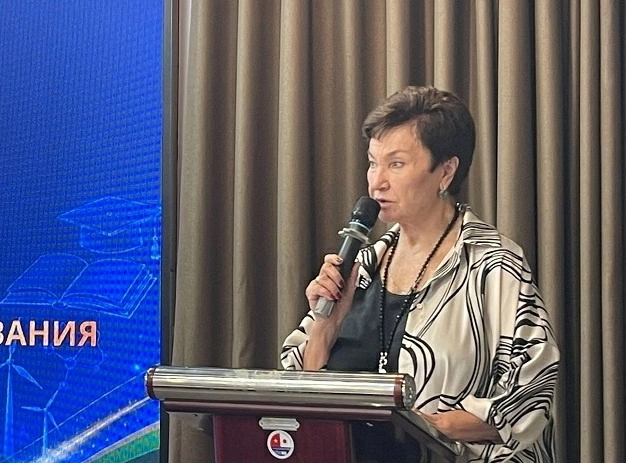 |
| Ms. Alexandra Ochirova, UNESCO Goodwill Ambassador, presenting her paper. (Photo: Tran Dung) |
Speaking at the event, Assoc. Prof. Dr. Hoang Anh Son, Director of the Academy of Science and Technology under the Vietnam Academy of Science and Technology, stated: “International cooperation not only brings capital and modern technology and equipment but also opens the door to knowledge, allowing Vietnamese scientists to participate in global research networks.”
Based on Vietnam’s experience, he proposed enhancing international cooperation in research and high-level human resource training, strengthening technology transfer and mastery, and promoting “technology diplomacy”.
The discussions not only focused on expanding partnerships between universities, promoting scientific and technological cooperation and innovation but also on building common human values, enhancing understanding among nations to create a favorable social foundation for sustainable development.
In the context of science, technology, and innovation playing an increasingly important role in the development of each nation, international cooperation also opens opportunities for educational and research institutions to share resources, connect experts, and implement joint training and research programs.
Through this, knowledge is more widely disseminated, while creating conditions for research results to be transformed into solutions serving life and socio-economic development.
Connecting resources, promoting substantive cooperation
After the presentations, delegates engaged in exchanges and Q&A sessions moderated by Ms. Yulia Petrova, Deputy Secretary-General of the World People's Council, Professor at the Financial University under the Government of the Russian Federation, and Dr. Nguyen Tien Minh, lecturer at the Faculty of Economics and International Business, University of Economics - Vietnam National University, Hanoi.
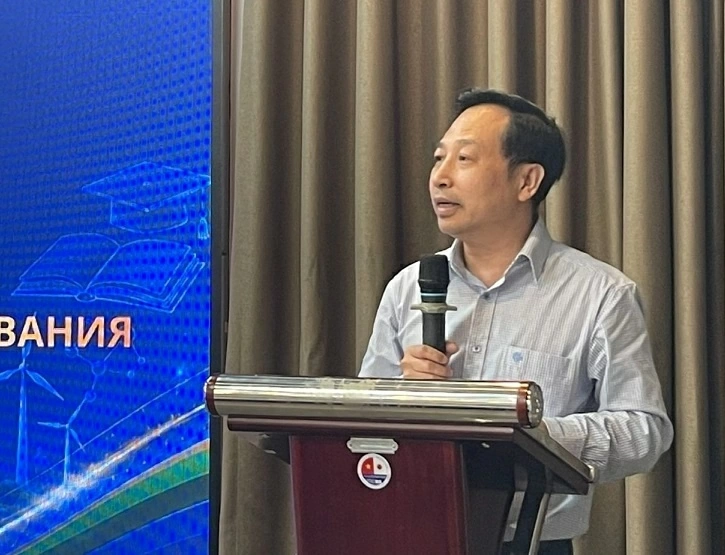 |
| Assoc. Prof. Dr. Hoang Anh Son, Director of the Academy of Science and Technology under the Vietnam Academy of Science and Technology, speaking. (Photo: Tran Dung) |
The discussions focused on clarifying how to deepen international cooperation in education and science, as well as further exploring the role of international organizations in connecting knowledge and resources, aiming to build a multilateral, substantive, and long-lasting cooperation model.
From the exchanges at the seminar, delegates suggested that international cooperation should be implemented in a practical manner, linked to the development needs of each country and the contribution capacity of partners.
Besides cooperation between educational institutions, research institutes, businesses, and international organizations, creating an environment for scientists, experts, and the younger generation to participate also holds significant importance in forming sustainable cooperation networks.
Concluding the seminar, delegates agreed on the importance of enhancing connectivity and sharing resources in science and education, particularly emphasizing the role of cultural and human values in the development process.
The exchanges at the program are expected to lay a foundation for further Vietnam-Russia cooperation initiatives, contributing to the promotion of science, education, and sustainable development. Furthermore, the seminar demonstrated that international cooperation in science and education is not only a professional connection but also a bridge between people, cultures, and nations.
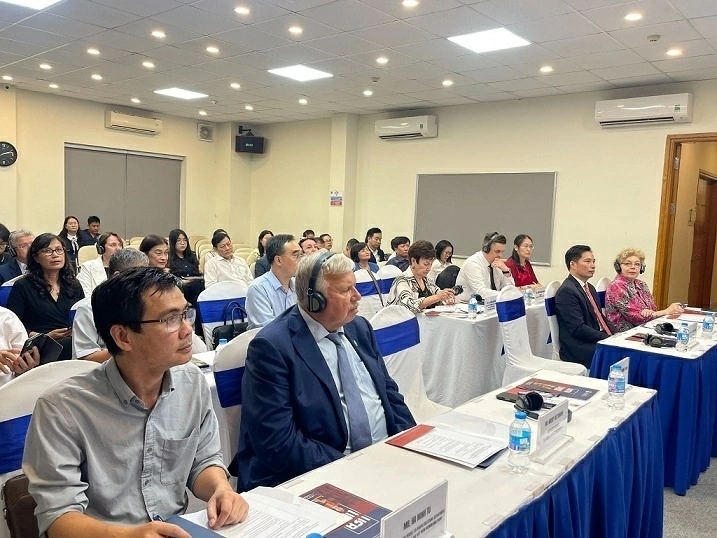 |
| The delegation agrees on the need to promote international cooperation in science and education (Photo: Tran Dung) |
On the journey towards sustainable development goals, maintaining dialogue, sharing knowledge, and expanding cooperation networks will continue to be essential requirements.
The results and initiatives discussed at the seminar could become the basis for parties to further concretize suitable cooperation programs, contributing to the development of science, education, and human resources, while strengthening understanding and friendly relations between Vietnam and the Russian Federation.