




Preserving the Vietnamese language through everyday things
WVR - As the Head of the Vietnamese Language Teachers Club in Sweden, teacher Sally Luu Nguyen (Nguyen Thi Luu) had a conversation with The World & Vietnam Report on the occasion of the Day to Honour the Vietnamese Language in the Vietnamese Community Abroad (September 8).
Latest
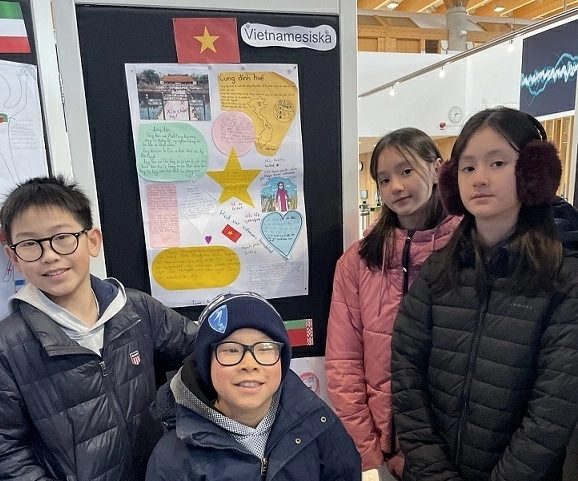 |
| The teaching of Vietnamese in Sweden and many other countries is maintained, with an increasing number of students enrolling in Vietnamese classes. (Photo: Courtesy by author) |
What motivated you and the teachers to create a connecting space for those teaching Vietnamese in Sweden?
The Vietnamese Language Teachers Club in Sweden was officially established on May 19, 2026. During this process, Vietnamese Ambassador to Sweden Tran Van Tuan made significant contributions, from proposing ideas, encouraging, and promoting to signing the decision to establish the club in a relatively short time.
Personally, I and the members are very proud and quite confident upon receiving the decision to establish the club at the end of June. The club's expectations are, of course, greater. We aim to enhance our knowledge together, improve our expertise, share materials and teaching methods, thereby making Vietnamese lessons more lively, attractive, and effective.
Teaching Vietnamese to Vietnamese children born and raised abroad has its own characteristics. In your opinion, what are the biggest challenges, and how should teachers innovate their methods to make Vietnamese more approachable and appealing to the children?
This is a very practical issue in teaching Vietnamese in Sweden. Besides the limited time for learning Vietnamese at school, the use of Vietnamese in daily activities is also minimal. Some children hardly have the opportunity to listen to or watch news in Vietnamese; their exposure to Vietnamese culture and art is also very limited.
Therefore, enabling them to read and understand literary texts is not easy, especially with Vietnamese folklore or critical realism literature.
For children born in Sweden with one parent not being Vietnamese, conveying the content of Vietnamese poetry is even more limited. This is truly regrettable.
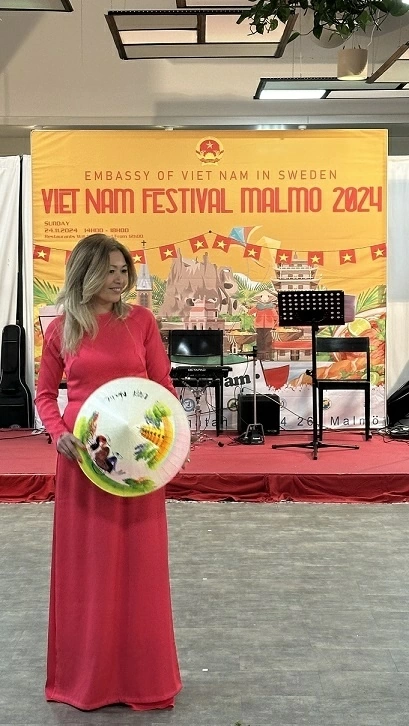 |
| Teacher Sally Luu Nguyen. (Photo: Courtesy by author) |
Many parents wish for their children to be proficient in Vietnamese, but the children are heavily influenced by the local language environment. In your opinion, how can learning Vietnamese become a natural need, a joy, and a source of pride in their roots?
In reality, the teaching of Vietnamese in Sweden and many other countries is still maintained, and the number of students enrolling in Vietnamese classes continues to increase. This is the motivation that gives teachers more strength.
Perhaps, the love for the profession, the love for the Vietnamese language, and the pride of being Vietnamese have helped us convey that love to the children. Many have embraced and accompanied the learning of Vietnamese for 9-12 years.
As they grow older, understand Vietnamese more deeply, and partially understand Eastern culture, they will understand their parents better, understand themselves better, and recognize the differences between Eastern and Western cultures. From there, they also become more confident.
In my opinion, adults should not turn “responsibility” into an obligation for future generations. Educators and parents should become storytellers.
Tell them about Vietnam through historical periods, about the origins of their names, about Vietnamese people who have shared and helped each other in times of difficulty and adversity.
Sing them lullabies, guide them in playing traditional games, and explore traditional dishes together. When curiosity and the desire to learn about their roots are awakened, they will learn with their own consciousness. And when they can proudly introduce themselves as Vietnamese to others, they will naturally preserve and spread those values.
Resolution No. 23-NQ/TW of the Politburo sets out many orientations for promoting the great unity of the entire nation, including connecting the overseas Vietnamese community. From the reality in Sweden, how do you perceive the role of the Vietnamese language and Vietnamese education in connecting the diaspora with their homeland?
The Vietnamese community in Sweden is not as large as in some other European countries like Germany, France, Poland, or the Czech Republic, but the Vietnamese community here has a spirit of solidarity. People help each other in work and life and create opportunities to meet during holidays, Tet, or birthdays.
The “Vietnamese identity” is perhaps most clearly expressed when we live far from the homeland. Vietnamese is one of the most precious things whenever Vietnamese people meet.
Only in Vietnamese can we address each other intimately; inquiries in Vietnamese also carry a very unique sentiment. Therefore, families registering their children to learn Vietnamese partly shows the awareness of protecting and preserving the Vietnamese language within the Vietnamese community in Sweden.
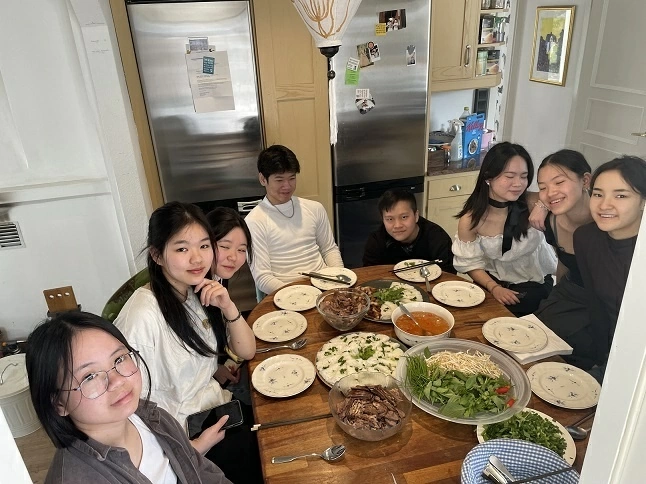 |
| Students enjoying cozy meals at teacher Sally Luu Nguyen's home. (Photo: Courtesy by author) |
Everyone has their own way of connecting with the community. For me, the important thing is that students not only meet in the learning environment but also have family spaces where they can express their “Vietnamese identity” naturally, even if some have Western names.
Whenever the students gather at my house, speaking Vietnamese, cooking Vietnamese dishes, or watching Vietnamese movies together, not only the students but I also feel happier. For young children, meeting peers with Vietnamese roots at the city library, borrowing Vietnamese books to read, is also a joy. Some have become friends from such meetings.
What role does the family play in maintaining the Vietnamese language, culture, and awareness of origins? What can parents do in daily life to ensure the Vietnamese language is not “disconnected” between generations?
If we have heard lullabies or stories from a young age, we should not forget to sing lullabies and tell stories to our children from when they are very young.
Vietnamese families should have picture books and reading materials in Vietnamese at home for both parents and children. Young people should also spend money on books to read or can give books as gifts instead of other material gifts.
Vietnamese Representative Missions can also find ways to bring Vietnamese books to the local market or convey them through appropriate channels.
In Sweden, the Vietnamese Language Teachers Club will seek locations to bring Vietnamese books closer to Vietnamese people and foreigners who want to learn about the Vietnamese language and culture. In this process, bilingual books are essential to make accessing Vietnamese easier.
In which direction will the Vietnamese Language Teachers Club in Sweden develop? Do you have any suggestions for building a more effective support network for teachers, students, and Vietnamese families abroad?
As the Head of the Club, I, along with the new Executive Committee, are unifying common operational methods. I am very fortunate and proud because the members all have high expertise and great dedication to protecting and promoting the Vietnamese language.
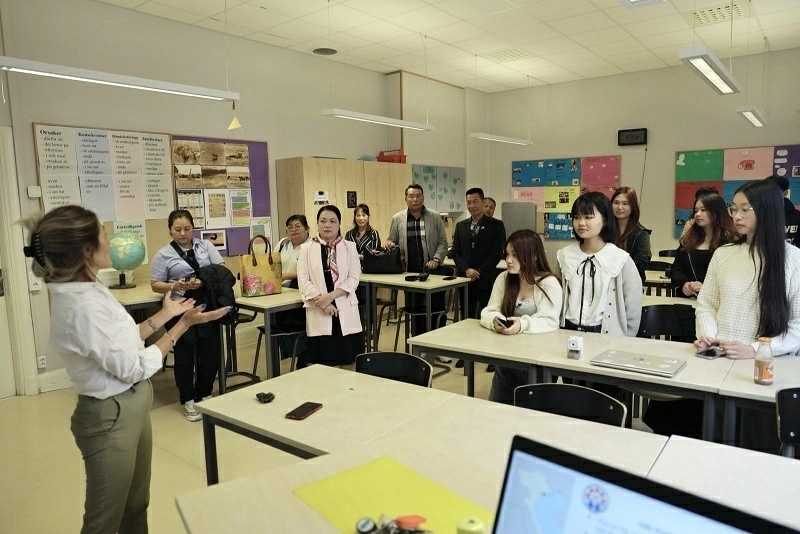 |
| Teacher Sally Luu Nguyen in the classroom. (Photo: Courtesy by author) |
The club plans to organize online meetings every two months and meet in person once a year during the Congress on May 19. At the same time, we will discuss with the Vietnam Education Publishing House of the Ministry of Education and Training, hoping to have more teaching materials, storybooks, and comics with suitable content that is easy to receive for children in Sweden specifically and Western countries in general.
Through the connections of Vietnamese Representative Missions abroad, including the Embassy, we have the opportunity to connect with sisters and friends in many European countries, who have expertise and experience in Vietnamese language and Eastern culture training. I hope they will become lecturers and experts accompanying the Vietnamese Language Teachers Club in Sweden in the mission of preserving and spreading the Vietnamese language.