



Vietnam-Indonesia: Celebrating language, strengthening roots
Every year on 8 September, Vietnam celebrates Language Day. It is more than a ceremonial date. It is a deliberate effort to nurture patriotism and a sense of belonging among its people. In a world that moves fast and often pulls individuals toward more private, self-focused lives, the day serves as a quiet reminder: language carries the soul of a nation.
Latest
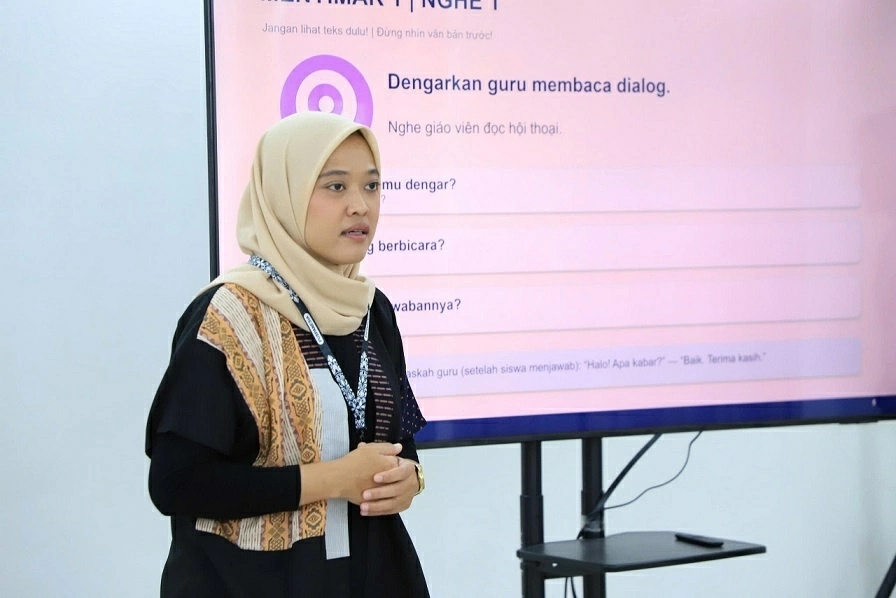 |
| Teaching Indonesian at the Indonesian Embassy in Hanoi in 2026. (Photo: Indonesian Embassy in Vietnam) |
Every year on 8 September, Vietnam celebrates Language Day. It is more than a ceremonial date. It is a deliberate effort to nurture patriotism and a sense of belonging among its people. In a world that moves fast and often pulls individuals toward more private, self-focused lives, the day serves as a quiet reminder: language carries the soul of a nation.
Indonesia faces a similar reality. Each October is designated as Language Month, centred around the Youth Pledge of 28 October 1928. Through activities across the country, the month aims to promote, nurture, and develop the Indonesian language and its literature. The goal is clear namely to deepen pride and affection for the language that unites the archipelago, specially for younger generations.
Both countries understand the pressure of modern times. Cosmopolitan lifestyles, constant digital noise, and the individualistic messages that dominate social media can slowly weaken emotional ties to home. When daily life becomes more global and more personal, the shared words that once bound communities can start to feel distant. Language days and language months are therefore not nostalgic gestures. They are practical responses to that risk.
Vietnamese and Indonesian are linguistic distant (different families, and different grammatical tools) but culturally closer than the language difference might suggest. The two nations share more common ground than many realise. Both societies grew from agrarian roots and long valued the community above the single person. The Vietnamese proverb “Một cây làm chẳng nên non, ba cây chụm lại nên hòn núi cao”; one tree alone cannot make a mountain, but several trees together form a high peak captures a spirit familiar of “Gotong Royong” across Indonesian villages as well. These deeper cultural patterns make mutual understanding natural rather than forced.
History has added its own threads. In the twelfth century, a Champa princess married a Javanese prince, creating an early link between the two regions. Even basic number words show faint phonetic similarities if one listens carefully.
In the modern time, the friendship between founding fathers Sukarno and Ho Chi Minh gave the bilateral relationship a personal warmth after formal ties began in 1955. Two leaders with strong nationalist convictions helped inspire independence movements far beyond their own borders. Their shared outlook still echoes in the way both nations approach questions of identity and sovereignty.
In this context, teaching Indonesian to foreign speakers takes on special meaning. Since 1993 the Indonesian government has formally supported this effort through the BIPA program or Indonesian for Foreign Speakers. BIPA was launched to promote the Indonesian language and culture systematically to learners around the world. Today it operates through partner universities, cultural centres, embassies, and offering structured courses that combine language skills with cultural understanding.
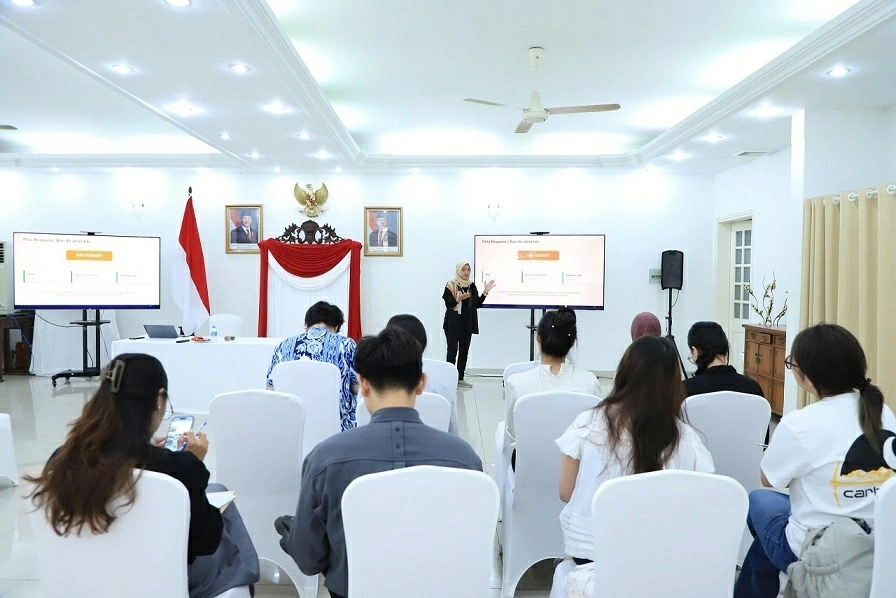 |
| Teaching Indonesian at the Indonesian Embassy in Hanoi in 2026. (Photo: Indonesian Embassy in Vietnam) |
In Southeast Asia, where several ASEAN countries already share linguistic roots with Indonesian, BIPA plays a particularly practical role. It helps students in Vietnam and neighbouring countries gain access to a language that opens doors across Malaysia, Brunei Darussalam, and Singapore, while also strengthening people-to-people ties within the region.
For young people across ASEAN, learning Indonesian is not only an academic exercise. It is a practical bridge to neighbours who already share parts of the same linguistic heritage. Language becomes a cultural connector and a useful tool. It eases friendship, study, and professional cooperation. In a region that continues to integrate, the ability to communicate with ease creates real advantages. At the same time, language strengthens the quieter work of keeping national languages alive and valued amid global currents.
Vietnam’s Language Day on 8 September and Indonesia’s Language Month in October therefore speak to the same need. They invite citizens, especially the young, to treat their language not as a background skill but as something worth protecting and using with pride. And teaching Indonesian to speakers of other languages forms a natural extension of that effort. It allows the language to travel, to be heard in new classrooms, and to build understanding across borders while remaining rooted at home.
The challenges of modern life will not disappear. Individualism and digital distraction will continue to compete for attention. What matters is the consistent choice to keep language visible, spoken, and celebrated. Small efforts from classroom conversations to public events add up. As another Vietnamese saying reminds us, “Có công mài sắt, có ngày nên kim”; with steady effort, even iron can become a needle.
By marking these dates with purpose, Vietnam and Indonesia affirm that language is not merely a tool of communication. It is a living expression of love for the homeland, belonging, continuity, and quiet strength. And in classrooms where Indonesian is taught to new learners, and in communities that pause each September and October to honour their own languages, that strength is renewed.