




Overseas Vietnamese and the aspiration to elevate Vietnam's global profile (Part II): Building literary bridges
WVR - Bilingual works such as "Nhịp điệu Việt"(Vietnamese Rhythms) and "Lục bát nếp thời gian" (Luc bat poem in the flow of time) , along with many other poetry collections by poet and translator Vo Thi Nhu Mai (residing in Perth, Australia), have reached international readers. With persistent efforts, she and many overseas Vietnamese writers are building bridges to enrich Vietnam's presence on the global literary map.
Latest
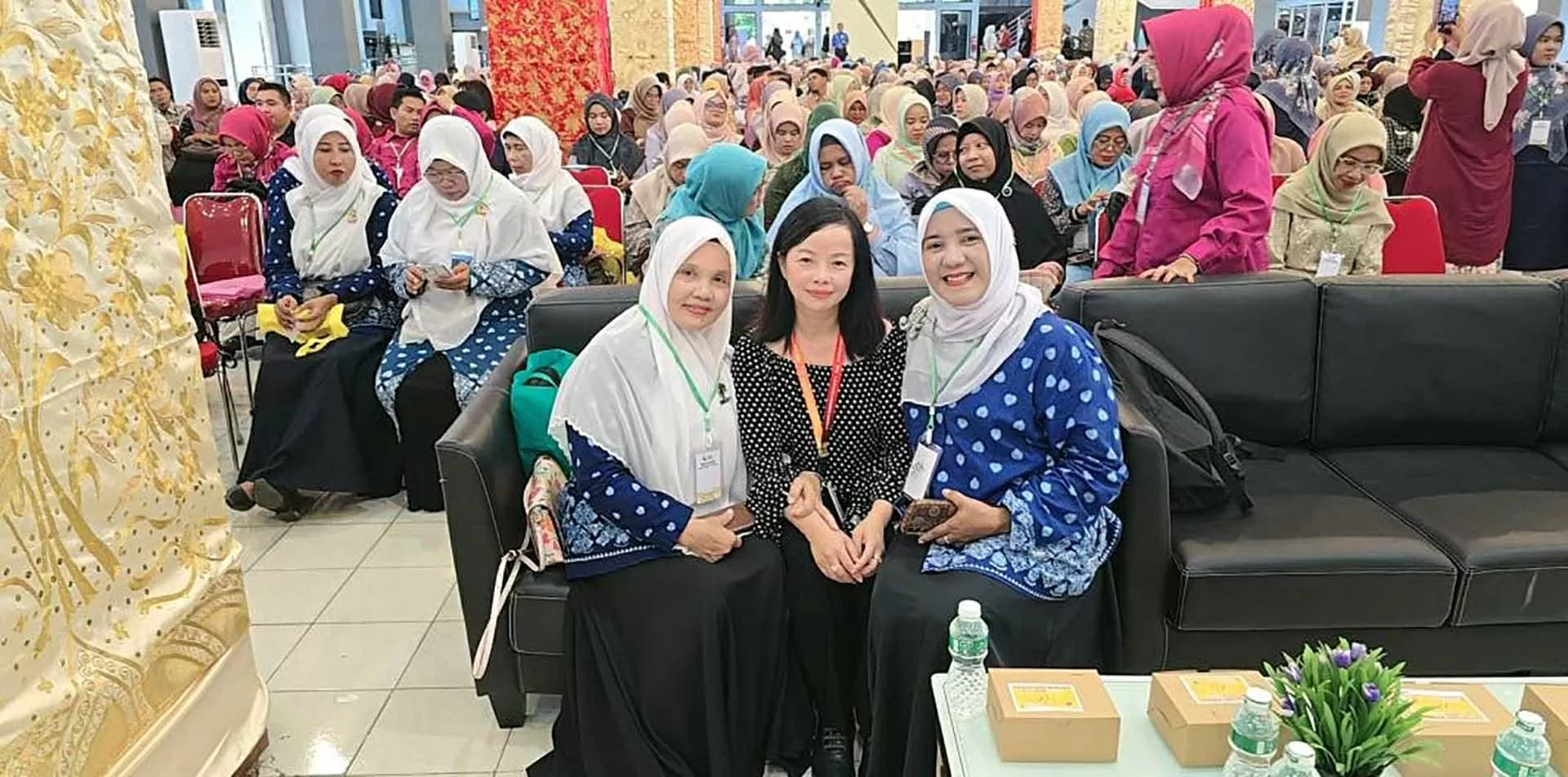 |
| Overseas Vietnamese and the aspiration to elevate Vietnam's global profile: Vo Thi Nhu Mai attending a literary festival in Indonesia. (Photo: Courtesy by author) |
How do you assess the role of overseas Vietnamese artists as cultural bridges to the world?
I believe that overseas Vietnamese artists are the "soft bridges" that bring Vietnam to the world through art and creativity. They not only spread Vietnamese cultural values to local communities in a genuine and approachable manner but also strengthen the solidarity of the Vietnamese community abroad.
At many forums, overseas delegates affirm that unity is the foundation for preserving and promoting national cultural identity while nurturing a confident younger generation that integrates without losing their roots.
With a deep understanding of the language, customs, and psychology of both sides, overseas Vietnamese artists are well-positioned to ignite pride in Vietnamese culture, creating emotional connections between generations and between domestic communities and overseas Vietnamese. Additionally, we play a role in opening cultural spaces: creating, translating, performing, and exhibiting art to bring Vietnam closer to international friends, awakening a sense of responsibility and national pride in every expatriate.
Overall, the role of overseas Vietnamese artists today is not only in creating and performing but also in inspiring, preserving, and renewing Vietnamese cultural values in the flow of integration.
It is often said, "One tree does not make a forest" to rally the collective strength of overseas Vietnamese in contributing to national development and promoting Vietnam's image. In literature, do you believe in the collaboration of colleagues in other countries?
Not only myself, but there are also many exemplary figures passionate about literature. For instance, author Quynh Iris Nguyrn – de Prelle in Europe has tirelessly organized Vietnamese cultural festivals, performed Vietnamese poetry, and promoted the Vietnamese language and culture in local communities and international festivals, affirming the responsibility and pride of overseas Vietnamese artists.
In Canada, the novel "Thuyen" (Ship) (2025) by author Nguyen Duc Tung has attracted many readers by bravely depicting the tragedy of boat people with profound humanity, bringing the painful memories of a part of the nation back to the mainstream literary flow, contributing to healing and enriching the common spiritual heritage.
Similarly, poet Truong Anh Tu, residing in Germany, through the poetry collection "Trang may toc me" (Mother’s Hair White as Clouds) (published by Kim Dong Publishing House), has infused children's poetry with a new musical breath, deeply imbued with maternal love, both carrying the Vietnamese soul and expanding international horizons.
Likewise, writer Kieu Bich Huong, a Vietnamese-origin author living in Belgium, is striving to build cultural bridges between Vietnam and the world through the children's comic series "Mat hieu OGO" (OGO Code), thereby spreading the love for the Vietnamese language and pride in origins to the overseas Vietnamese community.
In June, the World Poetry Movement (WPM) organized a global poetry reading program titled "A Song of Love for Gaza". Vietnam was represented by poet Huu Viet - WPM Coordinator in Vietnam, poet Nguyen Quang Thieu - Chairman of the Vietnam Writers' Association, and myself.
I was tasked with compiling this entire program into a video clip, using the song "Let's sing for love" (poetry by Trương Anh Tu, English lyrics by me, music by Cung Minh Huan, singer Tuyet Mai) as the background music. This was also a valuable opportunity to further affirm the position of Vietnamese poetry in the global poetry exchange space, while nurturing a common humanitarian voice for the world poetry community.
Poet and translator Vo Thi Nhu Mai, born in 1976 in Lam Dong province, is known for works such as "Tan mạn" (Van nghe Publishing House, 2010), "Ben kia tit tap dai duong" (Across the Ocean Beyond) (Literature Publishing House, 2011), "Vuon co tich" (Fairy Garden) (Writers' Association Publishing House, 2015)... Since 2004, alongside her work as a primary school teacher in Western Australia, she has been passionate about translating Vietnamese authors' poetry into English. |
What is a particularly meaningful poetry or translation project for you at this time?
I am currently serving as a guest editor for an international poetry collection published by ISISAR in India, bringing together contemporary poets from Vietnam and India.
I am directly involved in translating this collection into English, contributing to cultural exchange and connecting poetry between the two countries. The collection will be published in a bilingual English-Bengali format to expand its influence and reach readers in both countries.
Additionally, I am still seeking a suitable publisher for the work "Miệt vườn xa lắm" by writer Dạ Ngân, as for a work to be officially circulated in the international market, the support of a literary agent is essential. This is a key factor, as without them, bringing a work to the world would face many difficulties.
Vietnam is increasingly focused on promoting literature to the world. As an author living and working abroad, do you have any suggestions to make this journey more effective and sustainable?
I think to effectively and sustainably promote Vietnamese literature abroad, it is essential to maintain the spirit of "seeking understanding, not seeking beauty" in translation - meaning prioritizing clear, understandable, and honest content delivery over pursuing elaborate aesthetics. Translation should serve the dissemination of knowledge and culture, allowing more people to access and appreciate the core values of Vietnamese literature.
Along with that, the selection of works to promote also needs to be calculated reasonably, appropriately, and timely, meaning choosing works that carry cultural value and are suitable with international tastes and trends, thereby increasing the ability to attract global readers.
Experience from community models shows that building a network of translators and collaborators with a spirit of sharing and community is crucial to harness collective strength, contributing to diversifying and enhancing the quality of translations.
It can be likened to "pressing the rice cooker button", requiring a quick and convenient mechanism, yet still preserving the essence of each grain of rice. No matter how widely literature is spread, it cannot lose its inherent identity and sophistication.
Promoting Vietnamese literature to the world requires systematic and synchronized investment, not only limited to translation but also including training professional translators, building international distribution channels, participating in book fairs, and organizing international cultural exchange events to create sustainable outreach.
At the same time, applying modern technology such as machine translation, electronic publishing, and social media will help optimize costs, enhance transmission quality, and bring Vietnamese literature closer to global readers.
Moreover, expanding multilateral cooperation with publishers, international cultural organizations, and overseas Vietnamese communities is a key factor in forming a strong network of connections, promoting bilingual and multicultural literary projects.
Most importantly, in the process of internationalization, Vietnamese literature needs to preserve its complete identity and core values, avoiding excessive adjustments to fit the market that may lose its distinctive features.