




Mekong International Forum 2026: Unblocking economic corridors, promoting Mekong Subregion connectivity
WVR - On October 23, in Hanoi, the Diplomatic Academy of Vietnam, in collaboration with the Konrad-Adenauer-Stiftung Foundation (Germany), organized the Mekong International Forum 2026 with the theme “Mekong – The Hub of Land-Sea Connectivity: From Corridors to Regional Integration”.
Latest
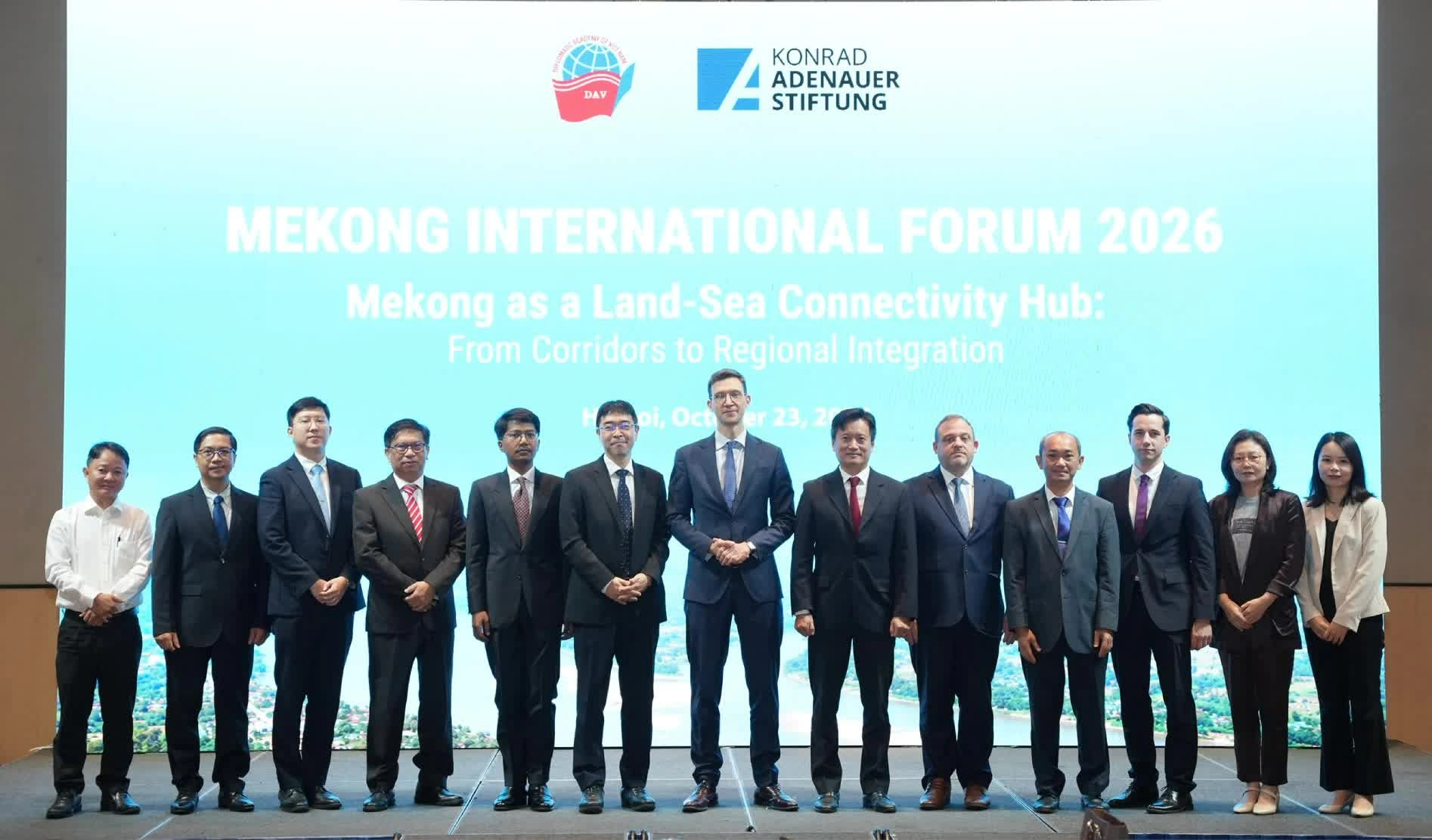 |
| Speakers take a commemorative photo at the Mekong International Forum 2026. (Source: Diplomatic Academy of Vietnam) |
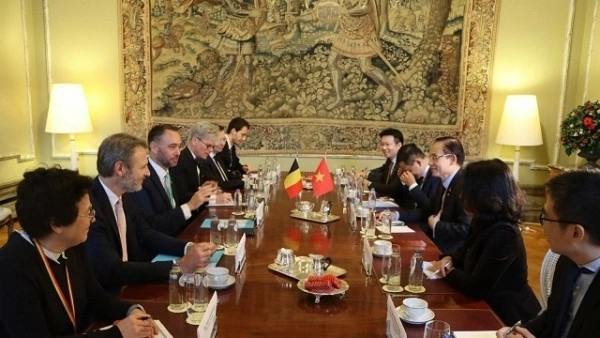
The forum focused on discussing the geo-economic shifts shaping the role of the Mekong subregion, while seeking solutions to enhance connectivity, economic integration, and the region's resilience.
The forum was attended by delegates, experts, and scholars from six countries in the Greater Mekong Subregion, including Cambodia, China, Laos, Myanmar, Thailand, and Vietnam, along with international partners.
Delegates concentrated on discussing orientations and solutions to leverage geographical advantages, strengthen connectivity between countries, and develop transport routes and trade corridors as drivers of regional economic growth.
Enhancing the strategic connectivity role of the Mekong Subregion
In his opening remarks, Dr. Nguyen Hung Son, Director of the Diplomatic Academy of Vietnam, emphasized the strategic role of the Mekong subregion in connecting land-based production centers with seaports and international trade networks.
Amid the restructuring of global supply chains, the subregion needs to better leverage its geographical and infrastructural advantages, gradually transforming transport corridors into a linked economic space, promoting regional trade, investment, and production.
For Vietnam, enhancing Mekong subregion connectivity with regional and international economic networks is crucial for market expansion, competitiveness enhancement, and investment attraction.
Vietnam can capitalize on its geographical position and port system to strengthen links between economic corridors and international logistics and trade networks, while promoting cooperation among countries to more effectively exploit the subregion's potential.
Expanding economic cooperation opportunities between Mekong and international partners
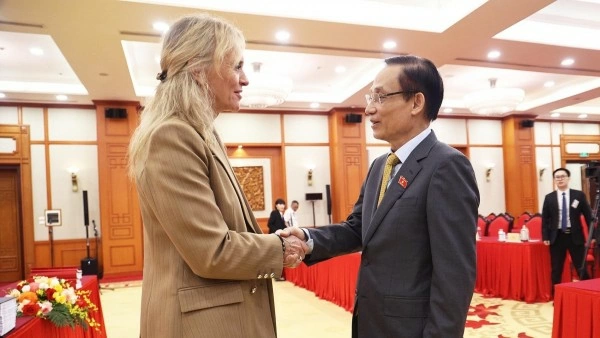
Speaking at the forum, Mr. Lewe Paul, representative of the Konrad-Adenauer-Stiftung Foundation, affirmed that the Mekong region is increasingly significant not only for subregional countries but also for partners, especially Germany and the European Union (EU).
Deeper regional connectivity and integration will contribute to expanding trade, diversifying supply chains, and enhancing economic cooperation between Europe and Asia.
Mr. Lewe Paul emphasized that connectivity is not just about building more roads, railways, or seaports but also about improving customs procedures, enhancing digital connectivity, and coordinating regulations among countries.
More importantly, these connections must create tangible economic opportunities, enabling local businesses to engage more deeply in regional and international markets, attract investment, and promote sustainable growth.
Additionally, connectivity initiatives need to ensure harmonious benefits among countries, align with each nation's development priorities, and mitigate the risk of forming unsustainable dependencies.
Multilateral dialogue and cooperation are considered essential foundations for maintaining stability and promoting long-term development in the Mekong.
Towards a connected and sustainable Mekong Subregion
Through three discussion sessions and one policy dialogue, the forum focused on finding solutions to address bottlenecks in transport connectivity, seaports, digital infrastructure, and energy; leveraging economic corridors to attract investment, develop production, and enhance regional linkages.
The exchanges contributed to promoting a connectivity approach linked to substantive economic integration, while expanding dialogue and cooperation between Mekong countries and international partners.
This is the sixth time the Diplomatic Academy of Vietnam has collaborated with the Konrad-Adenauer-Stiftung Foundation to organize the Mekong International Forum, continuing to create a space for policy and academic exchanges on common development issues of the subregion.
(Source: Diplomatic Academy of Vietnam)