




Finnish educational philosophy: How teachers retain their role in student-centered learning
The educational seminar “Finnish education bridge: From collaboration to leadership” recently took place in Ho Chi Minh City, gathering prestigious experts and educational managers from Finland and Vietnam.
Latest
As Vietnamese education is in dire need of comprehensive innovation, the role of educational leadership in the modern era has emerged as a pivotal issue.
In recent years, Finland has not only been known as the world’s happiest country according to the World Happiness Report but is also seen as a model for humanistic education - a place where students develop holistically without the pressure of grueling exams.
The seminar, organized by the Tan Thoi Dai Education System and the Vietnam-Finland International School (VFIS), brought together leading domestic and international experts, Finnish principals, and numerous educational managers and parents from the southern region.
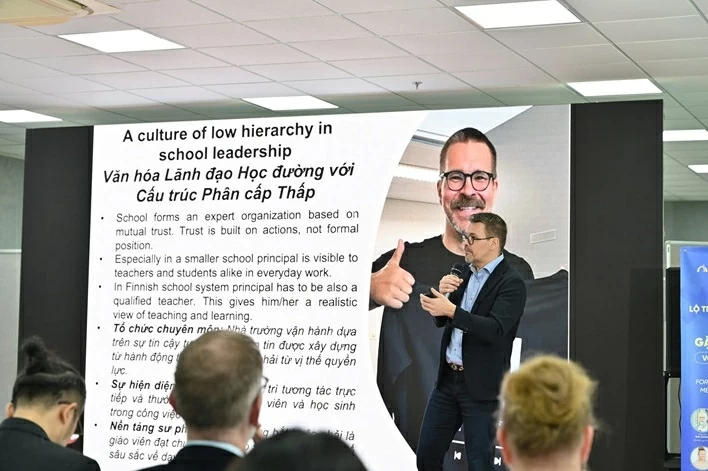 |
| Ossi Hermanni Kokkonen, Principal of Karkkila High School, talked about Finland’s culture and shared belief. (Photo: Embassy of Findland in Hanoi) |
When leadership is beyond management
During the discussion session for educational leaders, Finnish experts shared a core mindset: School governance is not merely about operating a system; it is the art of leadership that fosters autonomy, rooted in the core value of trust.
Finnish philosophy heavily emphasizes trusting and empowering teachers, and students are the center of all efforts. Speaking at the seminar, Mr. Ossi Hermanni Kokkonen, Principal of Karkkila High School, stated: “Teachers are given the power and space to build their own curriculum. That philosophy fosters a sense of responsibility and creates pedagogical effectiveness.”
A new vision for “educational leadership” in a complex society
According to the experts, a true educational leader does not just run a system based on procedures, control, and inspections. Instead, they are “architects” of an open environment where every teacher feels respected, happy, and able to maximize their personal potential.
“At VFIS, the basic educational program needs to achieve five elements, in which student initiative is prioritized to head toward a sustainable life. Additionally, teachers need to integrate various methods and build a learning community to move toward holistic education,” shared Ms. Miekk-Oja Suvi Kristiina, Principal of VFIS.
Echoing this view, Ms. Dao Thi Thu Thao, Deputy General Director of the Tan Thoi Dai Education System, argued that holistic education for a sustainable life is a vital goal for Finnish school models.
She added: “At Tan Thoi Dai, we apply Finnish philosophy and methods to all activities - from management and operation to teaching and culture building. This has succeeded with flying colors, first in the progress of our students and subsequently in the recognition from parents.”
Balancing leadership with empathy and technology
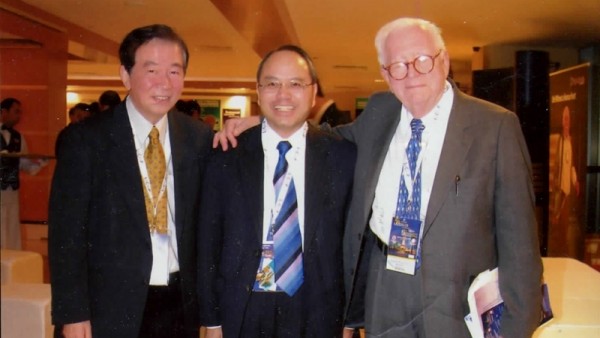
Beyond the philosophies of trust and interpersonal relationships, a standout moment was the presentation by Prof. Truong Nguyen Thanh (University of Utah, USA) regarding the role of Artificial Intelligence (AI) in modern education.
According to Prof. Thanh, AI can serve as a powerful “assistant,” helping teachers reduce their workload so that they can focus more on guiding and accompanying students. AI can handle most procedural and technical tasks, from lesson planning to making assignments. However, he emphasized that technology would never replace the primary role of the teacher.
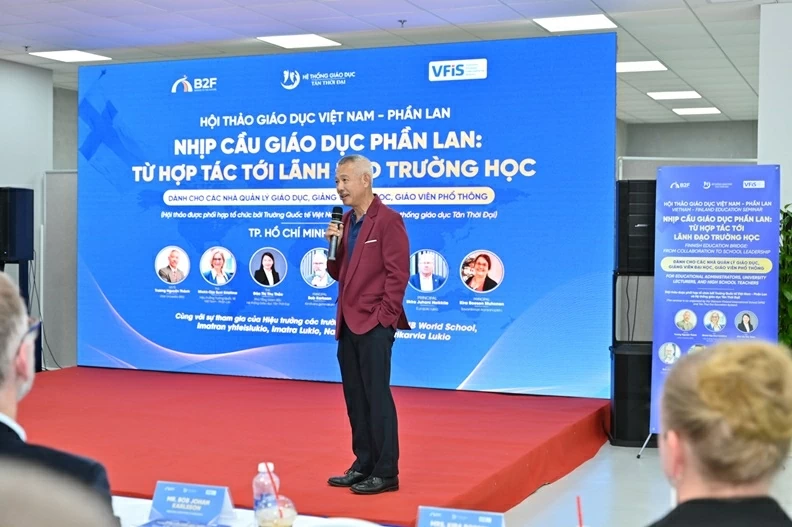 |
| Professor Truong Nguyen Thanh discusses the role of educators in the era of AI. (Photo: Embassy of Findland in Hanoi) |
"Students can learn from teachers and from AI. But teachers hold the role of directing, verifying, and ensuring that students are on the right track," Prof. Thanh implied. He firmly believed that teachers in the AI era were no longer someone who imparted knowledge but became companions who sparked curiosity and supported students in developing their mindset. This aligns perfectly with the student-centered philosophy of Finland, which values personalization and self-learning capabilities.
At the seminar, parents and educators also heard various valuable presentations reflecting the core spirit of Finnish education and practical perspectives on its application in Vietnam. Through direct exchanges with Finnish principals and experts, the key pillars of this model were clarified: trust-based education, human-centricity, school wellbeing, leadership development, and building a humanistic, sustainable learning environment.
The seminar “Finnish Education Bridge: From Collaboration to Leadership” concluded, delivering significant academic and practical value. Earlier, on January 16, 2026, at the Embassy of Finland in Hanoi, the Tan Thoi Dai Education System and a delegation of Finnish High School Principals signed an agreement to establish the Educators' Network.
This marks a new milestone in educational cooperation between the two nations, expanding opportunities for knowledge sharing and strengthening a shared vision and values in the process of educational innovation between Vietnam and Finland.