



Diplomatic sector plays a pioneering role in enhancing research, forecasting, and strategic advisory capacity
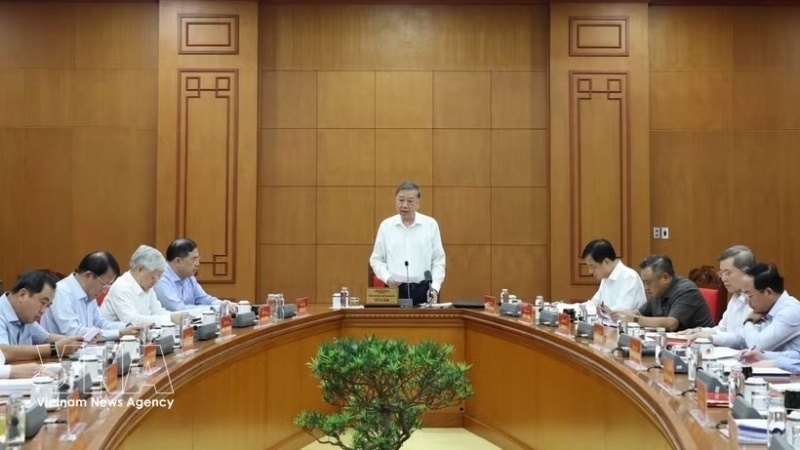
WVR - Mr. Nguyen Duc Trung, Deputy Head of the Party Central Committee's Commission for Policies and Strategies, delivered a speech at the National Conference for reviewing Diplomatic Sector in 2025 and outlined key tasks for 2026.
Latest
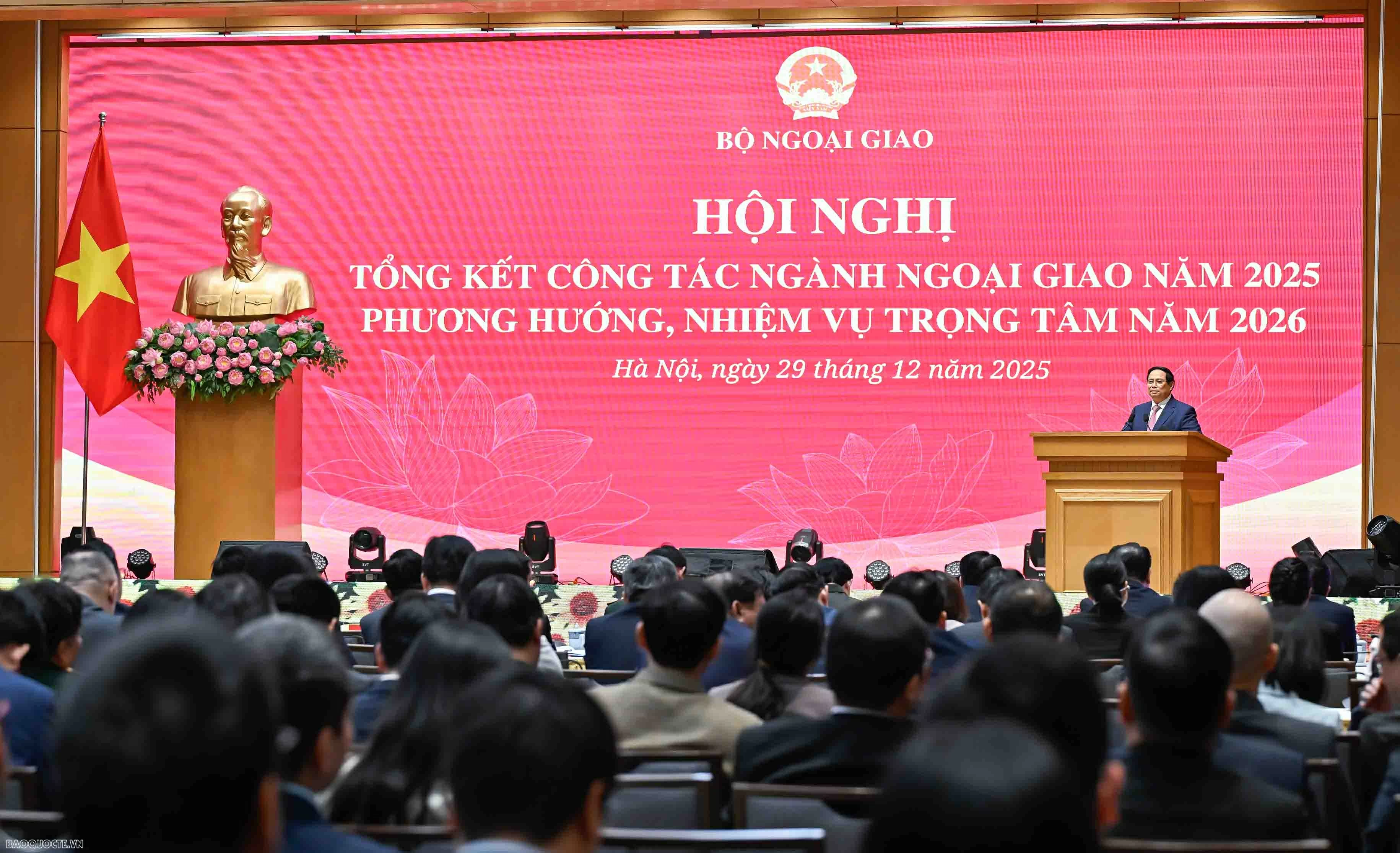 |
| Diplomacy plays a pioneering role in enhancing research, forecasting, and strategic advisory capacity: Prime Minister Pham Minh Chinh speaks at the National Conference for reviewing Diplomatic Sector in 2025, onlining key tasks for 2026. (Photo: Nguyen Hong) |
In his presentation on the country's development orientation and the role and contributions of foreign affairs in the upcoming period, Mr. Trung noted that in 2025 and beyond, the global and regional situation will continue to change rapidly, with complexity and unpredictability, intertwining numerous opportunities and challenges.
Strategic competition among major countries is intensifying, while digital transformation, green transition, and innovation trends are profoundly restructuring the global economy and development order.
In this context, the requirement for our country is not only to adapt but to proactively, confidently shape its development path, laying a solid foundation to achieve two strategic goals: becoming a high middle-income developing country by 2030 and a high-income developed country by 2045.
According to Mr. Trung, the development orientation for the country in the coming period is rapid, sustainable, and autonomous growth, driven by science and technology, innovation, and digital transformation, with people and culture as the foundation, and Vietnam's internal strength, intelligence, and resilience as decisive factors, while proactively and confidently integrating deeply and effectively into the international arena.
Notably, Mr. Trung emphasized that a particularly important highlight in this development orientation is the requirement to build and firmly consolidate strategic autonomy, linked to self-reliance in economic science and technology, institutions, and human resources, thereby enhancing the economy's resilience, reducing dependency, maximizing internal strength, and nurturing the aspiration for sustainable development of the Vietnamese nation in the new era of development.
Within this overall orientation, foreign affairs hold a particularly important role, serving as both a pillar ensuring a favorable development environment and a driving force mobilizing resources for national development, with specific key areas as follows:
Firstly, foreign affairs continue to affirm their role as a crucial driver in attracting, activating, and spreading development resources.
Economic diplomacy needs to be implemented more proactively, substantively, and effectively, focusing on attracting high-quality foreign investment, linked to technology transfer, effectively utilizing new-generation free trade agreements to expand markets, diversify partners, and supply chains.
Simultaneously, it supports the completion of development institutions, approaches international standards, and modern governance experiences, minimizing legal and economic security risks in integration.
Secondly, foreign affairs contribute to consolidating strategic autonomy and creating a peaceful, stable environment for national development.
Adhering to an independent, self-reliant, multilateral, and diversified foreign policy, handling relations harmoniously and flexibly with partners, especially major countries, while enhancing strategic research, forecasting capabilities, closely monitoring global economic policy and technology strategy trends will help Vietnam proactively maintain strategic balance, development space, and policy room for the country.
Thirdly, foreign affairs contribute to elevating the nation's position and prestige.
Demonstrating Vietnam's confidence and assertiveness in actively participating, contributing, and shaping new international cooperation frameworks and rules, especially in strategic areas such as the digital economy, supply chains, clean energy, green transition, and circular economy, while effectively mobilizing international resources to address climate change, green finance, and clean technology, ensuring national interests are harmonized in implementing international commitments.
Fourthly, it is necessary to continue building and developing a comprehensive, modern diplomacy, linked to enhancing research, advisory, and strategic capabilities.
Besides economic diplomacy, cultural diplomacy, science and technology diplomacy, environmental diplomacy, and legal diplomacy should be strengthened, with close, effective coordination among the three pillars of diplomacy: Party diplomacy, state diplomacy, and people-to-people diplomacy, leveraging the combined strength of the entire political system to serve national development needs.
Fifthly, special emphasis should be placed on developing high-quality foreign affairs human resources. This is a key factor ensuring effective implementation of foreign policy in the new context.
Today's foreign affairs officials need not only to be proficient in foreign languages and traditional diplomatic knowledge but also equipped with knowledge of economics, technology, and international law.
They must always be ready and capable of learning, updating new global knowledge and trends to meet increasingly diverse and complex tasks and requirements.
To achieve these objectives effectively, Mr. Trung believes that the diplomatic sector needs to continue to play a pioneering role, paving the way, enhancing research, forecasting, and strategic advisory capacities, contributing to realizing the goals of strategic autonomy, resilience, and confidence for rapid and sustainable national development.
In the coming time, the Pary Central Committee's Commission for Policies and Strategies will continue to closely coordinate and accompany the Ministry of Foreign Affairs and related agencies in researching, advising, and proposing strategic development orientations for the country, linked to effectively implementing the Party's resolutions on foreign affairs, especially the Politburo's Resolution No. 59 on international integration in the new situation.