


Colon Free Zone Panama: A Gateway for Vietnamese goods to the Latin American market
WVR - “Vietnam produces goods, while Panama connects to the global market,” the President of Panama expressed this expectation during his official visit to Vietnam in early October 2026. Just a week after that visit, the Vietnamese Trade Office in Mexico, which also covers Panama, organized a business connection conference in Panama City. On this occasion, Panama also called on Vietnamese businesses to pay attention to the Free Zone adjacent to the Panama Canal, where Vietnamese goods can be gathered for distribution into Latin American markets.
Latest
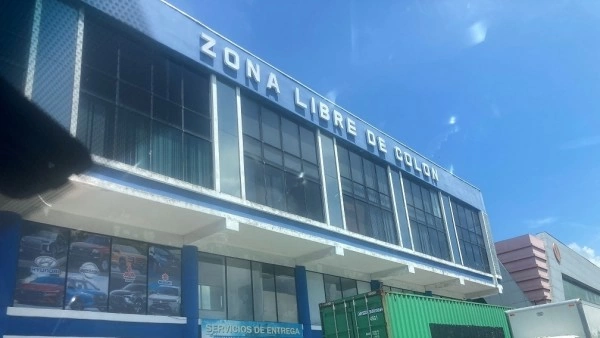
The largest free zone in the Americas is not in the United States, but in Panama. Colon is the second-largest free economic zone in the world, only after China's Shenzhen Free Trade Zone. Colon's advantage lies in its proximity to the Atlantic exit of the Panama Canal. Ships from Europe heading to the west coast of the U.S., and Asian ships bringing goods to New York, all pass through here.
After more than a month adrift on the ocean without a stop, container ships arriving in Panama must dock to refuel, replenish fresh water, and restock food for the crew. If repairs or maintenance are needed, they are done here. Ships dock near the Colon Free Zone, unload and load goods, making Colon an extremely convenient and quick transshipment point.
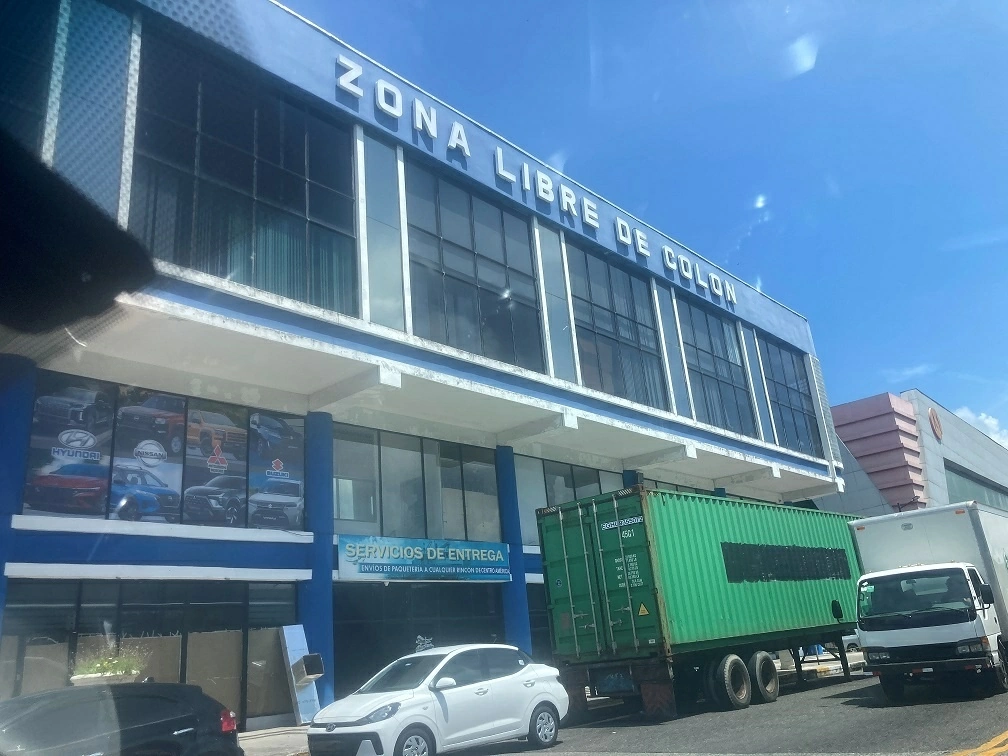 |
| The Colon Free Zone Panama covers a total area of about 1,064 hectares, divided into 9 areas, and is home to thousands of international trade businesses. |
This vast free zone is located between two very large seaports, Manzanillo Port and Colon 2000 Port. Goods from all over the world, including finished products and raw materials, electronics, clothing, cosmetics, pharmaceuticals, automobiles, construction materials, mainly from China, the U.S., European countries, and Japan, are stored here. They can undergo simple processing or repackaging and then be re-exported to Latin American countries and the entire Caribbean region.
And naturally, from here, they penetrate the U.S. market. Nearly 3,000 multinational corporations, major distributors, global logistics, and trade companies have showrooms and warehouses here. To get a sense of the scale: the import and re-export turnover of the Colon Free Zone regularly fluctuates between 20 billion and over 30 billion USD annually.
Vietnamese businesses in the Colon Zone
There is one Vietnamese business in the Colon Free Zone. Twenty years ago, Mr. Le The Tam recognized Panama's strategic position, even though his family was doing business in Poland at the time. In early 2007, Mr. Tam was licensed by the Panamanian Government to open a showroom and then a warehouse in the Colon Free Zone.
He established VietPa company in Panama, registered to trade in construction stone, cut stone, and sanitary ceramics. Having been stationed here for nearly 20 years, Mr. Tam still believes that his choice back then was correct.
“Businesses in the Colon Free Zone can trade products with each other on Panamanian soil, but since the goods have not cleared customs into Panama, neither the seller nor the buyer has to worry about taxes... I have sold goods from here to customers in Bolivia, Costa Rica, Venezuela, Cuba, who take the goods directly from here, and then declare import taxes in their respective countries. Having a warehouse and an office in Colon, and a bank account in Panama, means passing the 'screening' stage of the Panamanian government... Customers feel secure, needing only to meet me once here, see the goods once in the warehouse. Once trust is established, subsequent transactions are just a few phone calls, a few emails... and it's done,” he shared.
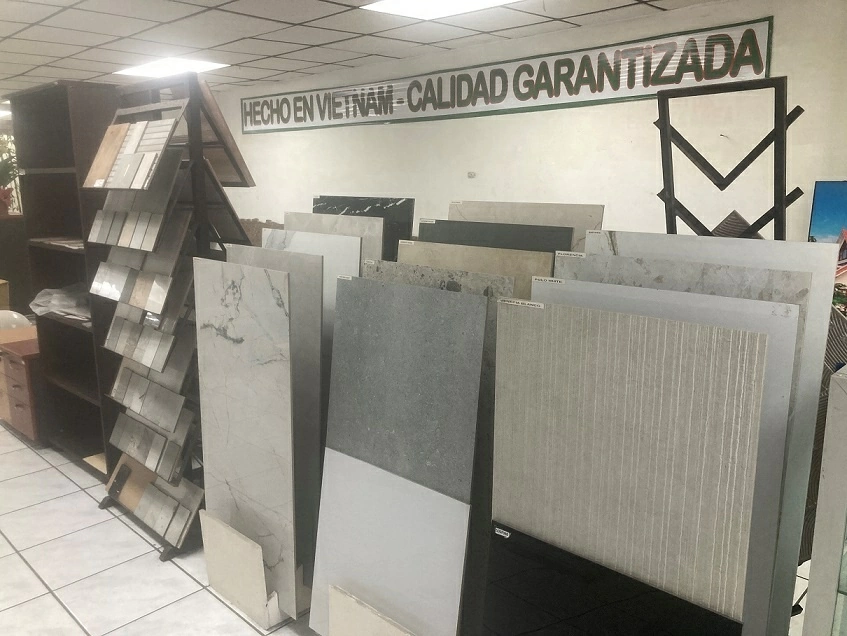 |
| VietPa company in Panama has a showroom and warehouse for construction stone, cut stone, tiles, and Vietnamese sanitary ceramics in the Colon Free Zone. |
From the “base” in Panama, Mr. Tam exports cut stone, tiles, and sanitary ceramics produced in Vietnam to Latin American countries. “Price is just a small part of the purchasing decision. Being based here, I have the opportunity to understand the tastes of Latin Americans. Some countries only like black tiles, others prefer natural green, some like speckled stones, others don't. Or regarding the standard length of tiles, each country is different. Then the way to cut and edge the stone slabs, some countries require straight edges, others prefer tight edges. If I had to cut and edge from Vietnam according to the customer's wishes, it would take a lot of time from order to delivery. I have the goods and workers here, I can cut according to the customer's wishes immediately,” he explained.
Shipping containers from Vietnam to Central America takes 35 to 45 days. For orders that need quick delivery, Mr. Tam has a significant advantage thanks to having a warehouse in Colon.
The ambition of a “Vietnam Town”
The official visit to Vietnam by the President of Panama in early October has sparked increased interest among the Panamanian business community in Vietnam, a country they perceive as having strong growth and exporting quality materials.
For his part, Mr. Le The Tam is also excited after reading the news that President of Panama José Raúl Mulino and Vietnamese Prime Minister Le Minh Hung discussed the participation of Vietnamese companies in the Colon Free Economic Zone to establish a distribution center for the Latin American market (*).
Mr. Tam has long aspired to create a “Vietnam town” in the Colon Free Zone, hoping that the Ministry of Industry and Trade and Vietnamese embassies can somehow make Vietnamese businesses aware of and interested in this distant but effective sales channel. A community of Vietnamese businesses, if established in this Free Zone, would create a national brand presence in Panama and cover the Latin American markets.
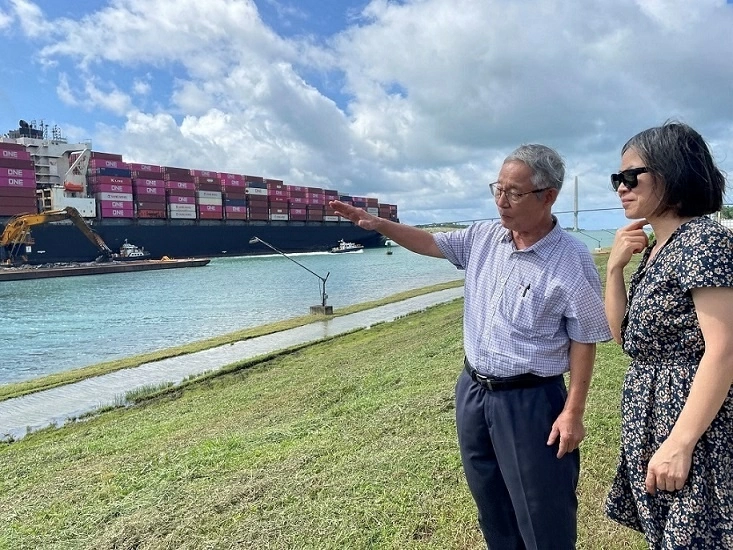 |
| Mr. Le The Tam explains the advantages of having a bonded warehouse near the Panama Canal to the Vietnamese Trade Attaché in Mexico, who also covers Panama. |
The Vietnamese Trade Attaché in Mexico, who also covers Panama, Phan Thi Nga, agrees with Mr. Tam's approach. She asserts: “The timing is favorable. In the Vietnam-Panama Workshop that we just organized, the Panamanian government also presented on this topic. Panama has a ministry-level agency named Administracion de la Zona Libre de Colon, temporarily translated as 'Colon Free Zone Administration'. Representatives of this agency assured us that Panama is committed to providing a comprehensive incentive system, including policies on taxes, customs, administrative procedures, and logistics infrastructure for foreign businesses joining the Colon Free Zone.”
Of course, there is a 100% exemption from import, export, and customs duties, like all other free trade zones. Additionally, there are corporate income tax incentives and VAT exemptions. Businesses in the Colon Free Zone are allowed to perform a variety of value-added logistics operations right in their warehouses, such as packaging, labeling, splitting shipments, assembling, mixing, inspecting, repackaging, or deploying digital data processing centers without complex administrative barriers. Goods can be stored indefinitely, waiting for favorable international market conditions for re-export without time or storage tax pressures.
This will be a game for large, well-capitalized businesses with production capabilities and supply capacity. Opening a showroom in Colon is not too difficult; setting up a storage warehouse is more challenging. You can build a warehouse, as Mr. Tam did; you can rent a warehouse or rent part of a shared warehouse with another business. In the Colon zone, there are all types of warehouses, for dry goods, bulk goods, liquids, cold storage, humidity-controlled, or temperature-stable warehouses. But depending on the product, the risks for businesses will vary. Mr. Tam's company deals in construction stone, sanitary ceramics... so the warehouse is just space. But if it is frozen food, dry food with a short shelf life, clothing, and footwear with short-term design trends... then the problem is not just about how many cubic meters. Stockpiling goods in Panama to quickly supply nearby markets and the U.S. is an attractive idea, but all factors must be considered.
The best way to start, according to Mr. Le The Tam, is to “send a representative to the site, understand the procedures, and study customer preferences, then establish a company in Panama, open a showroom or rent a warehouse there, and then decide.”
He believes: “To achieve results, first, you need to have a factory in Vietnam or good relations with a Vietnamese factory. Thanks to our presence here, interacting with customers, and researching the market, we can produce goods from Vietnam according to customer requirements here and be competitive. It's like natural stone tiles. In the past, no one dared to ship goods from Vietnam to Central America! Here, they used to buy from Brazil until we shipped from Vietnam, Vietnamese goods, supplying major construction projects here.”
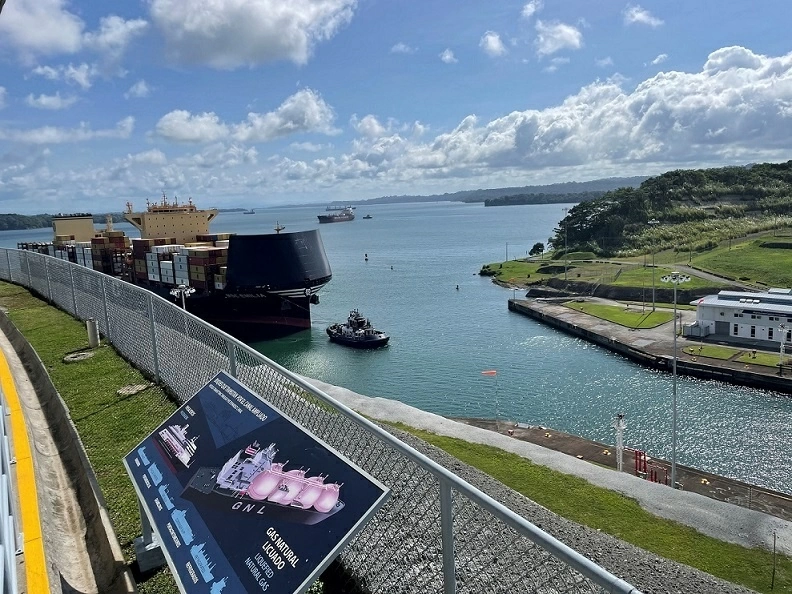 |
| The Panama Canal, located on the strategic maritime route connecting the Atlantic and Pacific Oceans, is a crucial logistics gateway for international trade. |
The natural reputation of the Vietnamese brand
According to Mr. Le The Tam, Panama has long been interested in Asian countries, inviting Asian businesses to invest in the Free Zone. He said: “For Vietnam, there is a natural reputation; people have a favorable impression of Vietnam from the war era, and they rate the quality of Vietnamese goods highly. So we can build on that foundation.”
It is no coincidence that in the Vietnam-Panama Business Connection Workshop organized by the Vietnamese Trade Office in Mexico in mid-October in Panama City, the Panamanian government sent three senior officials to attend: the Director of the Foreign Direct Investment Attraction Department under the Ministry of Commerce and Industry, a representative from the General Department of Free Economic Zones, and the Director General of the Investment Services Department. All three took the podium to speak, pledging to facilitate Vietnamese businesses wishing to enter the Panamanian market.
At the workshop, Ms. Jenny Chong, Director General of the Investment Services Department of Panama, mentioned the advantages that the country offers to foreign businesses when it comes to payment and profit repatriation, as well as liberal visa policies.
“Our Qualified Investor Program stipulates that permanent residency cards will be issued immediately upon approval, unlike temporary residency programs that require two years before permanent residency, and the review process takes a maximum of 60 days. Investors do not need to be present in Panama to submit applications; they can hire lawyers to submit on their behalf. If they purchase real estate, they are not required to live there but must enter Panama at least once every two years to maintain permanent residency. If they maintain permanent residency for five years, they can apply for citizenship,” she said.
Mr. Le The Tam hopes that once Vietnam re-establishes its Embassy and Trade Office in Panama, his aspirations will soon become a reality. He shared: “If we simply sell one product, customers will only remember us when they need that specific product, and each product has different consumption seasons. If there are many Vietnamese businesses here, linked together, each in a different field, selling goods year-round, then businesses from Latin American countries coming here will introduce each other.”
A “Vietnam town” in the Colon Free Zone Panama will be an on-site hub, distributing Vietnamese goods to the Latin American market.
(*) Article in La Estrella de Panama on 07/10/2026: https://www.laestrella.com.pa/mundo/panama-y-vietnam-acuerdan-uso-estrategico-de-zona-libre-de-colon-JO26286438