



CEF III: True success measured by verifiable results in the next 30, 60, and 100 days
Right after the conclusion of CEF III, the Organising Committee will transition to the "post-CEF" phase, guided by the principle: Clear tasks – Clear people – Clear deadlines – Clear products – Clear results.
Latest
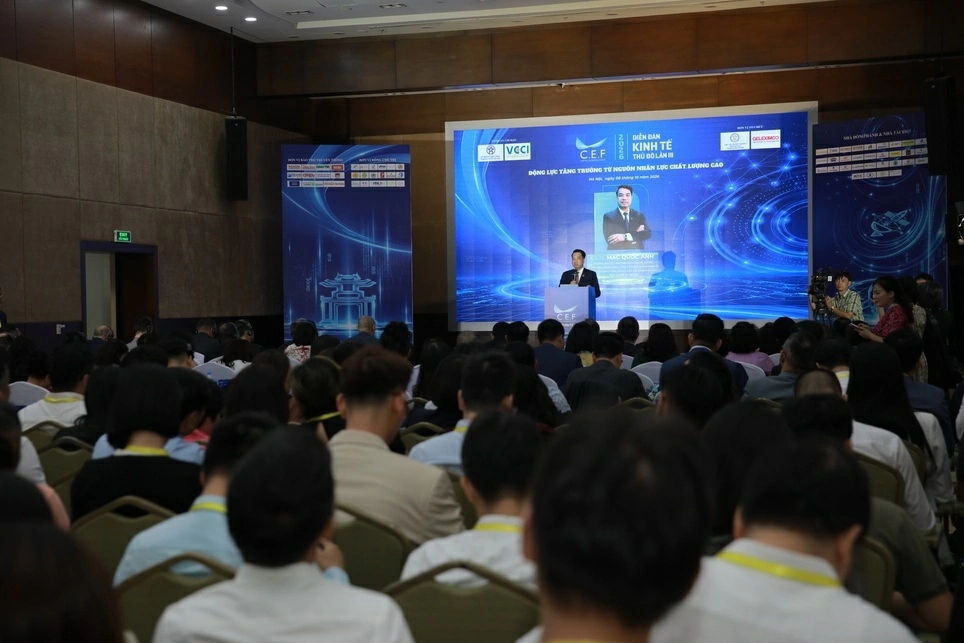 |
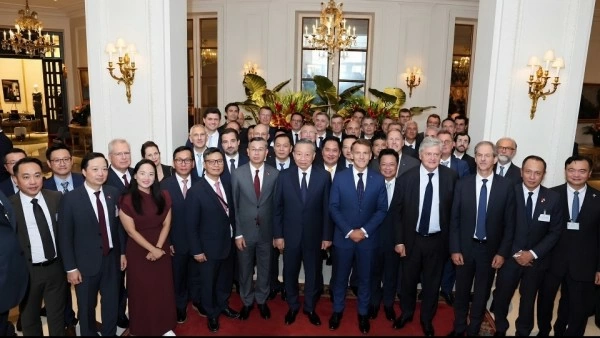
| CEF III gathered over 300 delegates, including 15 Ambassadors representing 15 countries, a network of 18 co-hosting units, and experts, businesses, investors, and training organisations. (Photo: Trung Anh) |
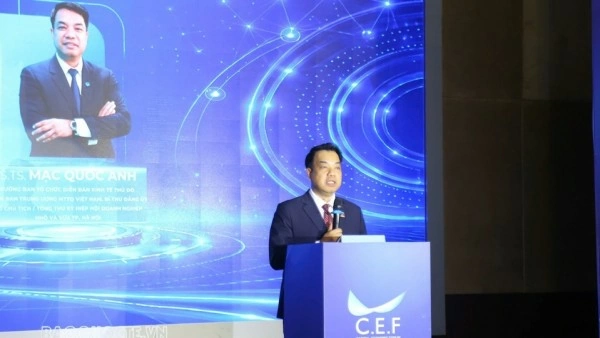
Professor Dr Mac Quoc Anh, Vice Chairman and General Secretary of the Hanoi Association of Small and Medium Enterprises (HANOISME), Head of the CEF III Organising Committee, gave an interview to World & Vietnam Report about the results, significance, and message of CEF III.
CEF III has just concluded. As the Head of the Organising Committee, what do you consider the most outstanding result of this year's Forum? How have the objectives set before the event been met?
I believe the most outstanding result of CEF III is the shift in approach to human resources: Not just discussing recruitment or training, but placing people directly into the equation of productivity, innovation, competitiveness, and business growth.
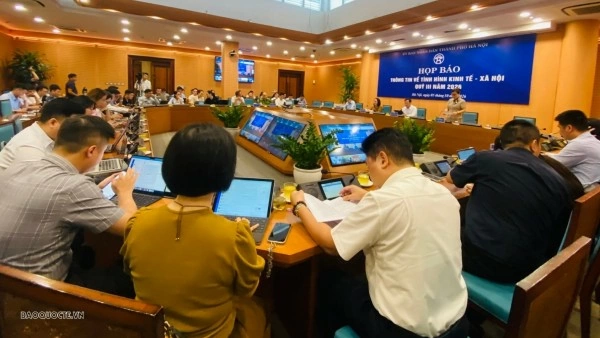
CEF III gathered over 300 delegates, including 15 Ambassadors representing 15 countries, a network of 18 co-hosting units, and experts, businesses, investors, and training organisations. Notably, the CEF High-Level Expert Council, consisting of 9 members, was officially launched.
This indicates that CEF is gradually moving beyond a single-event framework to form a network for consultation, critique, and resource connections for businesses in the capital.
What I highly appreciate is that the discussion sessions directly addressed the questions businesses need answers to: Are we lacking people or lacking capacity; where is the skills gap; how are AI, data, and automation changing the labor structure; how to simultaneously enhance management, financial, market, export, logistics, and production technical capabilities.
Thus, the goal of creating a more substantive, deeper dialogue linked to specific outcomes has laid an important foundation.
However, I want to emphasise that the success of CEF III does not end with the closing ceremony. True success must be measured by the work implemented after the Forum, the number of issues resolved, the number of businesses supported, and the verifiable results in the next 30, 60, and 100 days.
| To achieve sustainable double-digit growth, Hanoi must transform its human resource advantage into the capacity to create value, and businesses must be where knowledge is turned into products, capacity into productivity, and aspirations into results. |
After this Forum, what does the Organising Committee plan to do to ensure that business recommendations do not stop at discussions during the event?
Immediately after the Forum, we transition to what I call the “post-CEF” phase, guided by the principle: Clear tasks – Clear people – Clear deadlines – Clear products – Clear results.
Within the first 7 days, the Organising Committee will compile and categorise the opinions, recommendations, and needs of businesses, as well as the commitments made at the Forum, and select about 5-7 priority issues with the potential for the most significant impact. Each issue must identify bottlenecks, lead units, potential partners, and output products.
In 30 days, we will standardise business needs and connect with universities, research institutes, training organisations, technology companies, banks, investment funds, and experts to select models for piloting.
These could include retraining AI and data personnel; enhancing management capabilities for small and medium enterprises; connecting technical experts; or developing human resources for export and supply chains. The 60-day mark is the time to review progress, identify bottlenecks that need to be addressed by the City and relevant departments.
By around 100 days, the CEF High-Level Expert Council and the Organising Committee will evaluate the results to determine which models are effective, which need adjustment or expansion. This is also the action orientation established at the CEF III closing session.
For issues related to mechanisms and policies, HANOISME will compile them into official recommendation groups to be forwarded to the competent authorities and continue to monitor feedback. Businesses will only truly believe in dialogue when their recommendations are received, have a processing deadline, and receive feedback.
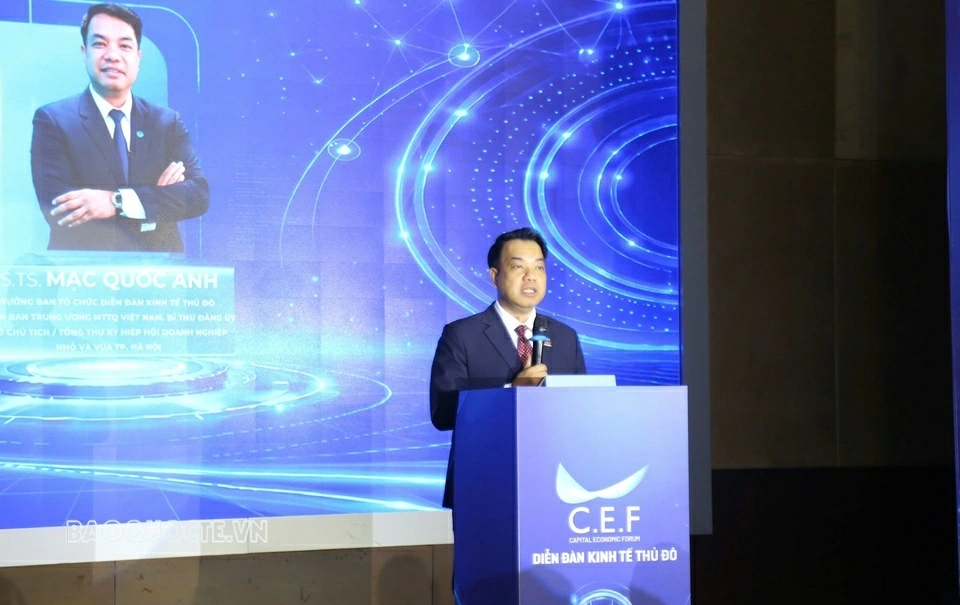 |
| Professor Dr Mac Quoc Anh, Vice Chairman and General Secretary of HANOISME, Head of the CEF III Organising Committee, speaking at the opening of CEF III. (Photo: Trung Anh) |
Based on the discussions at the Forum, can you share the three top priorities for workforce development that Hanoi and the business community should focus on in the coming period?
In my opinion, there are three major priorities. First, shift from “supply-based training” to “market-needed capacity training”. Hanoi has a significant advantage with its system of universities, research institutes, and intellectual workforce.
The percentage of the workforce aged 15 and over that has received training in Hanoi in 2024 reached 53.9%, significantly higher than the national level of 28.4%. However, having qualifications does not necessarily mean that capacity has been transformed into productivity and value for businesses.
Businesses must be more involved in building output standards, placing training orders, and evaluating capacity. The ultimate goal is not to have more certificates but to create people who can work and create value.
Second, give special priority to personnel in digital, AI, data, automation, and innovation. The gap between businesses that know how to apply AI and those that do not will increasingly become a gap in productivity and competitiveness.
We not only need technology engineers but also leaders who understand technology, managers who know how to use data, business personnel who master digital platforms, and technical workers capable of operating automated systems.
Third, upgrade management capacity and internationalisation. To participate deeply in the global value chain, businesses need teams that understand finance, M&A, legal, international standards, logistics, exports, intellectual property, brand building, and sustainable management.
These three priorities must be implemented synchronously. Having technology without people mastering it does not create productivity; having talent but weak management makes it difficult to retain skilled people; and training not linked to the market can still lead to a surplus of degrees but a lack of practical execution capacity.
Looking back over three editions, how do you assess the value the Forum has created for the business community and the economic development process of the capital? What needs to be innovated in future editions?
Over three editions, CEF is forming a fairly clear chain of thought. CEF I raised issues about AI, e-commerce, and digital tools; CEF II focused on capital, M&A, investment, supplier development, localisation, and participation in the value chain; by CEF III, we placed people at the centre: who will master technology, operate capital, develop markets, and elevate businesses to higher value levels.
The greatest value of CEF lies in gradually forming a space for connection among the State, businesses, experts, investors, training institutions, and international organisations.
For small and medium enterprises, this is particularly practical because a single business finds it very difficult to access all of these simultaneously.
However, from CEF IV onwards, I believe we must continue to innovate by reducing the “event” nature and increasing the “platform” nature. CEF needs a mechanism to receive business problems year-round, a database of needs, a system to track recommendations, regularly active expert groups, and pilot programs implemented between forum editions.
Each edition should also select fewer issues, go deeper, follow through more thoroughly, include measurable indicators, and publish results after the Forum. When that happens, CEF will not only be a place to voice opinions but also a policy consultation tool and a long-term business support for the capital.
 |
| CEF is not only a place to voice opinions but can become a policy consultation tool and long-term business support for the capital. (Photo: Gia Thanh) |
If you had to choose the most important message that CEF III wants to send to Hanoi and the business community, what would you emphasise?
The most important message I want to emphasise is: High-quality human resources only truly become a growth driver when human capacity is transformed into productivity, products, innovation, and market value.
Hanoi does not lack potential, qualified individuals, universities, research institutes, experts, or dynamic businesses. What we need to do better is connect these resources into an ecosystem capable of creating value.
For the government, it is necessary to continue creating an environment where talent is utilised, businesses can access suitable human resources, and universities and research institutes are more closely linked to market problems.
For businesses, a change in mindset is needed. Investing in people is not merely a cost, but an investment in productivity, innovation, and long-term competitiveness.
If I were to condense the entire spirit of CEF III into one sentence, I would say: “To achieve sustainable double-digit growth, Hanoi must transform its human resource advantage into the capacity to create value, and businesses must be where knowledge is turned into products, capacity into productivity, and aspirations into results.”
Thank you!
Tags: