



14th National Party Congress: Anti-corruption efforts shift from 'reactive measures' to 'proactive control'
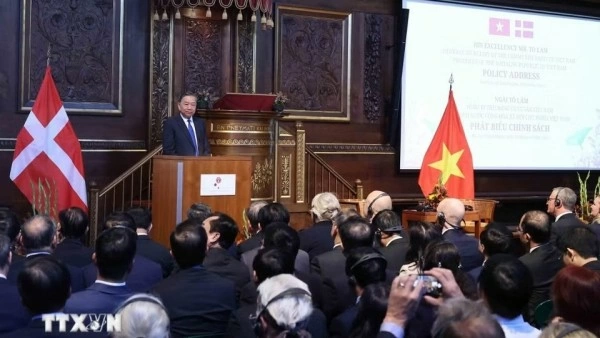
WVR 0 Continuing the program of the 14th National Congress of the Party, on the afternoon of January 21, on behalf of the Party Central Committee's Commission for the Internal Affairs, Member of the Party Central Committee, Deputy Head of the Internal Affairs Commission Vo Van Dung, spoke on the theme: Resolute and persistent in the fight to prevent and push back corruption, waste, and negativity.
Latest
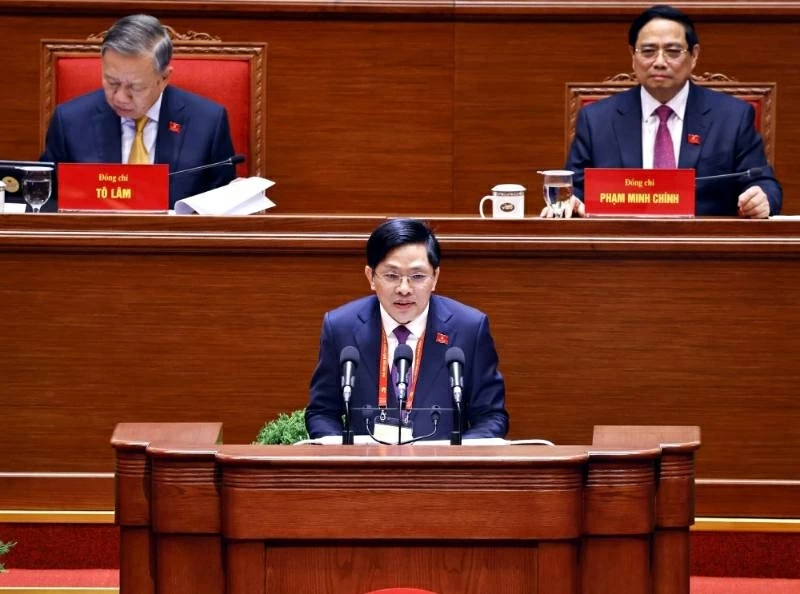 |
| Member of the Party Central Committee of the Central Party Agencies, Secretary of the Party Committee, Deputy Head of the Internal Affairs Commission Vo Van Dung presented a discussion "Continue to strengthen, resolutely and persistently fight to prevent and push back corruption, waste, and negativity". (Source: VNA) |
Protecting officials who dare to think and act for the common good
Deputy Head Vo Van Dung argued that corruption is a negative social phenomenon, irrespective of political regime and development level.
Corruption, waste, and negativity cause severe damage to public resources; undermine the proper functioning of the Party and State apparatus; distort justice and social equity; erode trust, and threaten the survival of the Party and the regime.
Lenin once warned: “If the fight against bureaucracy and corruption is unsuccessful, sooner or later, bureaucracy and corruption will destroy the cause of the communists.” Throughout the revolutionary leadership process, our Party has always identified corruption as “internal invaders”; fighting against corruption, waste, and negativity is an important, regular, urgent, and long-term task.
In many terms, especially during the 13th Party Congress, anti-corruption, waste, and negativity efforts were implemented decisively, with many new, systematic, scientific, comprehensive, and effective approaches. At the beginning of the term, content on combating negativity was added, and Provincial Steering Committees for Anti-Corruption and Negativity were established; by the end of the term, content on combating waste was added; ensuring comprehensive and synchronized efforts between anti-corruption and combating negativity and waste; both at the Central and local levels; in both the public and private sectors; encompassing disciplinary, administrative, and criminal measures.
Investigations and handling were both resolute and humane, persuasive; clarifying the nature of the case, clearly delineating responsibilities; strictly dealing with those with profiteering motives; lenient with those who recognized their mistakes and proactively remedied the consequences, maximizing asset recovery for the State and the People. Both warning and protecting officials who dare to think and act for the common good. For the first time, embezzlement crimes in the private sector were investigated, prosecuted, and tried, and absentee trials were conducted for defendants who fled abroad; affirming the rule of law and the Party and State's high political determination.
“No forbidden zones, no exceptions” is not just a slogan but has become a vivid reality, recognized and highly appreciated by officials, Party members, and the people, as General Secretary To Lam affirmed at the National Conference summarizing anti-corruption, waste, and negativity efforts during the 13th Party Congress.
Shifting focus to prevention, prioritizing prevention
To continue to strengthen, resolutely and persistently fight to prevent and push back corruption, waste, and negativity, it is necessary to thoroughly grasp and effectively implement 3 requirements, 5 focal points, and 3 breakthroughs, with the motto “Perseverance - Determination - Consensus - Comprehensiveness - Breakthrough” as concluded and directed by General Secretary To Lam at the National Conference summarizing anti-corruption, waste, and negativity efforts during the 13th Party Congress, Deputy Head Vo Van Dung proposed several specific contents.
Firstly, to shift focus to prevention, prioritizing prevention as the main, fundamental, and long-term approach, there must be a strong shift from “reactive measures” to “proactive control”, from “following procedures” to “achieving substantive results”, from “deterrence” to “sustainable building”, from “traditional management” to “digital governance”, using technology and data as tools for monitoring, preventing, and detecting corruption, waste, and negativity.
Enhance early monitoring, reduce pre-checks, increase post-checks; conduct monitoring using artificial intelligence (AI); analyze big data to detect and prevent corruption, waste, and negativity early and remotely, preventing small violations from accumulating into major offenses.
Along with perfecting institutions and laws, it is necessary to enhance transparency, accountability, and effective control of assets and income. Practice shows that the more transparent and accountable, the more effectively corruption, waste, and negativity are prevented, leaving no empty or dark areas. A set of criteria for evaluating accountability effectiveness should be developed, with citizen satisfaction as a key factor; this is crucial in accountability. At the same time, it is necessary to strengthen the culture of integrity, aiming to build an honest society and nation with three key pillars: Institutional integrity, public service integrity, and an honest cadre of civil servants.
It is essential to effectively implement Resolution 80 of the Politburo on developing Vietnamese culture. Culture not only guides the nation but can also reform corruption, laziness, vanity, and extravagance as taught by President Ho Chi Minh.
Secondly, alongside prevention, detection and handling are crucial and groundbreaking. Timely detection and handling ensure that corruption, waste, and negativity are “not dared”. Handling also aims to deter and warn, to “build” better and enhance prevention. In handling, it is necessary to deeply grasp historical, objective, and comprehensive perspectives; adhere to administrative principles, distinguish social and family relations from criminal relations; differentiate intentional profiteering violations from those for innovation, creativity, and common good; ensure the principle of presumption of innocence, political, legal, and professional requirements.
Research to perfect the mechanism for the People's Procuracy to initiate civil and administrative lawsuits to enhance prevention and early handling of violations, preventing them from escalating to criminal levels. Strict and humane handling, prioritizing economic, administrative, civil, and disciplinary measures. Criminal handling is the last resort, following the directive of General Secretary Tô Lâm.
Thirdly, strengthen power control; corruption and negativity are inherent “congenital defects” of power. Therefore, it is necessary to enhance and improve the effectiveness of power control. Officials, civil servants, and public employees, in particular, and those entrusted with positions and authority, in general, must continuously cultivate and train, regularly “self-reflect” and “self-correct”.
At the same time, it is necessary to enhance inspection, supervision, and effective control of power execution, following the principle: All power must be tightly controlled by mechanisms, bound by responsibility, power to responsibility, the higher the power, the greater the responsibility; abuse and misuse of power must be held accountable and strictly handled. Attention must be paid to power control, anti-corruption, waste, and negativity linked with building a truly honest two-level local government apparatus, close to the people, close to the grassroots, serving the people.
Fourthly, intensify anti-waste efforts, creating a stronger transformation in anti-waste efforts across society. It is necessary to further improve the efficiency of managing and using economic resources, especially the management and use of public finances and assets. Focus on resolving difficulties, obstacles, delays, backlogs, and potential loss and waste in projects and works, and surplus public land and assets after reorganizing the administrative apparatus and units according to the Politburo's and General Secretary Tô Lâm's directives: do not let waste prolong, but also do not legalize violations.
Urgently concretize and institutionalize the Party's guidelines and viewpoints on handling legal violations related to land; handling violations in cases and incidents in general and violations related to the private economy in particular to unlock resources and promote the country's socio-economic development.
Fifthly, complete strong mechanisms to protect officials who dare to think, dare to act, and innovate for the common good; effectively and thoroughly address the situation of shirking, avoiding, fearing mistakes, and not daring to act.