

Chilean President’s visit to Vietnam – A catalyst for turning cooperation foundations into concrete results: Ambassador Nguyen Viet Cuong
WVR - On the occasion of President of the Republic of Chile José Antonio Kast and his spouse's official visit to Vietnam (November 15-17), Vietnamese Ambassador to Chile Nguyen Viet Cuong shared with The World and Vietnam Report the key focuses of the visit as well as highlights of the bilateral cooperation over the past 55 years.
Latest
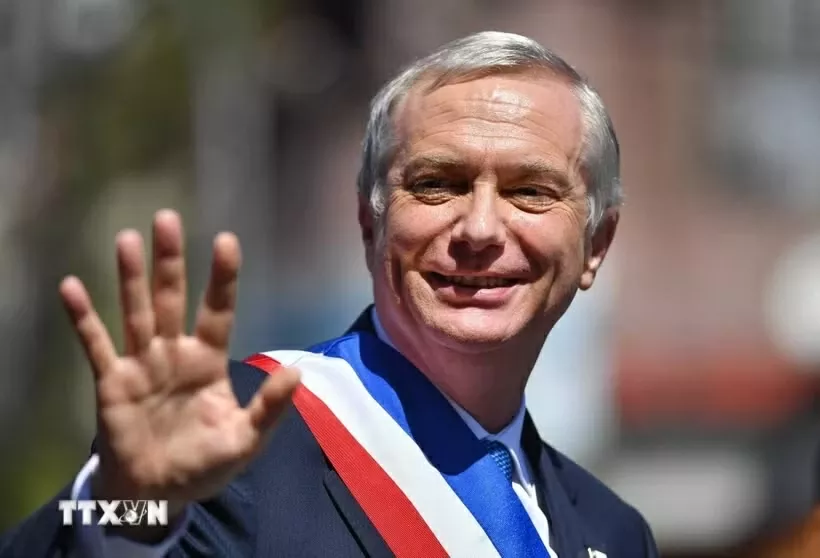 |
| President of the Republic of Chile José Antonio Kast . (Photo: VNA |
Ambassador, could you elaborate on the significance and key focuses of President José Antonio Kast's visit to Vietnam?
President José Antonio Kast and his spouse's official visit to Vietnam coincides with the 55th anniversary of the establishment of diplomatic relations between the two countries, making it particularly significant. This marks President Kast's first visit to Vietnam as head of state, following the official visit to Chile by President Luong Cuong in November 2024 and the visit to Vietnam by Chilean Foreign Minister Francisco Pérez Mackenna last August.
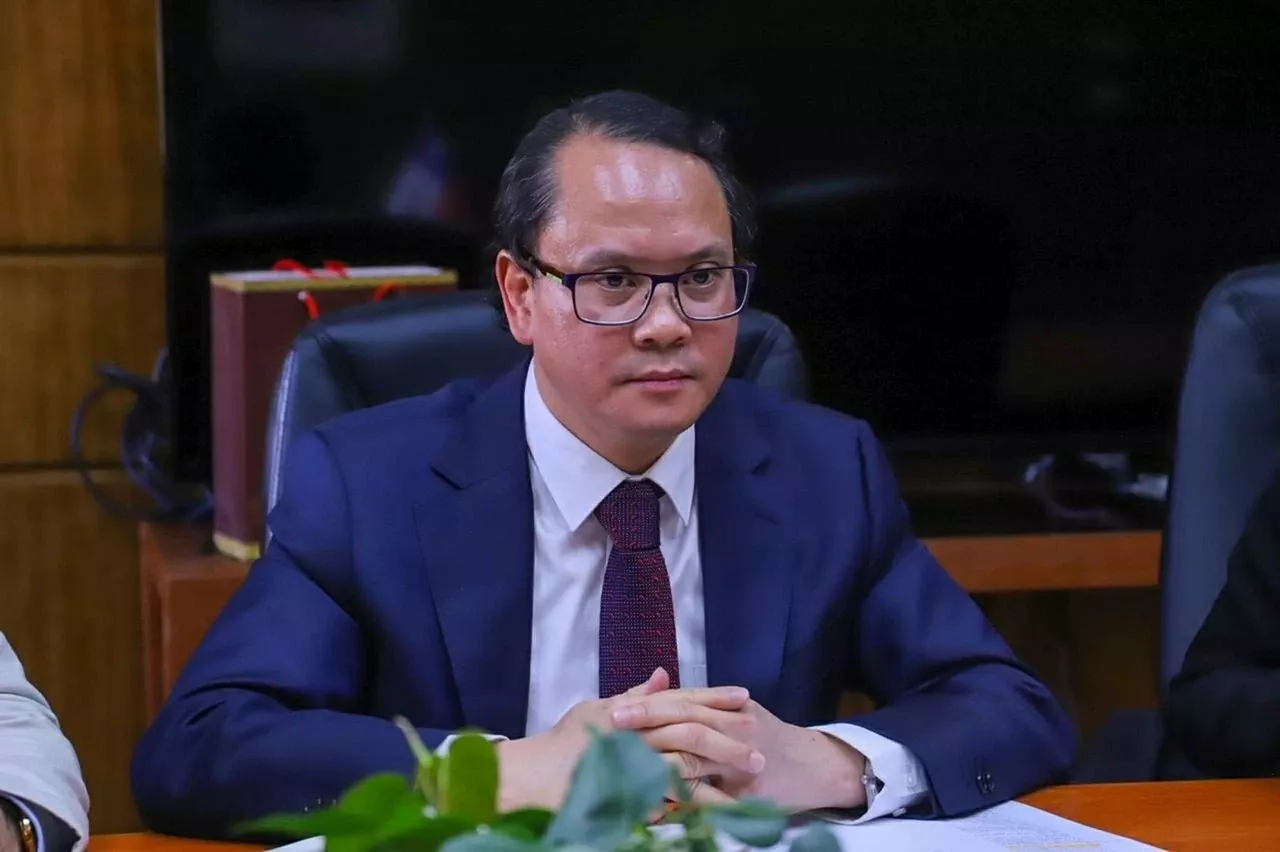 |
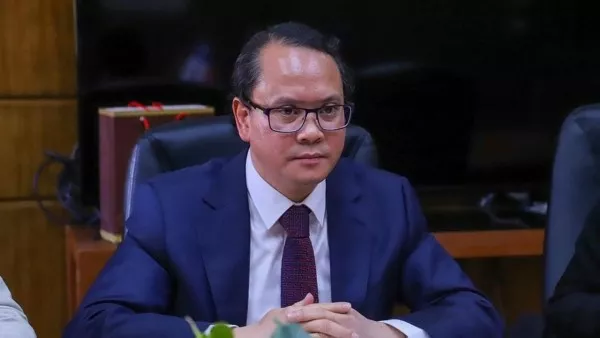
| Vietnamese Ambassador to Chile Nguyen Viet Cuong. (Source: Vietnamese Embassy in Chile) |
In my view, the visit aims at three major objectives. Firstly, it seeks to strengthen political trust. Meetings and discussions with Vietnam's senior leaders provide an opportunity for both sides to reaffirm their shared commitment to deepening the Comprehensive Partnership. Secondly, it aims to boost economic, trade, and investment cooperation, including agriculture and market access for each other's agricultural products. The delegation, comprising government officials responsible for key economic sectors and representatives from the Chilean business community, clearly demonstrates Chile's desire for tangible economic cooperation outcomes. Trade relations are also on a positive trajectory: in 2025, Chile's imports from Vietnam increased by nearly 47%. Thirdly, it seeks to enhance coordination at multilateral forums where both countries participate.
The visit also comes at a time when both countries have numerous opportunities for regional cooperation. This year, Vietnam chairs the Comprehensive and Progressive Agreement for Trans-Pacific Partnership (CPTPP), an agreement signed in Santiago in 2018 with Chile as one of the initial signatories. In November, Vietnam will host the 11th CPTPP Council Meeting. In 2027, Vietnam will host APEC for the third time and highly values Chile's experience, having hosted the APEC Economic Leaders' Meeting in 2004 and being the host for APEC 2019. Vietnam also supports Chile's accession to the Regional Comprehensive Economic Partnership (RCEP).
The two countries have established a solid foundation for cooperation: the Comprehensive Partnership framework, the bilateral Free Trade Agreement, and CPTPP membership. The next step is to transform these foundations into concrete results. I believe this visit will provide a strong impetus for that.
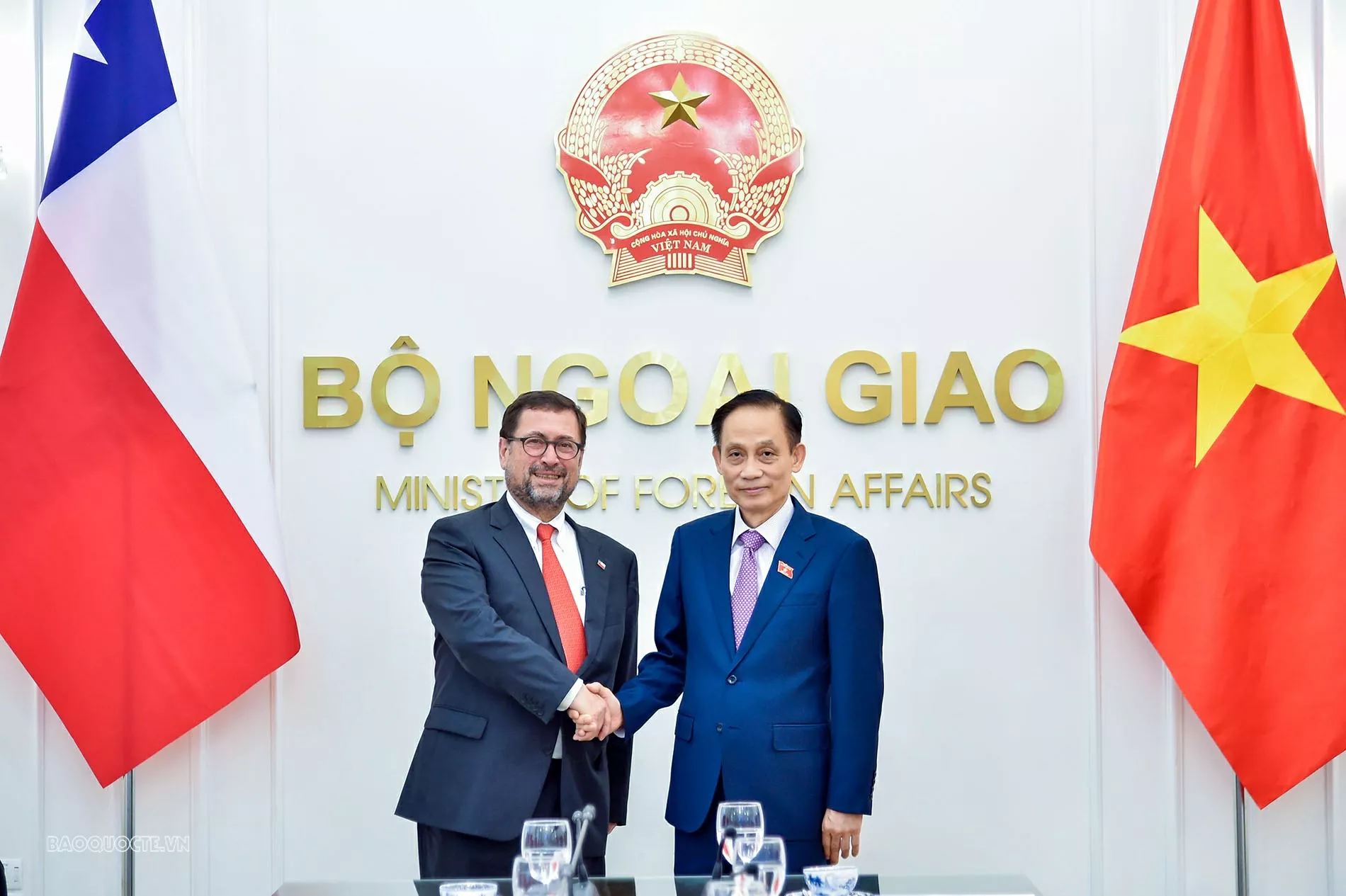 |
| Politburo Member, Foreign Minister Le Hoai Trung meets with Chilean Foreign Minister Francisco Pérez Mackenna during the official visit to Vietnam in August 2026. |
Ambassador, what are the standout highlights in Vietnam-Chile relations over the past 55 years?
Reflecting on the past 55 years, I would like to highlight the following points.
First and foremost is the origin of the relationship. On May 23, 1969, President Ho Chi Minh met with Mr. Salvador Allende, then President of the Chilean Senate, in Hanoi. This meeting paved the way for the establishment of diplomatic relations on March 25, 1971, making Chile the first South American country to have diplomatic relations with Vietnam. The affection that the Chilean people have for Vietnam during the years of struggle for independence and reunification remains intact today. This sentiment is evident in landmarks such as the park named after President Ho Chi Minh in Cerro Navia district, Santiago, and in individuals like Ms. Patricia Abarzúa Muñoz, President of the Chile-Vietnam Cultural and Friendship Institute, who has been connected with Vietnam for over six decades and considers Vietnam “a part of her life.”
The second highlight is a relationship that has stood the test of time. After the historical ups and downs, the two countries resumed relations in 1990 and established the Comprehensive Partnership framework in 2007. Over the past three decades, high-level leaders from both countries have maintained mutual visits. Despite changing times, generations of leaders have always valued and nurtured the Vietnam-Chile friendship.
The third highlight is economic cooperation, built on the foundation of trade agreements. The Vietnam-Chile Free Trade Agreement signed in 2011, effective since 2014, is Vietnam's first bilateral free trade agreement with a Latin American country. Along with the CPTPP, this agreement has contributed to the expanding two-way trade. According to Chilean statistics, bilateral trade in 2025 reached approximately USD 2.1 billion, an increase of nearly 40% compared to 2024. Vietnam is currently Chile's leading trade partner in ASEAN, while Chile is Vietnam's fourth-largest trade partner and third-largest export market in Latin America.
Additionally, the relationship between the two countries is increasingly close to the lives of the people and expanding into new areas. The visa exemption for ordinary passport holders since 2017 facilitates travel, tourism, and business. Defense cooperation has made new strides with the signing of cooperation documents and the opening of Vietnam's Defense Attaché Office in Chile in November 2024.
Finally, the milestones of 2026. On the occasion of the 55th anniversary, the heads of state exchanged congratulatory messages. Parliamentary channels have been strengthened from both sides: Vietnam's 16th National Assembly established the Vietnam-Chile Parliamentary Friendship Group, while both the Chilean House of Representatives and Senate formed friendship groups with Vietnam, continuing the groups from previous terms. In Santiago, 27 Chilean artists participated in a painting competition organized by the Embassy. Many sought out distinctly Vietnamese images such as forests, lotus, seas, and rice. Through the eyes of Chilean friends, we recognize the beauty of our own country in a new way. Above all, President Kast's visit is the highest-level activity in this commemorative year.
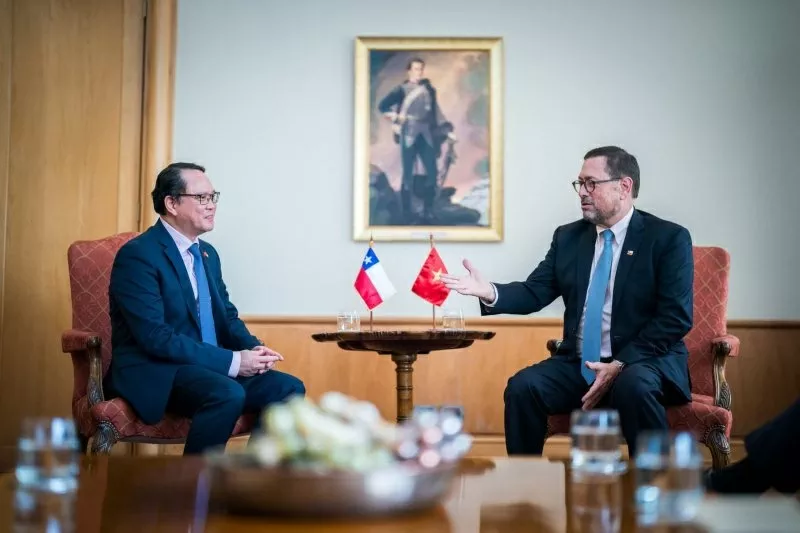 |
| Ambassador Nguyen Viet Cuong meets with Chilean Foreign Minister Francisco Pérez Mackenna on October 1. (Source: Vietnamese Embassy in Chile) |
The distance between Vietnam and Chile is measured by the ocean, yet there is a firm friendship and a shared goal of integration and development. How do you assess the potential for cooperation between the two countries on this new journey?
Vietnam and Chile are both open economies with complementary structures. However, the current scale of cooperation does not yet match the potential. Despite rapid growth, Vietnamese goods currently account for less than 2% of Chile's total imports, while Chile's exports to Vietnam in 2025 only exceeded 300 million USD. As we embark on a new journey after 55 years of relations, I believe the cooperation potential between the two countries focuses on four directions.
Firstly, developing more balanced two-way trade. Chilean salmon and fruits have become familiar to Vietnamese consumers, while Vietnamese electronics and footwear have established a foothold in the Chilean market. We hope to see more Chilean goods, especially agricultural products, in the Vietnamese market. The mutual opening of markets for each other's agricultural products, such as Vietnam's tropical fruits and Chile's temperate fruits, will benefit producers and consumers in both countries.
| Vietnam and Chile are situated on opposite shores of the Pacific Ocean. Fifty-five years ago, solidarity was the bridge connecting the two shores. Today, that bridge is further strengthened by shipments, cooperation programs, and exchanges between the people of the two countries. I believe that, based on the traditional friendship and with the determination of the leaders of both countries, Vietnam-Chile relations will enter a new phase, deeper and more substantive, for the benefit of the people of both nations. |
Secondly, investment and supply chains for green transformation. Chile is rich in strategic minerals such as copper and lithium and has great potential for renewable energy, while Vietnam has increasing manufacturing capabilities and has exported solar equipment to Chile. If these strengths can be connected, businesses from both countries can participate in new value chains needed by both economies. This is also a direction both sides agreed to promote during the visit of Chilean Foreign Minister to Vietnam last August.
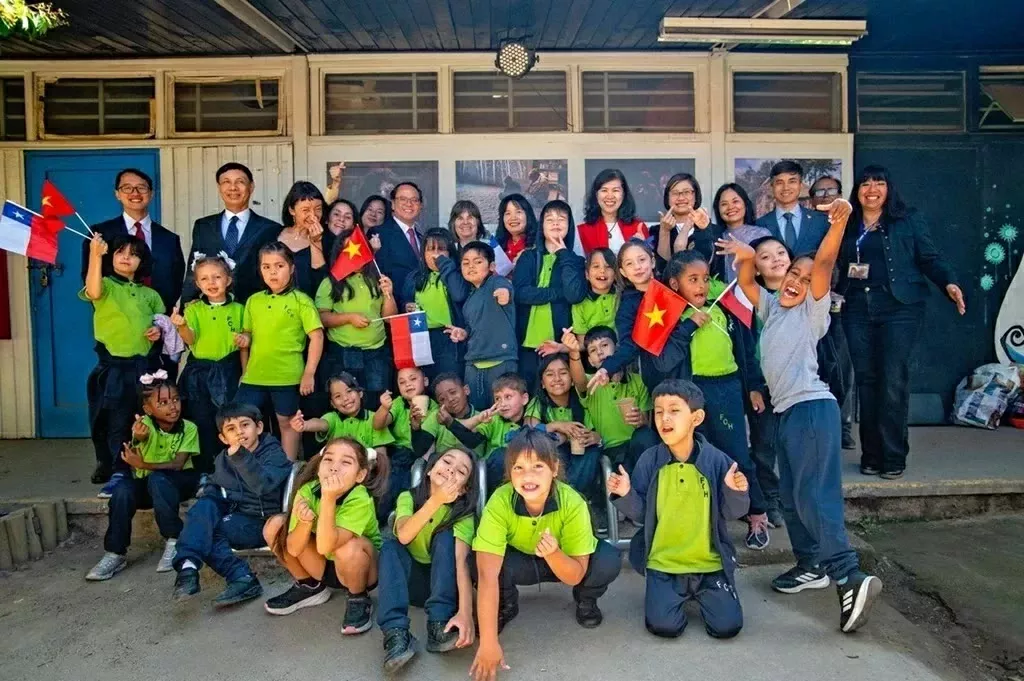 |
| Celebration of Vietnam's National Day and the 55th anniversary of Vietnam-Chile diplomatic relations in Santiago, September 10. (Source: Vietnamese Embassy in Chile) |
Thirdly, science, technology, and innovation, areas Vietnam is prioritizing for development. Chile has extensive experience in high-tech agriculture, aquaculture, and the application of technology in mining, experiences that closely align with Vietnam's needs. Chile has also expressed a desire to cooperate with Vietnam in science and artificial intelligence. There is ample room for collaboration in education, human resource training, and connections between universities in both countries.
Fourthly, leveraging each country's role as a regional connector. With a market of over 100 million people and a position within ASEAN, Vietnam can be a companion for Chilean businesses in Southeast Asia. Conversely, with a transparent business environment and a network of trade agreements with most Latin American countries, Chile can be a springboard for Vietnamese businesses to expand their presence in the region.
Vietnam and Chile are situated on opposite shores of the Pacific Ocean. Fifty-five years ago, solidarity was the bridge connecting the two shores. Today, that bridge is further strengthened by shipments, cooperation programs, and exchanges between the people of the two countries. I believe that, based on the traditional friendship and with the determination of the leaders of both countries, Vietnam-Chile relations will enter a new phase, deeper and more substantive, for the benefit of the people of both nations.
Thank you very much, Ambassador!