


Vietnam continues to uphold its role as an active and responsible member of UNESCO
WVR - From June 16-19, in Paris (France), Deputy Minister of Foreign Affairs Ngo Le Van, Chairman of the Vietnam National Commission for UNESCO, led the Vietnamese delegation to attend the 11th Session of the General Assembly of the 2003 Convention for the Safeguarding of the Intangible Cultural Heritage. The session attracted the participation of over 650 delegates from 185 member countries and more than 100 observers.
Latest
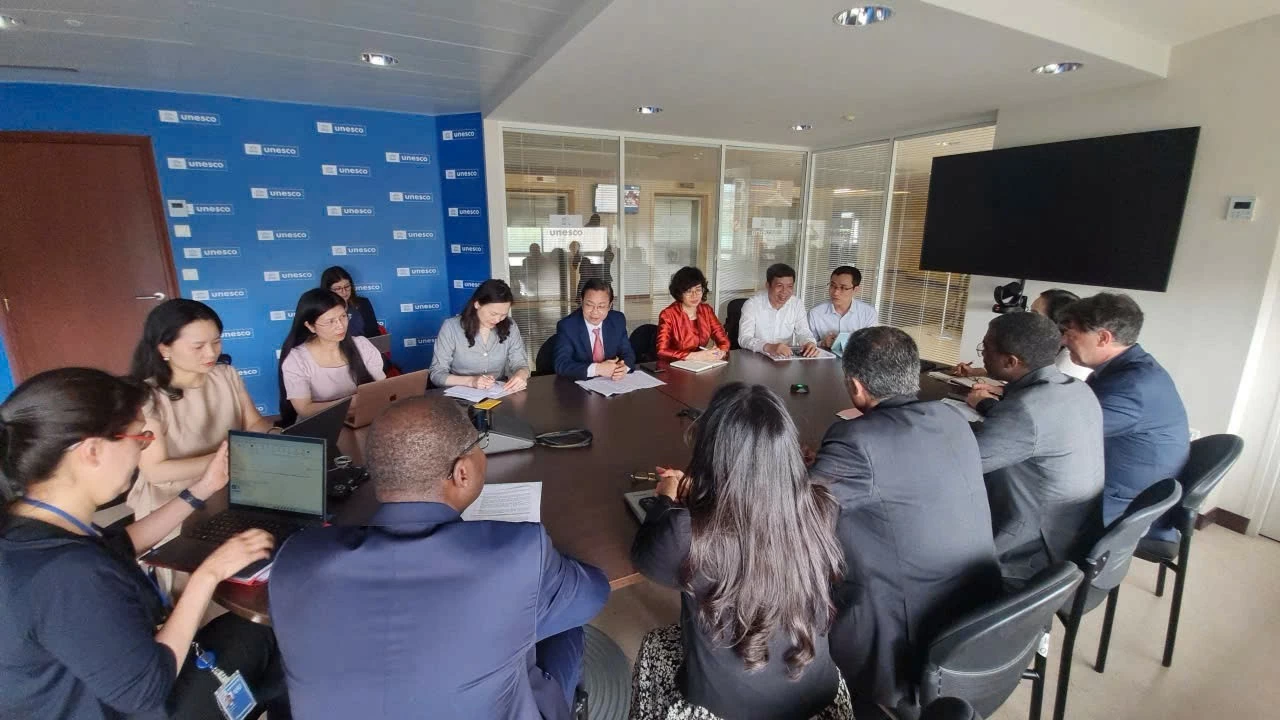 |
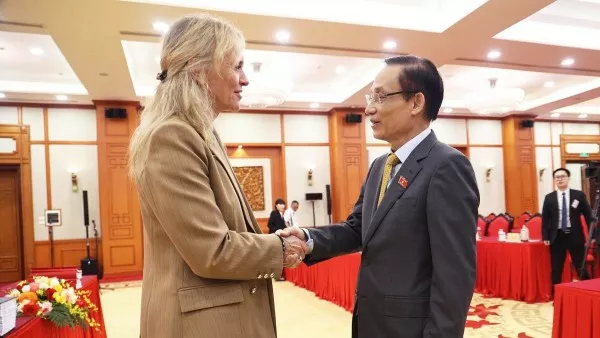
| Deputy Minister of Foreign Affairs Ngo Le Van, Chairman of the Vietnam National Commission for UNESCO, meets with UNESCO Assistant Director-General for Culture Nayef H. Al-Fayez and Director of the World Heritage Center Lazare E. Assomo. (Photo: Vietnam National Commission for UNESCO) |
Speaking at the session, Deputy Minister Ngo Le Van welcomed efforts to make the 2003 Convention an important framework for cooperation in safeguarding cultural heritage, promoting cultural diversity, dialogue among communities, and sustainable development.
The Deputy Minister stated that after more than two decades, the 2003 Convention has entered a new development phase, where safeguarding intangible cultural heritage not only preserves traditional values but also enhances community resilience, promotes education, sustainable livelihoods, and adaptability.
The Deputy Minister proposed that UNESCO and member countries continue to mobilize new, creative resources; effectively leverage technology; and promote the connection between the 2003 Convention and other UNESCO cultural conventions, especially the 1972 Convention on the Protection of the World Cultural and Natural Heritage.
The Chairman of the Vietnam National Commission for UNESCO affirmed that as one of the early participants in the 2003 Convention, with 17 intangible cultural heritages recognized by UNESCO, Vietnam always regards culture as the spiritual foundation of society, both a goal and a driving force for sustainable development.
Deputy Minister Ngo Le Van also noted that Vietnam focuses on completing the legal framework, placing communities at the center, linking heritage conservation with education, sustainable tourism, and digital transformation.
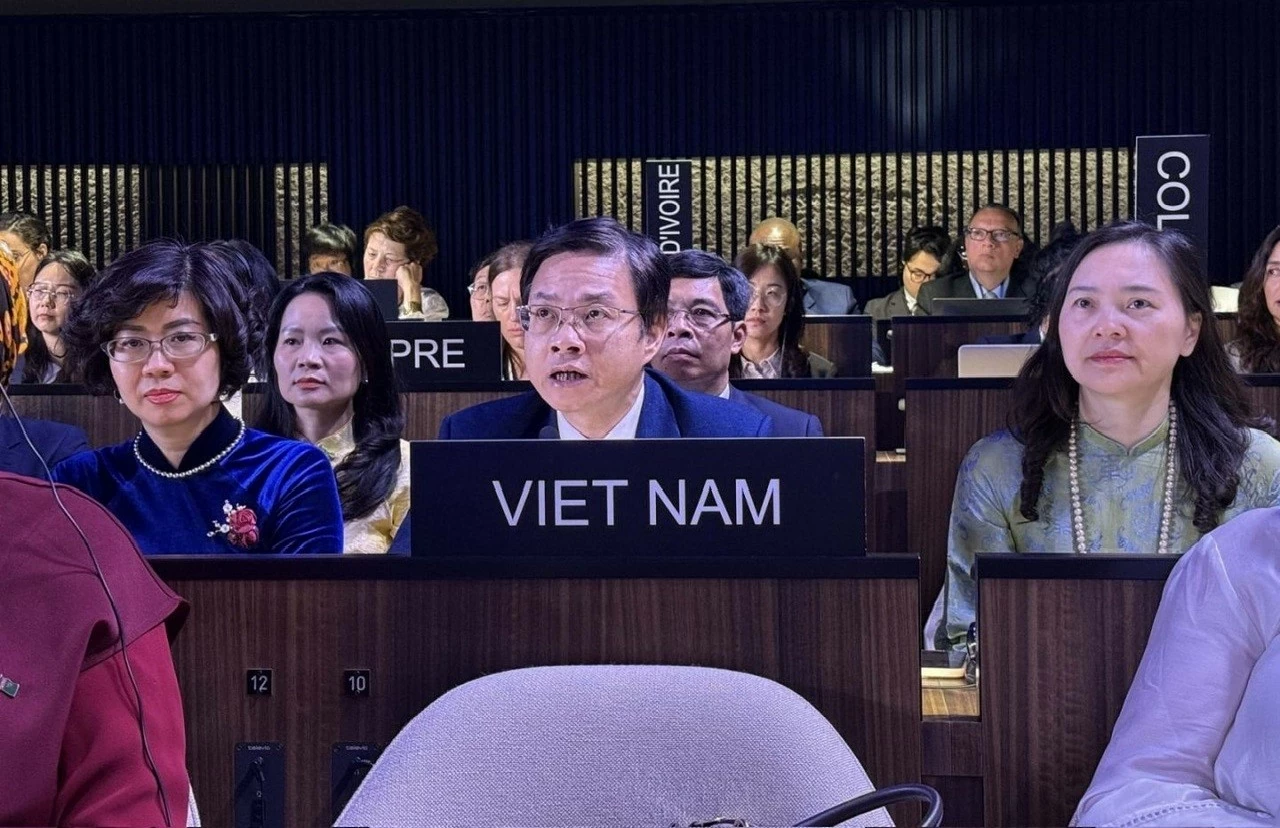 |
| Deputy Minister of Foreign Affairs Ngo Le Van speaks. (Photo: Vietnam National Commission for UNESCO) |
On the occasion of Vietnam's successful completion of its term as a member of the Intergovernmental Committee of the 2003 Convention (2022-2026), the Deputy Minister affirmed that Vietnam will continue to uphold its proactive role, contributing positively and responsibly, alongside UNESCO and member countries, to ensure the Convention remains a humanitarian and effective cooperation framework, contributing to a more diverse, inclusive, and peaceful world.
During this occasion, Deputy Minister Ngo Le Van held meetings with UNESCO Director-General Khaled El-Enany, UNESCO General Assembly President Khondker M. Talha, UNESCO Assistant Director-General for Culture Nayef H. Al-Fayez, Director of the World Heritage Center Lazare Assomo, ICOMOS Director-General Céline Noguès-Weber; Ministers of Culture and Fine Arts of Cambodia, Bulgaria, Mauritania, and heads of delegations from many member countries to promote bilateral and multilateral cooperation, garner support for Vietnam's important dossiers and initiatives, and promote a series of activities celebrating 50 years of Vietnam-UNESCO relations.
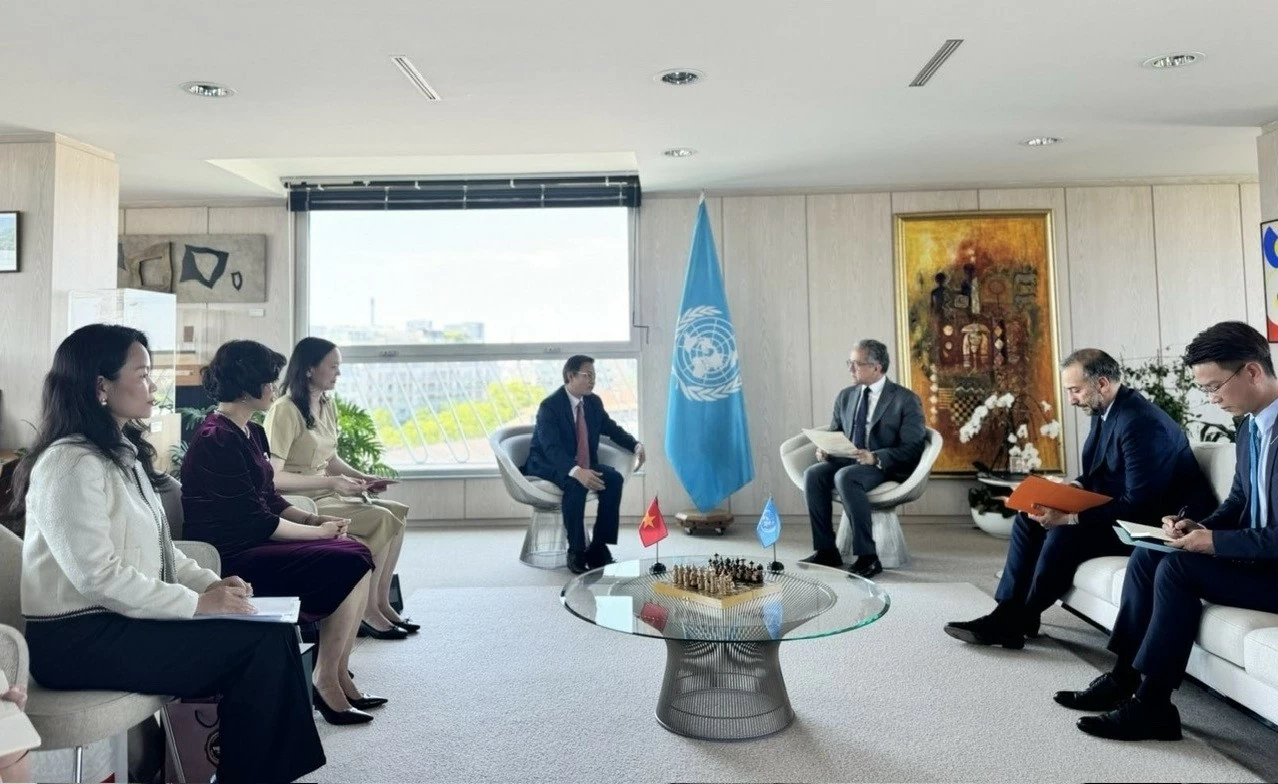 |
| Deputy Minister of Foreign Affairs Ngo Le Van affirms that Vietnam values its partnership with UNESCO. (Photo: Vietnam National Commission for UNESCO) |
In these meetings, Deputy Minister Ngo Le Van affirmed that Vietnam values its partnership with UNESCO; supports the vision and reform efforts to enhance the organization's operational efficiency, especially the UNESCO80 process.
In the context of 2026 marking 50 years of Vietnam-UNESCO relations, both sides discussed major directions to advance cooperation into a new development phase, promote the signing of the Vietnam-UNESCO cooperation framework for 2026-2030; and commemorate 50 years of relations at UNESCO Headquarters in Paris and in Hanoi.
Deputy Minister Ngo Le Van respectfully extended an invitation for an official visit to Vietnam this year to UNESCO Director-General Khaled El-Enany.
The UNESCO Director-General emphasized that Vietnam is a strategic, reliable partner of UNESCO, an active and responsible member, making many important and effective contributions to the organization's key governance mechanisms; affirmed acceptance of the invitation to visit Vietnam, and expressed a desire to welcome a high-level Vietnamese delegation at UNESCO Headquarters on the occasion of the 50th anniversary of Vietnam-UNESCO relations.
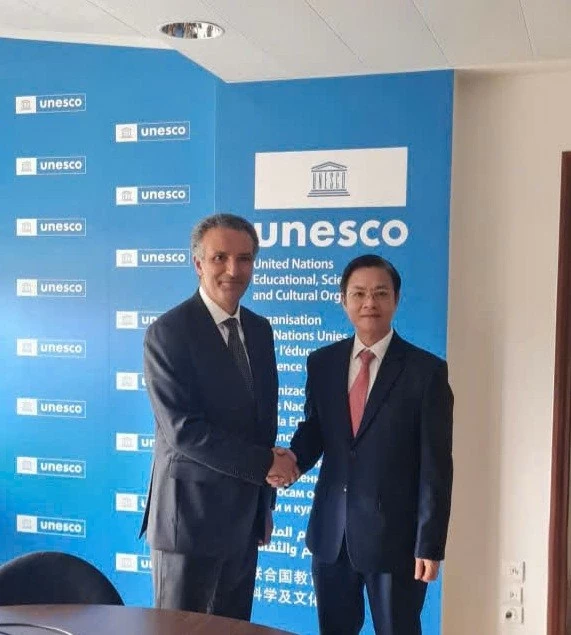 |
| Deputy Minister of Foreign Affairs Ngo Le Van, Chairman of the Vietnam National Commission for UNESCO, meets with UNESCO Assistant Director-General for Culture Nayef H. Al-Fayez. (Photo: Vietnam National Commission for UNESCO) |
Both sides also discussed promoting joint initiatives such as the International Decade for Culture for Sustainable Development, the Asia-Pacific Dialogue Conference on Heritage and Authenticity taking place in Hanoi in September 2026; as well as initiatives promoting a culture of peace, including the Peace Festival in Quang Tri in July 2026.
Notably, Vietnam wishes to continue receiving support and expert advice from UNESCO and ICOMOS in preserving and promoting the value of world heritage sites recognized by UNESCO, including the project to preserve, restore, and promote the value of the Thang Long Imperial Citadel Center in Hanoi associated with the restoration of Kinh Thien Palace and the Kinh Thien Main Hall space; while also supporting Vietnam in developing and promoting heritage dossiers such as Mo Muong and the Oc Eo - Ba The archaeological site.
For their part, UNESCO leadership, the World Heritage Center, and ICOMOS affirmed their continued support and cooperation with Vietnam in building, completing, and promoting the heritage dossiers and initiatives proposed by Vietnam.
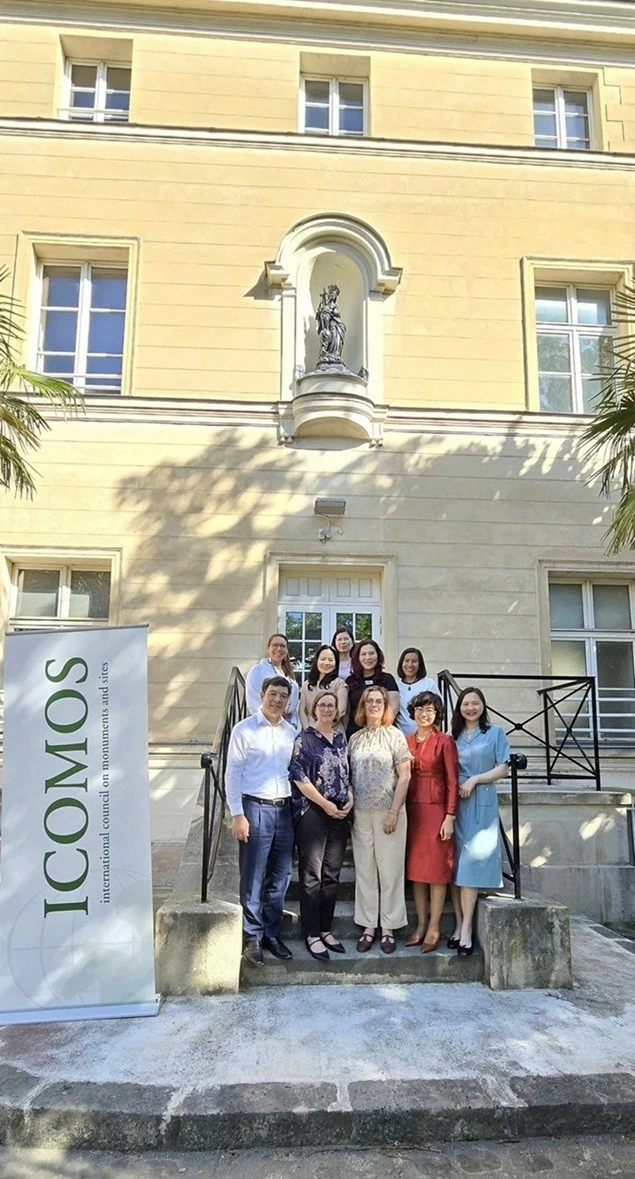 |
| The Vietnamese delegation meets with ICOMOS Director-General Céline Noguès-Weber. (Photo: Vietnam National Commission for UNESCO) |
In meetings and interactions, UNESCO leaders and heads of delegations from various countries expressed their impression of Vietnam's dynamic development, strategic vision, and major policies linked to cultural development, wishing for Vietnam to continue sharing experiences, especially the harmonious approach between conservation and promoting heritage values linked to sustainable development, tourism development, and improving community livelihoods.
| The General Assembly of the 2003 Convention is the highest authority of UNESCO in the field of safeguarding intangible cultural heritage, comprising representatives from 185 member countries. The General Assembly decides on the most important issues related to the policy and development direction of the Convention, allocates funding to support the conservation of intangible heritage in countries, and elects the Intergovernmental Committee of the 2003 Convention. |
Tags: