






United Nations Resident Coordinator in Vietnam: Vietnam places UNCLOS 1982 at the centre of maritime policy
Sharing with the World and Vietnam Report, United Nations Resident Coordinator in Vietnam Pauline Tamesis emphasised that Resolution 20 represents a fundamental shift in Vietnam's maritime development mindset, transitioning from marine exploitation to marine governance, from coastal economic development to building a strong maritime nation, linking economic growth with environmental protection and the enforcement of international law.
Latest
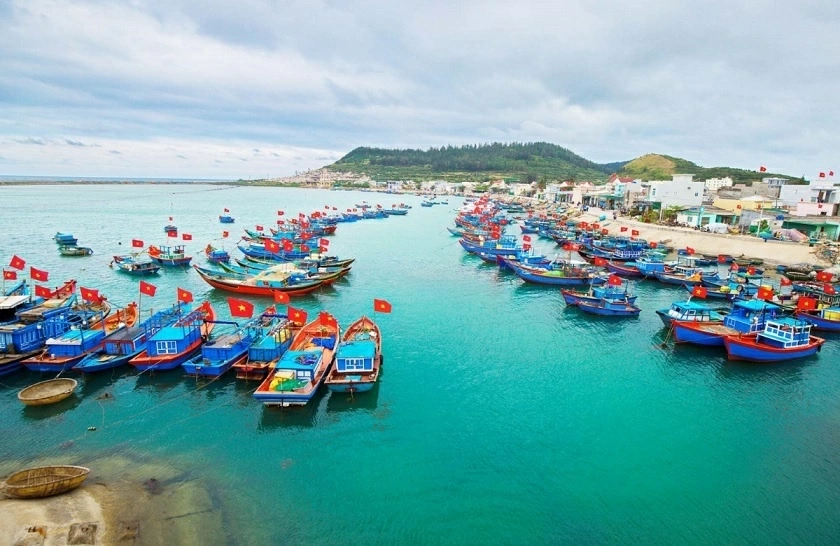 |
| The issue of ocean governance holds special significance for Vietnam, a nation with over 3,000 km of coastline. (Source: VnEconomy) |
A shift in maritime development mindset
According to United Nations Resident Coordinator in Vietnam Pauline Tamesis, for a maritime nation, the sea is not merely one of many sectors, but a space where issues of sovereignty, security, food, livelihoods, climate, and development converge. Fisheries resources, ocean currents, pollution, and warming seas impact across sectors. Therefore, the sea should be viewed as a unified entity, requiring synchronized plans, institutions, and partnerships.
Ms. Pauline Tamesis stated that ocean governance is particularly significant for Vietnam, a country with over 3,000 km of coastline. In the context of unprecedented pressures on the oceans from three crises – climate change, biodiversity loss, and environmental pollution – achieving Sustainable Development Goal 14 on conserving and sustainably using the oceans, seas, and marine resources becomes urgent. This goal demands reducing marine pollution, protecting ecosystems, ending overfishing and illegal fishing, conserving marine areas, enhancing marine science, and enforcing international law under the United Nations Convention on the Law of the Sea 1982 (UNCLOS).
However, according to Pauline Tamesis, the world is still not on track to achieve the Sustainable Development Goals, while Goal 14 remains one of the least funded global goals. In this context, Vietnam's Resolution No. 20-NQ/TW on building and developing Vietnam into a strong maritime nation was issued at a crucial time, reflecting Vietnam's orientation in fulfilling its national responsibilities in line with the international community's roadmap.
The United Nations Resident Coordinator in Vietnam emphasised that Resolution 20 calls for a profound shift in mindset: from marine exploitation to marine governance; from coastal economic development to building a strong maritime nation; from sectoral management to governing national marine space as a unified, integrated entity.
According to her, Vietnam identifies the marine economy as a driver for expanding and diversifying growth, while focusing on improving institutions and laws to meet ambitious development goals. Notably, Vietnam clearly states its stance of not trading the environment for mere economic growth, while setting development directions within the framework of protecting sovereign rights and jurisdiction under international law. Economic development, environmental preservation, and sovereignty protection are not opposing but reinforcing each other.
Aligning national goals with global responsibilities
Assessing the connection between Resolution 20 and the global ocean agenda, Ms. Pauline Tamesis noted that Vietnam's orientation closely aligns with the priorities promoted through commitments at the Third United Nations Ocean Conference and the Nice Ocean Action Plan.
This alignment is first reflected in the goal of expanding marine protected areas. Vietnam aims to protect at least 6% of its marine area by 2030, while restoring mangroves, coral reefs, and seagrass beds, thereby contributing to the global 30x30 goal of conserving 30% of land and sea areas by 2030.
Another priority is reducing carbon emissions in maritime transport through the development of green, smart ports, clean fuel infrastructure, and new industries like green hydrogen and green ammonia. This orientation is linked to the goal of developing offshore wind power capacity from 6 to 17 GW during 2030 - 2035.
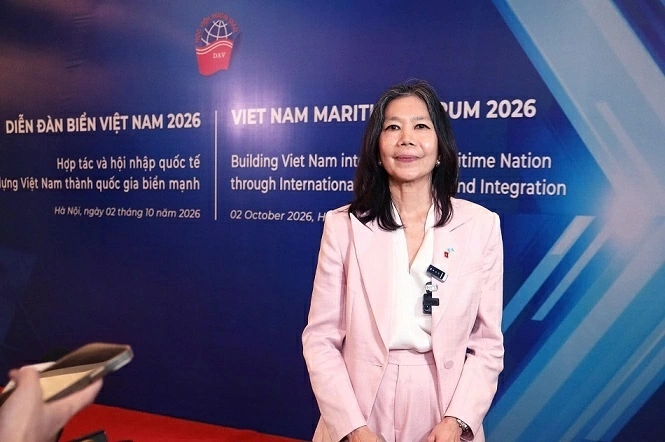 |
| United Nations Resident Coordinator in Vietnam Pauline Tamesis in an interview with the World and Vietnam Report. (Photo: Thanh Long) |
Additionally, Resolution 20 aims to address marine pollution by collecting and processing all plastic waste in coastal areas, ensuring waste treatment on islands, and promoting a circular economy. Implementing these goals also requires diversifying investment sources, developing green finance, risk-sharing mechanisms, preferential credit, insurance, and social welfare policies for fishermen and island communities.
According to the United Nations Resident Coordinator in Vietnam, these efforts need to be based on international law, with UNCLOS 1982 considered the “constitution of the oceans”, providing a stable and predictable legal framework for determining maritime zones, maritime activities, resource exploitation, and resolving disputes peacefully. Vietnam places the Convention at the centre of its maritime policy.
Ms. Pauline Tamesis also mentioned the Agreement on the Conservation and Sustainable Use of Marine Biological Diversity of Areas Beyond National Jurisdiction (BBNJ Agreement), a new pillar in the ocean legal framework. According to her, Vietnam has demonstrated an active, constructive partnership role from negotiation to ratification of the Agreement. The first Conference of Parties is expected to take place in January 2027, offering an opportunity for Vietnam to promote principles of fairness, equality, and send experts to participate in the activities of new institutions established under the Agreement.
Contributing to Global Ocean Governance
According to Pauline Tamesis, Vietnam has four strengths that can contribute to the international community's joint efforts in the maritime field.
Firstly, Vietnam serves as a bridge, connecting Southeast Asia, the Indo-Pacific region, Pacific island countries, and ASEAN based on shared interests in implementing UNCLOS, sustainable fisheries development, and enhancing resilience to climate change.
Secondly, Vietnam's experience in modernizing its fleet and ending illegal, unreported, and unregulated (IUU) fishing activities provides practical lessons for many other coastal nations.
Thirdly, Vietnam's practical experience in responding to climate change allows it to share insights on the impacts of sea level rise and salinity intrusion on communities and ecosystems, contributing to the development of global adaptation solutions.
Fourthly, Vietnam's voice promotes a balance between economic development opportunities in new development spaces with the need for science-based, long-term vision and equitable principles.
Pauline Tamesis emphasied that the next phase of ocean governance depends on the ability to connect UNCLOS, the BBNJ Agreement, climate frameworks, Sustainable Development Goal 14, and regional cooperation into a unified governance structure. This is also an area where the United Nations can provide practical value.
Affirming the spirit of accompanying Vietnam, the United Nations Resident Coordinator in Vietnam stated that the United Nations system in Vietnam stands ready to support aligning the action program of Resolution 20 with national commitments, enhancing implementation capacity, mobilizing partnerships and financial resources, while ensuring that the benefits of these efforts reach coastal and island communities.
According to her, Vietnam has set an ambitious vision for building a strong maritime nation. The ocean is a unified entity, the responsibility of nations is a shared responsibility, and actions need to be implemented synchronously. The United Nations is proud to accompany Vietnam on this journey.


