



The Philippines improves PISA scores and lessons for the Vietnamese education
The PISA 2025 results highlight a significant advancement for the Philippines, where collaboration among educational reforms, schools, and the private sector is opening new approaches to support learners. This story also offers insights for Vietnam, a nation regarded by the Philippines as a regional model.
Latest
The Philippines' strong progress in PISA 2025
According to the PISA 2025 results released in September 2026, Filipino students scored 367 in Reading, 371 in Mathematics, and 373 in Science, marking increases of 20, 16, and 17 points, respectively, compared to 2022.
The percentage of students achieving Level 2 or above, the basic proficiency level in PISA, also rose across all three areas. In Reading, this rate increased from 24% to 31%; in Mathematics, from 16% to 21%; and in Science, from 23% to 32%.
According to a 10-year trend analysis by the OECD, the Philippines is the fastest-improving country in Reading proficiency. The OECD also noted that the improvement in the Philippines occurred against a backdrop of generally declining international learning outcomes.
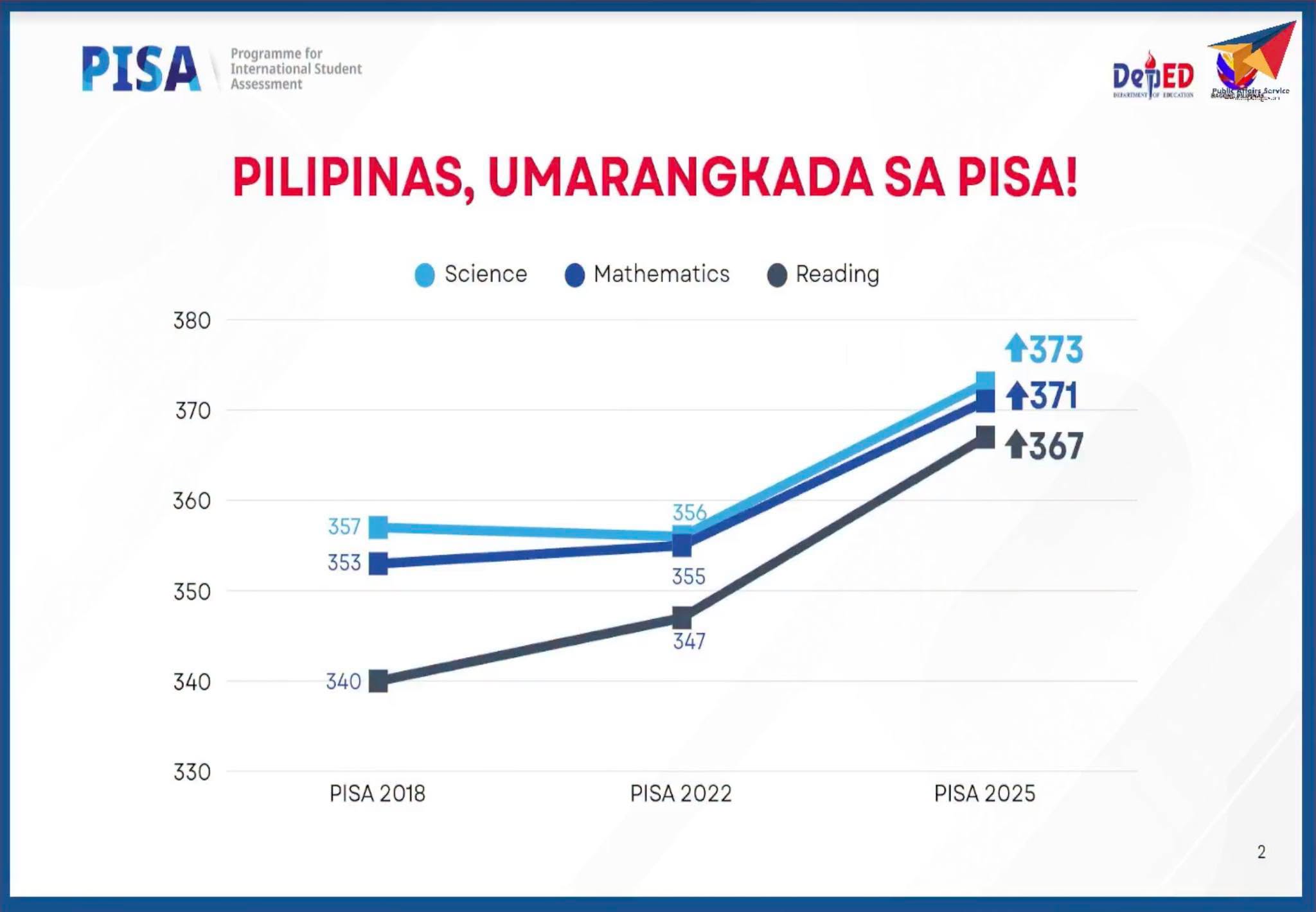 PISA 2025 results of the Philippines. (Source: DepEd).
Philippine Education Secretary Sonny Angara described these results as an encouraging milestone, but also emphasised that this is just the foundation for continued reform, as many students still need support.
Instead of focusing solely on rankings, the Philippine Department of Education (DepEd) reviewed the limitations identified in previous PISA cycles and gradually changed how students are prepared.
When the Philippines first participated in PISA in 2018, one of the identified issues was that students were unfamiliar with computer-based assessments and questions requiring application and analysis.
Subsequently, DepEd conducted surveys on schools' readiness, reviewed facilities, teaching staff, students, and support conditions. Students became more accustomed to computer-based testing environments and analytical, interactive question types.
Alongside PISA preparation, the Philippines implemented reforms to strengthen students' foundational skills. DepEd reduced administrative burdens on teachers to increase teaching time, improved curricula, and enhanced support programs for struggling students.
According to Kevin Karl Santos, Director of the DepEd's Education Assessment Bureau, PISA preparation was implemented on multiple fronts, from school, teacher, and student readiness to community and stakeholder involvement. The private sector was mobilised to supplement resources and support students. Khan Academy and Front Learners were mentioned by Santos as partners in this process.
This demonstrates that improving learning outcomes is situated within a broader ecosystem in which regulators, schools, teachers, communities, and external partners collaborate.
Khan Academy recognised in the Philippines' educational improvement efforts
Among the partners supporting DepEd, Khan Academy has been collaborating with the Philippine education system even before PISA 2025.
Since 2024, DepEd has chosen Khan Academy to deploy digital learning resources to approximately 1,000 public schools. The agreement focuses on delivering learning resources and online practice tools to students, particularly in Mathematics and Reading. When announcing the partnership, Secretary Sonny Angara expressed hope that this model would directly support the Philippines' goal of improving PISA results.
During the preparation for PISA 2025, Khan Academy continued to provide supplementary learning resources and online practice tools, helping students become familiar with PISA-oriented question types.
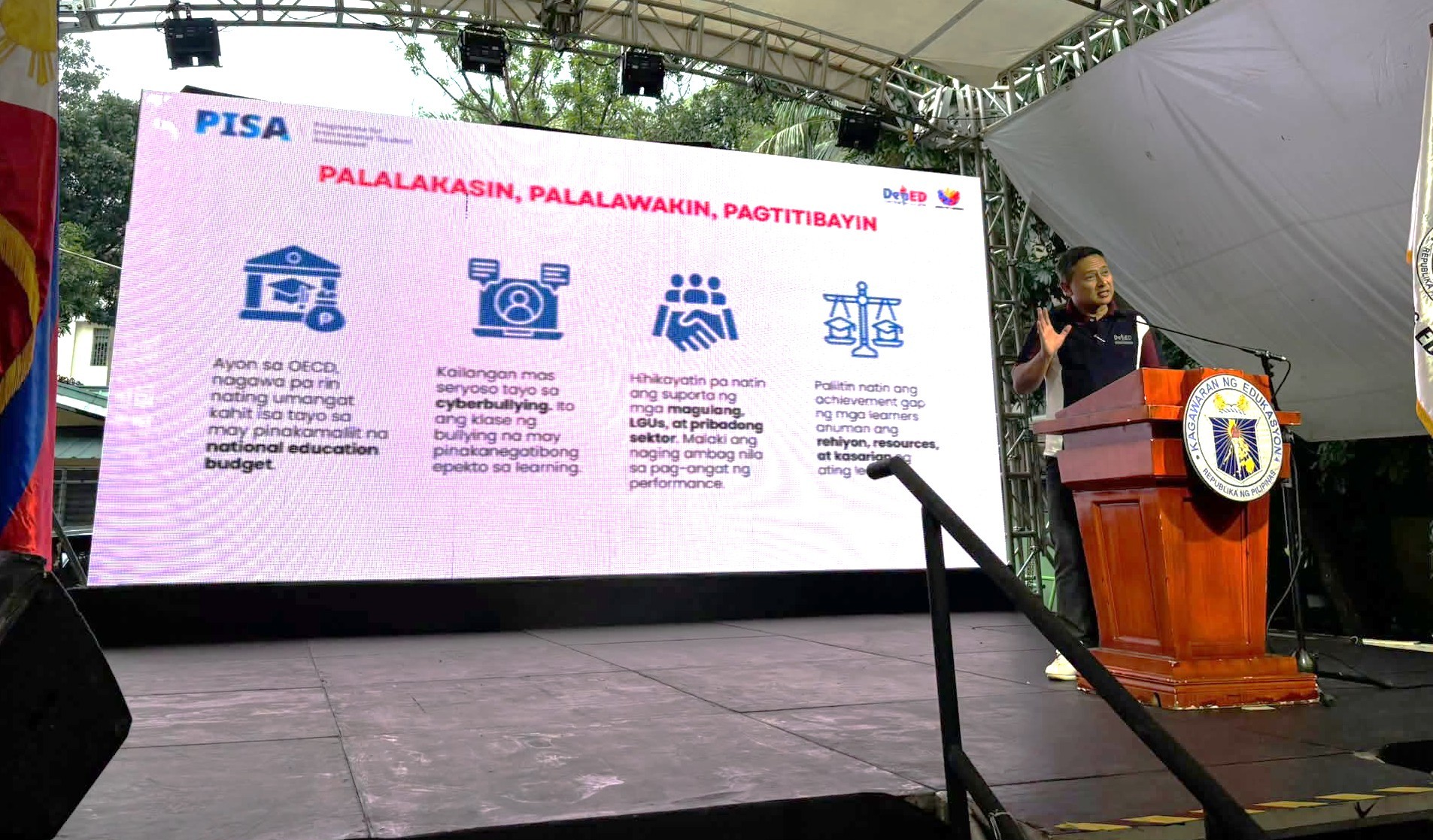 DepEd representatives acknowledge Khan Academy's support in improving PISA results.
After the PISA 2025 results were announced, Khan Academy Philippines continued to be mentioned by DepEd among the organisations and businesses supporting the nation's educational reform efforts. Partners are expected to continue contributing necessary tools and initiatives to maintain progress.
The case of Khan Academy illustrates a growing approach in Philippine education: technology platforms are not standing outside the system but are integrated as a supplementary resource for teachers, schools, and learners.
When integrated into a unified educational strategy, technology can expand learning resources, create additional practice opportunities, and help students access learning methods suited to the digital environment.
Philippines looks to Vietnam for experience
The story of the Philippines is particularly noteworthy for Vietnam because, during discussions of the PISA 2025 results, Philippine Education Secretary Sonny Angara mentioned Vietnam as a country worth learning from.
According to Angara, Vietnam's PISA results are close to the OECD average and serve as a useful example for the Philippines. He specifically highlighted Vietnam's focus on teachers, their training and welfare, and investment in education.
The Philippines's looking to Vietnam creates a thought-provoking perspective.
On one hand, the Philippines is demonstrating how an education system can make strides by addressing its gaps, focusing on foundational skills, and mobilising additional social resources.
On the other hand, Vietnam has a significant foundation in learning outcomes and is recognised by a regional country as a model worth referencing.
Therefore, for Vietnam, the question may be not only how to continue improving scores but also how to better leverage students' existing strengths in a rapidly changing educational environment.
Technology as a launchpad for existing strengths
PISA does not only assess the ability to recall knowledge. At the basic proficiency level, students need to apply knowledge to handle specific situations, comprehend information, represent problems mathematically, or make data-based judgments.
The experience of the Philippines shows that preparing learners involves more than just subject knowledge. Students need to become familiar with computers, interactive question types, and situations requiring knowledge application.
These competencies serve more than just a single exam. In increasingly digital learning and working environments, self-learning, problem-solving, information processing, and technology use become important skills for learners.
For Vietnam, technology can be seen not as a replacement for what the education system does well but as a launchpad to expand and enhance those strengths.
A student may have more opportunities for practice after school hours. Teachers have additional tools to monitor progress and support students according to their different needs. Schools can access high-quality learning resources without having to build them from scratch.
Open educational platforms like Khan Academy can become part of that ecosystem, especially when providing free learning resources and allowing learners to proactively access knowledge according to their needs.
From improving scores to building future competencies
The story of the Philippines shows that better PISA results do not come from a single solution.
It is the result of multiple efforts implemented simultaneously: strengthening foundational skills, supporting teachers, better preparing students, enhancing school readiness, and increasing collaboration with external partners. In this process, Khan Academy is one of the partners recognised by DepEd.
For Vietnam, this lesson can be approached differently.
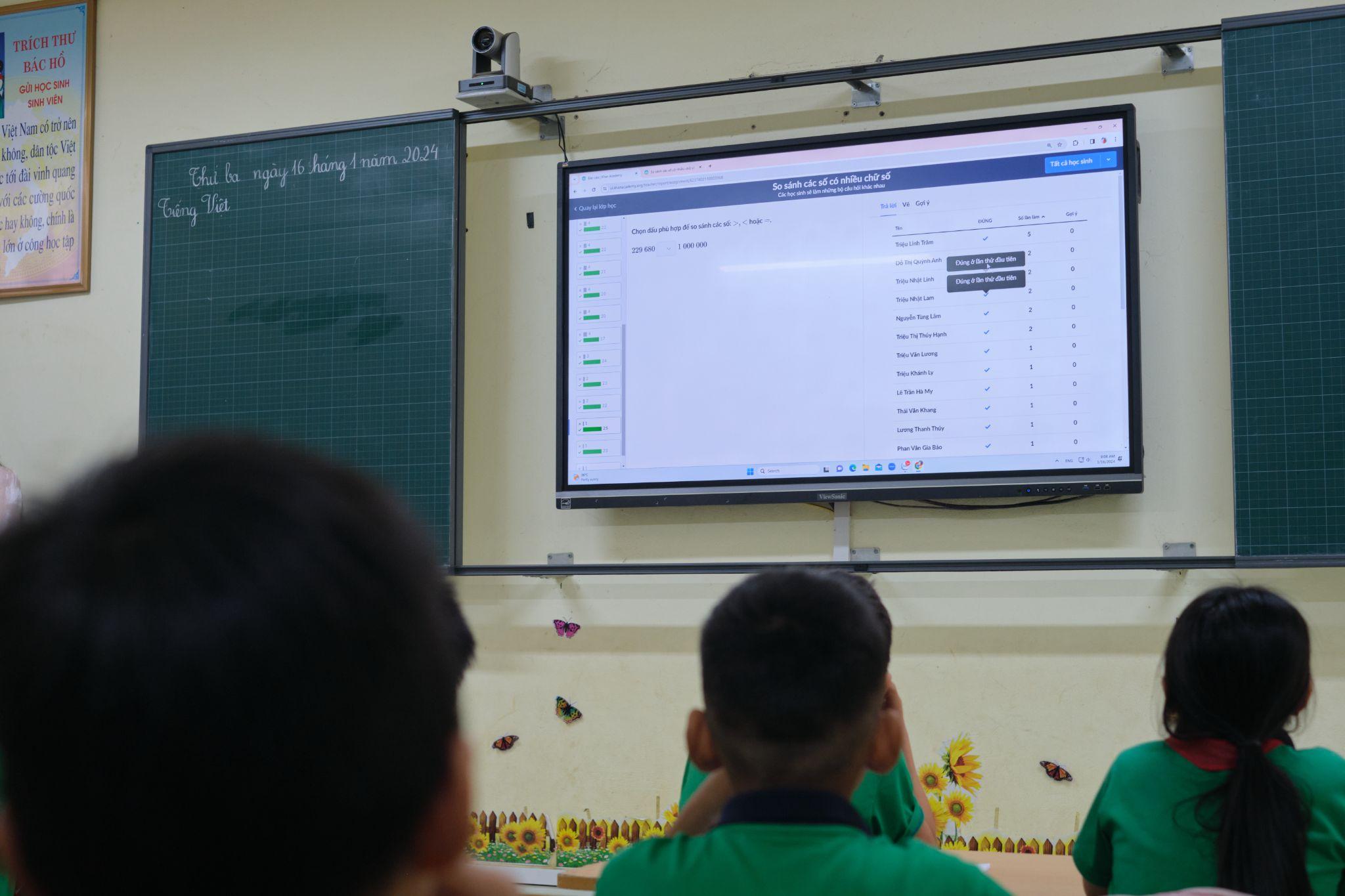 11,000 schools in Vietnam are also applying the Khan Academy platform in teaching and learning.
If the Philippines is striving to accelerate improvements in learning competencies, Vietnam can leverage its existing foundation to prepare for the next step: helping students not only learn well but also learn better independently, solve problems more effectively, and master technology more proficiently.
This is also the role that digital educational platforms like Khan Academy can play in the educational ecosystem: not replacing teachers or schools, but supplementing learning resources and tools to provide learners with more opportunities throughout their learning journey.
From the Philippines' experience, what may be of interest to Vietnam is not just maintaining a good position in international rankings but also ensuring that established learning strengths continue to develop in an increasingly digital world.
When the foundation is solid, technology can become a launchpad for learners to go further.
| Vietnam Education Publishing House supports Vietnamese teachers abroad in preserving and promoting the Vietnamese language
WVR - In August 2026, 50 teachers and volunteers from 14 countries and territories participated in a training course on Vietnamese language teaching for Vietnamese ... |
| Teachers 'catch the signal' to bring lessons to Pung Luong students
Pung Luong Ethnic Semi-boarding Primary School in Mu Cang Chai, Yen Bai, has only 20 computers to serve more than 400 students. Yet this does ... |