



The HCM City Mayors' Conference 2026 officially opens: A message of cooperation for joint development
On the morning of September 11, in Vung Tau ward, within the framework of the 3rd Ho Chi Minh City Friendship Dialogue 2026 (FD 2026), the FD 2026 Mayors' Conference officially commenced, marking the start of the official working day of the Dialogue.
Latest
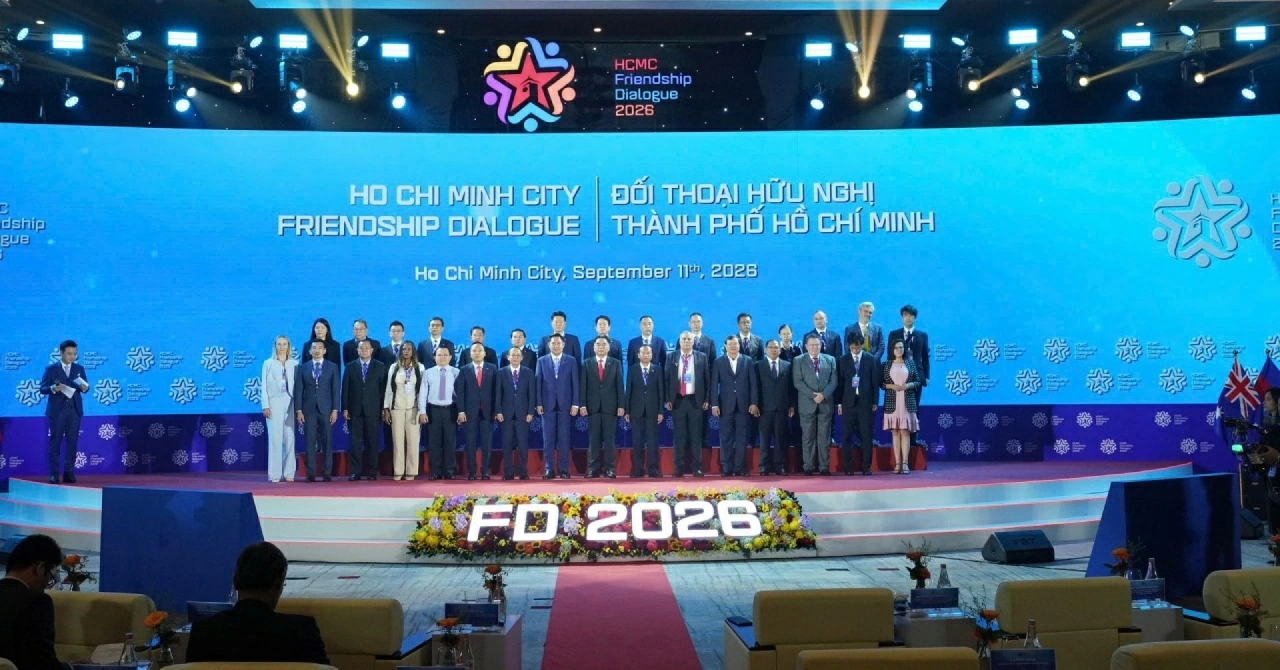 |
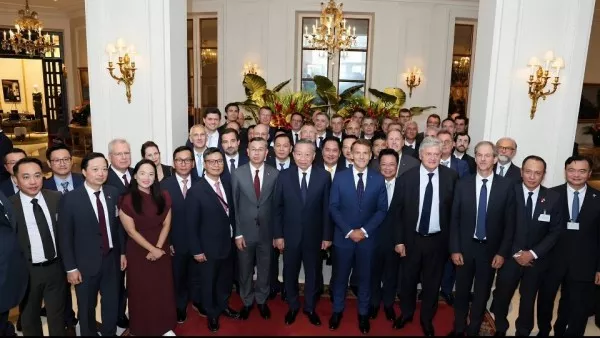
| Delegates take a group photo at the event. (Source: FD 2026) |
The conference focuses on discussing and clarifying the proactive role of local governments in implementing national foreign policy, while promoting practical cooperation models that align with the needs and strengths of each locality.
Attending the program, from the Central Ministries, there were Deputy Minister of Foreign Affairs Nguyen Hoang Long; Deputy Minister of Finance Le Tan Can; from Ho Chi Minh City, there were Deputy Secretary of the City Party Committee, Chairman of the People's Committee Nguyen Van Duoc; Standing Vice Chairman of the People's Committee Nguyen Loc Ha; Vice Chairman of the People's Committee Bui Minh Thanh; From the provinces, there was the presence of Deputy Secretary of the Provincial Party Committee, Chairman of Tay Ninh Provincial People's Committee Le Van Han; Vice Chairman of Can Tho City People's Committee Tran Chi Hung; along with many delegates from localities and international partners of Ho Chi Minh City such as Laos, Cambodia, Cuba, China, Russia, Japan, Slovakia...
Dialogue for Better Understanding
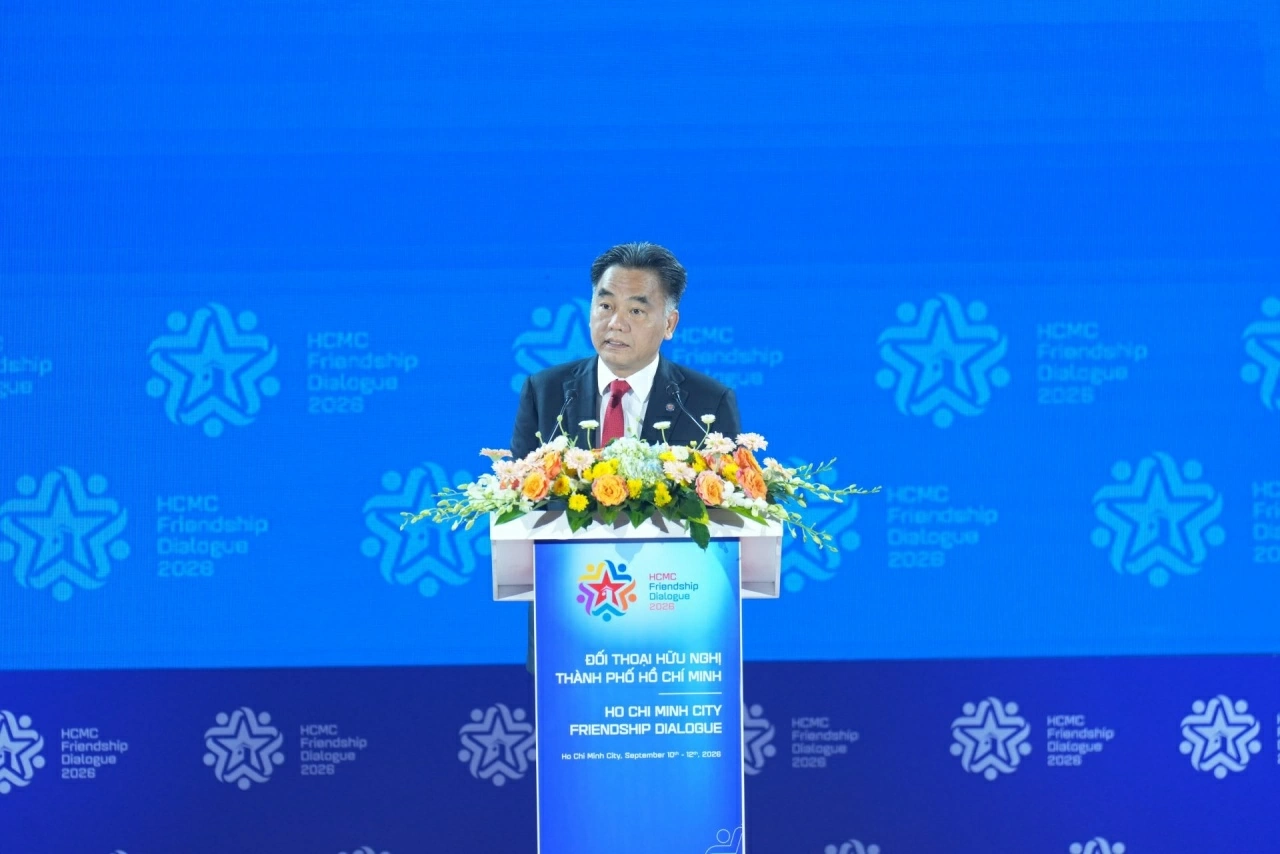 |
| Standing Vice Chairman of Ho Chi Minh City People's Committee Nguyen Loc Ha emphasised that this year's Friendship Dialogue theme not only reflects the development needs of Ho Chi Minh City in the new phase but also demonstrates the determination to find effective ways to turn the friendships, trust, and cooperation built over time into resources for common development. (Source: FD 2026) |
In his opening remarks at the Conference, Standing Vice Chairman of Ho Chi Minh City People's Committee Nguyen Loc Ha quoted the World Economic Forum's observation that cities are the engines of the global economy and increasingly populous centres. To improve the world's situation, efforts must begin in the cities themselves.
According to him, this observation reflects the reality that in the context of increasingly complex and unpredictable global challenges, cities – where resources, knowledge, scientific and technological achievements converge, and where the most dynamic economic activities occur – are playing an increasingly important role in creating new development drivers for each nation, region, and globally. Moreover, reality has shown that in today's era of globalisation, no single city or locality can solve all development issues on its own. Therefore, cooperation is the key to a sustainable future for all.
Nguyen Loc Ha emphasised that Ho Chi Minh City is deeply aware that, along with enhancing internal strength and improving the economy's resilience, promoting foreign cooperation and deepening international integration, effectively leveraging external resources, especially in capital, knowledge, technology, management experience, and advanced standards, is an objective need and an inevitable choice to develop alongside the times.
Thus, it can be said that foreign relations and international integration today go beyond maintaining friendships or expanding international exchanges and have become an important development method for localities. While national foreign policy, head-of-state diplomacy, and high-level foreign affairs have established frameworks and positioned directions, localities are where these strategic opportunities are transformed into specific programs, projects, and values for development.
According to the Standing Vice Chairman of the Ho Chi Minh City People's Committee, as one of the pioneering localities in the country in foreign relations and international integration, Ho Chi Minh City has continuously sought effective ways and measures to transform international relations into specific resources for development over the years. Today, this requirement is set on a much larger foundation than before: a city with a geographical space, economic scale, and comprehensive potential that has significantly expanded after administrative consolidation, with higher development goals and visions than the previous period.
From July 1, 2025, after merging with Binh Duong and Ba Ria - Vung Tau provinces, Ho Chi Minh City, with an area of over 6,700 km² and a population of over 15 million people, has entered a new development phase. The city is the convergence of three of Vietnam's leading dynamic growth poles: the financial, commercial, service, science-technology, and innovation centre in the core urban area; a high-tech industrial production space with a deep enterprise ecosystem and supply chain in Binh Duong; and a strategic deep-water port system, marine economic zone, energy, and marine tourism in Vung Tau.
On this foundation, the Politburo's Resolution on building and developing Ho Chi Minh City in the new era has defined a historical vision and development goals: Maintaining a minimum GRDP growth of 10% per year during 2026 - 2030; making the digital economy account for about 40% of GRDP by 2030; developing the city into a major center for science-technology, innovation, logistics, and international integration, with a prominent position in Southeast Asia, aiming towards the group of global cities that are livable and have a leading innovation ecosystem worldwide...
Additionally, the network of friendly cooperative relations with foreign localities and existing international partner organisations is also an important foundation for the City to continue expanding its foreign relations space, strengthening connections with strategic partners, and deeply participating in global innovation development networks. However, Nguyen Loc Ha pointed out that the requirement in the new phase is not just to expand relationships, but more importantly, to enhance the quality of cooperation, transforming international connections into specific values for development.
“Ho Chi Minh City wishes and is ready to further promote its pioneering role, to be a model, a place for piloting, experimenting, and spreading new initiatives, ideas, models, and cooperation methods with cities and international partners; using local practices to enrich and contribute to perfecting the comprehensive foreign relations at a new height of the country,” Standing Vice Chairman of the People's Committee of the City affirmed.
In that spirit, Nguyen Loc Ha believes that this year's Friendship Dialogue theme not only reflects the City's development needs in the new phase but also demonstrates the determination to find effective ways to turn the friendships, trust, and cooperation built over time into resources for common development.
This is also the guiding principle, purpose, and core value throughout the FD sessions since 2022: Dialogue for better understanding; friendship for closer bonds, and cooperation for more sustainable joint development.
Especially, within the framework of the Mayors' Conference, Nguyen Loc Ha hopes to hear valuable experiences from international localities on three aspects:
First, how to best promote the role of local governments within the overall national foreign policy? How to ensure the unity and consistency of foreign policy while creating enough space for localities to respond quickly to development needs and new cooperation opportunities?
Second, how can local-level multilateral networks create substantial value beyond mere meetings and information exchanges; what criteria should be used to evaluate the effectiveness of a local cooperation network?
Third, how to transform friendships, agreements, and political commitments into specific, measurable activities?
According to the Vice Chairman of the Ho Chi Minh City People's Committee, each locality has its own conditions, strengths, and development priorities. Importantly, in a world full of fluctuations and challenges today, trust, sharing, and cooperation in the spirit of seeking common ground while respecting differences will create a great synergistic strength, so that all can achieve prosperity, sustainable and inclusive development, ensuring no one is left behind.
| To date, Ho Chi Minh City has established friendly and cooperative relations with 88 foreign localities and nearly 20 international organisations and partners across continents. This network of relationships is an important foundation for the City to effectively and synchronously implement the Party and State's foreign policy at the local level, in the spirit of the Politburo's Resolution No. 59-NQ/TW on international integration in the new situation and Resolution No. 06-NQ/TW of the Politburo on implementing the foreign policy of the Party's 14th Congress; thereby affirming the pioneering and dynamic role of Ho Chi Minh City in the local foreign affairs of the country. |
Development Partners of Localities
 |
| Deputy Minister of Foreign Affairs Nguyen Hoang Long affirms that the Ministry of Foreign Affairs is a “development partner” of localities. (Source: FD 2026) |
In his welcoming speech, on behalf of the Ministry of Foreign Affairs, Deputy Minister Nguyen Hoang Long congratulated and highly appreciated the Ho Chi Minh City People's Committee for maintaining and elevating the FD to become a local foreign affairs forum with increasingly substantial content and closely linking international cooperation with development tasks.
Deputy Minister Nguyen Hoang Long also highly appreciated the theme “Local Foreign Affairs: A Driver for Innovation and Sustainable Growth” of this year's Dialogue. According to him, the theme reflects the pioneering, proactive, and positive spirit, along with the sensitivity of Ho Chi Minh City, the country's largest economic center, in response to the rapid changes in the international and regional situation; it also shows the goal of addressing a practical issue of local foreign affairs and international integration in the new context, which is transforming the extensive network of friendly partners and international connections into specific resources, opportunities, and drivers for development.
“This is not only a requirement for Ho Chi Minh City but also a common concern of many localities in Vietnam and around the world in the process of increasingly deep international integration,” the Deputy Minister emphasised.
According to Deputy Minister Nguyen Hoang Long, after 40 years of Renovation, from a country under siege and embargo, Vietnam today has become the 32nd largest economy in the world, among the 15 countries with the largest trade scale globally, and has participated in 17 free trade agreements, connecting with 60 key economies in the region and globally. Compared to the beginning of the Renovation process, Vietnam's per capita GDP has increased nearly 50 times, and the World Bank has classified it as a middle-income country.
The 14th Congress of the Communist Party of Vietnam also identified that, along with strengthening national defence and security, promoting foreign affairs and international integration is a “key, regular” task, playing a pioneering role in creating and maintaining a peaceful and stable environment, closely linking Vietnam's development process with the world's peace, cooperation, and progress; effectively leveraging external resources and favourable conditions for national development, contributing to the successful realisation of the two centennial goals... These renovation policies and strategic decisions have opened up great cooperation potential between Vietnam and international partners.
Deputy Minister Nguyen Hoang Long noted that the task of developing foreign affairs in the new era requires further enhancing the role of localities in proactively adapting, seizing opportunities, and effectively transforming international resources into development drivers. Accordingly, local-level foreign affairs and integration play an increasingly important role, connecting the central foreign policy and local development needs and directions; at the same time, effectively implementing local foreign affairs and international integration not only enhances local potential but also enriches the content of Vietnam's relations with global partners, increasing the position and strength of the country's foreign affairs.
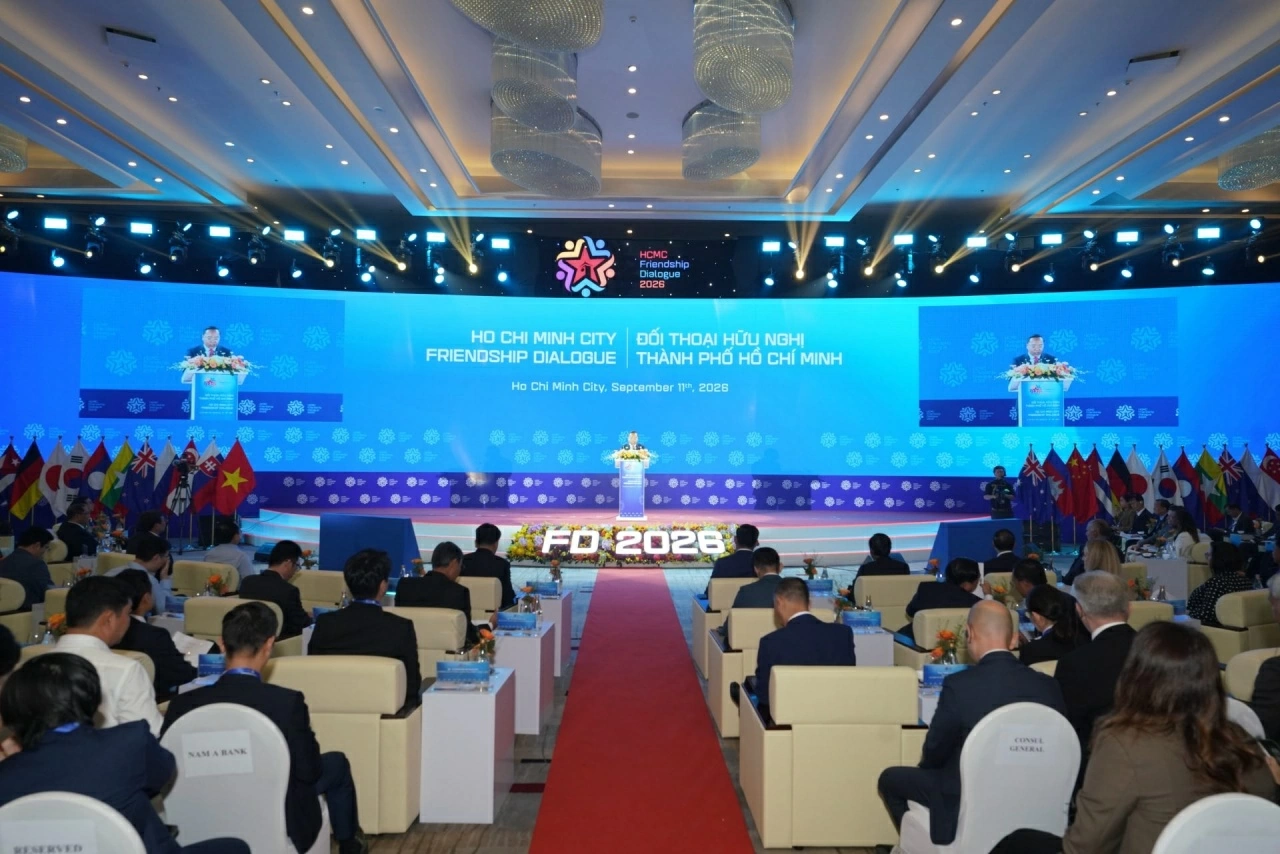 |
| Deputy Minister Nguyen Hoang Long evaluates that the theme “Local Foreign Affairs: A Driver for Innovation and Sustainable Growth” of this year's Dialogue reflects the pioneering, proactive, and positive spirit, along with the sensitivity of Ho Chi Minh City, the country's largest economic centre, in response to the rapid changes in the international and regional situation. (Source: FD 2026) |
In that spirit, the Deputy Minister affirmed that the Ministry of Foreign Affairs is a “development partner” of localities. The Ministry of Foreign Affairs and the system of Vietnamese Representative Missions abroad always identify “putting people, localities, and businesses at the centre of service”; accompanying localities not only in expanding relations but increasingly delving into seeking opportunities, connecting partners, mobilising resources, and resolving specific issues, so that the country's position and strength on the international stage are increasingly effectively transformed into resources, opportunities, and specific development drivers for each locality.
With that spirit, Deputy Minister Nguyen Hoang Long looks forward to the substantive results of this Friendship Dialogue:
First, in-depth exchanges at the Dialogue will contribute to consolidating common understanding and enriching common knowledge about the role of localities in the overall national foreign policy.
Second, meetings, connections, and exchanges will deepen and enhance the effectiveness of foreign relations.
Third, bringing diplomacy for development into depth, using practical effectiveness as a measure.
Fourth, promoting the formation of key cooperation themes throughout the Dialogue sessions is extremely important. The Deputy Minister also welcomed Ho Chi Minh City's research on thematic cooperation forms between localities, thereby creating additional channels for exchanging experiences, data, experts, and promoting specific cooperation initiatives.
On the foundation of friendly cooperative relations, Deputy Minister Nguyen Hoang Long suggested that localities, Vietnamese and international businesses promote their pioneering role and innovative spirit, boldly change their thinking and cooperation methods, transitioning from cooperation to co-creation, from transfer to joint development.
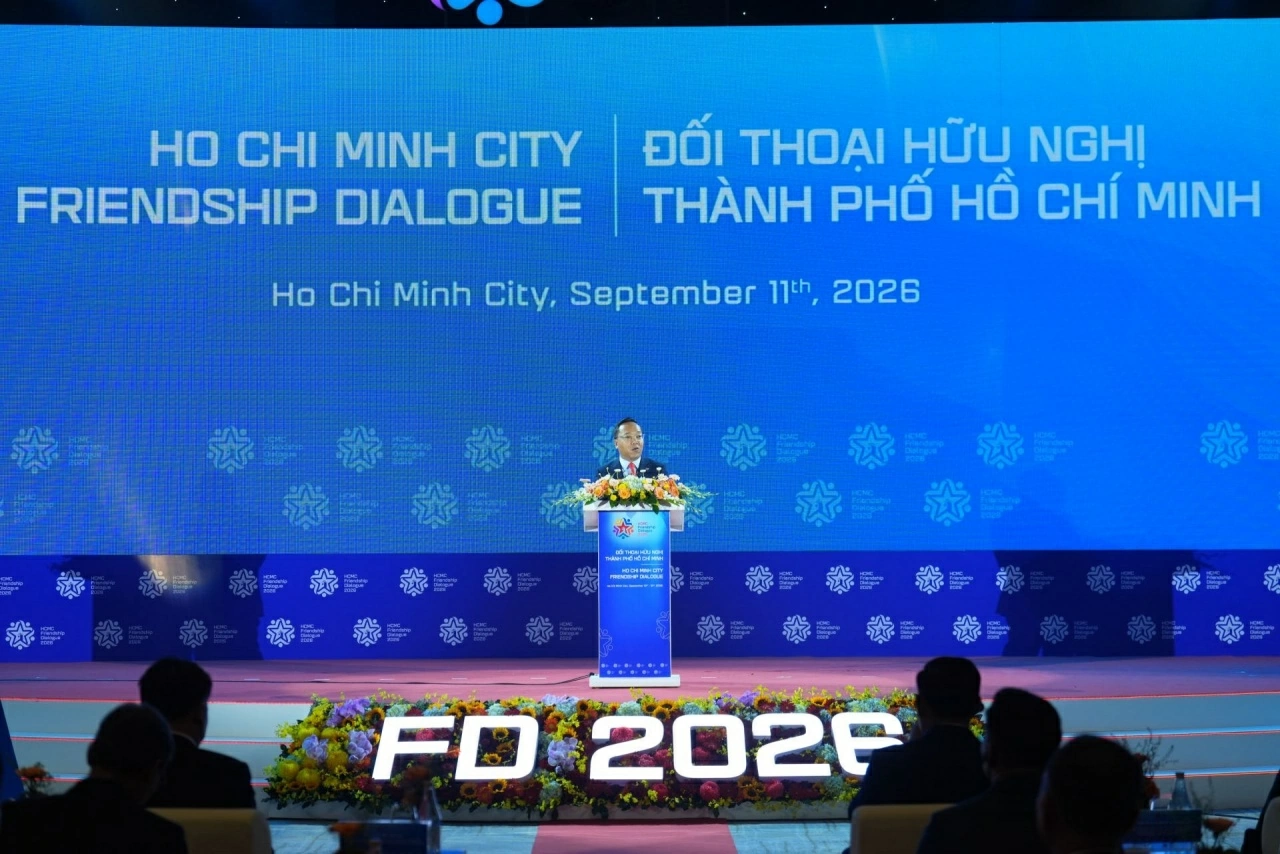
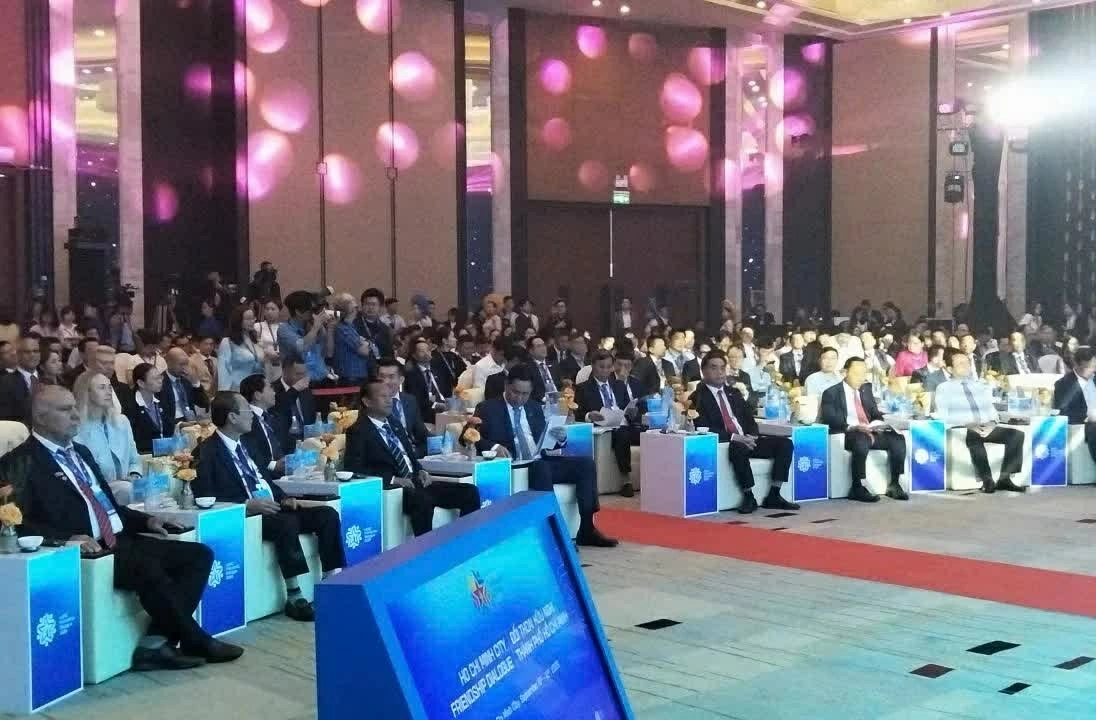 |
| Conference scene. (Source: FD 2026) |
Within the framework of the Conference, delegates listened to presentations from international and local leaders attending, as well as recorded congratulatory speeches from leaders of some localities such as the Liverpool City Region (UK), Leipzig City (Germany), Aichi Prefecture (Japan), and San Francisco City (USA).
From governance practices, international localities proposed many specific cooperation directions with Ho Chi Minh City. Localities in Laos (Champasak, Vientiane, Xiengkhouang, Houaphan) and Cambodia (Kratie, Phnom Penh, Siem Reap) emphasised the special friendship, promoting cooperation in infrastructure development, agriculture, border trade, tourism, and human exchange.
Localities in Cuba (Santiago de Cuba, Artemisa) proposed expanding cooperation in healthcare, biotechnology, and agriculture. Meanwhile, cities like Tokyo (Japan), Palmerston North (New Zealand), Košice (Slovakia), and Rostov Province (Russia) focused on sharing experiences, solutions for modern urban governance, green transition, climate change response, education and training development, science and technology, and expanding bilateral investment and trade opportunities with Ho Chi Minh City.
The central theme of the conference is transforming foreign relations into specific cooperation projects. In that spirit, one of the outstanding results is that the parties agreed to support the initiative to study a multilateral cooperation mechanism among port cities in Ho Chi Minh City's network of friendly cities, affirming the direct role of local foreign affairs in national development goals.
Concluding the Mayors' Conference, with very high consensus, the delegates adopted the Declaration of the 3rd Ho Chi Minh City Friendship Dialogue 2026, recognising the increasingly important role of local foreign affairs in the overall national foreign policy, and agreed to assign the focal agency of Ho Chi Minh City and localities to coordinate in building specific action plans towards FD 2028.
| FD 2026 attracted the participation of nearly 500 domestic and international delegates, with the presence of leaders from some central ministries such as the Ministry of Foreign Affairs and the Ministry of Finance; leaders of Ho Chi Minh City, Can Tho, and Tay Ninh; especially the participation of 35 delegations of localities, organisations, and international partners from 4 continents, including Asia, Europe, America, and Oceania; foreign consular agencies in Ho Chi Minh City, along with a large number of economic-financial, science-technology experts, and the Vietnamese and international business community. This is evidence of the stature and appeal of the event, while also reflecting the increasingly elevated role, position, and foreign affairs prestige of Ho Chi Minh City on the international stage. Through the event, the City named after Uncle Ho continues to spread the spirit of friendship, dialogue, and sincere cooperation with localities and global partners; at the same time, promoting its pioneering role, leading in local foreign affairs, deepening international integration, and participating more extensively in global networks. |
| PM Le Minh Hung: Vietnam-Japan localities and businesses should shift from cooperation to co-creation, from technology transfer to joint development WVR - Local cooperation is a crucial pillar in the overall Vietnam-Japan relationship, serving as a direct bridge to deepen and substantiate the cooperative directions ... |
| Vietnam–Russia partnership achieves substantive, comprehensive progress: Leaders say at joint press conference WVR/VNA - General Secretary of the Communist Party of Vietnam Central Committee and President To Lam and Russian President Vladimir Putin jointly addressed the press ... |