






Seminar explores press copyright in the “gray Area” of the AI Era
WVR - Faced with mounting pressure from artificial intelligence (AI) and the rapid spread of digital platforms, Deputy Director of the Copyright Office Pham Thi Kim Oanh has urged newsrooms to adopt a proactive approach, establish their rights, and put in place mechanisms to protect and commercially exploit copyright from the outset.
Latest
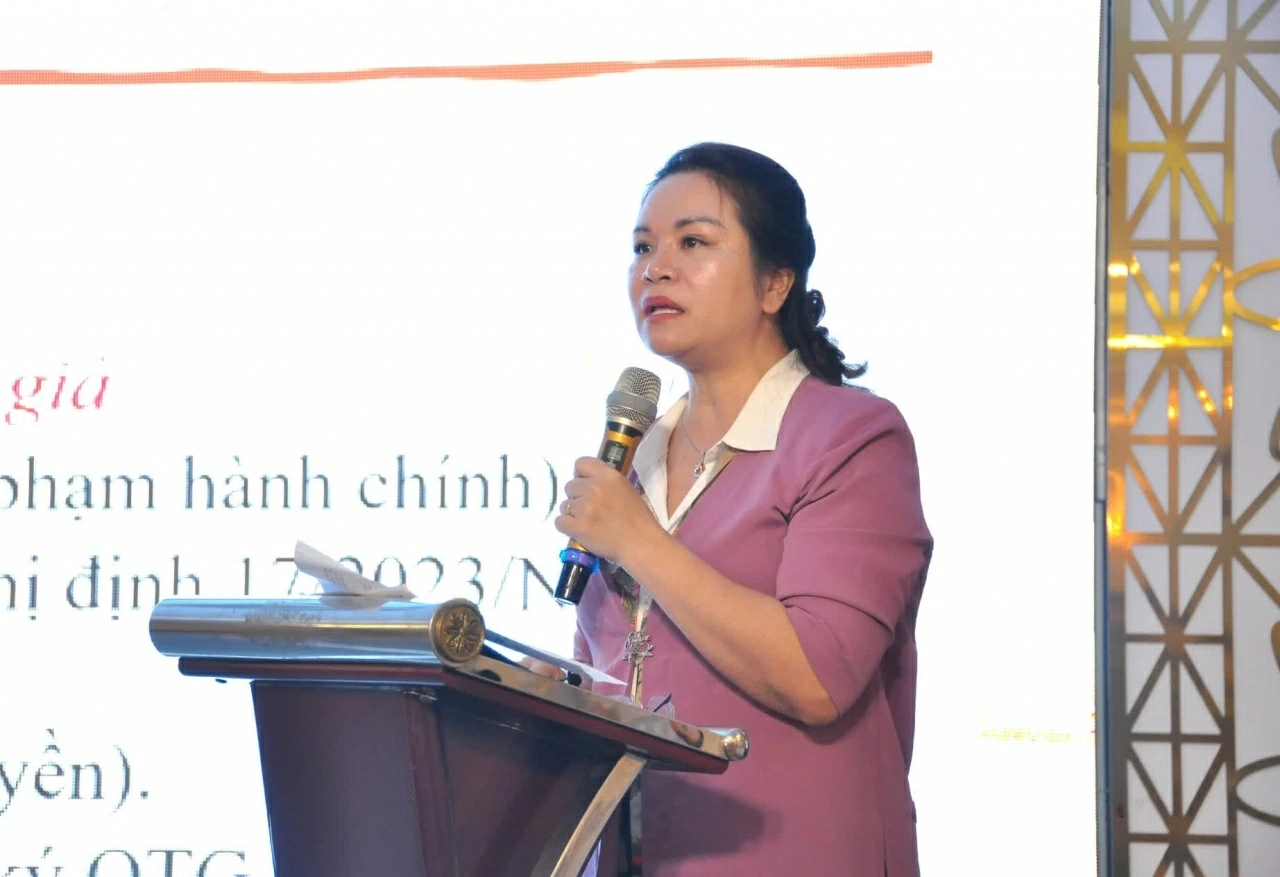 |
| Deputy Director of the Copyright Office under the Ministry of Culture, Sports and Tourism Pham Thi Kim Oanh presents her paper at the seminar. (Photo: Trung Anh) |
Within the framework of the seminar “New Points of the Press Law and Legal Sanctions: Identifying Risks and Protecting Journalistic Ethics”, organised by the Vietnam Journalists Association, Deputy Director of the Copyright Office Pham Thi Kim Oanh discussed with the press the copyright risks arising in the digital environment, as well as measures to safeguard the intellectual property of press agencies.
| More from WVR |
 Vietnam’s new Press Law raises legal and ethical standards for journalism in the digital age: Seminar Vietnam’s new Press Law raises legal and ethical standards for journalism in the digital age: Seminar |
Overall, the digital environment is significantly expanding the creative space available to journalism, bringing journalistic products closer to audiences while creating new avenues for press agencies to derive value from their works after publication.
At the same time, the greater openness of the digital space has made journalistic works increasingly vulnerable to copying, alteration, removal of identifying marks, or exploitation in ways beyond the rights holder’s intentions.
According to Deputy Director Pham Thi Kim Oanh, such losses directly affect revenue that press agencies would otherwise be entitled to receive. More fundamentally, they erode the value of intellectual property built through the effort, time and creative capacity of journalists.
Of particular concern, the rapid expansion of AI is creating another layer of risk, as journalistic works and data can be collected on a large scale for the training and development of AI systems.
As data collection becomes faster, broader and increasingly automated, copyright protection can no longer be confined to dealing with individual cases of infringement. Instead, press agencies face a growing need for a more proactive strategy for managing and safeguarding their intellectual property.
Law keeping pace with technology
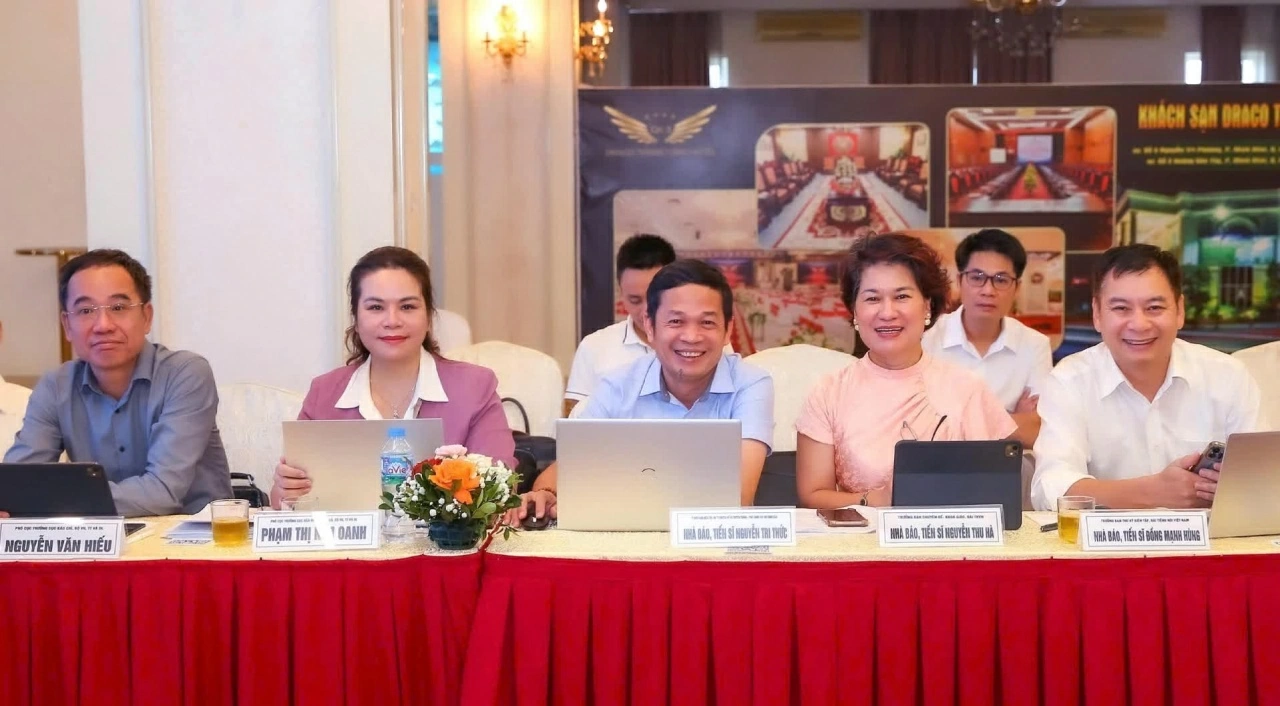 |
| Deputy Director Pham Thi Kim Oanh (second from left) exchanges views with other speakers at the seminar. (Photo: Trung Anh) |
Amid rapid changes in the digital environment, Deputy Director Pham Thi Kim Oanh said the legal framework governing copyright and related rights is gradually being strengthened to address new demands arising from the creation, production and exploitation of journalistic content.
Under the Intellectual Property Law, the moral and economic rights of authors and copyright owners are relatively clearly established. In addition, Article 198b sets out responsibilities for intermediary service providers in the online environment, providing an additional legal basis for protecting rights in the digital space.
| More from WVR |
 Symposium shares international experience in copyright enforcement in Hanoi Symposium shares international experience in copyright enforcement in Hanoi |
According to Ms. Pham Thi Kim Oanh, Decree No. 17/2023/ND-CP has further detailed the mechanism for enforcing copyright online, including procedures for notifying, removing and preventing infringing content.
A clear understanding of these mechanisms would enable press agencies to take a more proactive role in protecting their intellectual property, from detecting infringement to requesting platforms and intermediary service providers to take action against unlawful use.
The increasingly prominent role of AI in creative activities, meanwhile, is raising new questions for copyright law. Notably, Article 5a of Decree No. 134/2026/ND-CP sets out specific conditions for works created with the use of AI systems, emphasising the significant and decisive contribution of humans to the creative process.
Alongside the requirement for meaningful human contribution, authors remain responsible for the content and legality of their works and must ensure that copyright is not infringed in works used as input data for AI. These provisions place greater demands on press agencies to exercise control over the use of AI throughout the creative and exploitation processes.
Beyond the intellectual property framework, Press Law No. 126/2025/QH15, which took effect on 1 July 2026, further strengthens the legal framework governing journalism in the digital environment. The law provides a basis for press agencies to treat journalistic products as intellectual property requiring protection, while taking a more proactive approach to preserving and exploiting their value amid continuous technological change.
The paradox of ‘reverse copyright infringement’
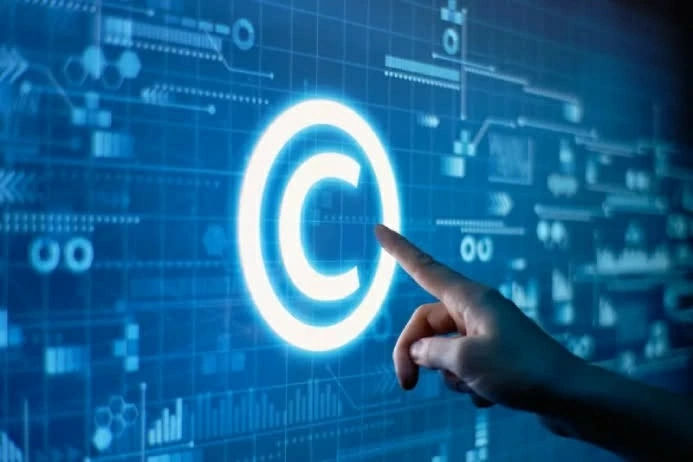 |
| Press copyright faces new risks as journalistic content is produced and exploited at increasing speed across the digital environment. (Source: Inter Justice) |
Although the legal framework governing copyright and related rights is becoming more comprehensive, the Deputy Director of the Copyright Office acknowledged that practical protection of press copyright still faces obstacles that need to be identified and addressed.
According to her, these difficulties span legal provisions, enforcement, awareness and internal procedures within press agencies. Meanwhile, the accelerating pace of content production, distribution and exploitation online is making copyright disputes and infringement increasingly complex and difficult to control.
Against this backdrop, Ms. Pham Thi Kim Oanh highlighted a particular paradox known as “reverse copyright infringement”. In such cases, a press agency, despite enjoying legal protection over works it has created, may itself infringe copyright by using content whose origin, rights holder or permitted scope of use has not been adequately verified during the journalistic process.
| More from WVR |
 Conference discusses protection of copyrights in film industry: MCST Conference discusses protection of copyrights in film industry: MCST |
A representative of the Ministry of Culture, Sports and Tourism said the pressure to report quickly, maintain a diverse flow of content and provide constant updates across digital platforms has made the use of online materials without thorough verification of their origin, rights holder or permitted scope of use an increasingly tangible risk.
Such risks may also emerge when press agencies use one another’s content, particularly when quotations or extracts from works are reproduced rapidly across online platforms.
The Deputy Director further warned that moral rights may be overlooked during content processing when works are edited or altered, or when the author’s name, logo or rights-management information is removed.
As these rights enjoy long-term legal protection, the editing, publication and reuse of journalistic works must therefore be handled with due care.
At the same time, Ms. Pham Thi Kim Oanh cautioned that when journalists use AI to assist with creative work, newsrooms may find it difficult to determine fully which data sources have been used by the system. As a result, AI-generated output could potentially incorporate protected works without the user being aware of it.
Human involvement, meanwhile, is a decisive factor in determining whether an AI-assisted work qualifies for copyright protection. Where humans have not made a significant and decisive contribution to the creative process, the resulting product may fail to meet the legal requirements for copyright protection.
Decree No. 134/2026/ND-CP sets out requirements concerning the degree of human contribution, responsibility for content and legality, as well as copyright in input data. The provisions therefore call on press agencies to oversee AI use from the outset, preserve evidence of the human creative process and clearly establish responsibility for the resulting product before it is commercially exploited.
Four steps to ‘maintain rights, preserve value’ for journalistic works
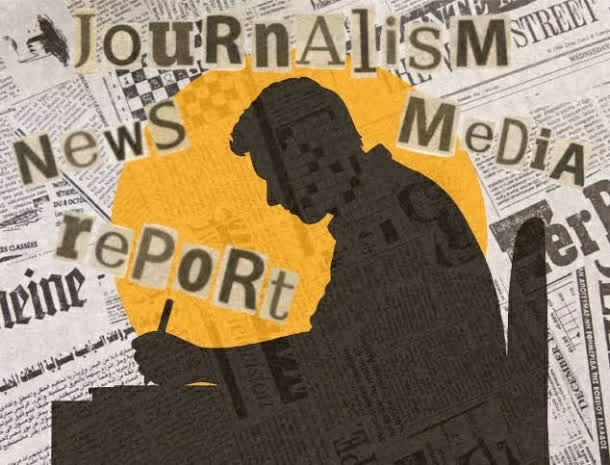 |
| Effective protection of press copyright should begin with the materials used in production and extend through internal procedures, technology and legal safeguards. (Source: Daily Bruin) |
Against this backdrop, Deputy Director Pham Thi Kim Oanh emphasised that copyright protection should be addressed at an early stage, beginning with the inputs used in the production of journalistic content.
First, newsrooms should exercise strict control over inputs and classify intellectual property assets. According to the Ministry of Culture, Sports and Tourism representative, each press agency should verify the origin and usage rights of materials incorporated into its works, while classifying intellectual property according to its value and intended use in order to determine the most appropriate means of protection.
For commercially valuable products, newsrooms can deploy identification codes, technological solutions and rights-management mechanisms to improve their ability to detect, verify and address unauthorised use, while creating greater scope for generating revenue from their own intellectual property.
| More from WVR |
 Copyright registrations increases to 10% yearly Copyright registrations increases to 10% yearly |
Second, newsrooms should actively monitor digital platforms and make effective use of legal safeguards. The Deputy Director of the Copyright Office stressed the importance of understanding the notification and takedown mechanisms provided for under Article 198b of the Intellectual Property Law and Decree No. 17/2023/ND-CP.
Under these provisions, rights holders may directly request intermediary service providers to deal with copyright-infringing content in accordance with the law. Newsrooms should therefore assign personnel to monitor digital platforms regularly, respond promptly to alerts, verify suspected infringements and take appropriate action against unauthorised use.
Third, newsrooms should establish AI-use procedures that clearly assign responsibility and preserve evidence of human creativity. As AI develops rapidly, press agencies should formulate internal rules governing its use in journalistic work while retaining records of how each work was created, thereby demonstrating the role and extent of human contribution.
Records such as prompts, input sources, editing stages and subsequent revisions may provide important evidence when a press agency needs to establish its rights over a work or account for how AI was used in its production.
Fourth, newsrooms should proactively establish rights over data and works used to train AI systems. Ms. Pham Thi Kim Oanh encouraged press agencies to explore opt-out mechanisms, allowing rights holders to expressly refuse permission for AI systems to use their works.
Newsrooms should also examine mechanisms for collecting royalties from the exploitation and use of journalistic works in the digital environment, thereby ensuring that the economic value generated by creative work continues to be recognised beyond the point of publication.
Against these requirements, the Ministry of Culture, Sports and Tourism representative emphasised that protecting press copyright requires a coordinated framework bringing together internal procedures, human resources, technology and legal instruments.
Affirming the Copyright Office’s readiness to work with press agencies in addressing infringement, Ms. Pham Thi Kim Oanh called on newsrooms to conduct regular reviews of their intellectual property assets, strengthen legal expertise and make greater use of technology so as to safeguard more effectively the value created through journalism.
| National Press Festival underscores media’s role as trusted anchor of public opinion WVR/VNA - On June 21, the National Press Festival 2026 concluded in the northern port city of Hai Phong, leaving a strong impression as more ... |
| Ho Chi Minh City establishes new press and broadcasting agency WVR/VNA - On June 20, the Ho Chi Minh City Party Committee announced a decision on the establishment of the city press and radio-television agency, ... |
| Press release on fifth working day of Party Central Committee’s third Plenum WVR/VNA - On July 24, the 14th Party Central Committee continued its third Plenum - the fifth working day of this event - by discussing ... |
| Deputy Foreign Minister Le Thi Thu Hang welcomes delegation from Lao Ministry of Foreign Affairs' Press Department WVR - On August 17, at the headquarters of the Ministry of Foreign Affairs, Deputy Minister of Foreign Affairs Le Thi Thu Hang received a ... |
| Vietnamese, Lao Foreign Ministries exchange experience in external information work WVR - On August 18, at the headquarters of the Ministry of Foreign Affairs, the Press and Information Department, Ministry of Foreign Affairs of Vietnam, ... |


