


PM Pham Minh Chinh requests planning railway sector with over-100-year vision
Prime Minister Pham Minh Chinh inspected and offered encouragement to the forces working on the Nhon – Hanoi Station urban railway line in the capital city on February 22.
Latest
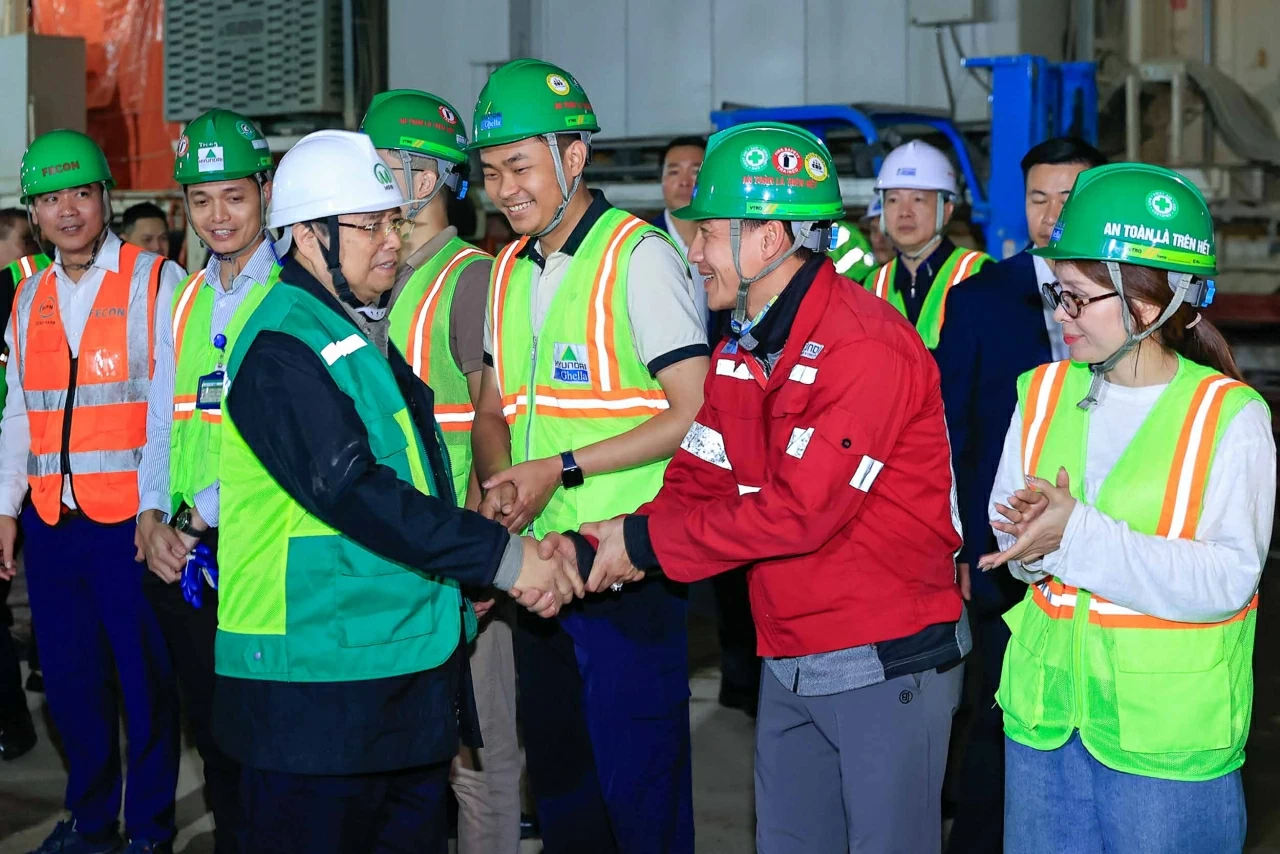 |
| PM Pham Minh Chinh extends Tet greetings to the forces working on the Nhon – Hanoi Station railway line on February 22. (Photo: VGP) |
The 12.5km route consists of an 8.5km elevated section and about 4km running underground. It features a 1,435mm standard-gauge double track built to European standards, comprising eight elevated and four underground stations.
With a total investment of 34.826 trillion VND (over 1.3 billion USD), the project is financed through official development assistance (ODA) and reciprocal capital from Hanoi's budget, with the implementation period spanning from 2009 to 2027.
The elevated section, from Nhon to Cau Giay, has been put into commercial operation since August 8, 2024, meeting safety and quality standards and receiving positive feedback from the public. Meanwhile, construction on the underground section is in full swing, reaching 76.3% of the total workload and largely remaining on track.
Extending Lunar New Year (Tet) greetings to the forces involved in the project, PM Chinh praised efforts by Hanoi authorities, relevant agencies and, especially, engineers and workers performing duties around the clock, even during the Tet holiday, at the construction site.
He underscored that due to the prolonged implementation of the Nhon – Hanoi Station metro project, a fundamental shift in mindset, methodology, and approach is imperative. He stressed the need to accelerate progress while ensuring quality, safety, and compliance with technical, aesthetic, and environmental standards.
Talking to local residents in the project zone, the Government leader thanked them for their support and noted that the sooner the project is completed, the sooner trade, investment, and tourism will develop, thereby creating momentum for economic growth in Hanoi and the Capital Region.
At the meeting with ministries, central agencies, local authorities, the investor, and contractors, PM Chinh lauded the encouraging results gained so far, saying the project is being carried out promptly so that it can become fully operational in 2027.
He pointed out that over the last 17 years, Hanoi has completed only 21km of urban railway while to achieve the target of over 600km by 2045, the pace of construction must increase dozens of times.
Given this, a fundamental shift in implementation mindset, methodology, and approach is essential, the PM emphasised, calling for “self-transcendence” to develop the railway industry and propel the nation toward fast and sustainable development—aiming for a powerful, civilised, and prosperous Vietnam on its path to socialism.
Assigning tasks to relevant ministries, agencies, and Hanoi to speed up the project and develop the railway industry, he demanded the swift finalisation and issuance of a comprehensive set of technical standards and regulations for the urban railway system.
PM Chinh urged authorities to speed up the drafting of the railway development master plan, including urban networks, with a vision spanning over 100 years. This strategic planning, he emphasised, must eliminate the waste of time, effort, capital, and land while ensuring a bright, green, clean, and beautiful environment.
It is necessary to develop the railway sector through unified, modern, and shared technologies, ensuring optimised investment linked with effective technology transfer, he went on, requesting the rapid development of supporting industries and a robust railway ecosystem to meet practical demands.
He also asked human resources training to be promoted—spanning consultancy, design, construction, management, and operations—with the goal of having 90% of the sector’s workforce being Vietnamese nationals.
The PM highlighted the necessity of diversifying funding sources for railway development, including public investment, public-private partnerships (PPP), bond issuances, loans, and domestic savings.
Shaping a modern, smart, digital, and green railway governing system involving Vietnamese technology enterprises and drawing on international practices is also a crucial task, he added.
(Source: VNA)