


Party General Secretary To Lam chairs a meeting on Vietnam-China railway connection
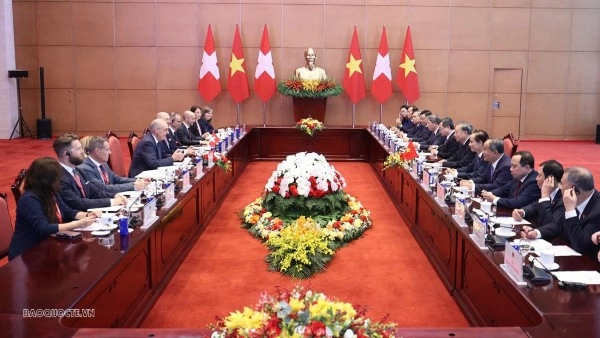
WVR - On the morning of March 19, at Dong Dang Station, Lang Son Province, General Secretary To Lam chaired a meeting with a number of ministries, central agencies, and local authorities regarding the implementation of Vietnam-China Railway Cooperation.
Latest
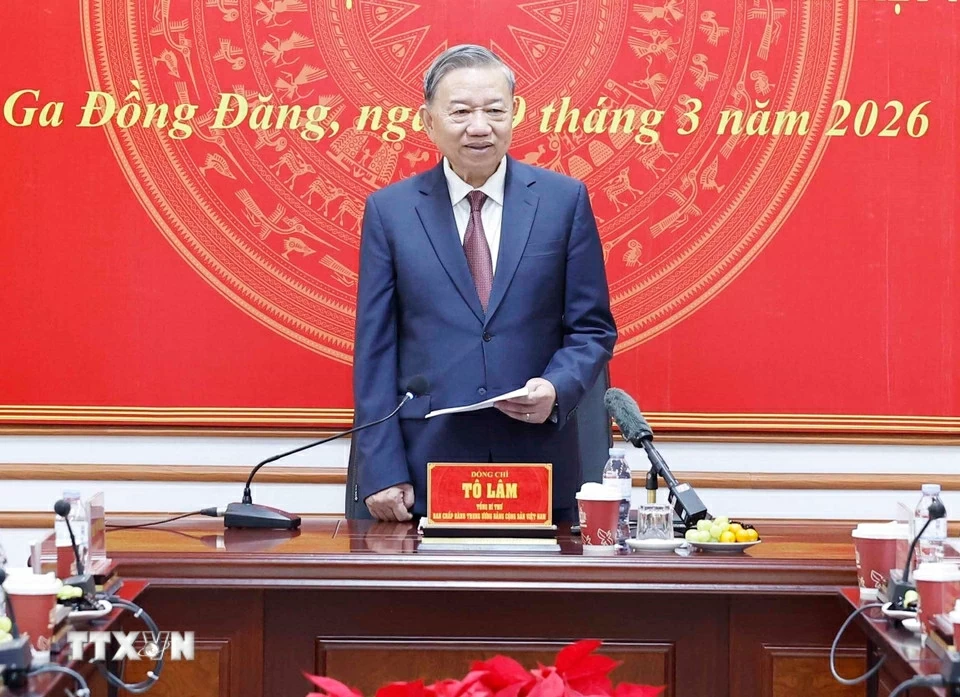 |
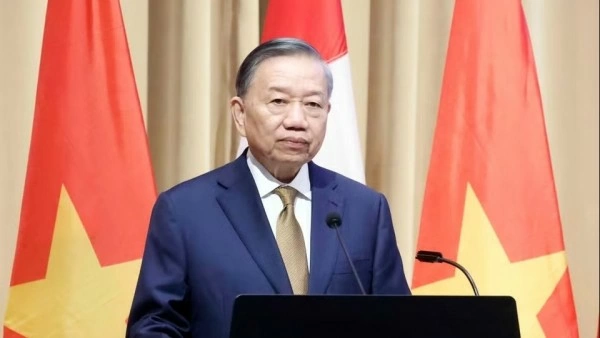
| General Secretary To Lam speaking at the meeting. |
Attending the meeting were Prime Minister Pham Minh Chinh; General Luong Tam Quang, Politburo Member, Minister of Public Security; Politburo Member, Minister of Foreign Affairs Le Hoai Trung; Politburo Member, Party Central Committee Secretary, Chief of the Party Central Office Pham Gia Tuc; and members of the Party Central Committee, leaders of several central and local departments.
This is a crucial element in guiding Vietnam-China trade relations into a new phase of more substantial, effective, and sustainable development, creating additional momentum and space for economic growth in line with the Party's Resolutions.
After conducting a field inspection at Dong Dang Station, General Secretary To Lam listened to a summary report from the Ministry of Construction on the cooperation status of three railway lines (Hanoi-Dong Dang; Lao Cai-Hanoi-Hai Phong; Hai Phong-Ha Long-Mong Cai); the progress of agreements, passenger transport connections with China, and discussions at the meeting.
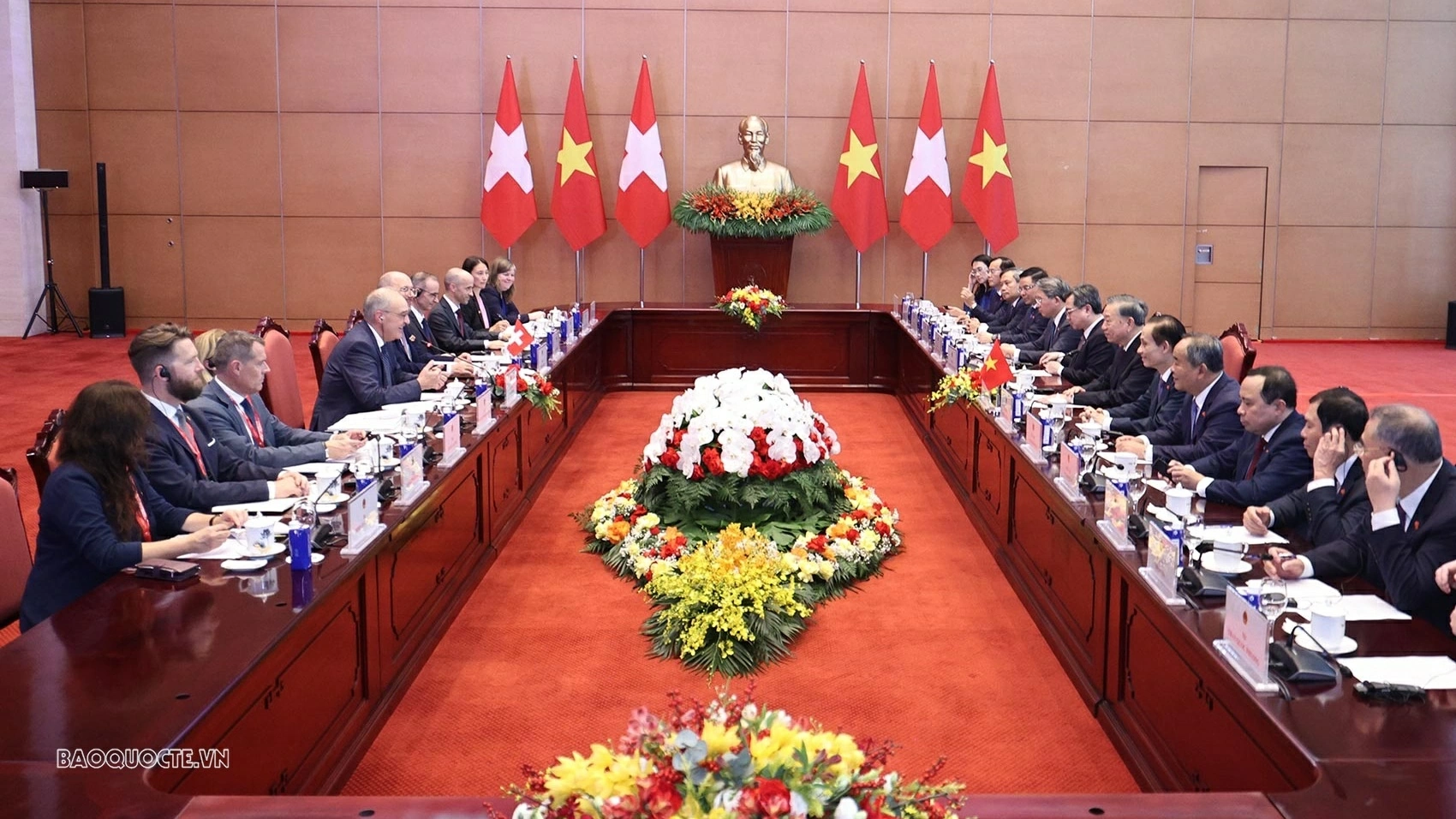
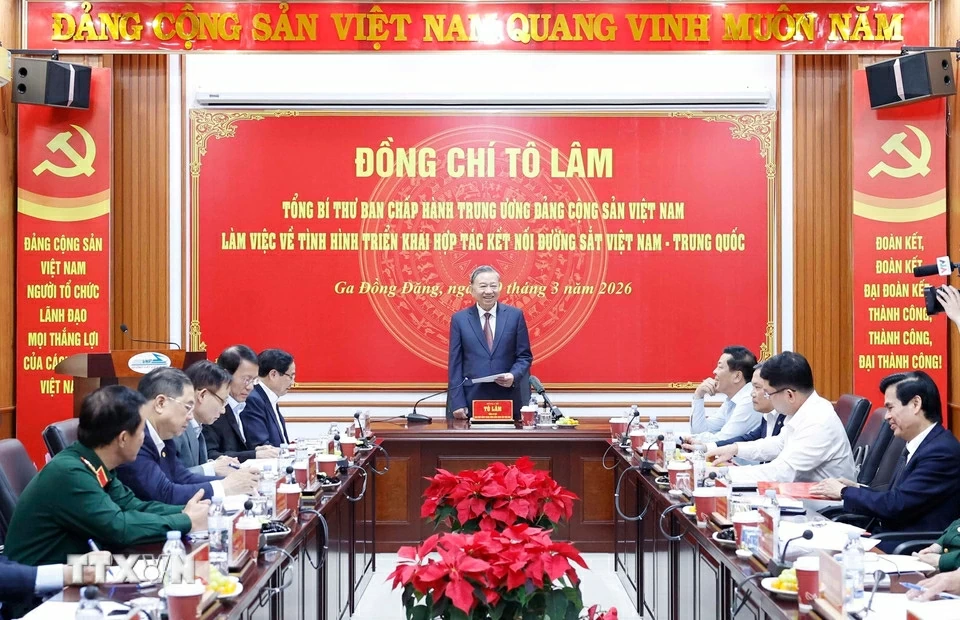 |
| Overview of the meeting. |
In his concluding remarks, General Secretary To Lam emphasized that Vietnam-China cooperation in the railway sector is both a necessity and an opportunity. It represents a practical and effective cooperation space between the two countries for many years to come. This collaboration serves as a powerful lever for Vietnam to modernize infrastructure, reduce logistics costs, expand international connectivity, and gradually master a new foundational industry.
The cooperation in infrastructure and railway connectivity between Vietnam and China holds significant importance, such as reducing logistics costs, shortening transportation time, and enhancing competitiveness. It promotes trade and economic development at the border, improves clearance capacity, reduces congestion at road border gates, and develops logistics centers, border economic zones, and industrial clusters in border provinces. It connects Vietnam to the Asia-Europe railway network, diversifying international transport routes and reducing reliance on maritime routes. This cooperation fosters the formation of economic corridors and regional production chains, strengthens regional economic connectivity, and enhances Vietnam's position in the Asian supply chain.
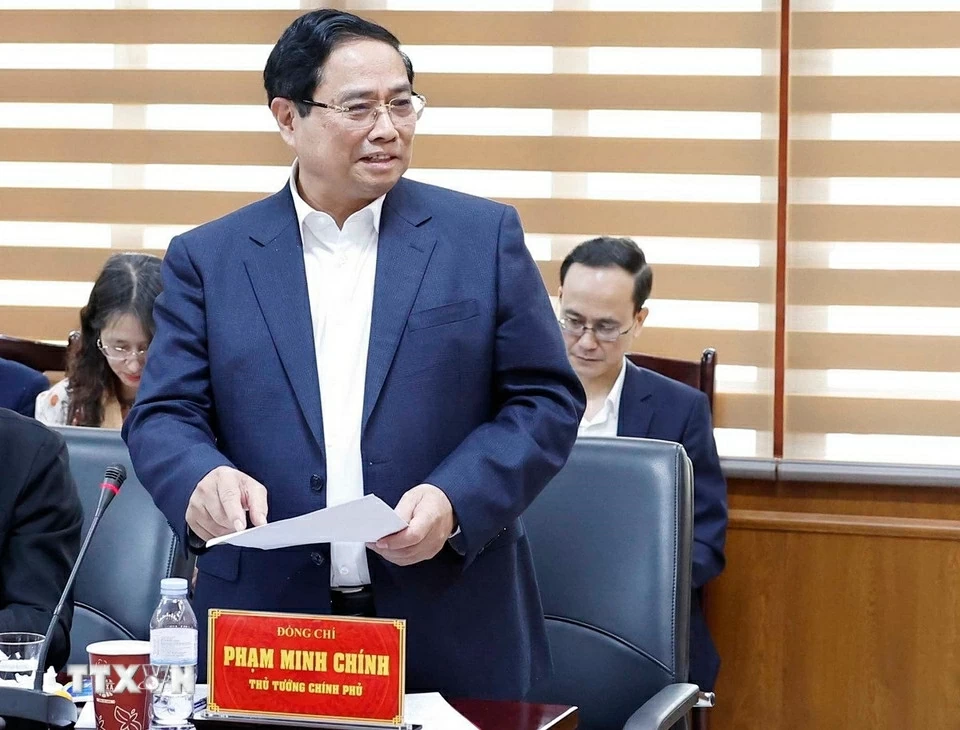 |
| Prime Minister Pham Minh Chinh speaking at the meeting. |
Addressing the challenge of effectively mobilizing funds for railway construction while ensuring national financial safety, the General Secretary called for the development of diverse and sustainable funding mechanisms. A unified national coordination mechanism must be established for these strategic infrastructure connectivity projects, ensuring centralized leadership and clear responsibility allocation among ministries, sectors, and localities. An effective coordination focal point should be set up for negotiations, preparation, and project implementation.
Strengthening inter-sectoral coordination must ensure the synchronous linkage between transport infrastructure development and regional economic development planning, logistics systems, and industrial zones along economic corridors, rather than merely focusing on standalone railway projects.
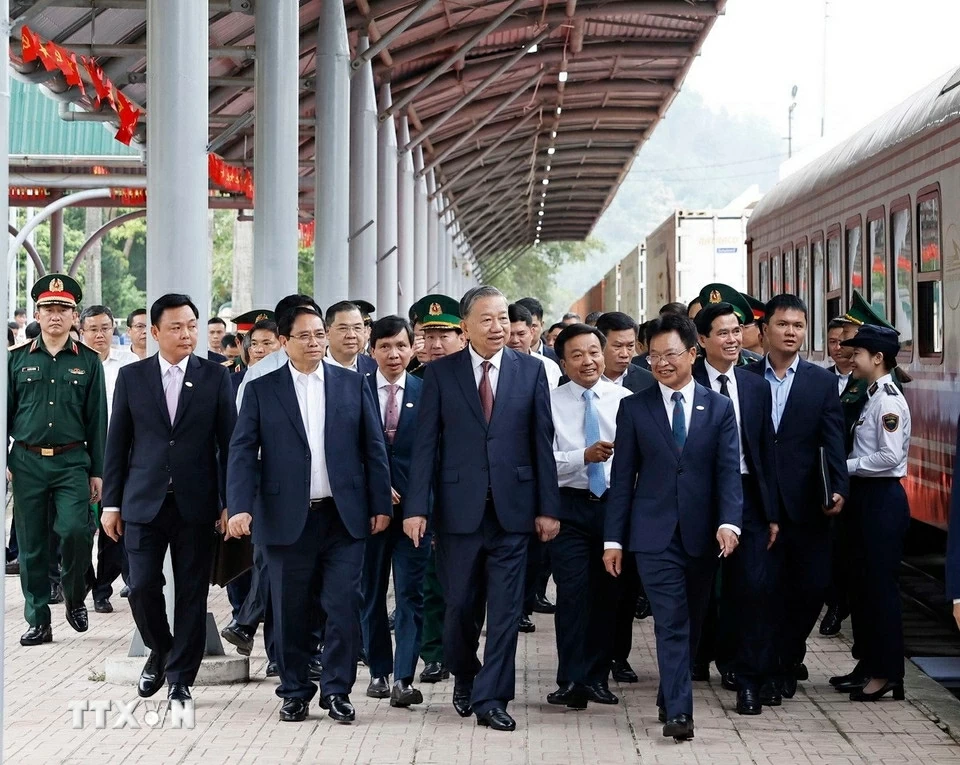 |
| General Secretary To Lam, Prime Minister Pham Minh Chinh, and the central delegation conducting a field inspection at Dong Dang Station. |
The General Secretary pointed out the challenges in implementing the Vietnam-China railway line. He emphasized that infrastructure connectivity, particularly the Vietnam-China railway connection, must be identified as a strategic breakthrough in bilateral economic cooperation. This will help reduce logistics costs, enhance the economy's competitiveness, and lay the foundation for connecting Vietnam with international transport networks in the region. Strategic cooperation principles must be ensured, aligning projects with national development strategies and Vietnam's infrastructure planning. Diversifying funding sources, ensuring economic efficiency, and maintaining transparency in technology and standards are essential.
Affirming the heavy responsibilities, tight timelines, and high demands, the General Secretary urged for determination and unity across the entire political system. The Government Party Committee, led directly by the Ministry of Construction, needs to develop a Vietnam-China railway development strategy within the overall Vietnam railway development strategy for the 2026-2030 period, with visions for 2045, 2100, and 2130.