


49th ASEAN Summit: Prime Minister Le Minh Hung puts forth three strategic directions to enhance East Asia Summit’s role
WVR/VNA - Prime Minister Le Minh Hung has stressed that, amid profound changes in the global and regional landscape, the East Asia Summit (EAS) needs to make a stronger shift from confidence-building dialogue towards substantive cooperation aimed at delivering tangible results.
Latest
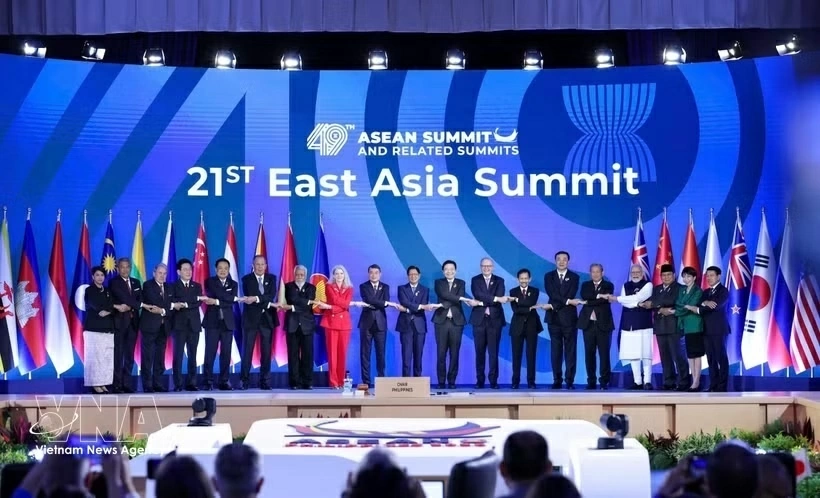 |
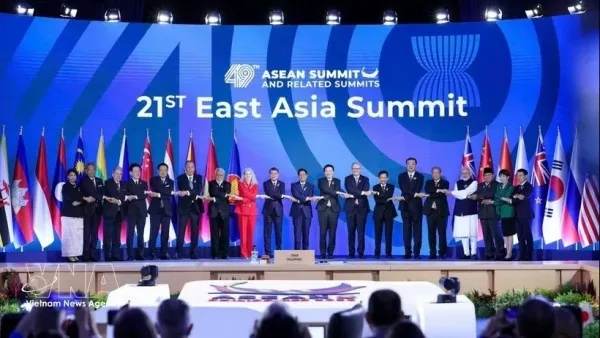
| 49th ASEAN Summit: Prime Minister Le Minh Hung puts forth three strategic directions to enhance East Asia Summit’s role. (Photo; VNA) |
Addressing the 21st EAS, held as part of the 49th ASEAN Summit and Related Summits, Prime Minister Hung proposed three strategic directions to enhance the forum’s role and operational effectiveness in the time ahead.
First, the EAS should be strengthened as a pillar of regional peace, stability and strategic trust. He called for promoting ASEAN’s centrality, advancing effective dialogue on strategic issues, enhancing the capacity to proactively anticipate risks, prevent conflicts and manage differences, while stepping up substantive cooperation.
He suggested establishing an EAS law enforcement hotline network to facilitate information sharing and rapid response coordination, in connection with the implementation of the UN Convention against Cybercrime (Hanoi Convention).
Regarding the East Sea, he called on relevant parties to maintain cooperation, ensure the full and effective implementation of the Declaration on the Conduct of Parties in the East Sea (DOC), and work towards the early conclusion of an effective and substantive Code of Conduct in the East Sea (COC) that is consistent with international law, particularly the 1982 United Nations Convention on the Law of the Sea (UNCLOS).
Second, the EAS should shape a forward-looking cooperation agenda centred on new drivers of growth. PM Hung suggested prioritising cooperation in digital transformation, green transition, science and technology, and innovation, while strengthening connectivity among regional frameworks and initiatives to generate synergies.
He also proposed developing a programme to enhance digital capacity and promote the application of artificial intelligence (AI) among small and medium-sized enterprises (SMEs) in the region.
Third, the EAS should leverage its strategic bridging role between regional cooperation and global governance, thereby mobilising resources and sharing experience in sustainable growth, energy security, food security and climate change response, PM Hung said.
He affirmed that, as Chair of the Asia-Pacific Economic Cooperation (APEC) forum in 2027, Vietnam would strive to align the agendas of APEC, ASEAN and the EAS, while expressing his hope for support from EAS member countries to ensure the success of APEC Year 2027.
At the summit, ASEAN leaders and leaders from the eight partner countries – Australia, China, Japan, the Republic of Korea, India, New Zealand, Russia and the US – reaffirmed the EAS as a premier forum for dialogue on strategic, political and economic issues, playing an important role in promoting peace, stability and prosperity in the region.
With 19 members, the EAS represents more than half of the world's population and has a combined nominal GDP of 69.6 trillion USD, accounting for 60% of global GDP. In 2025, trade in goods between ASEAN and its EAS partners reached 3.07 trillion USD, while foreign direct investment (FDI) inflows from EAS partners into ASEAN totalled 83.2 billion USD.
The leaders acknowledged positive progress in implementing the EAS Plan of Action for 2024-2028, particularly in energy, education, healthcare, disaster management and preparedness, economic and trade cooperation, and maritime cooperation. These achievements have helped strengthen trust, promote a culture of dialogue and cooperation, and support the building of the ASEAN Community.
Against the backdrop of profound global and regional changes, the leaders agreed to continue promoting the EAS as an open, inclusive and transparent dialogue mechanism and an integral part of the ASEAN-led regional architecture, operating on the basis of shared principles and norms of conduct.
They agreed to effectively implement the EAS Plan of Action for 2024-2028, with priorities including promoting dialogue and trust building, and strengthening substantive cooperation in combating transnational crime, cybercrime and online scams, as well as in the digital economy, innovation, energy transition, green development, infrastructure connectivity, education, healthcare and disaster preparedness and response.
The leaders also consented to study measures to improve the EAS and enhance its operational effectiveness.
Exchanging views on international and regional issues, the leaders underscored the importance of maintaining peace, security, stability, safety and freedom of navigation and overflight in maritime areas, including the Strait of Hormuz and the East Sea.
They called on all parties to exercise restraint, refrain from actions that could further complicate the situation, and settle all disputes by peaceful means in accordance with international law, including the 1982 UNCLOS.
Regarding the East Sea, the leaders emphasised the need to fully and effectively implement the DOC and work towards the early conclusion of an effective and substantive COC that is consistent with international law, including the 1982 UNCLOS.
The leaders also highlighted the importance of maintaining peace and stability on the Korean Peninsula and complying with relevant United Nations Security Council resolutions.
On the Myanmar situation, they expressed support for ASEAN's efforts to implement the Five-Point Consensus, promote dialogue and reconciliation, and provide humanitarian assistance to people facing hardship.
At the end of the summit, the leaders adopted the EAS Declaration on “Navigating our Future, Together: Stability and Renewal” and the EAS Leaders' Statement on “Strengthening Cooperation Against Online Scams and Related Offenses”, reaffirming their shared determination to shape the region's future and effectively address emerging challenges.