





Lao Ambassador Khamphao Ernthavanh: Lao NA President’s visit to Vietnam opens a new chapter in parliamentary cooperation
WVR - On the occasion of Lao National Assembly President Sonexay Siphandone and his spouse's official visit to Vietnam from November 2-5, Lao Ambassador to Vietnam Khamphao Ernthavanh shared with the press the significance of the visit and highlighted key directions to enhance cooperation between the National Assemblies of the two countries in the new phase.
Latest
Joining hands to foster Vietnam-Laos parliamentary cooperation
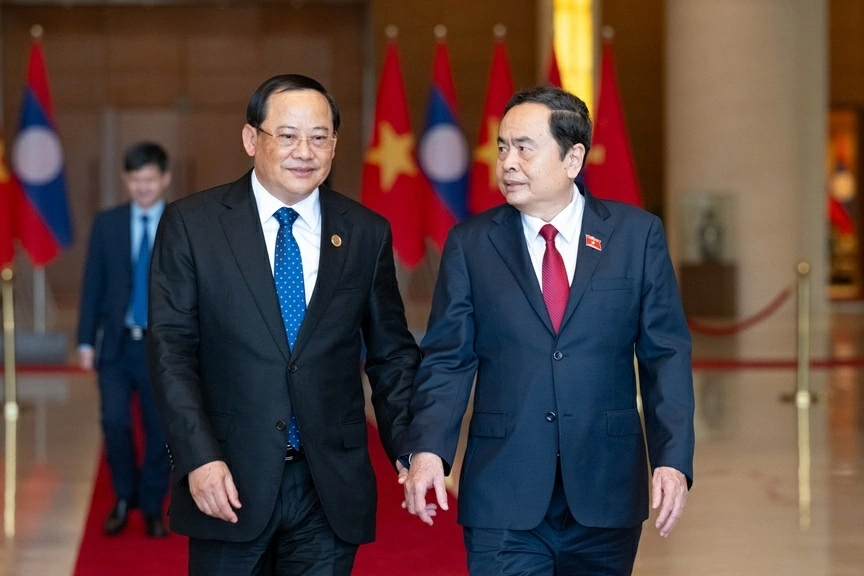 |
| National Assembly President Tran Thanh Man received Lao National Assembly President Sonexay Siphandone when he was the Prime Minister of Laos during his visit to Vietnam in April 2025. (Source: National Assembly) |
Ambassador Khamphao Ernthavanh affirmed that the official visit to Vietnam by Lao National Assembly President Sonexay Siphandone holds great significance, reflecting the special regard of the Lao Party, State, and National Assembly for strengthening, nurturing, and developing the great friendship, special solidarity, comprehensive cooperation, and strategic connectivity between the two countries.
Notably, National Assembly President Sonexay Siphandone was recently elected as the President of the 10th National Assembly of Laos on October 5, 2026. Therefore, this visit contributes to promoting exchanges between the leaders of the two National Assemblies in the new phase, laying the foundation for effectively implementing existing cooperation agreements and opening new cooperation directions that align with each country's development needs.
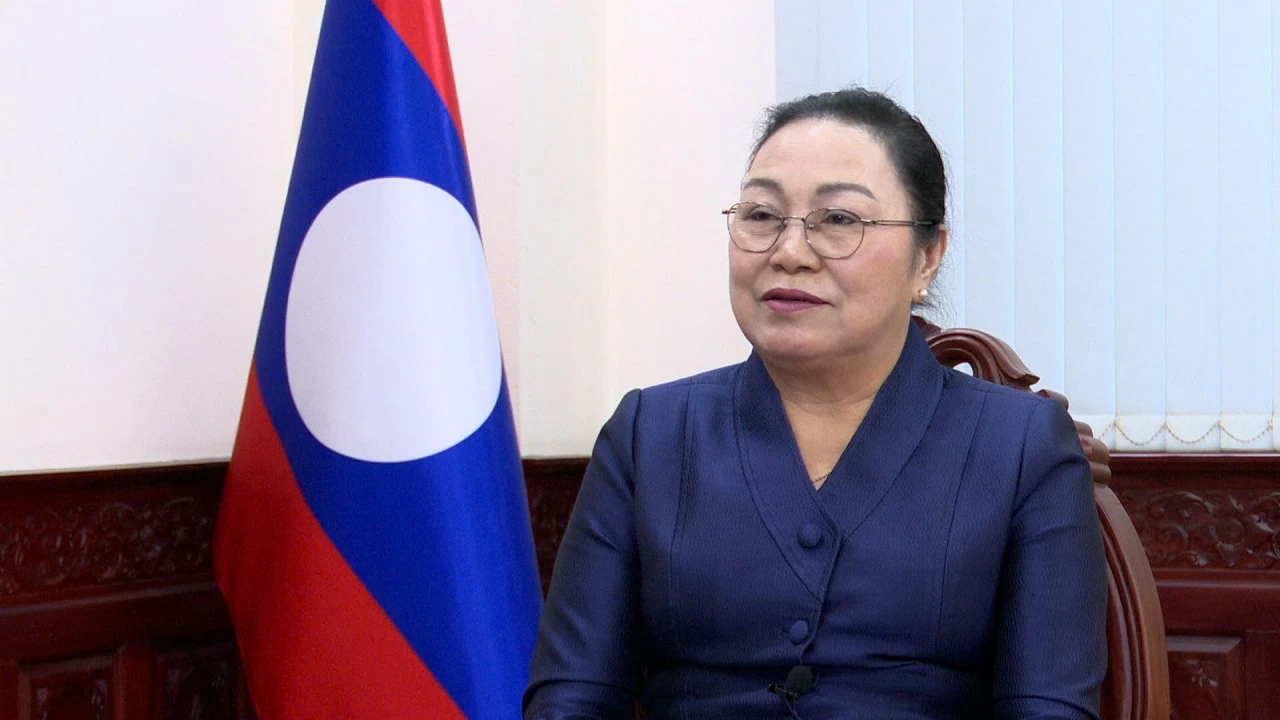 |
| Lao Ambassador to Vietnam Khamphao Ernthavanh. (Photo: Thanh Long) |
According to the Ambassador, this is also an opportunity for the leaders of the two National Assemblies to exchange and evaluate cooperation results, while agreeing on specific directions and measures to enhance the quality and effectiveness of each legislative body's activities; strengthening coordination in legislative work, supreme supervision, and decision-making on important national issues.
Amid rapid and complex regional and global developments, Ambassador Khamphao Ernthavanh emphasised the need to enhance exchanges, share experiences, and coordinate to improve the legal systems of the two National Assemblies.
These are practical cooperation contents that contribute to creating a solid political, legal, and institutional environment, serving the socio-economic development of each country.
The Lao Ambassador stressed that the National Assembly represents the will, aspirations, and sovereignty of the people, while holding responsibilities in legislative work, supreme supervision, and deciding on major national issues.
Therefore, cooperation between the two legislative bodies not only enhances the effectiveness of each National Assembly's activities but also directly strengthens political trust, increases the bond between the two peoples, and promotes comprehensive cooperation between the two countries.
The Ambassador is confident that the visit will continue to affirm the strong political determination of the high-level leaders of the two countries, creating new momentum for the cooperative relationship between the National Assembly of Vietnam and the National Assembly of Laos to deepen, become more practical and effective, commensurate with the stature of the special Vietnam-Laos relationship.
Five directions to promote parliamentary cooperation
Ambassador Khamphao Ernthavanh hopes the visit will mark an important milestone, opening a phase of deeper and more effective cooperation between the National Assembly of Vietnam and the National Assembly of Laos. According to the Lao diplomat, to realize this goal, both sides need to focus on five key areas.
First, continue to strengthen cooperation mechanisms and increase delegation exchanges between the two National Assemblies. Through these activities, both sides can share experiences in organizing sessions, legislative processes, law project verification, questioning activities, thematic supervision, voter contact, handling citizen complaints, and improving the quality of National Assembly deputies' activities.
Appreciating the effective cooperation between the Offices of the two National Assemblies in recent times, the Ambassador noted that annual seminars and exchanges between the two bodies have become practical cooperation channels, enabling officials and civil servants from both sides to directly share professional experiences, enhancing advisory capacity and supporting National Assembly activities.
Second, strengthen cooperation in legislative work and promote the implementation of high-level cooperation agreements. This is one of the important cooperation contents. The two National Assemblies need to continue sharing experiences in building, amending, and perfecting the legal system, ensuring consistency between legal regulations with policies, guidelines, and cooperation agreements between the two countries.
Alongside this, the National Assembly's supervision activities need to be intensified to monitor, urge, and evaluate the effectiveness of implementing agreements and cooperation agreements signed between the two Governments, ministries, sectors, and localities of the two countries. This will help promptly identify difficulties and obstacles in mechanisms, policies, and laws to propose competent authorities for consideration and resolution.
The Ambassador suggested that both sides need to shift from exchanging and agreeing on policies to closely monitoring implementation results, clearly defining the responsibilities of each agency, and evaluating the actual effectiveness of cooperative projects. Based on the special solidarity spirit and high political trust between the two countries, commitments need to be concretized into practical results, bringing benefits to the people and businesses of both countries.
Third, promote bilateral cooperation linked with coordination at multilateral parliamentary forums. Besides bilateral cooperation, the two National Assemblies need to continue closely coordinating at regional and international parliamentary forums, especially the Inter-Parliamentary Union (IPU), the General Assembly of the ASEAN Inter-Parliamentary Assembly (AIPA), the Asia-Pacific Parliamentary Forum (APPF), and other parliamentary cooperation mechanisms.
According to Ambassador Khamphao Ernthavanh, this is an important cooperation channel. Through multilateral parliamentary forums, the legislative bodies of the two countries can enhance each country's position and voice, while actively contributing to promoting ASEAN's central role and building a peaceful, stable, and cooperative environment in the region.
Fourth, enhance experience exchange, improve capacity, and quality of parliamentary staff of the two countries. The Ambassador noted that this is a long-term strategic area requiring regular attention. Parliamentary activities demand a highly professional team of officials, researchers, experts, and National Assembly deputies with deep legal knowledge, policy analysis capabilities, supervision skills, technology application, and the ability to work in an international environment.
Both sides need to continue organizing exchange programs, thematic seminars, professional training, expert exchanges, and short-term and long-term training courses for National Assembly office staff. Cooperation content should focus on legislative skills, policy impact analysis and evaluation, budget supervision, public investment project supervision, organizing questioning sessions, voter information, and research supporting National Assembly deputies.
Particularly, the Ambassador emphasised the need to focus on training young staff, female staff, and highly specialized personnel, thereby building a successor workforce capable of meeting the modernization requirements of the National Assembly's activities in the future.
Fifth, accelerate digital transformation cooperation and build a digital National Assembly. This is a new cooperation direction with strategic significance for the two legislative bodies in the current phase.
Digital transformation goes beyond the application of computers and software in administrative work; it is a process of innovating organizational methods, managing, processing information, researching policies, and performing legislative, supervisory, and decision-making functions on important National Assembly issues.
She assessed that the National Assembly of Vietnam has extensive experience and achievements in IT application, database construction, document digitization, document management, and supporting National Assembly deputies' activities. These are valuable experiences for the National Assembly of Laos to study, learn, and apply appropriately to actual conditions.
Both sides can enhance cooperation in building a digital National Assembly library; digitizing legal documents and session records; developing electronic document management systems, information platforms for National Assembly deputies; applying technology to support discussion, voting, and supervision activities; improving the ability to search, exploit, and connect information between National Assembly agencies.
Additionally, Ambassador Khamphao Ernthavanh proposed researching AI applications in supporting legal document retrieval, summarizing voter opinions, and data analysis for supervision and policy research. However, technology application must go hand in hand with ensuring information security, cybersecurity, data protection, and the accuracy and transparency of information.
Within the cooperation framework between the Office of the National Assembly of Vietnam and the Office of the National Assembly of Laos, both sides have exchanged experiences in developing a digital National Assembly library, building a National Assembly television channel, and IT application in advisory work, staff training, as well as managing and operating National Assembly facilities. These are practical experiences that need to be further expanded and enhanced in quality.
The diplomat also hopes that in the future, the two National Assemblies will research and develop broader cooperation programs on digital transformation, organize expert delegations, training courses, and technical exchange programs. This will provide Lao National Assembly staff with more opportunities to access modern governance models and methods, gradually building a digital National Assembly suitable for Laos' conditions.
Ambassador Khamphao Ernthavanh expressed confidence that cooperation in this field will contribute to enhancing the effectiveness of the National Assembly's activities in both countries, while “promoting the national digital transformation process, building a digital government, digital society, and digital economy in each country”.
From these specific cooperation directions, Khamphao Ernthavanh underscored the need to continue strengthening political trust, special solidarity, and the close relationship between the two countries through specific cooperation programs with clear objectives, comprehensive plans, and transparent results.
“Through this, the relationship between the National Assembly of Laos and the National Assembly of Vietnam will continue to develop robustly, commensurate with the stature of the great friendship and special solidarity between the two countries,” the Ambassador affirmed.


