


Group sharing on career development in sustainability at DAV
C asean Vietnam hosts a group sharing on career development in sustainability at Diplomatic Academy of Vietnam (DAV) as part of SX Roadshow 2025 – Vietnam.
Latest
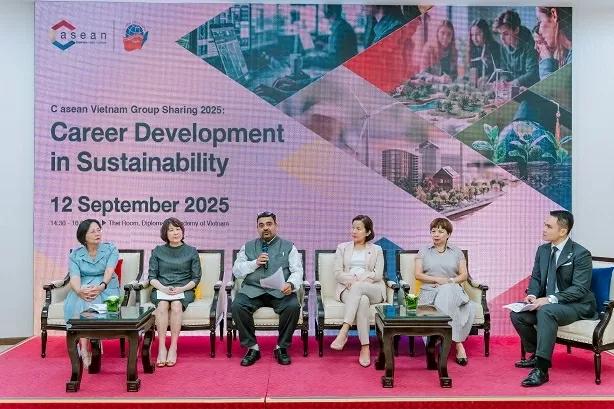 |
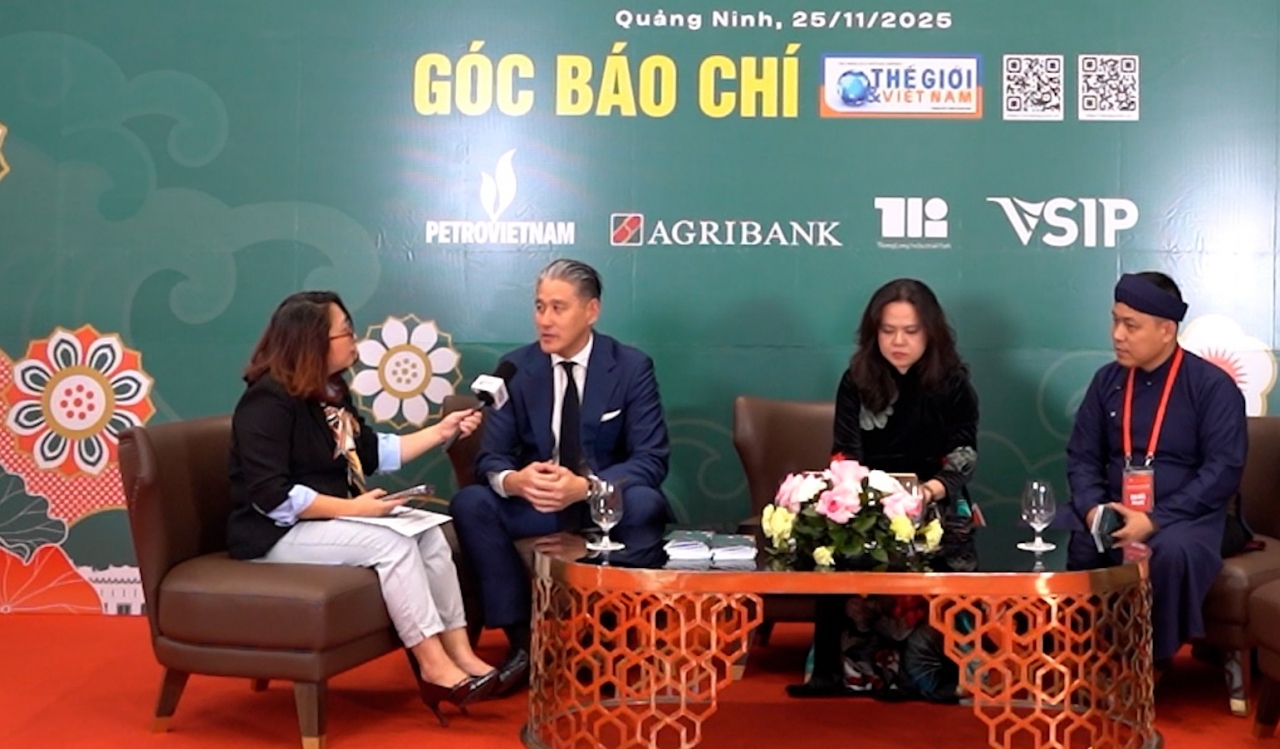
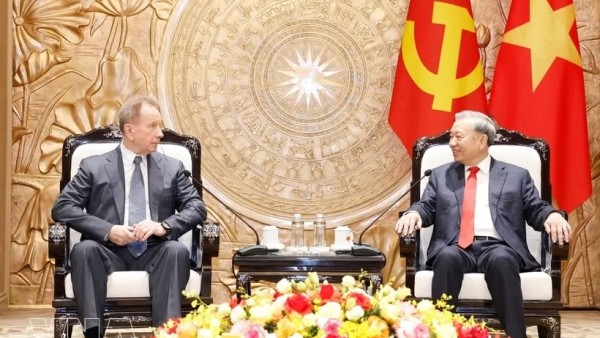
| Speakers at the group sharing on career development in sustainability, part of SX Roadshow 2025 – Vietnam. — Photo courtesy of C asean Vietnam |
The event attracted participation from representatives of enterprises, government agencies, multinational corporations, leading universities, and recruitment and consulting organizations in the region. At the event, speakers shared the latest trends and practical solutions to promote sustainable human resource development.
As the world witnesses a powerful shift toward a sustainable economy, the panel discussion highlighted the urgent need for developing skilled human resources in ESG, renewable energy, and circular economy sectors.
In Vietnam, this trend presents unique opportunities to attract talent through advantages such as political stability, competitive labor costs, and supportive green investment policies. However, to fulfill sustainable development commitments, Vietnam faces the challenge of developing new workforce capabilities in sustainability-related fields while also retraining existing workers to adapt to the structural transformation of the labor market.
Opening the session, Dr. Nguyen Chi Truong, Head of Skills development, Department of Vocational and Continuing Education & Training, Ministry of Education and Training, shared that state management agencies have been researching various educational policies to encourage green human resource development in Vietnam.
Building vocational training and continuing education programs that integrate sustainable development principles is a crucial first step in guiding educational organizations to enhance training quality for students and workers in environmentally friendly fields.
He emphasized the importance of educational cooperation and talent development to improve training quality and ensure Vietnamese people can compete in the regional sustainable job market. Dr. Nguyen Chi Truong acknowledged the unprecedented pace of change in the world of work, driven by the Fourth Industrial Revolution, artificial intelligence (AI), and global uncertainties, which are reshaping jobs, skills needs, and the very definition of a career.
He highlighted that while the green transition creates new opportunities in areas like renewable energy, ESG, the circular economy, and green diplomacy, these changes also present significant challenges for students, the labor force, and the nation. He detailed Vietnam's strong steps forward in response to these changes, including the Employment Law 2025, which has established for the first time a legal foundation for sustainable skills development, and the National Skills Testing and Certification System in place since 2013.
The Politburo's Resolution 71 NQ/TW has initiated breakthrough reforms in education and training, alongside other key resolutions to promote high-quality human resource development. He emphasized that these policies collectively affirm a clear message: skills development, education, and training are central to Vietnam's aspiration to rise with confidence, dignity, and strength in the new era.
Ms. Dinh Thi Quynh Van, Chairwoman of PwC Vietnam, shared that global sustainable career trends are developing strongly, though the skills gap in Southeast Asia remains a major challenge. She pointed out that by 2030, the sustainable career landscape will undergo fundamental changes, requiring organizations and individuals to implement changes starting now.
She emphasized the necessity of developing critical environmental thinking skills, sustainable impact analysis capabilities, and deep understanding of international ESG standards to meet recruitment demands of multinational corporations. She provided an extensive overview of global trends in sustainability careers and a comparison of Vietnam's workforce skills and readiness with ASEAN.
She highlighted that global trends for 2024 2025 indicate massive job creation, with the World Economic Forum projecting 170 million new jobs globally by 2030, 35 million of which are directly linked to the green transition. Climate-change mitigation is identified as the third-most transformative trend for the global labor market and the top green trend, with nearly half of surveyed employers anticipating increased investments in reducing carbon emissions and adapting to climate change.
Ms. Tongjai Thanachanan – Chief Sustainability & Strategy, Thai Beverage Public Company Limited (ThaiBev) shared on ThaiBev's comprehensive sustainability strategy and talent attraction approach across the ASEAN region, providing specific examples of how multinational corporations are adjusting human resource practices to support sustainability goals.
She emphasized how the company translates high-level commitments into practical talent development and career creation for sustainability-minded professionals. She shared that ThaiBev’s vision is to be the Stable and Sustainable ASEAN leader.
Ms. Nguyen Thi Thin, Deputy Director of the Diplomatic Academy of Vietnam, presented the increasingly important role of diplomatic training in promoting regional cooperation on sustainable development initiatives, particularly within the ASEAN community. She shared specific programs that the Diplomatic Academy of Vietnam has developed to prepare future diplomats for active participation in sustainable development policy negotiations.
She emphasized that diplomatic expertise is essential for advancing Vietnam's sustainability agenda internationally and regionally. Ms. Thin spoke extensively about the pivotal role of diplomatic training in advancing regional cooperation for sustainable development, emphasizing that sustainable development is a global necessity tied to the survival and future of every nation and the planet.
She stated that ASEAN, with its nearly 700 million people, dynamic economies, and rich cultural diversity, has both the responsibility and opportunity to become a model of linking growth with sustainability. In this context, diplomacy plays a critical role by providing a channel for countries to address transboundary challenges such as climate change, environmental degradation, food security, water security and energy transition.
She underscored that diplomatic training is indispensable because strong diplomacy relies on well-prepared human resources: diplomats with vision, expertise, adaptability, and the capacity to engage constructively in multilateral cooperation.
Training is not only about providing knowledge and skills but also cultivating strategic thinking, fostering a cooperative spirit, and equipping students with capacities to work across diverse disciplines, from politics, economics, environment, and technology to culture and social development.
She stressed that ASEAN's collective efforts for sustainable development require a generation of young diplomats who can operate in cross-sectoral settings and understand the nexus between foreign policy and sustainability. She elaborated on the Diplomatic Academy of Vietnam and its programs for future diplomats.
Established in 1959, DAV is a leading institution in Vietnam for international relations and foreign affairs, having trained generations of Vietnamese high-ranking politicians and diplomats, and serving as a hub for international academic and professional cooperation. DAV's key strategies include integrating components of sustainability development into its curricula or introducing a separate course on global governance, etc.
The Academy strengthens negotiation skills through regular participation in international simulations like Model UN or ASEAN+ forums, where sustainable development and climate change issues are discussed. The Academy nurtures innovation and policy- oriented thinking through student programs like the D.I.P Game, research projects or extracurricular activities where potential diplomats propose policy ideas, some of which have been presented at regional forums.
Looking ahead, DAV proposes the possibility of building a Thailand-Vietnam Youth Network for Sustainable Development so that Thailand and Vietnam can jointly design courses, exchange students and lecturers with the focus on sustainability issues.