
General Secretary, President To Lam's state visit to China achieves important results: FM Le Hoai Trung
WVR - General Secretary, President To Lam and his spouse, along with the high-level Vietnamese delegation, successfully concluded a state visit to China from April 14-17, at the invitation of General Secretary, President of China Xi Jinping and his spouse. On this occasion, Politburo Member, Minister of Foreign Affairs Le Hoai Trung gave an interview to the press about the results of the visit.
Latest
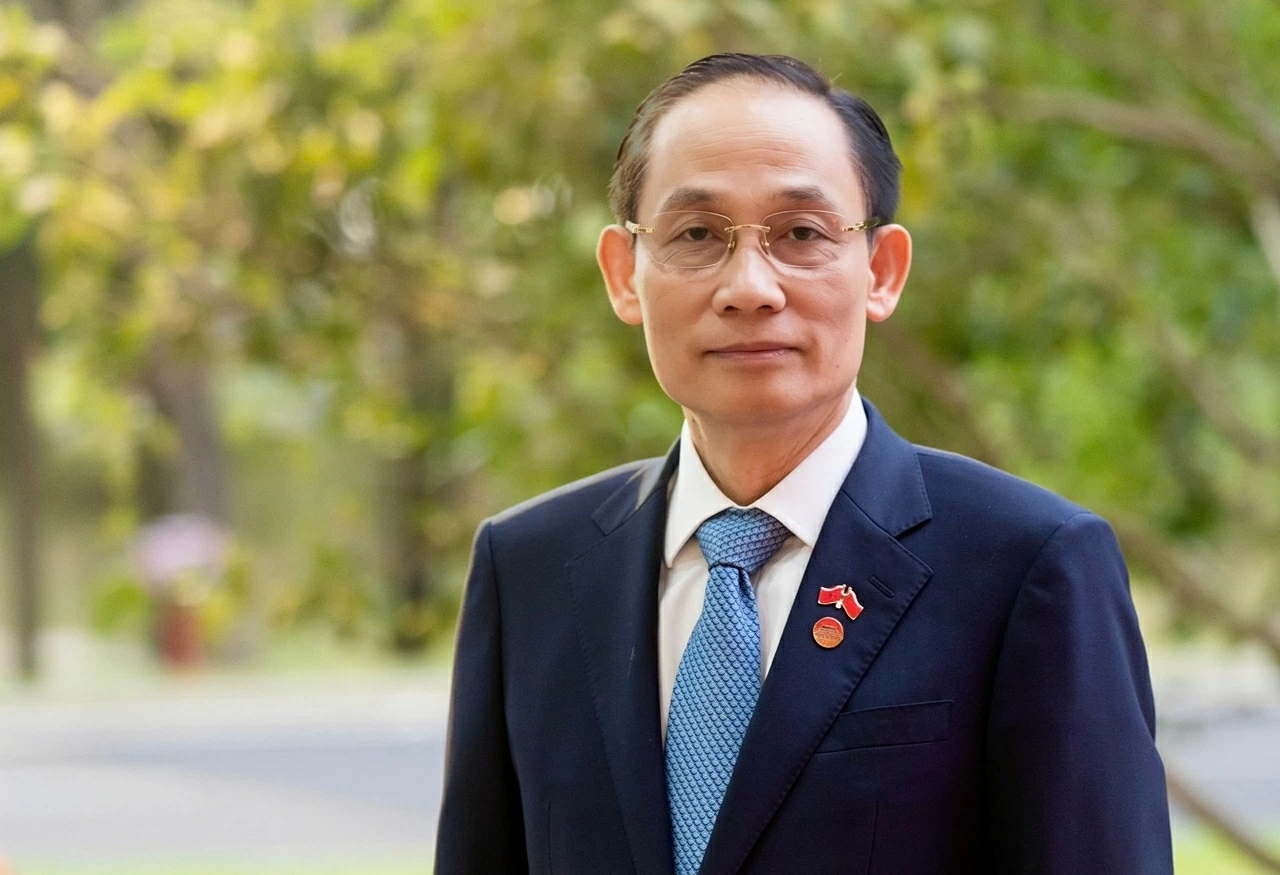 |
| Politburo Member, Minister of Foreign Affairs Le Hoai Trung. (Source: Ministry of Foreign Affairs) |
The state visit of General Secretary, President To Lam and his spouse to China from April 14-17, 2026, was highly successful. Minister, could you please highlight the key activities of the delegation and the main outcomes and highlights of the visit?
At the invitation of General Secretary of the Central Committee of the Communist Party of China, President of the People's Republic of China Xi Jinping and his spouse, General Secretary of the Central Committee of the Communist Party of Vietnam, President of Vietnam To Lam, along with his spouse and the high-level Vietnamese delegation, conducted a state visit to the People's Republic of China from April 14 to 17, 2026.
This was the first overseas visit by General Secretary, President To Lam following the consolidation of state leadership positions by the 16th National Assembly, based on the successful outcomes of the 14th Party Congress and the elections of the 16th National Assembly and People's Councils at all levels for the 2026-2031 term.
The visit was identified by both sides as the most important diplomatic activity in Vietnam-China relations for 2026, as both countries are entering a new phase of development. The 14th Party Congress set forth major goals and directions to advance the country towards socialism in the new era, aiming to achieve strategic objectives by 2030 and 2045; and this year marks the first year China implements its 15th Five-Year Economic and Social Development Plan.
The visit also conveyed Vietnam's important message in implementing and concretizing the Party's foreign policy of independence, self-reliance, resilience, multilateralism, and diversification.
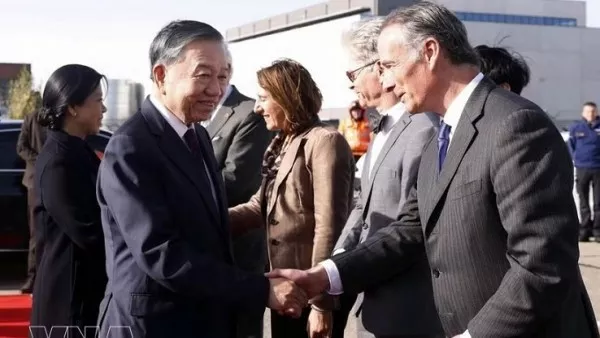
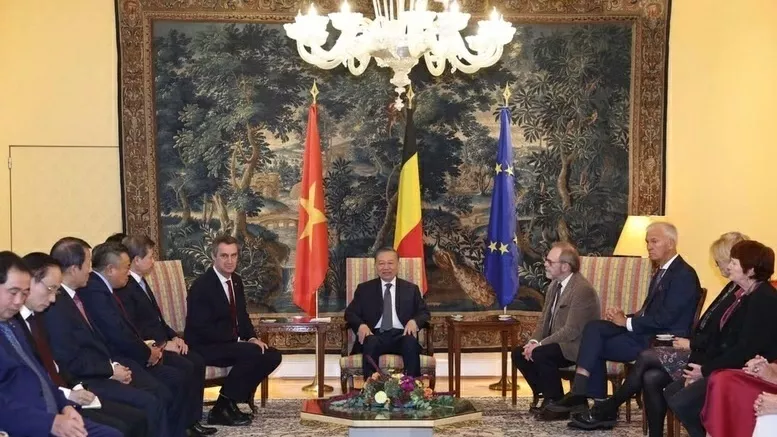
During the visit, General Secretary, President To Lam, his spouse, and the high-level Party and State delegation engaged in numerous important and diverse activities, demonstrating political trust and comprehensive, deep cooperation between the two Parties and countries. It also reflected the shared desire of both sides to elevate strategic connectivity, making Vietnam-China relations more profound and substantive, better meeting the needs of both Parties, countries, and the aspirations of their peoples. General Secretary, President To Lam and General Secretary, President Xi Jinping held important talks, exchanged in-depth strategic views, and witnessed the signing of numerous cooperation documents across various fields. They also had meetings and interactions with all key leaders of the Chinese Party and State and participated in many other significant diplomatic activities, such as meeting and speaking with representatives of the youth from both countries.
Additionally, General Secretary, President To Lam visited and delivered a policy speech at Tsinghua University, visited the Xiong'an New Area in Hebei Province, a model of socialist modernization in China. After concluding activities in Beijing, General Secretary, President To Lam and the delegation visited Guangxi, coinciding with the 85th anniversary of President Ho Chi Minh's departure from Guangxi to return to Vietnam after years of seeking a path to national salvation.
Alongside participating in some official activities with the General Secretary, President, his spouse Ngo Phuong Ly had cordial exchanges with Professor Peng Liyuan, spouse of General Secretary, President Xi Jinping; visited several exemplary educational, cultural, and artistic institutions in Beijing and Guangxi, further strengthening the friendship and people-to-people exchanges between the two countries.
During the visit, Politburo Member, Standing Member of the Secretariat Tran Cam Tu co-chaired a meeting between representatives of the two Politburos with Cai Qi, Politburo Standing Committee Member, Secretary of the Secretariat, Chief of the Office of the Central Committee of the Communist Party of China. Many Politburo Members, Central Committee Members who are leaders of ministries, sectors, and localities had substantive meetings and interactions with Chinese counterparts to promptly implement high-level agreements.
The visit achieved particularly important results, was very rich, and carried profound strategic significance, prominently reflected in several key points:
Firstly, both sides identified this as the most important diplomatic activity between the two Parties and countries in 2026, demonstrating the importance and political trust in Vietnam-China relations in each country's foreign policy, with a desire to elevate Vietnam-China relations to new heights in the new context. Vietnam always prioritizes developing relations with China as a strategic choice in the overall foreign policy of the 14th Party Congress; China always prioritizes developing relations with Vietnam in its neighborly diplomacy.
Chinese Party and State leaders highly appreciated and valued General Secretary, President To Lam's first overseas visit to China immediately after the 16th National Assembly consolidated state leadership positions; they welcomed the delegation with the highest level of protocol, with great respect and warmth, with many special arrangements. The public in both countries and internationally paid great attention and gave very positive evaluations of this visit to China by General Secretary, President To Lam and his spouse, along with the high-level Vietnamese delegation.
Secondly, the top leaders of the two Parties and countries had sincere and extensive exchanges on the situation of each Party, each country, the international and regional situation, and comprehensive discussions on bilateral relations, achieving important common understandings and setting major directions for promoting substantive cooperation in various fields, leveraging each side's strengths. On this occasion, General Secretary, President To Lam also proposed very specific measures to create close connectivity in areas such as economy, investment, development policy, infrastructure, science and technology, education and training, people-to-people exchanges, tourism, and close cooperation in new fields where Vietnam has needs and China has strengths in the coming period.
Thirdly, through exchanges, the two leaders agreed and reached important common understandings on the orientation for elevating Vietnam-China relations to new heights. Accordingly, in politics, based on mutual respect and trust, both sides agreed to support the cause of building socialism in each country, enhance high-level visits and contacts between the leaders of the two Parties and States, and effectively utilize existing cooperation mechanisms across Party, Government, National Assembly - National People's Congress, Fatherland Front - National Committee of the Chinese People's Political Consultative Conference, and other political-social organizations. Both sides agreed on connecting the two economies, promoting practical measures to develop trade and investment, closely cooperating in research and early commencement of railway construction projects, facilitating customs clearance for export goods of both countries...
Fourthly, the two leaders also emphasized actively coordinating and supporting each other on the international stage, creating additional important foundations and favourable conditions for consolidating a peaceful and stable environment for each country.
Overall, the visit reaffirmed the traditional, close-knit relationship between the two Parties, countries, and peoples, which has been carefully nurtured by generations of leaders on both sides throughout various revolutionary periods. It also affirmed the determination and set forth the vision and overall orientation of the highest leaders of the two Parties and countries to elevate strategic connectivity between the two countries in the new development phase, consolidate favorable diplomatic conditions, and make this important relationship increasingly meet the practical needs and aspirations of the peoples of both countries in the new era, contributing positively to peace, stability, cooperation, and development in the region and the world.
Minister, could you please outline the future directions in leveraging the achievements and significant implications of the state visit of General Secretary, President To Lam and his spouse to China?
The state visit to China by General Secretary, President To Lam and his spouse was highly successful, achieving rich results with significant implications for creating additional important foundations for the country's development and elevating Vietnam-China relations to new heights.
In the coming time, high-level leaders of the Party and State of both countries will closely monitor and provide specific guidance on implementing these important achievements. Ministries, sectors, and localities will deeply grasp the important common understandings between the two General Secretaries, Presidents, actively promote exchanges and contacts at all levels, and enhance substantive cooperation with a focus on strategic connectivity, using concrete effectiveness as a measure, and the interests of the peoples of both countries as the goal.
Firstly, it is necessary to fully inform, with appropriate methods and approaches, ministries, sectors, localities, and the public about the important results achieved during the visit, especially in enhancing substantive cooperation between the two sides, helping to further clarify the strategic connectivity between Vietnam and China in development policy, infrastructure, trade, investment, logistics... Priority will be given to quickly implementing key projects such as railways, highways, logistics, and smart border gates, facilitating the flow of goods and investment, ensuring energy security.
Secondly, based on this, ministries, sectors, localities, organizations, and enterprises should develop implementation plans, action plans, or take very specific measures to leverage and maximize the potential of cooperation between the two countries in each field.
Thirdly, both sides need to continue coordinating and closely exchanging in implementing the high-level agreements reached. In exchanges with Chinese leaders, the Chinese side is ready to build plans and specific measures to coordinate with us in implementing the signed agreements.
Thank you very much, Minister!