


General Secretary, President To Lam chairs first meeting of National Defence - Security Council in 2026-2031 term
WVR/VNA - On April 28, in Hanoi, Party General Secretary and President To Lam, Chairman of the Council for National Defence and Security in the 2026–2031 tenure, chaired the first meeting of the council following the National Assembly’s approval of its new members.
Latest
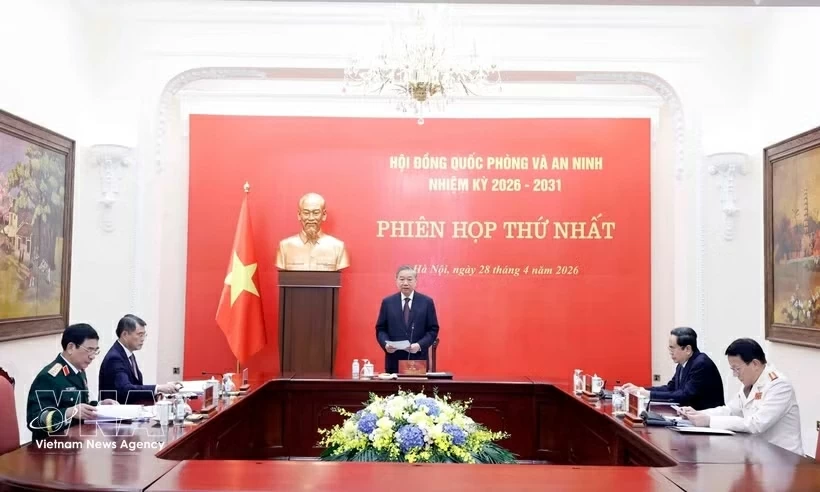 |
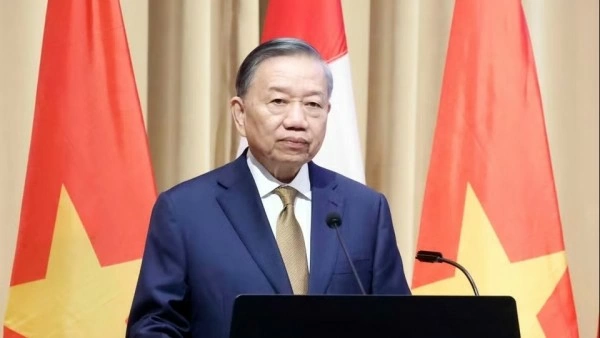
| General Secretary, President To Lam chairs first meeting of National Defence - Security Council in 2026-2031 term. (Photo: VNA) |
The meeting marked an important starting point as the country accelerates the implementation of the Resolution of the 14th National Party Congress and consolidates the state apparatus for a new development phase, with higher requirements for political stability, national defence, security, and safeguarding national sovereignty.
Participants reviewed and discussed three key items, including a report evaluating the implementation of the council’s working regulations in the 2021-2026 term and orientations for the new term; a draft of revised working regulations for the 2026–2031 tenure; and a draft overall programme for the council’s activities in the tenure.
The meeting reaffirmed that the council is a special constitutional institution tasked with deliberating and deciding on critical issues related to national defence, security, and the protection of the Fatherland. Amid increasingly complex and unpredictable global and regional dynamics, intensifying strategic competition among major powers, and intertwined traditional and non-traditional security challenges, the council was urged to enhance early analysis, forecasting, and preparedness to avoid strategic surprises.
Discussions also offered a comprehensive and candid assessment of the council’s performance in the previous term, highlighting achievements while pointing out limitations in coordination mechanisms, information-sharing, reporting regimes, content preparation, and the quality of strategic analysis and inter-sectoral advisory work. Based on this, orientations for the 2026–2031 period were shaped to ensure more practical and effective operations in line with constitutional and legal mandates.
Regarding the new working regulations, the council stressed the need for clear principles, responsibilities, authority, coordination mechanisms, and working procedures, alongside flexibility and responsiveness to emerging issues. The proposed full-term programme was designed to focus on strategic priorities, ensuring both comprehensive coverage and clear focal points to strengthen the council’s role in strategic orientation and forecasting.
The inaugural meeting concluded with success, laying a solid foundation for the council’s operations throughout the term and contributing to more effective leadership and direction in handling strategic issues in defence, security, and foreign affairs, thereby firmly safeguarding the Fatherland in the new context.
(Source: WVR/VNA)