




Economic Diplomacy: A strategic launchpad for Ho Chi Minh City and Southern Region integration in the new era
WVR - This topic was discussed during the working program of the Delegation of Heads of Vietnamese Representative Missions Abroad for the 2025-2028 term with the People's Committee of Ho Chi Minh City and representatives from southern localities on March 31, 2026.
Latest
In the context of globalization and international integration entering new turns with many fluctuations, economic diplomacy is no longer merely an extension of foreign policy but has become a crucial driving force, vital for local development, especially in the country's most dynamic economic region.
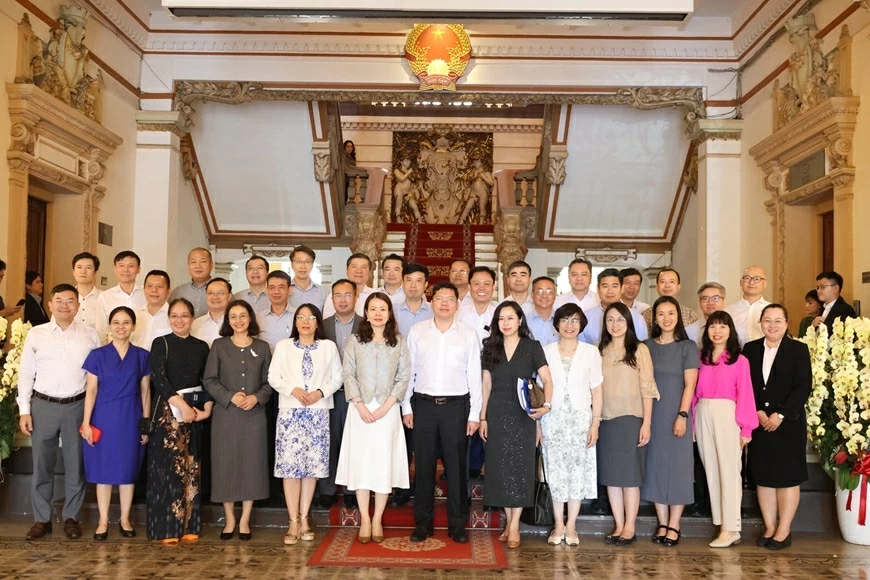 |
| Delegates take a commemorative photo at the People's Committee of Ho Chi Minh City. |
Aspiration to shape position in the New Era
On the morning of March 31, at the headquarters of the People's Committee of Ho Chi Minh City, the delegation of Heads of Representative Missions Abroad for the 2025-2028 term, led by Deputy Minister of Foreign Affairs Nguyen Minh Hang, met with the People's Committee of Ho Chi Minh City and leaders of the city's departments and agencies before departing for their assignments.
The event took place at a pivotal moment as the country enters a new development phase, and Ho Chi Minh City is setting unprecedented development goals.
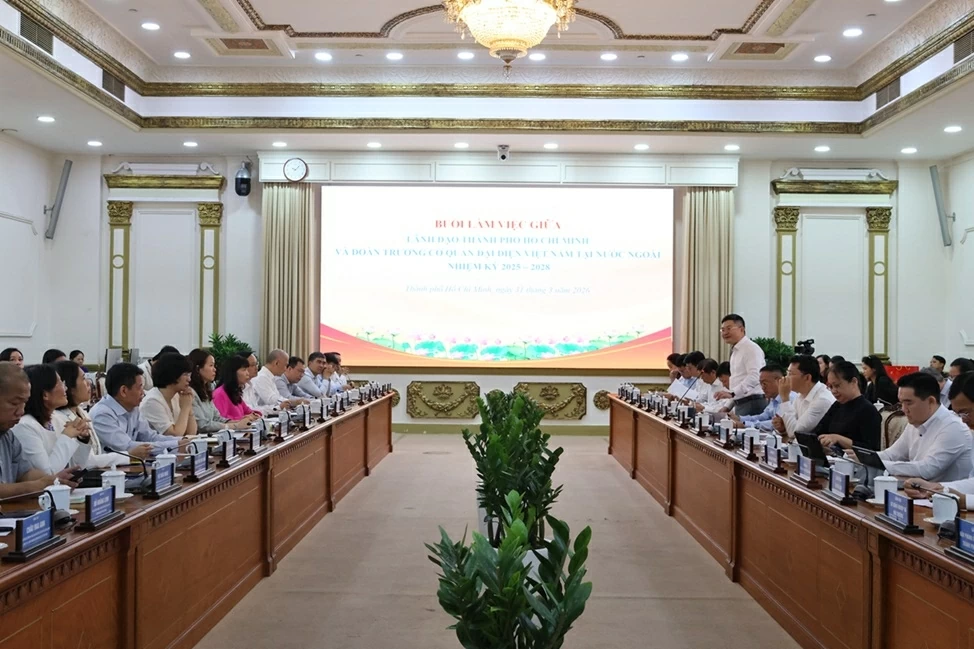 |
| Overview of the working session between the delegation of Heads of Representative Offices for the 2025-2028 term and the People's Committee of Ho Chi Minh City. (Photo: Phuong Chau) |
In his opening remarks, Vice Chairman of the People's Committee of Ho Chi Minh City Hoang Nguyen Dinh shared the city's breakthrough strategic directions. Accordingly, the Party Congress of the City for the 2025-2030 term outlined ambitious goals, closely aligned with the inevitable development rules: striving for an average GRDP growth rate of 10% to 11% per year and increasing the digital economy's share to 30% to 40% of the city's total GRDP.
To realize this vision, Ho Chi Minh City's political system identifies foreign affairs as a crucial, regular, and continuous task. To date, the city has established friendly cooperative relations with 87 localities and 21 international partners, creating a solid foundation to continue expanding development space and global vision.
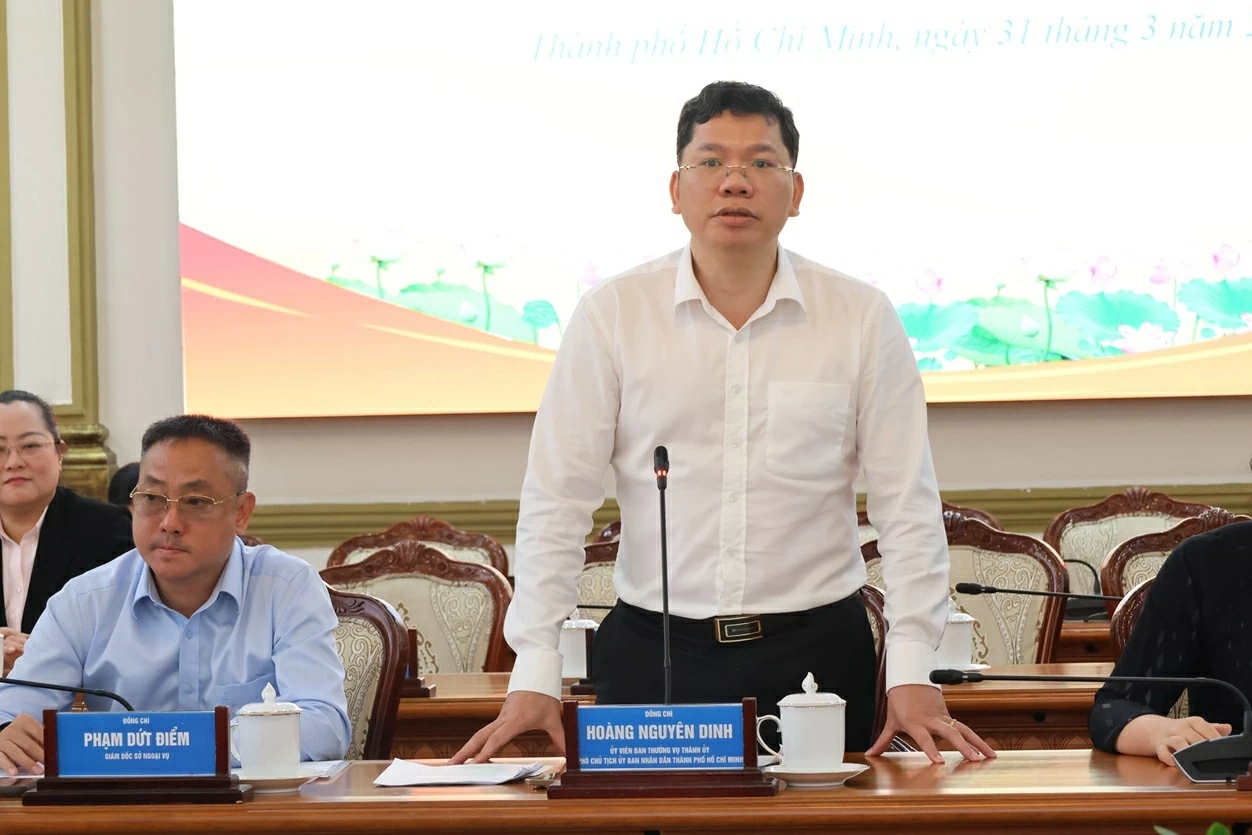 |
| Vice Chairman of the People's Committee of Ho Chi Minh City Hoang Nguyen Dinh speaking at the working session. (Photo: Phuong Chau) |
Based on these goals, Ho Chi Minh City leaders hope that the Heads of Representative Offices will continue to serve as reliable bridges, contributing to mutual understanding and expanding international trade and investment space. The fields that Ho Chi Minh City prioritizes for investment attraction in the coming period are all key industries, crucial for long-term growth and competitiveness in the 21st century.
These include the semiconductor industry, information and communication technology, renewable energy, infrastructure development, logistics, and particularly the strategic goal of creating an international financial center of stature. Beyond attracting capital, Ho Chi Minh City also expects new ambassadors and consuls general to leverage their keen insights, promptly advising on global economic development trends, while promoting scientific and technological cooperation, knowledge transfer, enhancing people-to-people diplomacy, and effectively connecting the overseas Vietnamese community.
On behalf of the delegation, Deputy Minister of Foreign Affairs Nguyen Minh Hang expressed admiration for Ho Chi Minh City's strong development strides and long-term strategic vision.
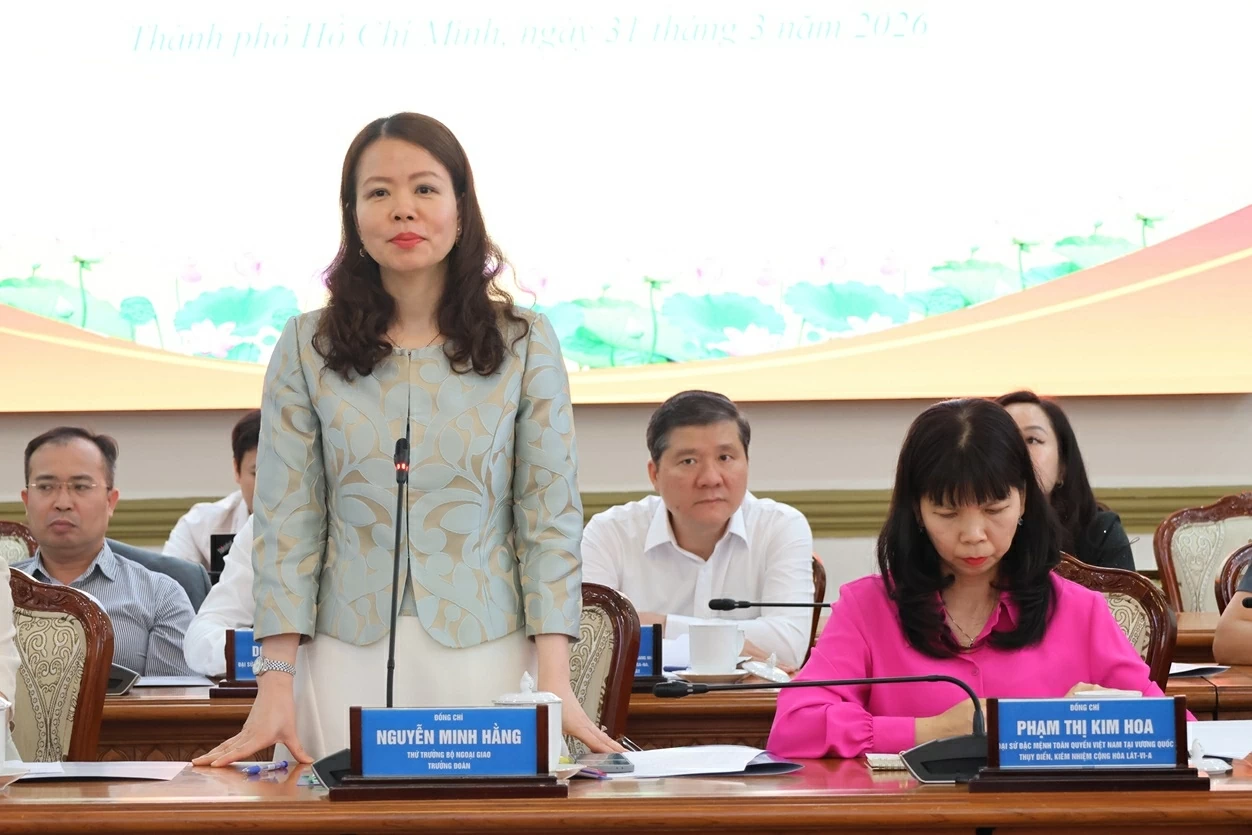 |
| Deputy Minister of Foreign Affairs Nguyen Minh Hang speaking at the working session. (Photo: Phuong Chau) |
Deputy Minister emphasized the leading role of Ho Chi Minh City in the country's overall development, especially after the landmark administrative boundary consolidation in July 2025. The expansion of development space requires a new breath of life, necessitating the attraction and effective utilization of international resources.
Therefore, Deputy Minister Nguyen Minh Hang affirmed that, alongside traditional national security pillars such as foreign affairs, defense, and security, building international cooperation strategies and promoting economic diplomacy should continue to be identified as essential, regular tasks of the diplomatic sector. The consensus at the working session also reflects the commitment of ambassadors and consuls general to actively coordinate closely with Ho Chi Minh City's departments and agencies, thereby bringing economic diplomacy orientations into practical and effective implementation.
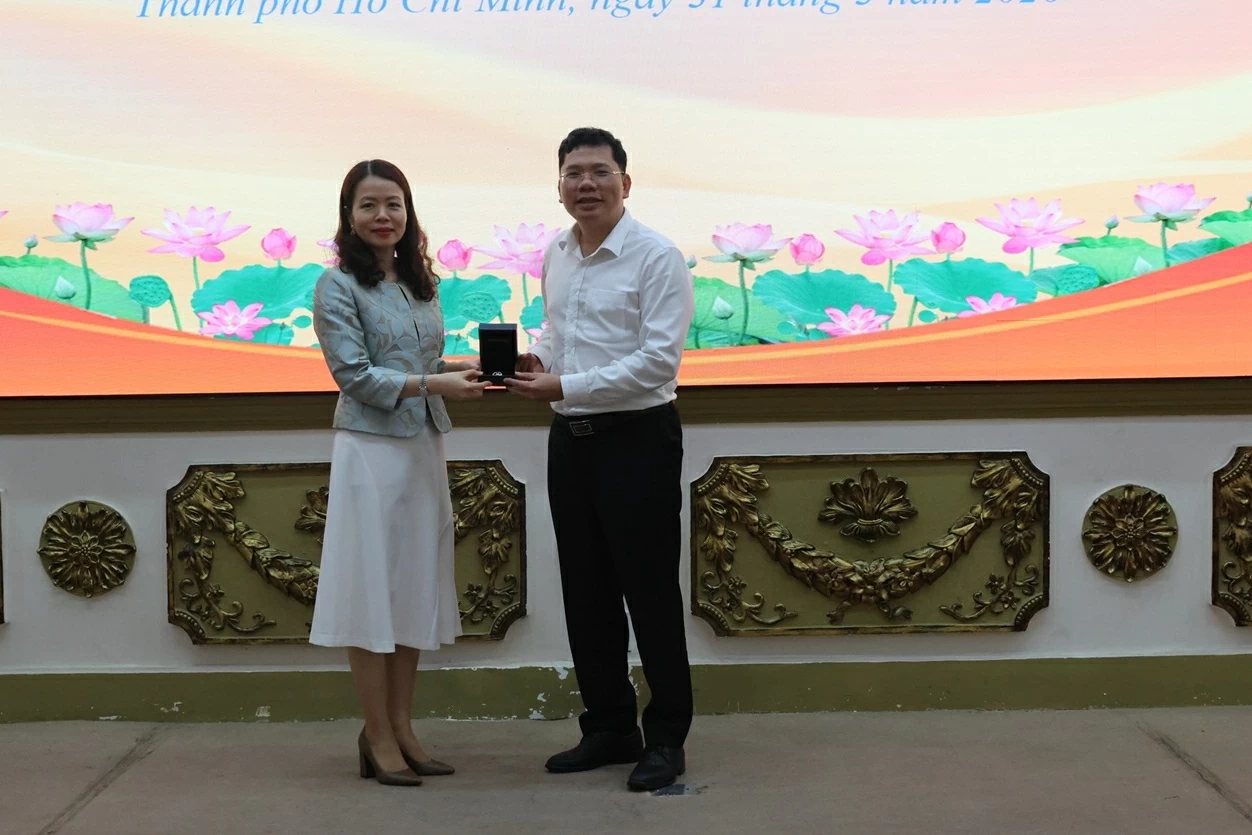 |
| Leaders of the People's Committee of Ho Chi Minh City present souvenirs to the Ministry of Foreign Affairs and the working delegation. (Photo: Phuong Chau) |
Supporting regional linkages and integration for southern localities
In the afternoon, at the Department of Foreign Affairs of Ho Chi Minh City, the discussion expanded to a regional scale through a dialogue between the delegation of Heads of Representative Offices for the 2025–2028 term and representatives from southern localities.
Throughout the working session, the Ministry of Foreign Affairs and delegates reached a high consensus on the need to enhance effectiveness and aim for substantive results.
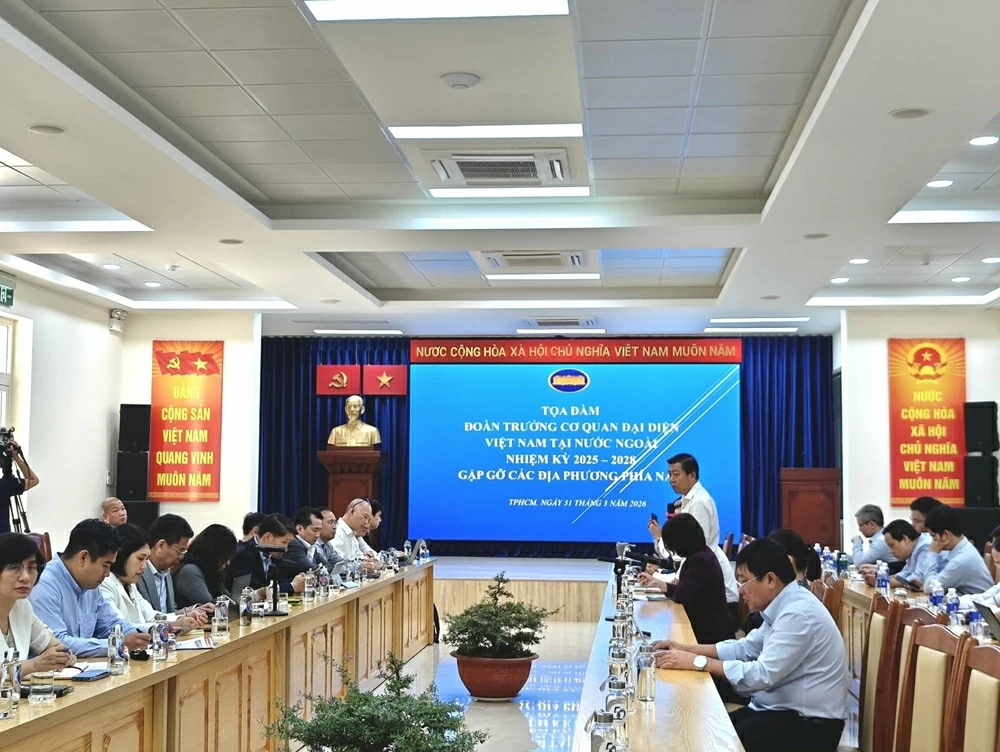 |
| Dialogue between the Delegation of Heads of Vietnamese Diplomatic Missions Abroad for the 2025-2028 term and representatives from southern localities in Ho Chi Minh City, afternoon of March 31, 2026. |
At the dialogue, representatives from provinces such as An Giang, Dong Thap, Dong Nai, and Can Tho City shared about their socio-economic situation, unique strengths, and development priorities. From the need to attract resources for infrastructure development, green agriculture, processing industries, to developing eco-tourism and seafood processing logistics, localities hope that the Ministry of Foreign Affairs and the Heads of Representative Offices will continue to support and become focal points for connecting with foreign strategic partners.
One notable topic at the dialogue was conquering the international Halal certification market—a fertile and potential land of the Islamic world but also fraught with numerous technical barriers. In practice, southern localities are quite perplexed by the "maze" of standard sets.
Nguyen Viet Thong, Deputy Director of the Department of Tourism of An Giang Province, candidly shared the local confusion in the goal of building Halal-certified facilities. The bottleneck lies in the fact that each major market like Indonesia, Malaysia, the European Union (EU), or the Middle East applies a separate Halal standard system.
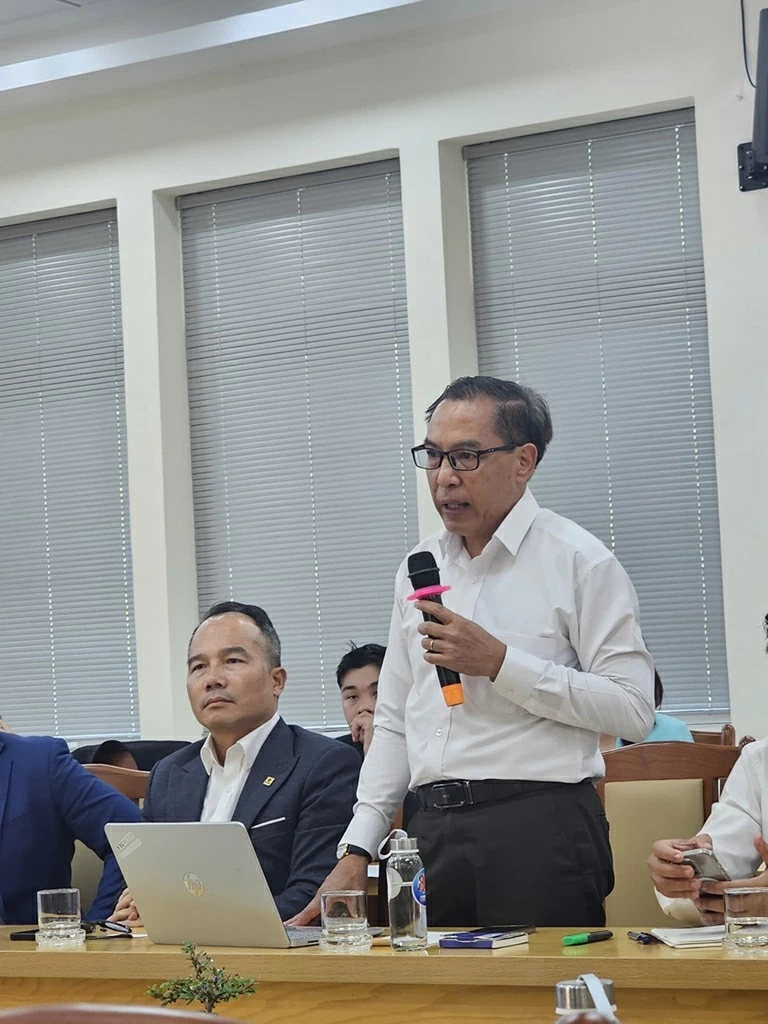 |
| Nguyen Viet Thong, Deputy Director of the Department of Tourism of An Giang Province, speaking at the Dialogue. |
Sharing this concern, Nguyen Dinh Phuong Uyen, Deputy Director of the Department of Finance of Dong Thap Province, pointed out the direct difficulties for businesses, such as high certification costs due to the need to meet the unique standards of each market, short validity periods of licenses, while lacking mutual recognition mechanisms between countries. From this reality, Dong Thap representatives proposed the need for a unified, reputable focal point to assist businesses in resolving these issues.
Listening to the local challenges, the Heads of Representative Missions offered many noteworthy suggestions. Ambassador-designate of Vietnam to Malaysia Pham Thi Thuy Nga noted that although Malaysia is a market with stringent standards, obtaining Halal certification from this country would give Vietnamese products a significant advantage in accessing other Islamic markets. She also emphasized a key principle: for the Muslim community, trust plays a decisive role. Therefore, after obtaining certification, businesses need to strictly maintain product quality to ensure credibility and expand long-term cooperation opportunities.
Additionally, Ambassador-designate to Brunei Do Thuy Duong expanded the scope of thinking by affirming that development potential is not limited to food but extends to Halal tourism and Halal fashion.
To provide a systematic solution, Luyen Minh Hong, Deputy Director General of the Department of Economic Diplomacy, Ministry of Foreign Affairs, brought information that resolves many bottlenecks: From April 2024, the Ministry of Science and Technology officially established the National Halal Certification Center. This marks the first time Vietnam has shaped its own Halal standard system. Luyen Minh Hong suggested that localities proactively guide businesses to first access this standard set, while affirming that the Government will persistently negotiate to reach mutual quality recognition agreements with partner countries, removing barriers from the root.
Alongside the story of agricultural products and the Halal market, the challenge of elevating industrial technology and penetrating the world's highest-standard and most demanding markets was also deeply analyzed. Representing the voice of the manufacturing business sector, Nguyen Trong Luat, Vice Chairman of the Ho Chi Minh City Supporting Industry Association (HASI)—which gathers 270 businesses, mostly small and medium-sized in electronics, semiconductors, mechanics, and automation—directly requested ambassadors to act as bridges to bring businesses into the European market.
In the context of increasing tariff barriers in the U.S., diversifying output markets becomes an urgent requirement for businesses. Notably, HASI expressed a desire to access and receive technology transfer in precision mechanics from countries with strengths such as Germany, the Netherlands, and Switzerland, to serve research, development, and eventually produce electronic chips within the next 5–10 years.
 |
| Nguyen Huong Tra, Ambassador-designate of Vietnam to Belgium, concurrently accredited to the Grand Duchy of Luxembourg, Permanent Representative of Vietnam to the European Union (EU), speaking at the dialogue. |
Not stopping at Europe, the integration challenge in Asia was also analyzed from the perspective of Nguyen Truong Son, Consul General of Vietnam in Osaka (Japan). Regarding the desire to overcome the situation of "bumper crops, low prices" and elevate supporting industry capabilities in localities like Can Tho, An Giang, and Dong Nai, Son noted that Japan demands absolute transparency and rigor in information. Accordingly, cooperation projects in areas such as fishing ports, post-harvest preservation technology, or supply chains need to be prepared with detailed proposals, clearly outlining needs and objectives.
He also emphasized the leading role of large domestic enterprises, considering it a crucial condition for receiving technology and participating effectively and sustainably in the global value chain.
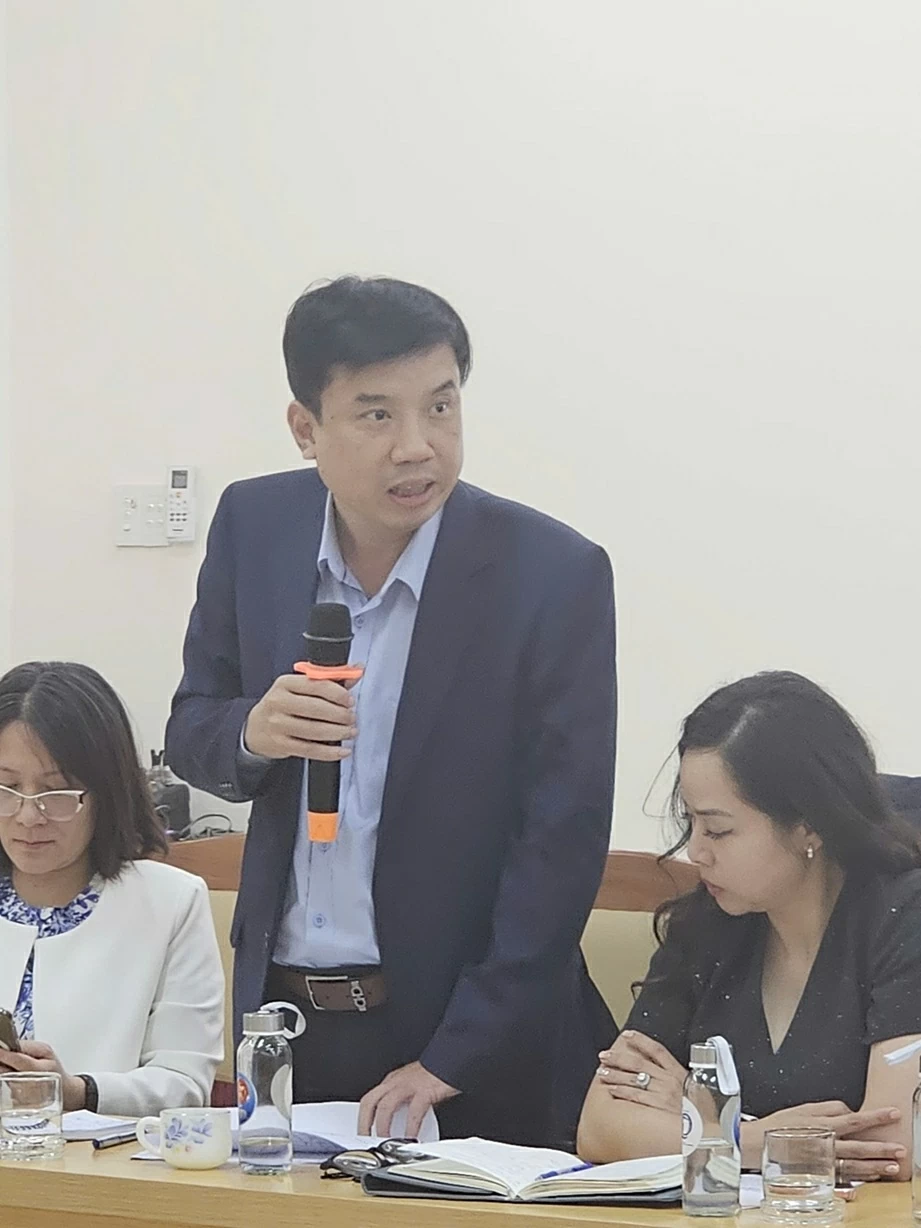 |
| Nguyen Truong Son, Consul General of Vietnam in Osaka (Japan) for the 2025-2028 term, speaking at the Dialogue. |
In concluding remarks at the Dialogue, Luyen Minh Hong reaffirmed the orientation of focusing on economic diplomacy, science, and technology as spearheads, serving the goal of double-digit growth. The Ministry of Foreign Affairs is committed to accompanying businesses and actively coordinating with 98 representative offices abroad to build a list of international events and exhibitions, thereby contributing to enhancing the position of Vietnamese booths.
Particularly, to ensure diplomacy goes into substance, from 2026, the Ministry of Foreign Affairs aims to strengthen close coordination and maintain regular connections with local Departments of Foreign Affairs. Heads of Representative Missions are required to develop specific action plans, clearly defining timelines and implementation deadlines, while linking with a transparent evaluation mechanism to measure results at the end of the term.


