

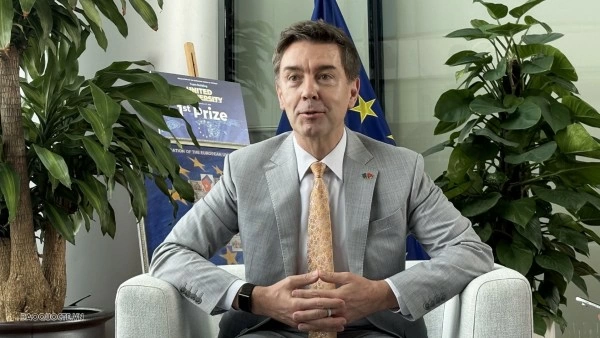

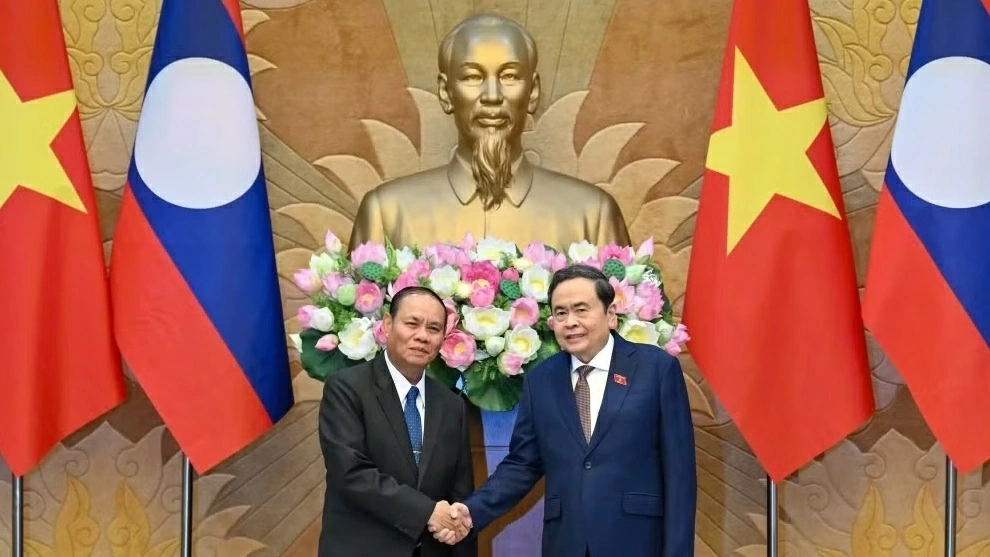
General Secretary, President To Lam's visit to EU highlights stature of relations: Ambassador Julien Guerrier
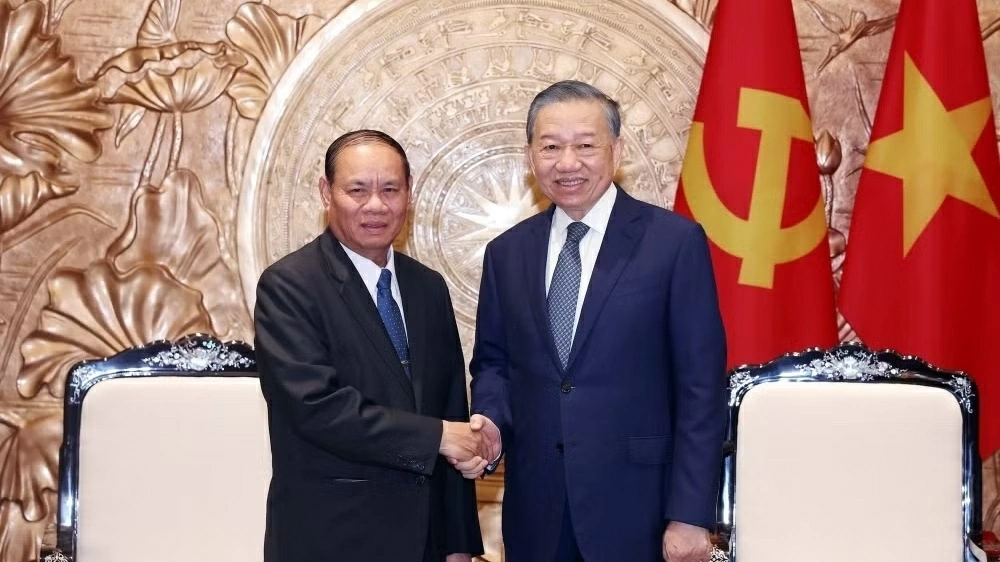
WVR - At the invitation of President of the European Council (EC) António Costa, General Secretary of the Communist Party of Vietnam and President of Vietnam To Lam will pay an official visit to the European Union (EU). On this occasion, EU Ambassador to Vietnam Julien Guerrier spoke to the press ahead of this historic visit.
Latest
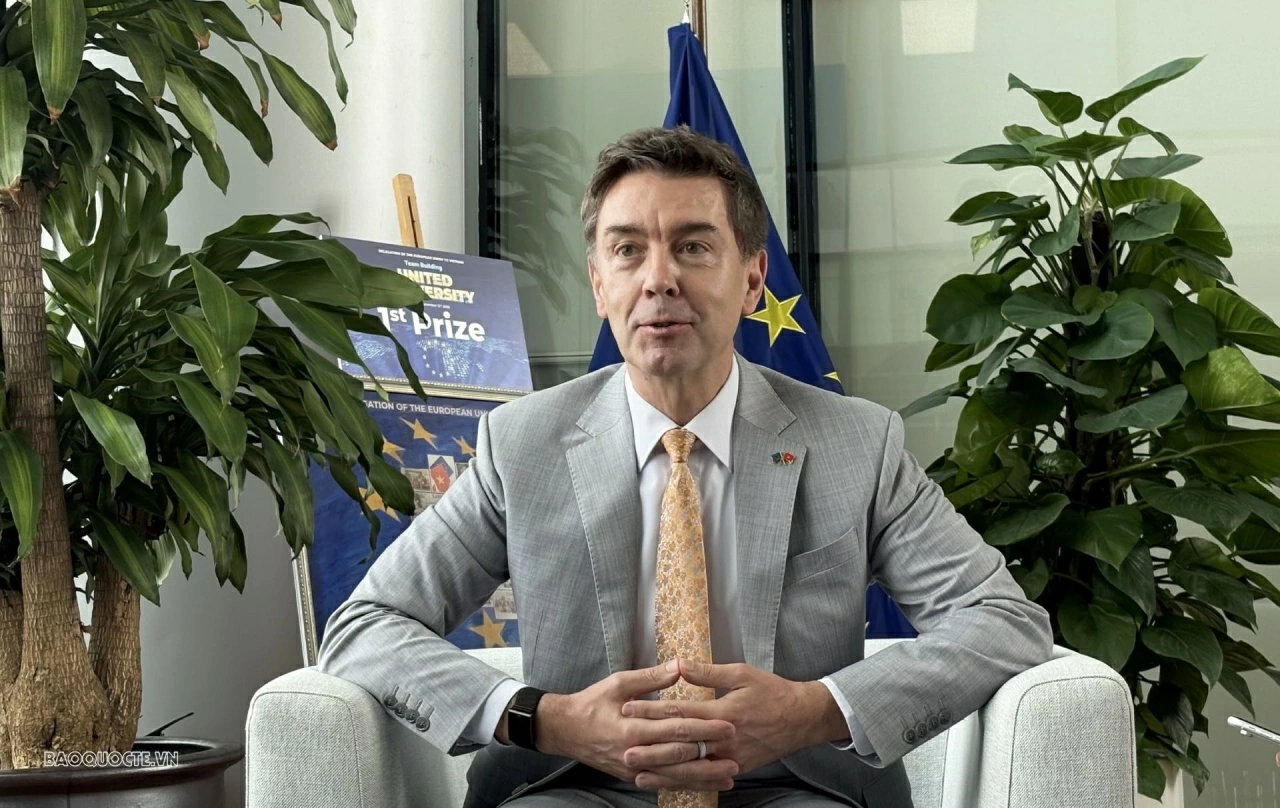 |
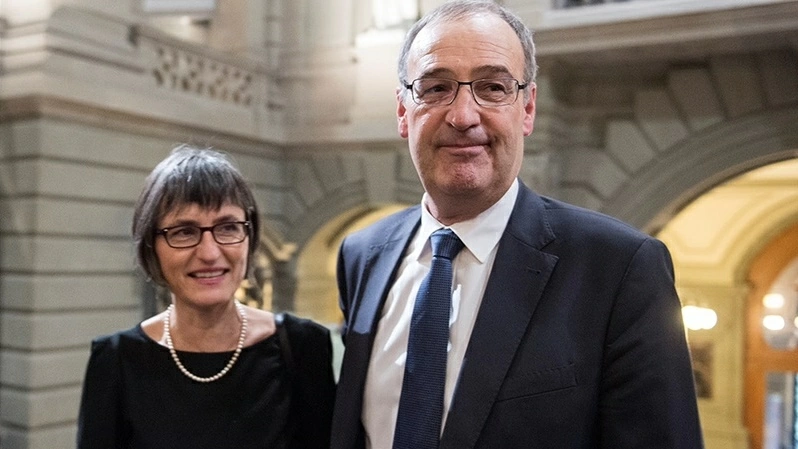
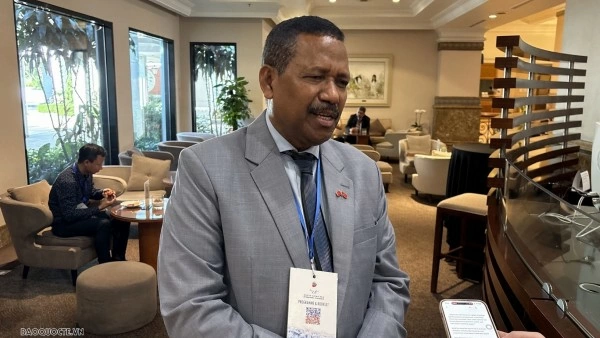
| EU Ambassador to Vietnam Julien Guerrier. (Photo: Ngoc Anh) |
EU Ambassador to Vietnam Julien Guerrier stressed that, after 35 years of diplomatic relations, Vietnam and the EU had built a solid, broad and deep relationship covering almost all areas of public policy. In January 2026, during the visit to Vietnam by European Council President António Costa, the two sides officially upgraded their ties to a Comprehensive Strategic Partnership. Since then, they have continued to implement and deepen cooperation under this new framework.
| More from WVR |
 General Secretary, President To Lam to pay a state visit to Denmark and official visits to the EU and Belgium: Spokesperson General Secretary, President To Lam to pay a state visit to Denmark and official visits to the EU and Belgium: Spokesperson |
According to the Ambassador, the upcoming visit to Europe by General Secretary and President To Lam is of great significance, underscoring the stature of bilateral relations and the importance of the EU to Vietnam and of Vietnam to the EU. General Secretary and President To Lam will receive the highest-level welcomes from European Commission President Ursula von der Leyen and European Council President António Costa.
The visit will provide an opportunity for both sides to review bilateral relations, assess the implementation of the Comprehensive Strategic Partnership framework, and discuss measures to elevate ties to a new level and translate shared objectives into tangible results. Discussions will cover trade, investment, energy, education, science, technology and security, laying the groundwork for stronger relations in the months and years ahead.
The Ambassador noted that the visit comes at a particularly important time for international relations, as geopolitical upheavals unfold in various regions while multilateralism and international law face serious challenges. Against this backdrop, Vietnam and the EU share an interest in promoting multilateralism, upholding international law and maintaining free and open trade. These shared interests also provide a basis for the two sides to further develop and strengthen their relationship.
Vietnam is a key partner of the EU in the Indo-Pacific and the first ASEAN member state to establish a Comprehensive Strategic Partnership with the EU. According to Ambassador Julien Guerrier, strengthening ties with Vietnam forms part of the EU’s broader efforts to deepen cooperation with partners that share common interests.
As an example, he pointed out, at the same time as establishing the Comprehensive Strategic Partnership with Vietnam in January 2026, the EU announced the conclusion of negotiations on a free trade agreement (FTA) with the Southern Common Market (Mercosur), while also securing an FTA and a security agreement with India. In recent months, the EU has also concluded FTAs with the Philippines and Indonesia, while continuing negotiations with Malaysia and Thailand. In addition, Canadian Prime Minister Mark Carney’s recent visit to Europe and the possibility of Canada joining a framework for closer association with the EU further illustrate the trend towards stronger ties between the EU and partners with shared interests.
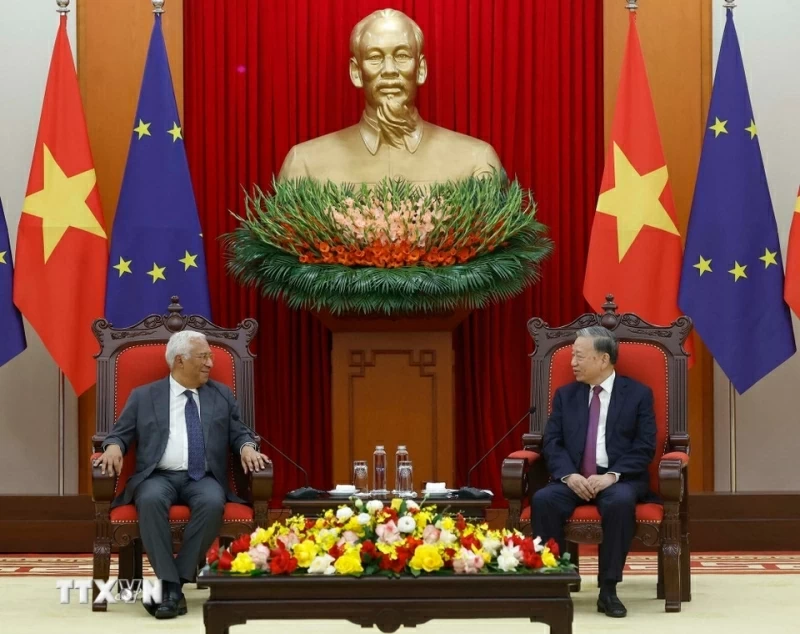 |
| On January 29, at the headquarters of the Party Central Committee, General Secretary To Lam received President of the European Council António Costa who was on an official visit to Vietnam. (Photo: VNA) |
Significant potential for further cooperation
Ambassador Julien Guerrier affirmed that trade and investment would be among the key focuses of the visit. A large Vietnamese business delegation will accompany General Secretary and President To Lam to Brussels. Meanwhile, senior executives from a number of major European corporations will also take part in working activities with Vietnamese leaders, including a business roundtable and an event bringing together General Secretary and President To Lam and Vietnamese enterprises.
Highlighting positive developments in bilateral cooperation in recent years, the Ambassador noted that trade between Vietnam and the EU had grown significantly since the EU-Vietnam Free Trade Agreement (EVFTA) entered into force in 2020. Bilateral trade has now reached approximately 76 billion Euro, representing an increase of more than 60% compared with the period before the agreement took effect. Vietnam is currently the EU’s largest trading partner within ASEAN and its 16th-largest trading partner globally.
Nevertheless, the EU diplomat believes that considerable room remains for further growth in bilateral trade. To unlock this potential, both sides need to ensure the full implementation of the EVFTA while addressing trade barriers and obstacles to investment and business activities between their respective industries. The EU regularly discusses these issues with Vietnamese authorities and expects to continue the discussions during the visit to Brussels.
In addition to removing barriers, Ambassador Julien Guerrier emphasised the importance of encouraging European small and medium-sized enterprises to invest in Vietnam, thereby fostering business ecosystems in selected industries. Establishing a more transparent and predictable regulatory environment would help promote trade, attract investment and enable businesses on both sides to expand their operations.
The EU, he added, aims to invest in high-quality industries in Vietnam, not only by providing European capital but also by supplying secure, reliable and world-leading technologies. These technologies could help safeguard Vietnam’s strategic autonomy in key sectors, including transport, secure digital infrastructure and energy infrastructure.
In particular, the EU will continue to accompany Vietnam on its journey towards becoming a developed country by 2045 and achieving climate neutrality by 2050. According to the Ambassador, investments in technology and infrastructure would not only meet immediate development needs but also help Vietnam enhance its competitiveness, accelerate the green transition and strengthen its autonomy in strategic sectors.
Ensuring energy security and promoting sustainable transport
Energy is one of the areas in which the two sides are expected to engage in in-depth discussions during the visit. Ambassador Julien Guerrier said the crisis in the Strait of Hormuz highlighted the importance of ensuring energy security for both Europe and Vietnam, as well as developing domestic energy supplies.
According to him, renewable energy is particularly important because it can be generated domestically, meeting the needs of a growing economy while helping green industrial sectors and reducing dependence on external energy supplies. Developing renewable energy therefore not only supports the goal of achieving climate neutrality by 2050 but also contributes to energy security.
Through the Just Energy Transition Partnership (JETP) and the Global Gateway initiative, the EU will continue to make substantial investments in Vietnam’s renewable energy sector. In addition, the EU is actively supporting Vietnam in developing its nuclear energy industry, with particular emphasis on safety requirements.
Sustainable transport is another cooperation priority. The EU seeks to invest in areas such as urban railways to help people in Hanoi and Ho Chi Minh City travel more quickly, conveniently and cleanly, while reducing traffic congestion, limiting air pollution and meeting growing transport demand.
In 2026, the EU launched a dedicated transport support mechanism for Vietnam, providing 40 million Euro in grant funding for technical assistance. The mechanism aims to help Vietnam adopt and apply advanced standards and technical regulations in high-speed rail and urban transport. The EU will also continue to provide technical assistance for transport infrastructure projects in Vietnam.
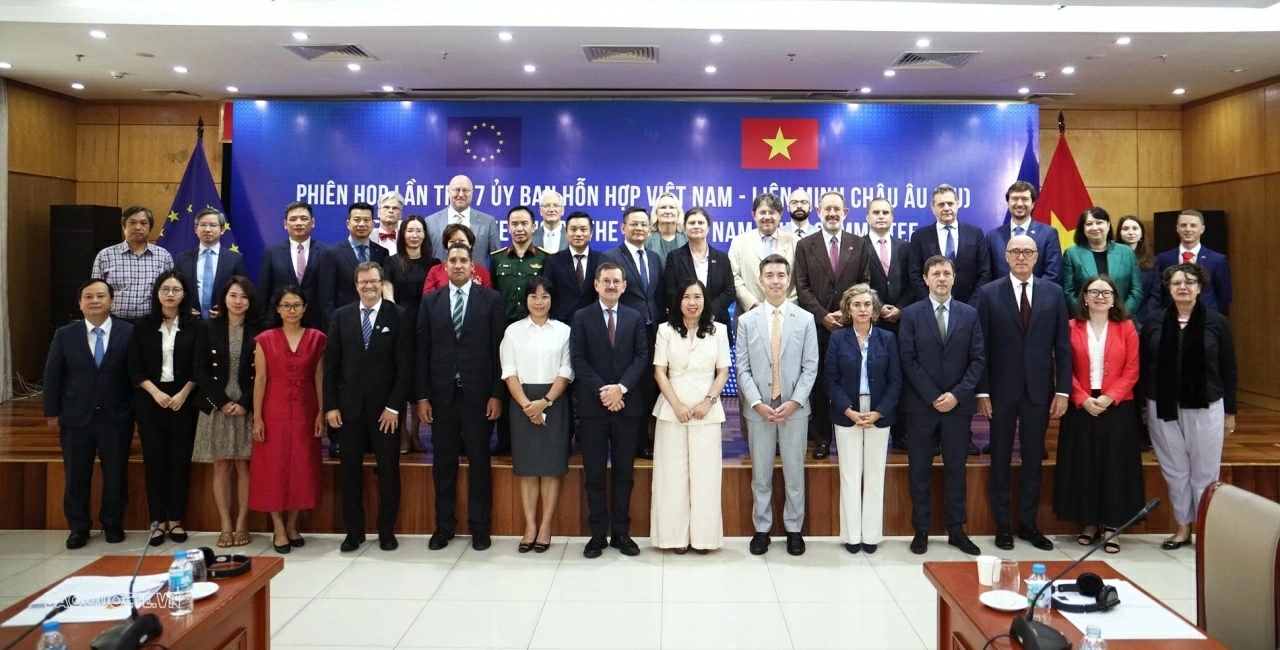 |
| The 7th session of the Vietnam-EU Joint Committee on the implementation of the Vietnam-EU Comprehensive Partnership and Cooperation Agreement (PCA) co-chaired by Deputy Foreign Minister Le Thi Thu Hang and Mr. Erik Kurzweil, Director General of Asia-Pacific, European Union Foreign Affairs Agency (EEAS), on September 25. (Photo: Thanh Long) |
Expanding cooperation in science, technology and education
Science, technology and education are priorities shared by Vietnam and the EU and have been highlighted under the Comprehensive Strategic Partnership.
Ambassador Julien Guerrier said that, in May 2026 in Hanoi, the EU had signed a Letter of Intent on cooperation between European Commissioner for Startups, Research and Innovation Zaharieva and Vietnam’s Minister of Science and Technology. During the upcoming visit, the two sides are expected to sign another Letter of Intent on cooperation between Vietnam’s Minister of Education and Training and the European Commission’s Vice-President responsible for education.
These agreements will provide a basis for implementing a range of activities to promote exchanges among students and researchers. The EU also hopes that more Vietnamese researchers and research organisations will participate in projects under the Horizon Europe programme.
In education, the EU recently organised EU Education Week in Hanoi and Ho Chi Minh City, featuring international conferences and European study-abroad fairs in both cities. More than 70 European universities travelled to Vietnam to introduce study opportunities and scholarship programmes for Vietnamese students. The two fairs attracted thousands of visitors.
The Ambassador expressed his pleasure at the strong interest shown by Vietnamese students in studying in Europe, as well as by European universities in increasing the number of Vietnamese students. In his view, promoting educational exchanges would not only help improve education and the quality of Vietnam’s human resources, supporting the country’s development and the operations of European businesses investing in Vietnam, but also establish lasting links between people on both sides.
“Vietnamese students and researchers who travel to Europe to study and conduct research can become bridges for people-to-people exchanges and greater mutual understanding. These connections will help lay a solid foundation for the continued development of Vietnam-EU relations in the future,” Ambassador Julien Guerrier said.
Promoting peace and security
Beyond economic cooperation, Ambassador Julien Guerrier said that Vietnam and the EU would discuss peace and security during the visit, as well as their shared commitment to respect for international law, territorial integrity and the sovereignty of states.
On the East Sea (South China Sea) issue, the EU and Vietnam both support the implementation of the United Nations Convention on the Law of the Sea (UNCLOS). The Ambassador stressed that this was not merely a matter of regional importance but also a principle of global significance.
In particular, Ambassador Julien Guerrier said the EU highly valued the convergence of views between European Council President António Costa and General Secretary and President To Lam, as reflected in their speeches at the United Nations General Assembly. According to him, the two leaders share much common ground in their support for multilateralism, multilateral institutions, the United Nations and a rules-based international order.
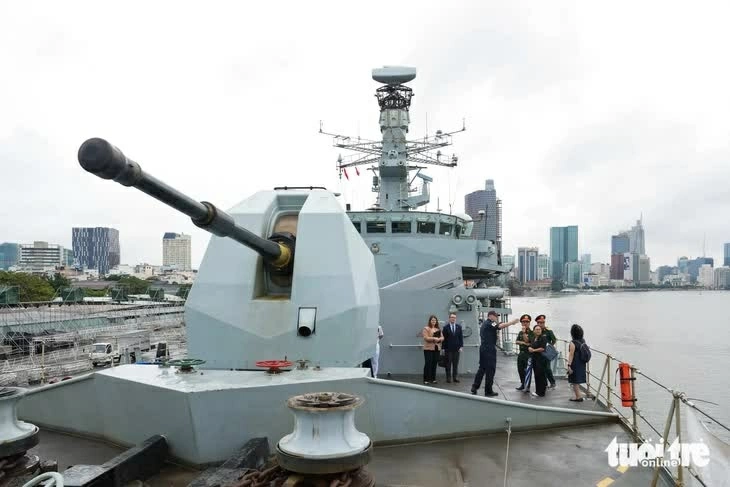 |
| In 2025, the HMS Richmond of the British Royal Navy docked at Nha Rong port (Ho Chi Minh City), launching the second visit to Vietnam after the visit in 2021. (Photo: Tuoi Tre Newspaper) |
Specifically, in response to a question from a reporter of The World and Vietnam Report on how Vietnam and the EU could strengthen coordination at multilateral forums, within the framework of ASEAN-EU cooperation, and on shared concerns such as maritime security, supply chain security and global challenges, Ambassador Julien Guerrier emphasised the importance of coordinating positions within the United Nations framework.
He explained that the relevant authorities on both sides maintained regular contact, exchanged views and sought common positions whenever votes or discussions took place at the United Nations. This is one practical way for Vietnam and the EU to strengthen their common voice at international forums.
At the same time, the Ambassador argued that promoting multilateralism must begin with compliance with the rules that countries have jointly established, including trade rules, as well as international norms and standards that enable the multilateral system to continue developing.
Regarding the significance of upgrading Vietnam-EU relations within the EU’s broader strategy in the Indo-Pacific, Ambassador Julien Guerrier affirmed that the region was of particular importance to the EU, especially in the areas of defence and security.
Describing Vietnam as one of the leading countries in cooperation with the EU, the Ambassador noted that Vietnam regularly welcomed European frigates and other military vessels into its ports. Their presence contributes to maintaining an international presence in the East Sea, thereby helping safeguard peace, security and freedom of navigation.
Looking ahead, the EU hopes to further strengthen bilateral cooperation with Vietnam in maritime security, including the protection of undersea cables, while expanding coordination in other related areas.
“Vietnam holds a leading position in the EU’s cooperation efforts in the Indo-Pacific region. I believe that cooperation between the two sides is a model well worth emulating,” Ambassador Julien Guerrier remarked.