


Hanoi must make personnel evaluation reform a breakthrough: Party General Secretary, President To Lam
WVR/VNA - Hanoi must build a contingent of highly qualified, capable and accountable cadres as personnel quality directly affects the capital’s development, General Secretary of the Communist Party of Vietnam Central Committee and President To Lam has stated.
Latest
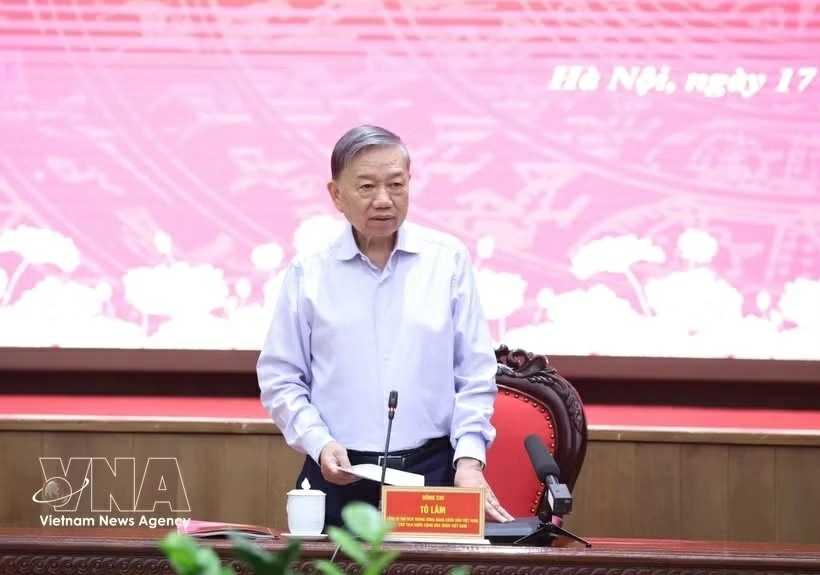 |
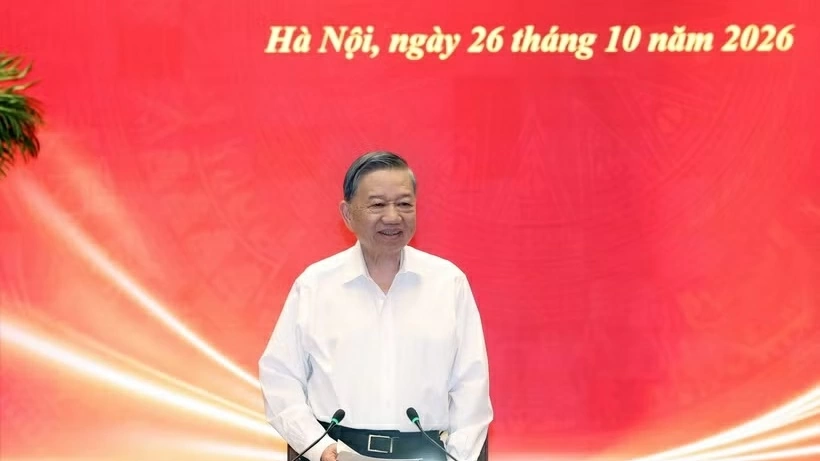
| Hanoi must make personnel evaluation reform a breakthrough: General Secretary, President To Lam speaks at the meeting held in Hanoi to adopt a draft report on the results of the third inspection and supervision round of the Hanoi Party Committee’s Standing Board. (Photo: VNA) |
The top leader, who also heads Inspection and Supervision Team No. 218 of the Political Bureau, made the statement while chairing a meeting held in Hanoi on September 17 to adopt a draft report on the results of the third inspection and supervision round of the municipal Party Committee’s Standing Board.
General Secretary and President Lam commended Hanoi for its encouraging achievements in personnel affairs, as well as the refinement of regulations regarding decentralisation, management, position standards, performance assessment, succession planning, training, and personnel policies.
The staffing of 126 communes and wards involved a massive workload, yet the organisational structures have operated continuously without significant disruption, he noted, adding that the city has implemented policies to attract and value talent, while accelerating the digitalisation of personnel administration, management, and performance evaluation.
However, pointing out existing limitations, he urged the capital to urgently rectify gaps following the recent organisational restructuring and make personnel evaluation reform a breakthrough step.
Emphasising Hanoi’s critical role as the national political – administrative centre and a major hub for culture, education, science – technology, innovation and international integration, the Party and State leader requested that Hanoi takes the lead in personnel development, adding every decision regarding personnel affects the city's development capacity and the public image of the administrative apparatus.
He demanded Hanoi's cadre contingent be politically steadfast, possess impeccable character, and remain dedicated to the people; they must strictly observe discipline and uphold integrity in the performance of their duties. Furthermore, they must possess strategic thinking, a deep understanding of the unique characteristics of a major metropolis, and the modern governance capabilities required for effective implementation.
Personnel must be assigned based on specific local needs, he said, stressing that city-level cadres must excel in policymaking, inter-agency coordination, and resource mobilisation, while grassroots ones must stay close to the public, handle tasks swiftly, and master the digital environment.
Furthermore, he said, key sectors like planning, transportation, environment, science – technology, finance, law, culture, and urban governance require officials and experts with sufficient depth of knowledge, capability, and dedication.