




Combat IUU Fishing: Deputy Prime Minister Tran Hong Ha calls for addressing issues raised by EC's IUU inspection team
WVR - On March 27, Deputy Prime Minister Tran Hong Ha chaired a meeting on tasks and solutions to combat illegal, unreported, and unregulated (IUU) fishing.
Latest
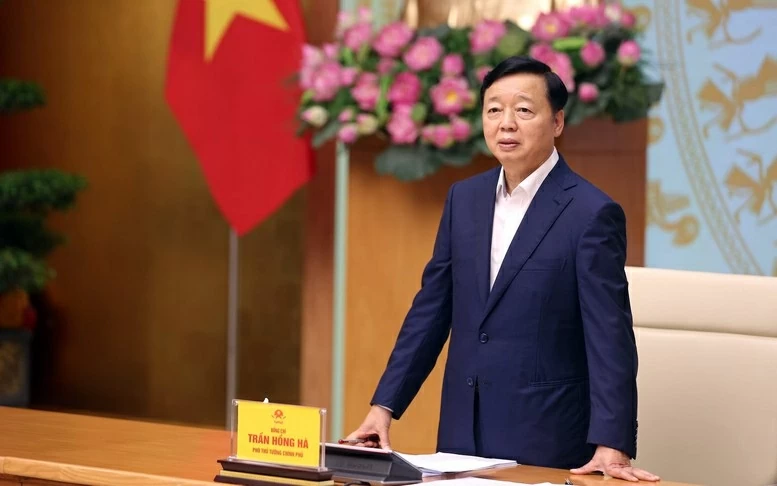 |
| Deputy Prime Minister Tran Hong Ha chaired the meeting on tasks and solutions to combat illegal, unreported, and unregulated fishing (Photo: VGP) |
The meeting was connected online to 22 coastal provinces and cities, as well as Tay Ninh province.
Deputy Prime Minister Tran Hong Ha stated that although the European Commission's (EC) IUU inspection team acknowledged Vietnam's efforts, inspections at localities revealed long-standing issues and weaknesses.
“These issues are well-known, nothing new, but inspections consistently uncover problems,” the Deputy Prime Minister said, emphasizing that today's meeting was not for explanations but focused on rectification and preparation for the next engagement with the EC.
Accordingly, the Ministry of Agriculture and Environment must clearly identify the issues raised by the EC's IUU inspection team and develop a plan to address them, categorizing them into those needing explanation and those requiring rectification.
Relevant ministries, sectors, the Steering Committee, and localities need to simultaneously implement solutions, update data, and complete reports to send to the EC with more convincing evidence.
Issues must be addressed within specific timeframes (short-term, medium-term, long-term), especially tasks that can be completed before April 19, when the EC releases its official report.
Four key recommendation groups
Reporting at the meeting, Deputy Minister of Agriculture and Environment Phung Duc Tien stated that the EC's IUU inspection team provided preliminary assessments and recommendations on combating IUU fishing in Vietnam, focusing on four main areas.
Specifically, regarding the legal framework, the EC's inspection team recommended adding penalties such as revoking fishing licenses and confiscating fishing vessels for serious violations; classifying actions like unsealing, removing, or sending vessel monitoring system (VMS) devices as serious violations; and imposing the highest penalties for serious violations to serve as a deterrent.
In terms of managing and monitoring fishing vessel activities (MCS), the EC's inspection team recommended that all registered fishing vessels participating in fishing activities must display registration numbers and mark vessels as per regulations (including those docked and not engaged in fishing activities).
Enhance inter-agency coordination to inspect and control fishing vessels entering and exiting ports and operating in maritime zones to prevent and strictly handle IUU fishing violations.
For the traceability of harvested seafood, the inspection team recommended strict control of harvested and imported seafood products from port to enterprise and export, especially seafood harvested by container; conduct traceability checks at enterprises to detect and handle violations involving the use of illegally harvested seafood.
In law enforcement and violation handling, the inspection team recommended expediting the handling of violating fishing vessels; prioritizing administrative penalties for IUU fishing to ensure deterrence and strictness of the law; unifying information and data on IUU fishing vessel violations among ministries, sectors, and localities; establishing a mechanism to monitor and address delays in law enforcement at local levels.
At the meeting, leaders from the Ministry of Agriculture and Environment, Tay Ninh province, and Dak Lak province clarified the prominent issues highlighted by the EC's inspection team.
These include violations of foreign maritime zones by fishing vessels; vessels not engaged in fishing but still having their catch confirmed by ports; vessels losing signal without synchronized handling; incomplete listing of violations, slow handling, insufficient penalties, primarily limited to administrative fines; discrepancies between documentation and actual goods, especially with imported materials; and inconsistencies between central and local data.
Lieutenant General Le Quang Dao, Deputy Chief of the General Staff of the Vietnam People's Army, stated that the Ministry of Defense held deep review meetings with relevant forces and localities immediately after receiving preliminary results from the EC's inspection team.
Based on this, the Ministry of Defense proposed several key points. First, there is a need for a significant overhaul in communication efforts to ensure fishermen fully understand and comply with IUU regulations. Additionally, there should be an urgent review and completion of the legal framework to ensure clarity, consistency, and the elimination of overlaps and instability.
Lieutenant General Lê Quang Đạo suggested assigning a unified focal point for handling administrative violations related to VMS disconnection to avoid multiple forces addressing a single violation, which can lead to overlap and prolonged resolution times. Furthermore, there should be a comprehensive review, investigation, and accurate updating of fishing vessel data to ensure strict management, leaving no cases outside the system.
The Ministry of Defense also recommended enhancing local government responsibility in managing fishing vessels, especially at ports, for vessels not meeting conditions, and for "3 no" vessels. Additionally, there should be clear delineation of authority among forces in handling violations to avoid confusion and shifting of responsibility.
Moreover, based on practical violations, the Ministry of Defense proposed researching the expansion of VMS installation to vessels from 12 m to under 15 m to enhance control and prevent violations of foreign maritime zones.
Preventing violations early and remotely
Concluding the meeting, Deputy Prime Minister Tran Hong Ha urged ministries, sectors, and localities to continue decisive implementation with high responsibility, openness, and frankness to address the issues raised by the EC's inspection team.
The Deputy Prime Minister agreed to fully acknowledge the issues raised by the EC's inspection team and requested that ministries and sectors proactively review and supplement emerging practical issues.
Particularly, attention should be given to vessels from 12 m to under 15 m, which are not yet fully managed and pose a high risk of violations. The Ministry of Agriculture and Environment should research and propose expanding VMS installation to ensure management of all vessels from 12 m and above.
Regarding the installation and use of VMS, the Deputy Prime Minister called for the prompt issuance of specific regulations and guidelines for cases where fishing vessels are equipped with two devices simultaneously, ensuring strict management and preventing exploitation to conceal violations. In the absence of guidelines, it falls under the responsibility of the specialized management agency. Relevant technical agencies should coordinate to develop standards, operating procedures, registration, and use of VMS, ensuring consistency and uniformity.
Concerning fleet management, the Deputy Prime Minister urged a swift review and supplementation of regulations on "ineligible for operation" behaviors, clarifying the responsibilities of vessel owners, authorized persons, and operators; tightening management of cases involving buying, transferring, changing ownership, and changing management areas. All fishing vessels must be registered and have clear ownership identification. Transactions must be re-registered and licensed according to regulations.
Simultaneously, the Ministry of Agriculture and Environment should clearly define criteria for vessels eligible and ineligible for operation. Localities should organize strict management of ineligible vessels, clearly assigning responsible agencies and individuals, and controlling entry and exit in management areas. For old vessels that do not meet standards or have not operated for extended periods, appropriate handling plans should be developed; meanwhile, vessels completing procedures should be allowed controlled movement with specific monitoring mechanisms.
For violations such as using fake fishing vessel plates, the Deputy Prime Minister suggested considering severe penalties, not just administrative fines, but potentially higher measures according to legal regulations.
Regarding inspection and monitoring at sea, the Deputy Prime Minister emphasized the need to shift from reactive to proactive prevention. All cases of fishing vessels detected crossing Vietnam's maritime boundaries into foreign waters via the VMS system must be identified as violations and promptly reported, documented, and addressed directly from the database, regardless of whether the vessel has been detained. In cases of repeat offenses or serious circumstances, criminal prosecution should be considered.
The Deputy Prime Minister tasked the Ministry of Defense with leading the coordination and unified command of enforcement forces at sea; proactively organizing inspections, preventing, and promptly addressing violations as soon as they are detected through data, avoiding passive situations where action is only taken after foreign detention. Additionally, relevant ministries and sectors should swiftly complete coordination mechanisms, clearly assign responsibilities, and effectively utilize existing data to enhance monitoring capabilities, early detection, and remote prevention of IUU fishing activities.
Regarding the completion of regulations on administrative penalties linked to fleet management, the Deputy Prime Minister agreed to fully supplement missing violations, especially those related to the purchase, transfer of vessels without legal conditions; violations concerning license plates, numbers, and vessel identification. Additionally, clarify the responsibilities of registration and inspection agencies in determining vessels eligible for operation; ensure vessel identification information is accurate and consistent according to standards. The Ministry of Agriculture and Environment is responsible for reviewing and, if necessary, issuing circulars with specific regulations, consistent with the responsibilities of relevant agencies.
The Deputy Prime Minister emphasized that the review and amendment of decrees on administrative penalties should aim to increase deterrence, fully supplement new emerging violations; effectively implement decentralization mechanisms, granting penalty authority to state management agencies. Violation handling must be timely and within authority, avoiding prolonged backlogs as before; in cases with criminal indications, transfer to the police for handling according to regulations. The Ministry of Agriculture and Environment, in coordination with the Ministry of Justice, should promptly complete and submit to competent authorities for issuance.
Regarding data systems and inter-agency coordination, the Deputy Prime Minister called for an urgent review and completion of fisheries databases, ensuring they are "accurate, complete, clean, and live" and updated timely, consistently across agencies. Systems like VN Fishbase, eCDT, VNeID, and related databases must operate uniformly, with clear regulations on updating, exploitation, and the responsibilities of each agency, unit, and enterprise. Any case of non-compliance or incomplete data updating must be identified as a violation and handled according to regulations.
The Deputy Prime Minister also directed tightening the process of tracing seafood origin to ensure seamless and consistent connections between verification, certification, and licensing stages; thoroughly addressing loopholes in past practices. Additionally, relevant ministries and sectors should research and complete regulations on the responsibilities of export and import enterprises; strictly handle cases where goods do not match documentation and records according to legal and international standards.
Chain management
Regarding implementation, at the central level, the Ministry of Agriculture and Environment is tasked with establishing an inter-agency task force, issuing a model regulation to guide localities in unified implementation; simultaneously developing a specific activity plan until the end of 2026, focusing intensely on implementing the EC's inspection team's recommendations.
Localities should promptly establish inter-agency task forces decided by provincial levels, issuing operational regulations, and clearly assigning responsibilities among forces (inspection, police, agriculture, justice, customs…). Task forces are responsible for guidance, inspection, violation handling, and timely advice; ensuring sufficient authority to handle both administrative and criminal cases when necessary.
The Deputy Prime Minister emphasized the need to enhance law enforcement effectiveness at local levels, addressing laxity and lack of decisiveness; simultaneously increasing communication efforts to raise awareness among the public, enterprises, and enforcement forces about IUU violations and penalties. Communication content should be specific, easy to understand, directly linked to the responsibilities of each subject such as vessel owners, captains, crew members, and enterprises.
Regarding fleet management and fishing port infrastructure, the Deputy Prime Minister clarified that localities are directly responsible for fishing vessels operating within their jurisdiction, including vessels at remote beaches; simultaneously reviewing and proposing upgrades and additions to fishing ports that meet conditions, mobilizing social resources to meet management requirements.
Notably, the Deputy Prime Minister stressed the need to shift strongly towards chain management, focusing on purchasing, processing, and exporting enterprises as the key control points; clearly defining the responsibilities of each link in the supply chain to ensure strict control of seafood origin from input to export stages.
The Deputy Prime Minister urged ministries, sectors, and localities to swiftly develop implementation plans for the EC's recommendations, clearly identifying short-term (immediate pre-report actions), medium-term, and long-term tasks; ensuring specific, feasible progress commitments. Additionally, promptly complete the Government's report on the results of receiving and implementing the recommendations to send to the EC, updating and supplementing before the EC's official report release.
Functional forces at sea should enhance coordination, proactively preventing violations early and remotely; avoiding the emergence of numerous incidents affecting overall results. In this spirit, ministries, sectors, and localities are required to maximize responsibility, closely coordinate, and resolutely implement effective solutions, striving to lift the EC's "yellow card" warning soon.