


Seminar on 10 years of Vietnam–India Comprehensive Strategic Partnership: Achievements and prospects
WVR - On September 15, a scientific seminar titled “10 Years of the Comprehensive Strategic Partnership between Vietnam and India: Achievements and Prospects” was held at the Ho Chi Minh National Academy of Politics. The seminar aimed to evaluate the significant achievements and discuss the prospects for cooperation between the two countries in the new phase.
Latest
Trust as a catalyst for bilateral relations
In his opening remarks at the seminar, Associate Professor Dr. Le Hai Binh, Member of the Party Central Committee and Permanent Vice President of the Ho Chi Minh National Academy of Politics, emphasised that the Vietnam-India relationship is built on a profound friendship, nurtured over decades, and is increasingly developing substantively.
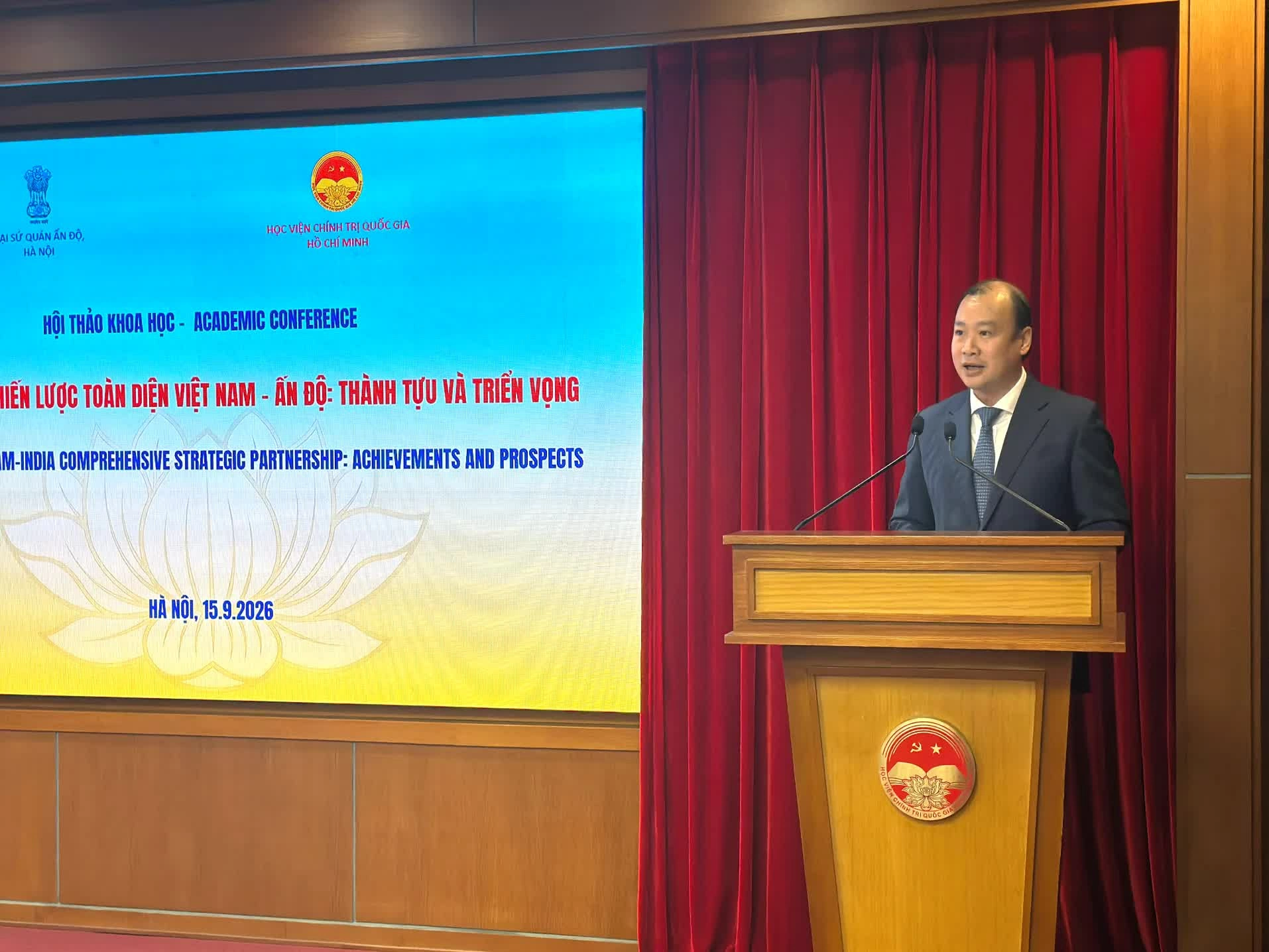 |
| Associate Professor Dr. Le Hai Binh, Member of the Party Central Committee and Permanent Vice President of the Ho Chi Minh National Academy of Politics, delivers the opening speech at the seminar. (Photo: Trung Anh) |
From historical milestones associated with President Ho Chi Minh, Indian leader Mahatma Gandhi, and Prime Minister Jawaharlal Nehru, the relationship between the two countries has gradually been elevated, from establishing diplomatic relations in 1972 to a Strategic Partnership in 2007 and a Comprehensive Strategic Partnership in 2016.
According to Associate Professor Dr. Le Hai Binh, the continued upgrading of relations during the state visit of General Secretary and President To Lam to India in May 2026 demonstrates the increasing political trust, while opening up broader cooperation opportunities in various fields.
The Permanent Vice President of the Ho Chi Minh National Academy of Politics affirmed that one of the notable transformations in Vietnam-India relations recently is the qualitative change, which is increasingly evident in the fields of economy, culture, society, and people-to-people exchanges.
However, he also noted that the gap between political, strategic levels and the capacity to realize cooperation needs to be narrowed, especially in the fields of economy, technology, innovation, logistics, payment, and market information connectivity.
In the rapidly changing regional and international context, Associate Professor Dr. Le Hai Binh emphasised that Vietnam-India relations need to shift from expanding scope to enhancing quality, from commitments to results, and from exploiting potential to co-creating new capacities and development spaces.
Accordingly, the seminar should focus on clarifying the content of the Comprehensive Strategic Partnership, establishing a long-term vision in the evolving regional structure, and seeking breakthroughs in economics, science and technology, and connectivity.
Additionally, strengthening the foundation of knowledge, culture, and society, enhancing scholar exchanges, training human resources, and building effective implementation mechanisms will contribute to transforming trust into shared interests, turning potential into cooperative capacity, and translating strategic commitments into concrete, impactful results.
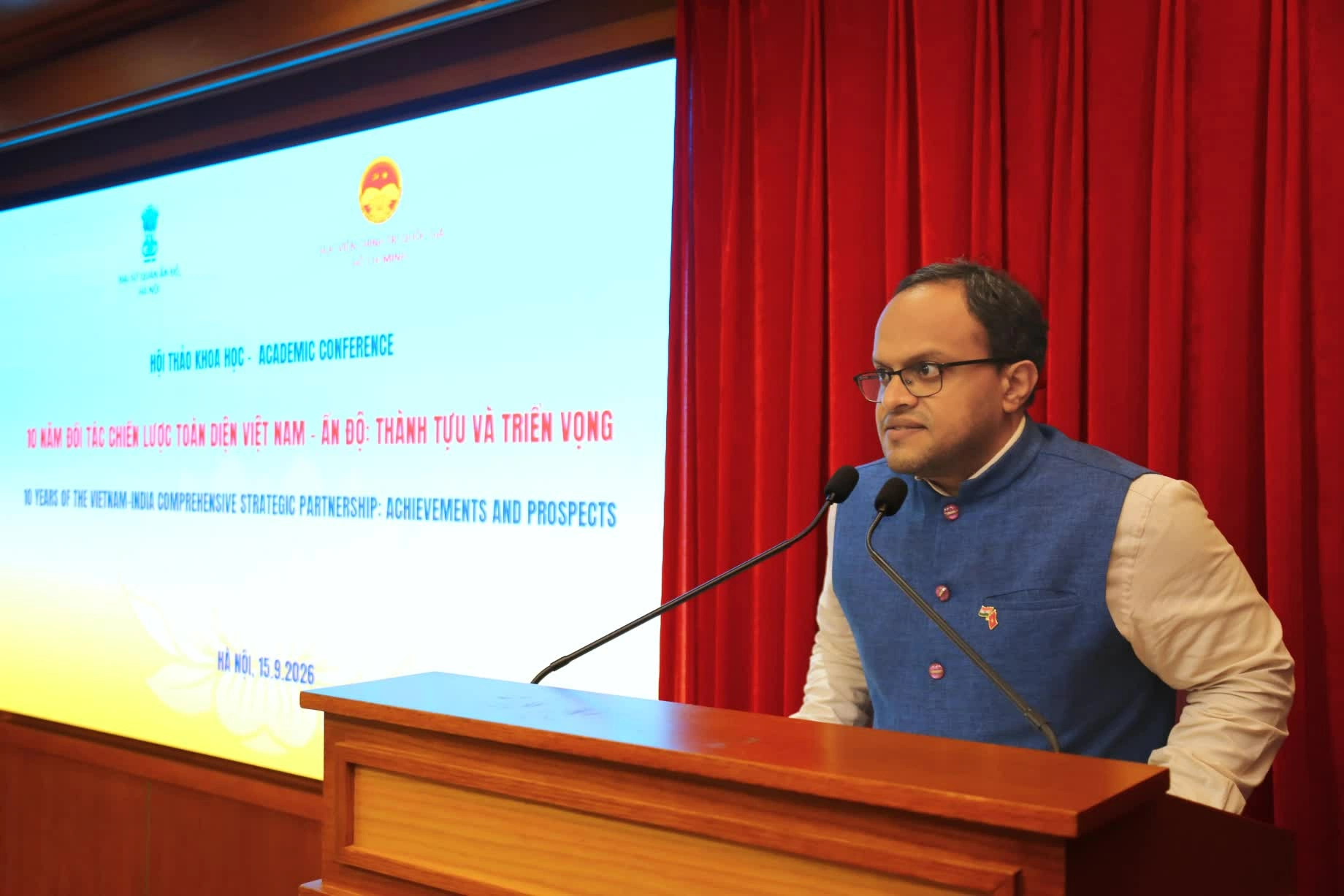 |
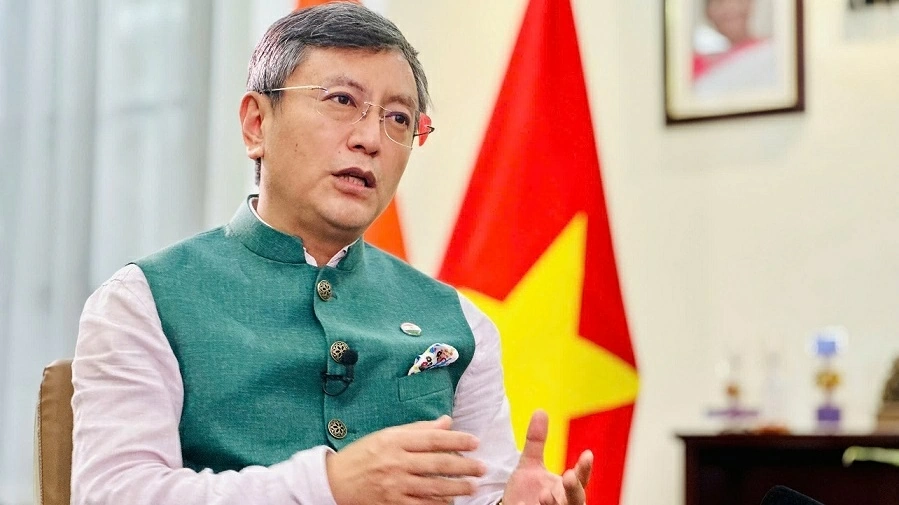
| Deputy Chief of Mission of India to Vietnam Bastian Nonginiyil Chacko affirmed that concrete results in trade, development cooperation, defense-security, and people-to-people exchanges are adding momentum to the bilateral relationship. (Photo: Trung Anh) |
At the seminar, Deputy Chief of Mission of India to Vietnam Bastian Nonginiyil Chacko emphasised that over more than half a century, the Vietnam-India relationship has become one of the stable and close relationships in the Indo-Pacific region.
According to Mr. Nonginiyil Chacko, the state visit to India by General Secretary and President To Lam in May 2026 marked a new development as the two countries upgraded their relationship to an Enhanced Comprehensive Strategic Partnership, building on the Comprehensive Strategic Partnership established in 2016, the Joint Vision for Peace, Prosperity, and People in 2020, and the Action Plan for 2024-2028.
Praising the outstanding results of the bilateral relationship, the Deputy Chief of Mission of India to Vietnam noted that two-way trade exceeded 18 billion USD in the fiscal year 2025-2026, an increase of nearly 16% compared to the previous year, with diverse groups of goods and products from seafood, coffee to electronics, machinery, and manufactured goods.
The two countries aim to raise trade turnover to 25 billion USD by 2030, while promoting more favorable trade mechanisms.
Additionally, the two countries maintain development cooperation programs, human resource training, heritage conservation, and humanitarian support, thereby contributing to enhancing connectivity and strengthening bilateral cooperation capacity.
Defense and security relations are also being strengthened through maritime capacity-building cooperation, defense credit lines, the transfer of the missile corvette INS Kirpan, and joint training activities between the forces of the two countries.
According to the Deputy Chief of Mission of India, the depth of the Vietnam-India relationship is also reflected in people-to-people exchanges and the increasingly close connections between the two societies.
In 2025, the Buddha's relics were brought and enshrined in nine provinces and cities of Vietnam, attracting over 15 million Buddhists and people to pay homage. Along with that, Yoga is becoming increasingly popular in Vietnam, with hundreds of clubs maintained across the country.
In the field of people-to-people exchanges, nearly 90 flights per week connect the cities of the two countries, facilitating travel and enhancing direct contact. The community of about 8,000 Indians living in Vietnam also serves as an important bridge, contributing to deepening the relationship between the two nations.
Deputy Chief of Mission Bastian Nonginiyil Chacko stressed that Vietnam and India are two ancient civilizations and developing countries with a confident vision for the future, sharing a perspective on a free, open Indo-Pacific region that respects international law.
Positioning the strategic stature of Vietnam-India
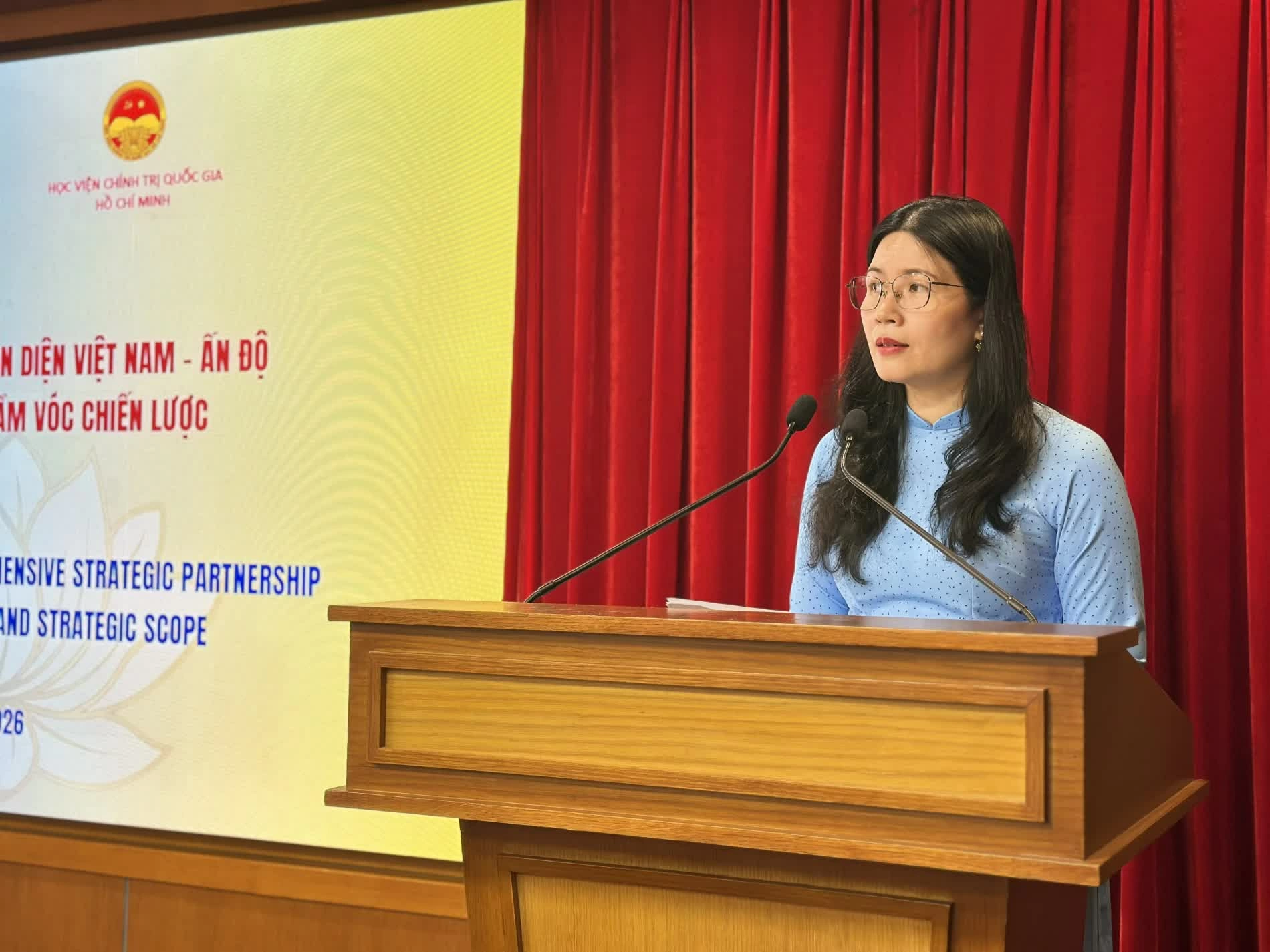 |
| Dr. Bui Viet Huong noted that the challenge of the new phase lies in the ability to bridge three gaps. (Photo: Trung Anh) |
Also within the framework of the seminar, Dr. Bui Viet Huong, Deputy Director of the Institute of Politics and International Relations, Director of the India Research Center, stated that after 10 years of the Comprehensive Strategic Partnership, the Vietnam-India relationship has shifted from a foundation of historical friendship to a level of increasingly clear convergence of interests.
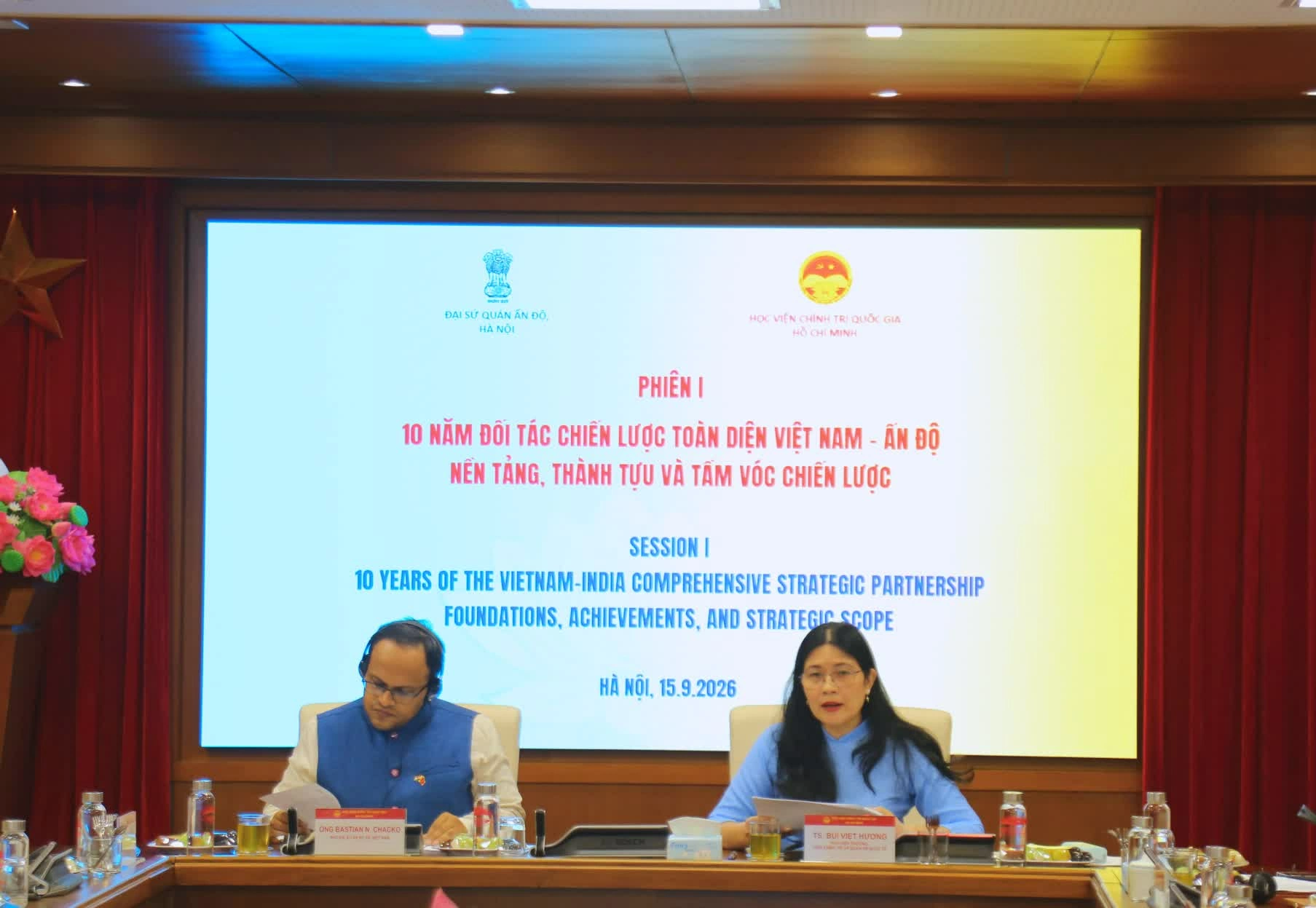 |
| Dr. Bui Viet Huong and Deputy Chief of Mission of India to Vietnam Bastian Nonginiyil Chacko co-chaired the first discussion session of the seminar. (Photo: Trung Anh) |
According to her, “strategic convergence” does not mean policy uniformity or alliance, but rather reflects an increasing overlap in perceptions, long-term interests, and action orientations, while both countries maintain autonomy in policy-making.
From there, Dr. Bui Viet Huong noted that the challenge of the new phase lies in the ability to bridge three gaps (1) between political-strategic levels and economic foundations, (2) between commitments and implementation capacity, (3) between intergovernmental cooperation and business, local, and knowledge ecosystem connections.
She proposed shifting the focus from expanding the cooperation portfolio to creating development capacity, where the effectiveness of the relationship should be measured by the ability to create additional capacity in technology, supply chains, human resources, resilience, and autonomous space for each country.
According to Dr. Bui Viet Huong, technology cooperation in the new phase should shift from exchange and reception to a model of “co-research, co-development, co-production, co-market access,” thereby forming new capacities and values in both countries.
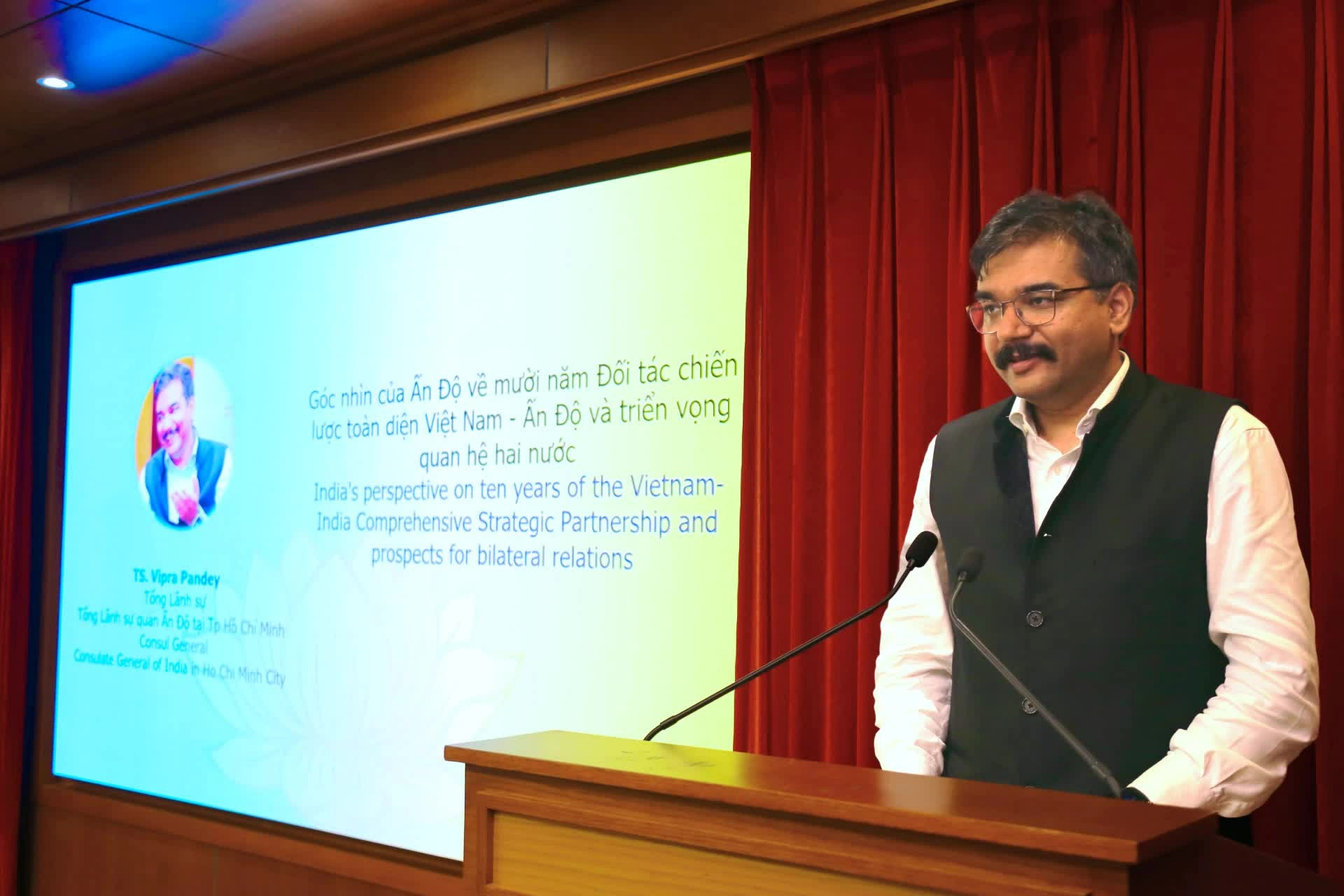 |
| Dr. Vipra Pandey, Consul General of India in Ho Chi Minh City, shares perspectives from India. (Photo: Trung Anh) |
From an Indian perspective, Dr. Vipra Pandey, Consul General of India in Ho Chi Minh City, assessed that Vietnam holds a special position in the “Act East” Policy, MAHASAGAR Vision, and New Delhi's Indo-Pacific orientation, and is one of India's important partners in ASEAN.
According to Dr. Vipra Pandey, the similarity in approaches to international issues provides a foundation for the two countries to coordinate in promoting multilateralism, respecting international law, and amplifying the voices of developing countries.
In the context of the shifting international order, India and Vietnam can play a more proactive role in shaping the regional environment rather than merely adapting to external changes.
Dr. Vipra Pandey also emphasized the potential for cooperation between the two countries within frameworks for Southern Hemisphere countries, especially after Vietnam joined BRICS as a partner country in 2025 and India assumed the role of BRICS Chair in 2026.
The Consul General of India in Ho Chi Minh City affirmed that this is a space for the two sides to exchange experiences and coordinate on development issues, resilience, innovation, and sustainable development.
In the long term, Dr. Vipra Pandey suggested that the relationship between the two countries should be nurtured based on policy autonomy, mutual respect for each other's interests, and towards common goals, thereby creating additional momentum for the Enhanced Comprehensive Strategic Partnership to play its role in the evolving regional structure.
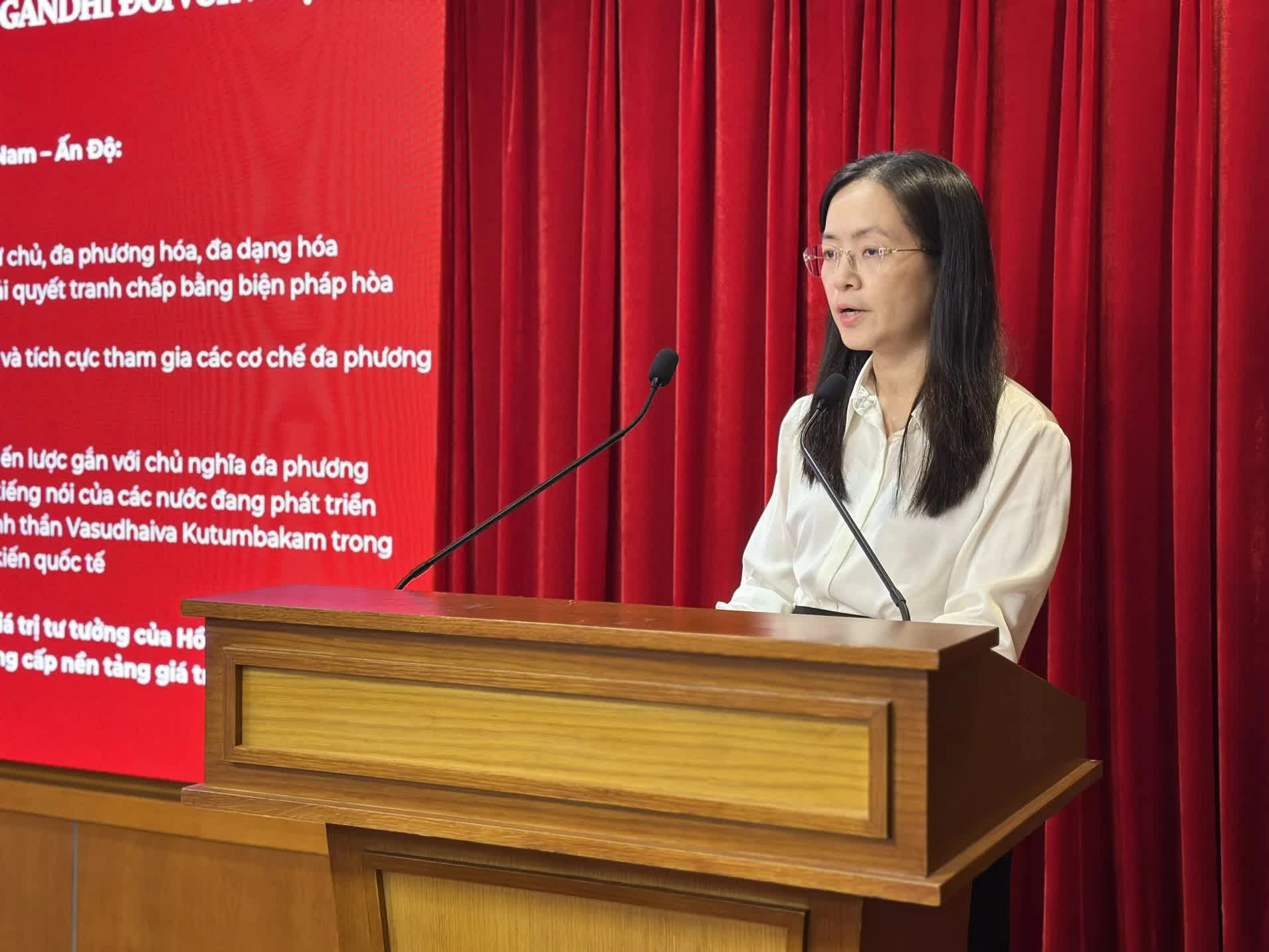 |
| Dr. Kieu Thanh Nga emphasized that effective diplomacy needs to uphold principles while avoiding rigidity, protecting national interests alongside expanding dialogue and seeking common ground. (Photo: Trung Anh) |
Dr. Kieu Thanh Nga, Deputy Director of the Institute for South Asian, West Asian, and African Studies, Editor-in-Chief of Asia-Africa Studies Journal, Vietnam Academy of Social Sciences, stated that the thoughts of Ho Chi Minh and Mahatma Gandhi still hold deep reference value for modern diplomacy, especially in handling disagreements and building relationships between nations.
If Ho Chi Minh's thought is notable for combining steadfastness in independence, sovereignty, and national interests with strategic flexibility, Gandhi emphasized the power of truth, non-violence, and the ability to transform opponents through dialogue and persuasion.
The meeting point between the two thoughts lies in the notion of considering peace, human dignity, and national interests as values that need to be placed in a harmonious relationship.
From these values, Dr. Kieu Thanh Nga emphasised that effective diplomacy needs to uphold principles while avoiding rigidity, protecting national interests alongside expanding dialogue and seeking common ground.
In particular, the thoughts on moral strength, tolerance, and community responsibility of leader Mahatma Gandhi, combined with Ho Chi Minh's perspective on independence, autonomy, and “unchanging to respond to changes,” can suggest a more humane approach to international issues.
For Vietnam-India relations, the similarities in ideological values create a spiritual foundation capable of supporting strategic interests, while opening up space for the two countries to share experiences and coordinate on common issues.
The seminar included three main discussion sessions, focusing on evaluating the 10-year journey of the Comprehensive Strategic Partnership between Vietnam and India, highlighting achievements in various fields of cooperation, and exploring new prospects and motivations in the bilateral relationship.
In an open exchange atmosphere, delegates actively discussed, shared perspectives, and proposed directions to make Vietnam-India relations increasingly substantive, effective, and sustainable.
Some other images from the seminar:
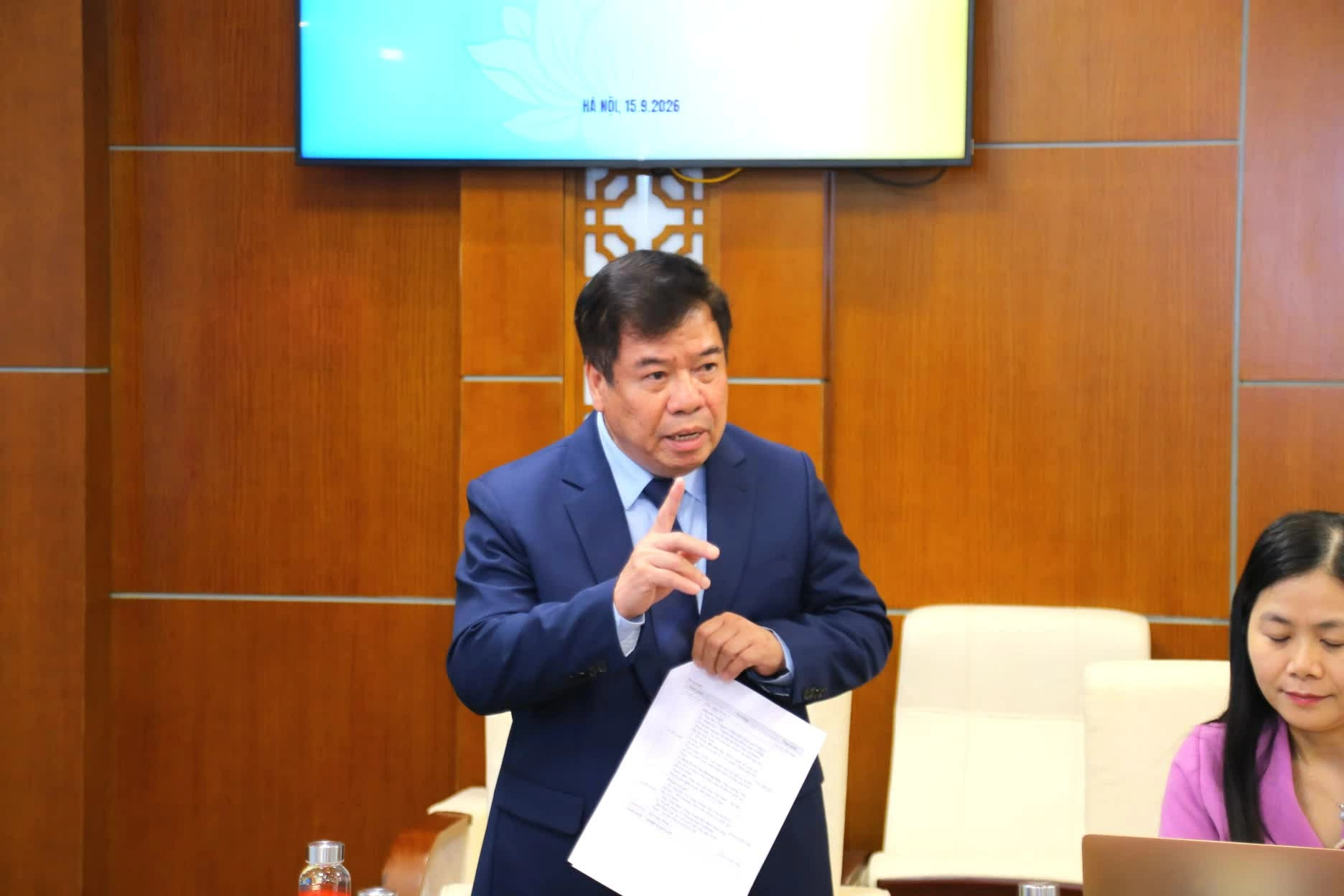 |
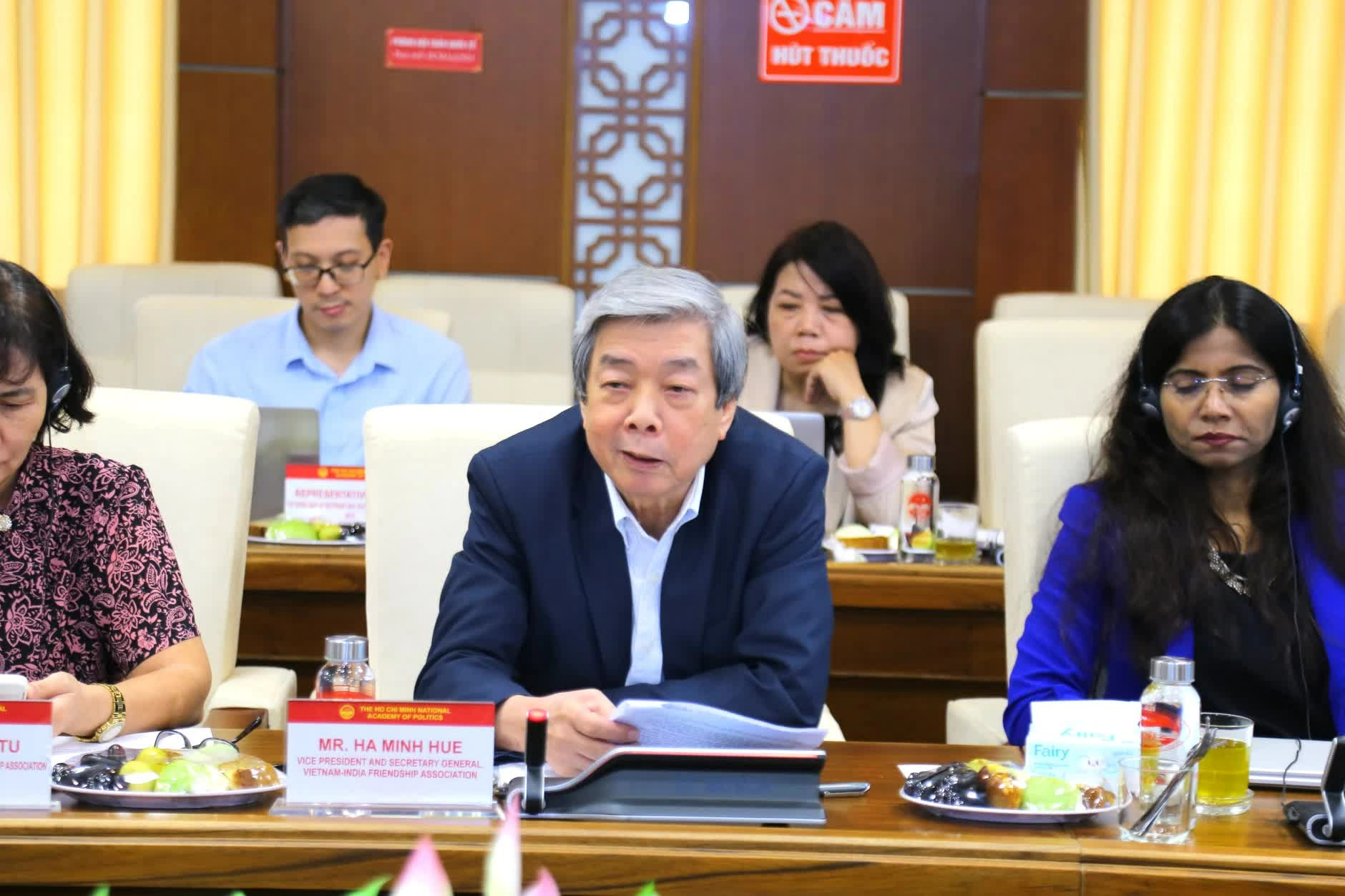 |
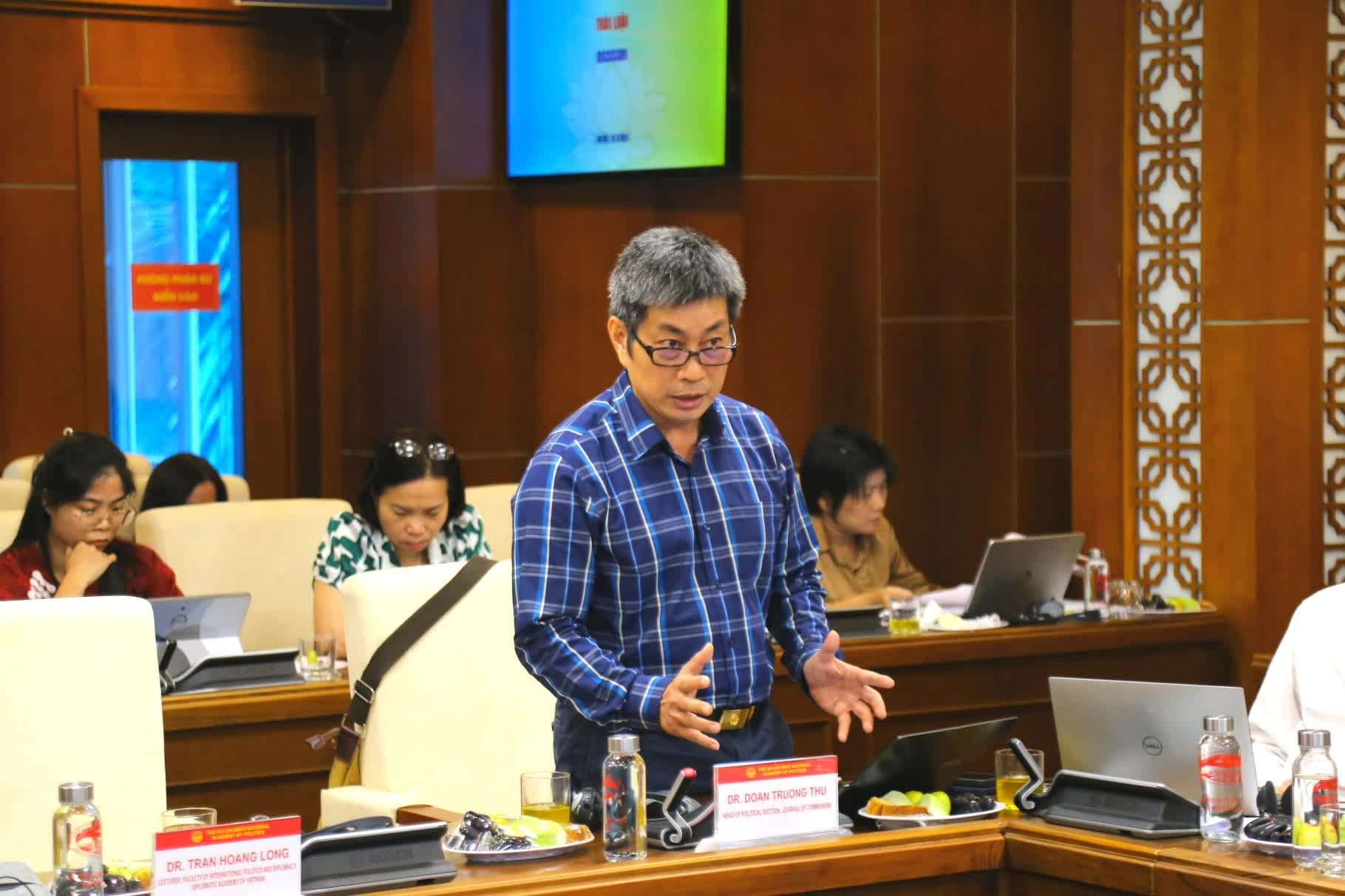 |