


General Secretary, President To Lam's visits elevate ties with Denmark, EU and Belgium: FM Le Hoai Trung
WVR - The World and Vietnam Report is pleased to introduce the interview with Politburo Member and Minister of Foreign Affairs Le Hoai Trung regarding the outcomes of the state visit to the Kingdom of Denmark, official visit to the European Union (EU), and the Kingdom of Belgium by General Secretary, President To Lam.
Latest
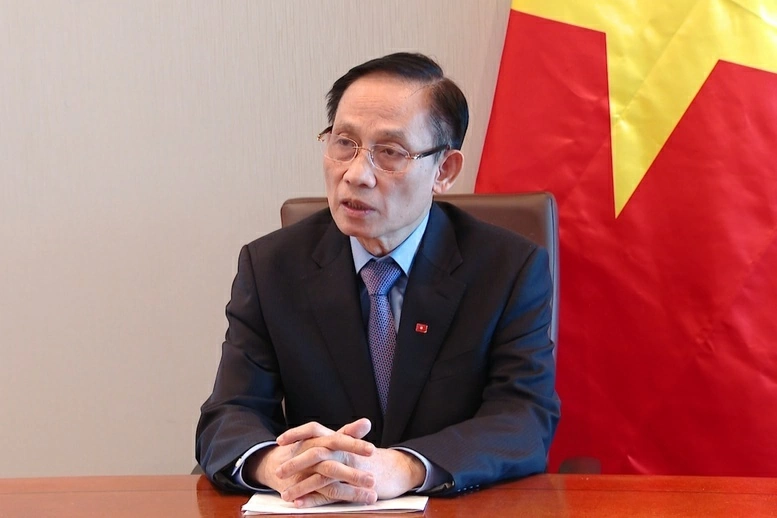 |
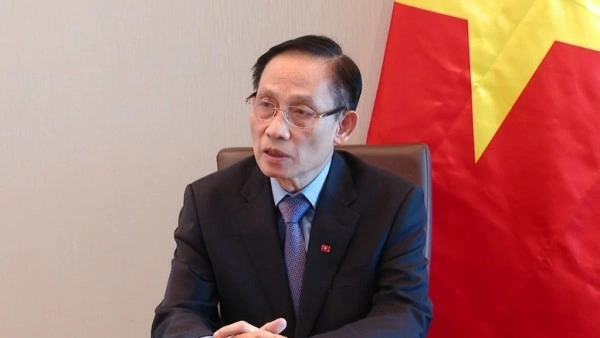
| Minister of Foreign Affairs Le Hoai Trung discusses the outcomes of General Secretary, President To Lam's visit to Denmark, the European Union (EU), and Belgium. (Source: Ministry of Foreign Affairs) |
Foreign Minister Le Hoai Trung has described the visits to Denmark, the EU and Belgium by General Secretary, President To Lam as a success that has elevated Vietnam’s relations with the three partners across the board, opening new opportunities for substantive cooperation in support of Vietnam’s rapid and sustainable development.
Minister, could you please share the significant and notable outcomes achieved during the state visit to the Kingdom of Denmark, the official visit to the European Union, and the Kingdom of Belgium by General Secretary, President To Lam?
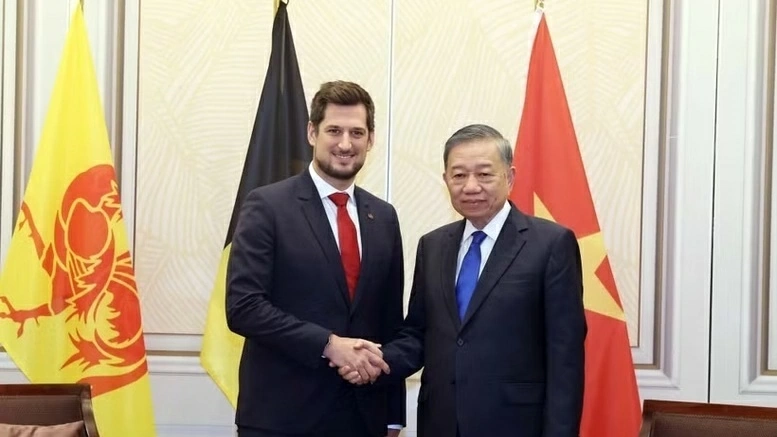
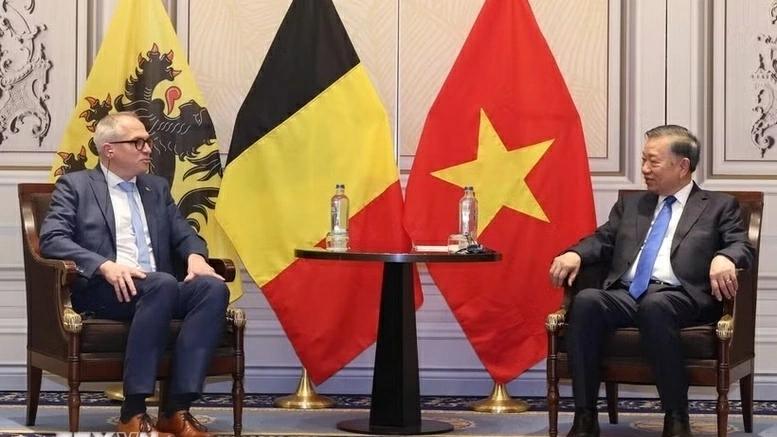
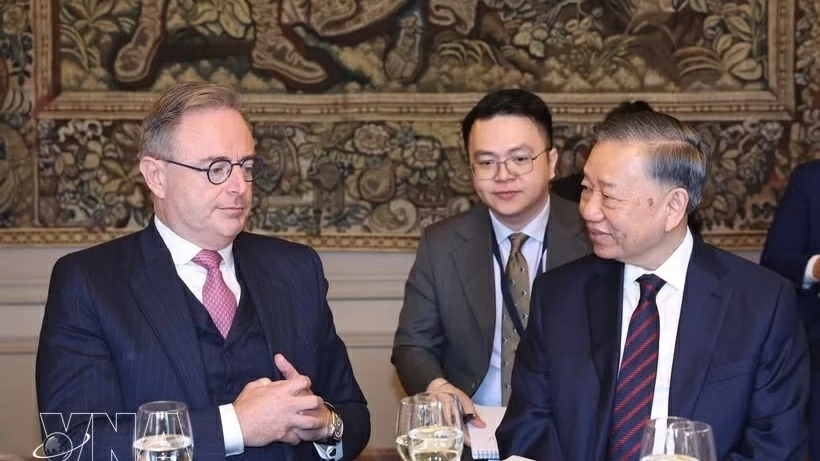
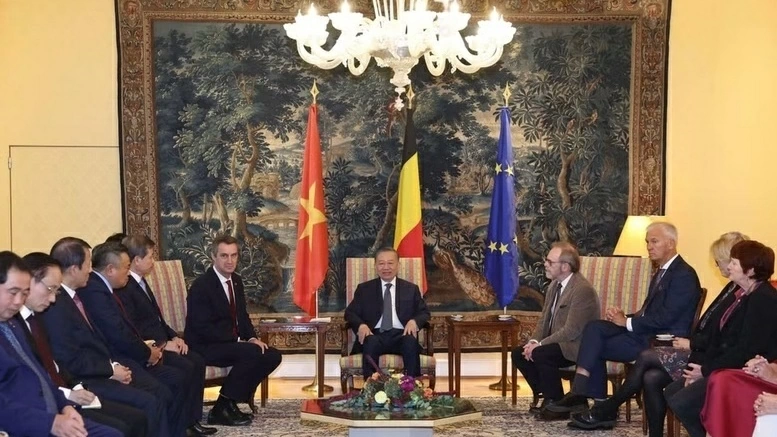
At the invitation of King Frederik X of Denmark, President of the European Council António Costa, and Prime Minister of Belgium Bart De Wever, General Secretary, President To Lam, along with his spouse and a high-ranking Vietnamese delegation, conducted a state visit to the Kingdom of Denmark and an official visit to the European Union (EU) and the Kingdom of Belgium from October 19-24, 2026.
This marks the first state visit to the Kingdom of Denmark by the General Secretary of the Communist Party of Vietnam and the first official visit to the European Union (EU) and the Kingdom of Belgium by General Secretary, President To Lam following Vietnam's successful 14th Party Congress and the 16th National Assembly elections.
The visits hold a great significance, reflecting Vietnam’s high regard for its European partners as well as their respect for Vietnam. They also help consolidate Vietnam’s foreign relations, expand its network of trusted partners, and strengthen the country’s ties with Europe at both bilateral and regional levels.
The visit was highly successful, achieving numerous substantive and practical outcomes, elevating the comprehensive relationship between Vietnam and its partners based on strong political committment and shared strategic orientations. Leaders of the countries extended a warm, special, and exceptionally high-level reception to General Secretary, President To Lam, his spouse, and the high-ranking Vietnamese delegation, particularly in Denmark.
Denmark regards Vietnam as a leading partner and a strategic gateway to Southeast Asia. The visits reaffirmed Vietnam’s position as a key partner of Denmark in green and sustainable development, particularly in green and smart seaports, renewable energy and efforts to strengthen self-reliance and create new drivers of growth amid profound global changes.
The visit marked a historic milestone in the countries’ traditional friendship. Denmark has consistently supported Vietnam’s struggle for national independence and reunification, post-war reconstruction and development during the Doi Moi (renewal) process. At high-level meetings and exchanges, leaders highlighted the strong foundation of friendship built over 55 years and the longstanding ties between the Danish Royal Family and Vietnam.
The Danish side applauded Vietnam’s development achievements as well as the vision and orientations of its leaders, particularly General Secretary and President Lam. It also expressed optimism about future cooperation, highlighting the top Vietnamese leader’s assessments and proposals at both bilateral and multilateral levels.
A landmark outcome was the agreement to upgrade bilateral ties to a Comprehensive Strategic Partnership, making Denmark the second EU member state to establish this level of partnership with Vietnam. The new framework is expected to lift cooperation in politics, external affairs, economy, science and technology, and education and training to a new level. Both sides identified economic, trade and investment cooperation as a key pillar, while prioritising renewable energy, offshore wind power, green transition, seaports, logistics and green maritime transport.
With the European Union, the extensive discussions between General Secretary, President To Lam and both the President of the European Council and the President of the European Commission, along with recent visits by Vietnamese leaders to Europe, have strengthened mutual understanding and political trust, while creating new frameworks for cooperation. These engagements also supported Vietnam’s policy of multilateralisation and diversification of external relations and helped consolidate a favourable external environment.
Notably, cooperation is expanding beyond trade, investment attraction, or simple technology transfer, towards connecting research institutions, universities and businesses, jointly researching, developing and applying technology, co-creating products and engaging more deeply in value and supply chains. This is a necessary direction for Vietnam to better leverage European knowledge, technology, and innovation capabilities, while gradually enhancing the country's self-reliance and economic competitiveness.
During the visit, the two sides discussed science and technology, innovation, critical raw materials, strategic infrastructure, the circular economy and marine economy. They also sought to make better use of cooperation mechanisms, including Global Gateway, the Just Energy Transition Partnership (JETP) and Horizon Europe. The two sides agreed to strengthen strategic dialogue and expand cooperation into new areas, including defence and security, maritime security and responses to non-traditional security challenges.
With Belgium, the Federal Belgian Parliament's vote to ratify the Vietnam-EU Investment Protection Agreement (EVIPA) just before the official activities of the visit is a positive signal, reflecting Belgium's goodwill and regard for its relationship with Vietnam.
During the visit to Belgium,senior leaders of the two countries agreed on a vision to elevate relations to a Strategic Partnership, in line with the increasingly broad scope of cooperation, extending beyond the existing sectoral Strategic Partnership in agriculture. The visit opened new cooperation directions, aligning with Vietnam's development needs and Belgium's strengths, aiming at flagship projects in port infrastructure, logistics, clean energy, science and technology, and high-quality human resource training.
One of the highlights of the visit was that exchanges took place not only at the federal level but also with regions and localities in Belgium, creating broader and deeper bilateral cooperation.
A prominent highlight is that leaders and business communities from the three partners highly valued Vietnam’s development policies, particularly the Government’s efforts to improve institutions in coordination with the National Assembly, develop infrastructure and enhance workforce quality. They also expressed a desire for Vietnam to continue building a more stable, transparent, consistent and predictable legal and policy environment to facilitate long-term cooperation and investment.
The visit also holds profound significance for the work concerning overseas Vietnamese. General Secretary, President To Lam met with representatives of the Vietnamese community in Nordic countries and Europe; notably, the meeting in Belgium included representatives from the Vietnamese community in 10 European countries. This was an opportunity for Party and State leaders to inform about the country's situation, listen to the community's sentiments and aspirations, and encourage the community to continue integrating and contributing positively to the host country while staying connected to their homeland. European partners also highly appreciated the contributions of the Vietnamese community in their countries.
Another noteworthy outcome is that the visit created additional conditions to mobilize resources for Vietnam's socio-economic development. Through economic and trade forums and business interactions, many European corporations and enterprises introduced plans and projects expected to be implemented in Vietnam, with a total preliminary exchange value of approximately 20 billion EUR (over 22.4 billion USD) . Additionally, various documents and cooperation agreements were signed between ministries, sectors, localities, and businesses, contributing to concretizing cooperation prospects in the coming period.
Furthermore, Vietnam and its partners agreed to make more effective use of the EU-Vietnam Free Trade Agreement (EVFTA), promote trade and investment, and address outstanding obstacles. Vietnam called on the remaining EU member states to ratify EVIPA and urged the EU to lift its “yellow card” warning on Vietnamese seafood over illegal, unreported and unregulated (IUU) fishing. At the multilateral level, the sides reaffirmed their commitment to multilateralism, the UN Charter, international law and the peaceful settlement of disputes. They also agreed to strengthen coordination at multilateral forums, promote ASEAN-EU relations and contribute to peace, stability and sustainable development in their respective regions and worldwide.
Minister, based on the outcomes achieved during the visit, what tasks should Vietnam and its partners focus on implementing to bring high-level agreements into practice?
The outstanding success of General Secretary, President To Lam's visit to European partners has not only established or oriented new developments in political relations but also laid the foundation for promoting substantive cooperation with partners.
The visit's outcomes also open up broader cooperation spaces between Vietnam and Denmark, the EU, and Belgium, serving the country's rapid and sustainable development goals. The most important issue in the coming period is to transform common perceptions, commitments, and high-level agreements into specific programs, projects, and products.
Firstly, promptly concretize the visit's outcomes into action plans with clear tasks, timelines, focal points, responsibilities, and results. Vietnamese ministries, agencies, and localities will closely coordinate with partners to develop action plans to implement the cooperation framework, clearly identifying the lead agency, partners, resources, timelines, and expected outcomes while actively considering and addressing specific proposals from countries regarding Vietnam.
Secondly, effectively utilize existing cooperation mechanisms, better leverage the Vietnam-EU Free Trade Agreement (EVFTA), promote the EVIPA ratification process, enhance the capacity to meet EU market standards on environment, sustainable development, traceability, and social responsibility; create conditions for businesses to engage more deeply in value chains and supply chains.
Thirdly, prioritize strategic, feasible programs and projects that yield specific results. With Denmark, focus on cooperation in energy transition, offshore wind power, green port infrastructure, and logistics. With the EU, proactively propose projects within the Global Gateway, JETP, Horizon Europe frameworks, and strategic technology fields. With Belgium, promote projects in port infrastructure, logistics, clean energy, science and technology, and high-quality human resource training.
Fourthly, leverage the roles of ministries, sectors, localities, businesses, universities, and research institutes in actively seeking, proposing, and implementing cooperation. It is necessary to connect research with businesses and the market, transitioning from technology reception to collaborative research, production, and product development, thereby gradually enhancing Vietnam's technological mastery.
I strongly believe that, with the political determination of the leaders of all parties, along with the proactive, creative, and substantive approach of ministries, sectors, localities, businesses, and research institutions, Vietnam's relations with Denmark, the EU, and Belgium will continue to develop deeply and effectively, for the benefit of the people of each side, contributing positively to peace, stability, cooperation, and development in the region and the world.