

Ambassador Nguyen Van Hai: A new beginning for Vietnam - Panama relations
WVR - On the occasion of President of Panama José Raúl Mulino and his spouse's official visit to Vietnam (October 5-8), Vietnamese Ambassador to Mexico, concurrently accredited to Panama, Nguyen Van Hai shared with The World &Vietnam Report the significance of the visit as well as the key areas of cooperation between the two countries in the near future, both bilaterally and multilaterally.
Latest
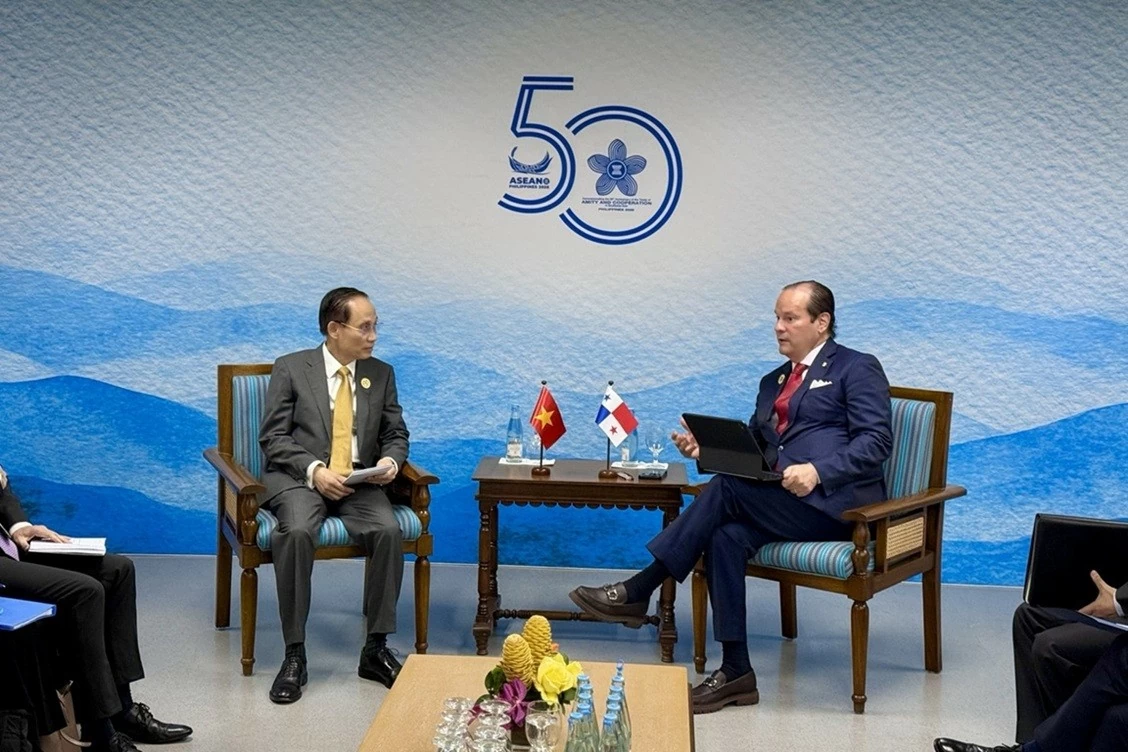 |
| Politburo Member, Minister of Foreign Affairs Le Hoai Trung meets Panama's Minister of Foreign Affairs Javier Eduardo Martínez-Acha Vásquez, on the occasion of the 59th ASEAN Foreign Ministers' Meeting and related conferences on July 24, 2026. (Photo: Bao Chi) |
Ambassador, could you share the significance and key focuses of President of Panama José Raúl Mulino and his spouse's visit to Vietnam at this time? What are your expectations for this visit?
The official visit of President of Panama José Raúl Mulino and his spouse to Vietnam holds significant importance for Vietnam - Panama relations. This is the first high-level visit between the two countries in nearly 15 years, since President of Panama Ricardo Martinelli's visit to Vietnam in 2012, and takes place just one year after the two countries celebrated the 50th anniversary of diplomatic relations (1975-2025). President José Raúl Mulino's visit to Vietnam at this time demonstrates Panama's high regard for its relationship with Vietnam and opens an important opportunity for both sides to advance bilateral relations into a new phase of development.
Notably, this visit has been actively and meticulously prepared by both sides. Prior to the visit, the two sides successfully organized a meeting between the Foreign Ministers of Vietnam and Panama on the sidelines of the 59th ASEAN Foreign Ministers' Meeting and related conferences in the Philippines on July 24, followed by the second Political Consultation in Vietnam at the end of July.
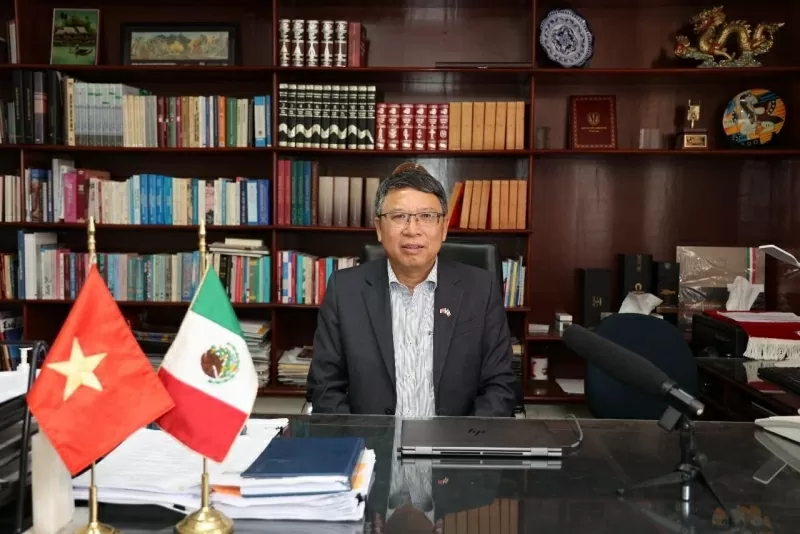 |
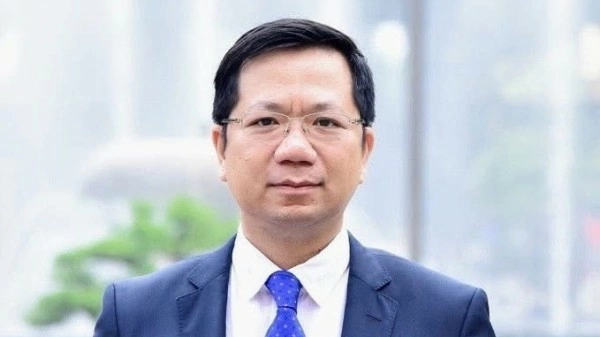
| Vietnamese Ambassador to Mexico, concurrently accredited to Panama, Nguyen Van Hai. (Source: Vietnamese Embassy in Mexico) |
I expect the visit to create new developments in three main aspects:
Firstly, it will further consolidate political trust and mutual understanding, providing the highest level of motivation to transform the potentials and orientations agreed upon by both sides into specific programs, action plans, projects, and tangible results.
Secondly, it will enhance cooperation in economics, trade, and investment across various fields such as agriculture, banking, telecommunications, infrastructure, maritime transport, education and training, as well as cooperation in other potential areas.
Thirdly, the cooperation agreements expected to be signed during the visit will provide a solid legal foundation for the bilateral relationship to deepen and develop further.
It is crucial that after the visit, the commitments and orientations of the two countries' leaders are quickly translated into concrete actions and results. The relevant agencies of both sides need to promptly implement and materialize the agreements and initiatives agreed upon by the high-level leaders of the two countries; at the same time, continue to effectively utilize existing cooperation mechanisms such as the Political Consultation between the two Foreign Ministries and the Joint Committee on Economic, Trade, and Investment Cooperation. These are the foundations for the visit to not only hold political and symbolic significance but truly become the beginning of a new phase of deep, substantive, and effective cooperation between Vietnam and Panama.
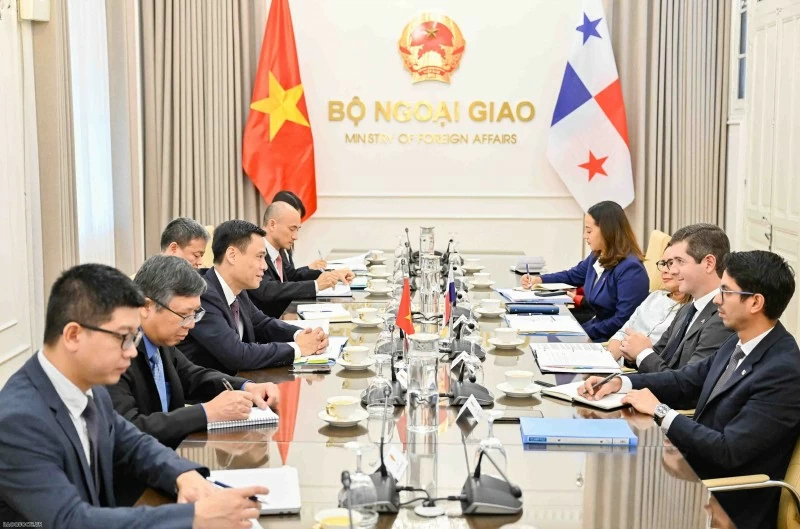 |
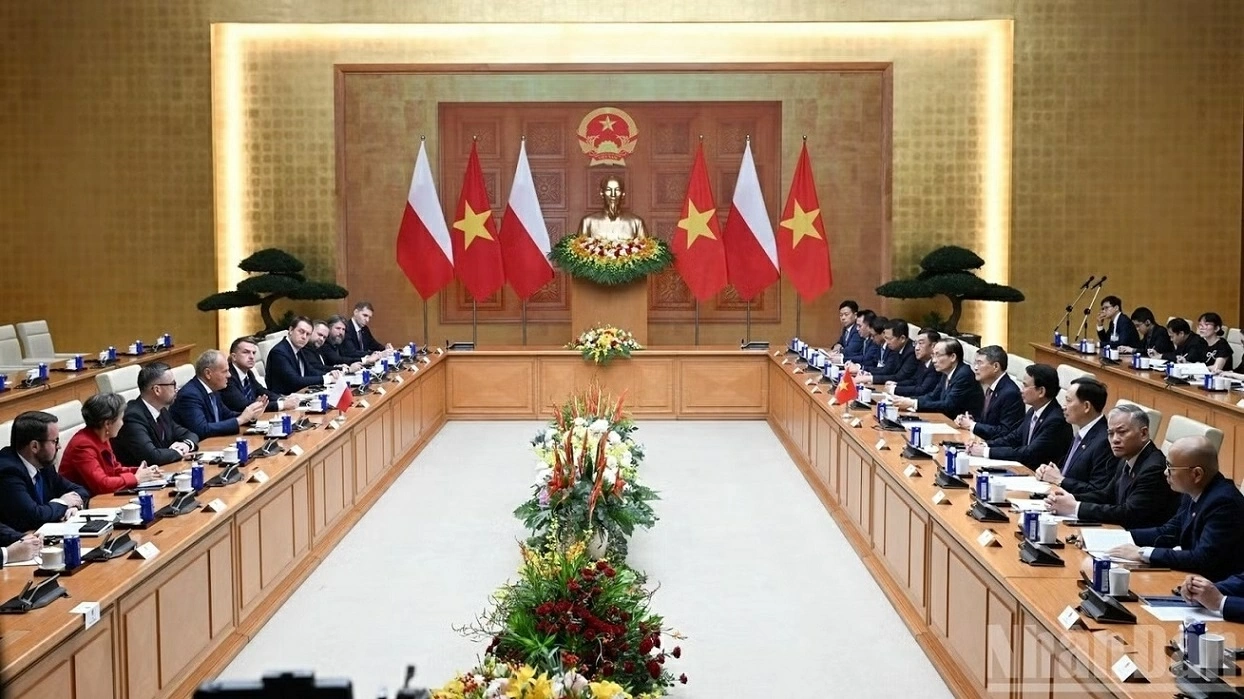
| Scene of the second Political Consultation between the Foreign Ministries of Vietnam and Panama on July 28, 2026. (Photo: Nguyen Hong) |
Despite the geographical distance, Panama can become a transshipment hub for Vietnamese goods in Latin America, while Vietnam can serve as a base for Panama to access ASEAN. To fully leverage this advantage, what key areas should both sides focus on in the near future, according to the Ambassador?
Enhancing economic and trade cooperation by leveraging complementary strengths and effectively utilizing each other's geographical positions is one of the pillars that will help Vietnam - Panama relations transition to substantive and mutually beneficial cooperation.
Vietnam has increasingly prominent production, processing, and export capabilities, with a highly open economy capable of connecting with the ASEAN region as well as the Asia-Pacific. Meanwhile, Panama has a unique geostrategic position, with a leading regional and global port system, the Panama Canal, logistics centers, and international trade services.
According to the Vietnam Customs Department, bilateral trade turnover in 2025 reached 478.1 million USD, an increase of 19.2% compared to 2024, with Vietnam exporting 462.6 million USD to Panama and importing USD 15.5 million USD.
However, bilateral trade accounts for less than 0.1% of Vietnam's total trade turnover and only about 3% of Panama's total trade turnover in 2025. These figures indicate that while bilateral trade has a certain foundation, there is still ample room for both sides to expand and diversify trade relations.
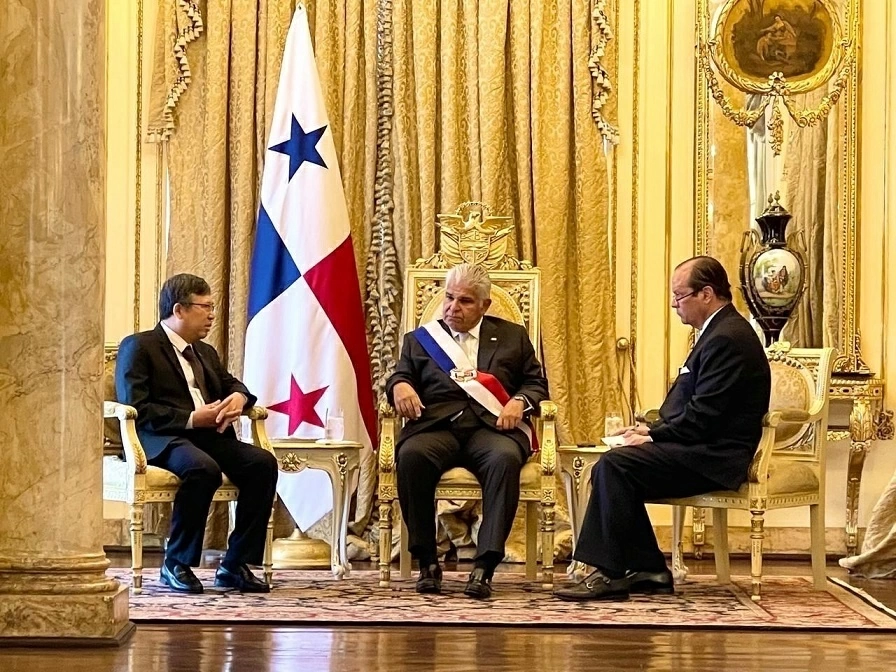 |
| Vietnamese Ambassador to Mexico, concurrently accredited to Panama, Nguyen Van Hai presents his Letter of Credence to President of Panama José Raúl Mulino Quintero. (Source: Vietnamese Embassy in Mexico) |
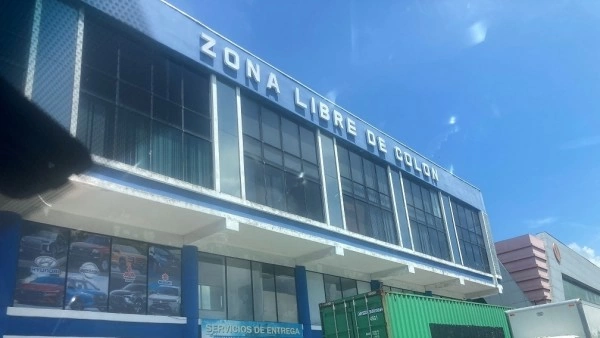
Notably, Panama is not only a potential market but can also become a “gateway,” a significant transshipment and distribution point for Vietnamese businesses when expanding into Latin America and the Caribbean. Panama has an advantage that few countries in the world possess: the Panama Canal connects with over 180 shipping routes, approximately 170 countries, and 1,900 seaports worldwide; the Colón Free Trade Zone is one of the leading free trade zones in Latin America, with a wide network of businesses and logistics, warehousing, and distribution activities.
Additionally, Panama is orienting itself to elevate its role from a traditional logistics center to a high-value “economic hub,” prioritizing attracting investment in finance and banking, services, science and technology, telecommunications, semiconductors, electric vehicles, medical equipment, pharmaceuticals, renewable energy, modern agriculture, and the digital economy. This opens up new cooperation opportunities for Vietnamese businesses, not only in goods trade but also in investment, production, and trade services.
To realize these potentials, both sides need to focus on a number of key areas:
First, strengthen direct connections between the business communities of both sides, transitioning from individual trade promotion activities to building a regular network of connections between industry associations, production, logistics, port, banking, agriculture, technology, and distribution enterprises of the two countries.
Secondly, thoroughly research the needs and regulations of each market, promote trade facilitation, customs, establish common standards, as well as form long-term distribution partnerships. Mechanisms such as the Joint Committee on Economic, Trade, and Investment should be more effectively utilized to identify specific business obstacles and propose solutions.
Thirdly, increase the organization of business forums, trade promotion and investment connection delegations, while exploring the possibility of establishing specific cooperation projects in logistics, maritime transport, agriculture, science and technology, telecommunications, electric vehicles, and high-value-added industries.
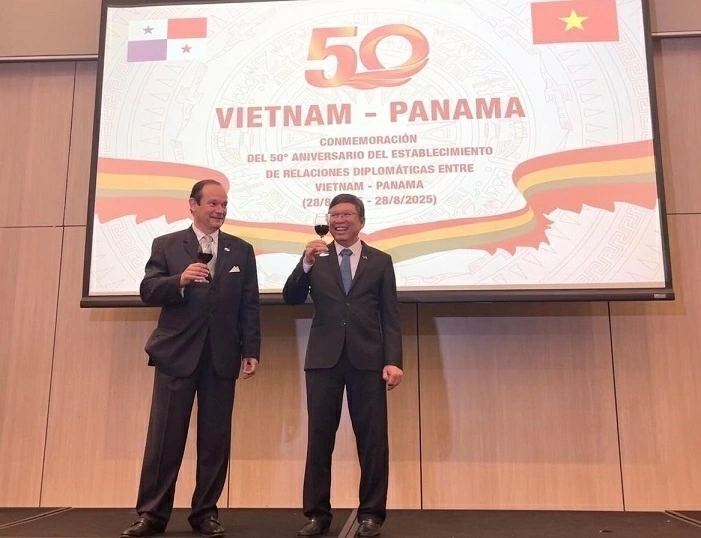 |
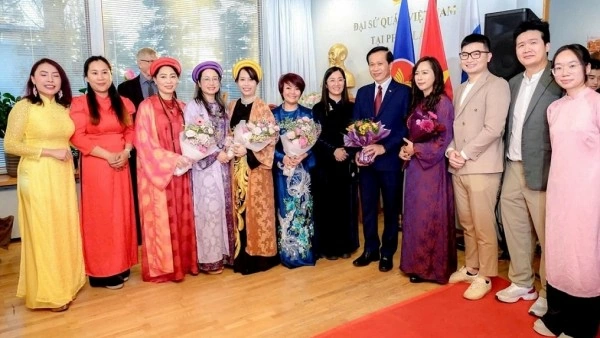
| Panama's Minister of Foreign Affairs Javier Martínez-Acha Vásquez and Vietnamese Ambassador to Mexico, concurrently accredited to Panama, Nguyen Van Hai at the 50th anniversary of Vietnam - Panama diplomatic relations, August 20, 2025. (Source: Vietnamese Embassy in Mexico) |
What is the Ambassador's assessment of the potential for cooperation between the two countries both in bilateral relations and coordination on the international stage?
The potential for cooperation between Vietnam and Panama is immense, both bilaterally and multilaterally. Over the past half-century, geographical distance has not hindered the two countries from maintaining a good friendship, gradually expanding cooperation in various fields, and closely coordinating and supporting each other at multilateral forums.
The two countries have reliable, stable political-diplomatic relations and share many common values such as respect for independence, sovereignty, and territorial integrity, upholding the United Nations Charter and international law, cherishing peace, freedom, social progress, and justice... These are important foundations for the two countries to continue deepening their relationship in the new phase.
At the bilateral level, besides trade and investment, the two countries have ample room for cooperation in agriculture, telecommunications, infrastructure, maritime transport, aviation, finance and banking, education and training, tourism, as well as new fields such as technology, digital transformation, renewable energy, electric vehicles, and sustainable development.
These are all areas identified by the Governments of Vietnam and Panama as priorities and areas they wish to promote cooperation. Notably, with their “gateway” positions in Southeast Asia and Latin America - the Caribbean, cooperation between the two countries has the potential to not only bring individual benefits to each side but also contribute to connecting these two large economic regions.
Another increasingly important area is enhancing exchanges between legislative bodies, localities, businesses, educational institutions, cultural-social organizations, and the people of the two countries, thereby creating a solid social foundation and mobilizing a wide range of stakeholders to directly participate in building and promoting bilateral relations.
In terms of multilateral cooperation, Vietnam and Panama share many similarities in valuing and protecting multilateralism and free trade, upholding international law, and promoting cooperation to address global issues. Panama highly values Vietnam as one of the first countries to sign the Protocol on the permanent neutralization of the Panama Canal in 1979; at the same time, it shares the viewpoint of supporting the resolution of disputes based on peaceful measures, respecting international law.
In the future, the two countries need to further enhance cooperation on issues of common interest such as responding to climate change, environmental protection, ensuring food security, sustainable development, strengthening cybersecurity, combating cybercrime, transnational crime, ensuring maritime security, safety, and freedom, as well as addressing challenges faced by developing countries.
Additionally, both sides should continue to enhance consultation, coordination, and mutual support at multilateral forums, especially at the United Nations; support and serve as a bridge for the two countries to expand cooperation with countries and multilateral organizations in each region, including ASEAN, APEC in the Asia-Pacific region, and organizations such as CELAC and SICA in the Latin America and Caribbean region. Notably, Panama joined the Treaty of Amity and Cooperation in Southeast Asia (TAC) in 2023, laying the foundation for Panama to strengthen its ties with ASEAN. Vietnam, as an active and proactive member in the region, can serve as an important bridge to promote this cooperative relationship.
Based on the foundation of 51 years of friendship, political trust, complementary strengths, and the determination of the high-level leaders of both countries, I believe that the official visit of President of Panama José Raúl Mulino and his spouse to Vietnam will provide important momentum for Vietnam – Panama relations to develop more deeply, substantively, and effectively in the coming years, bringing practical benefits to the people of both countries and contributing positively to peace, stability, cooperation, and common prosperity in both regions and the world.
Thank you very much, Ambassador!