



Ambassador Ha Hoang Hai: Polish Prime Minister Donald Tusk's visit to Vietnam to expand cooperation in a new phase
WVR - On the occasion of Polish Prime Minister Donald Tusk's official visit to Vietnam (October 24–26), Vietnamese Ambassador to Poland Ha Hoang Hai shared with The World&Vietnam Report the significance of the visit, developments in bilateral relations, and prospects for cooperation in various fields.
Latest
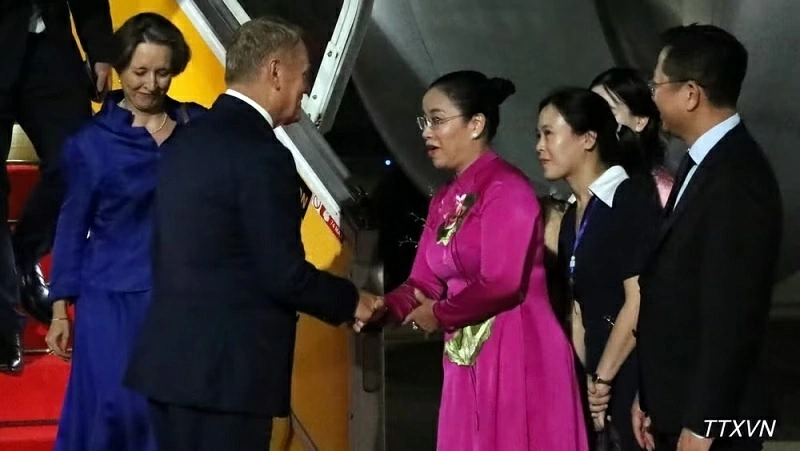 |
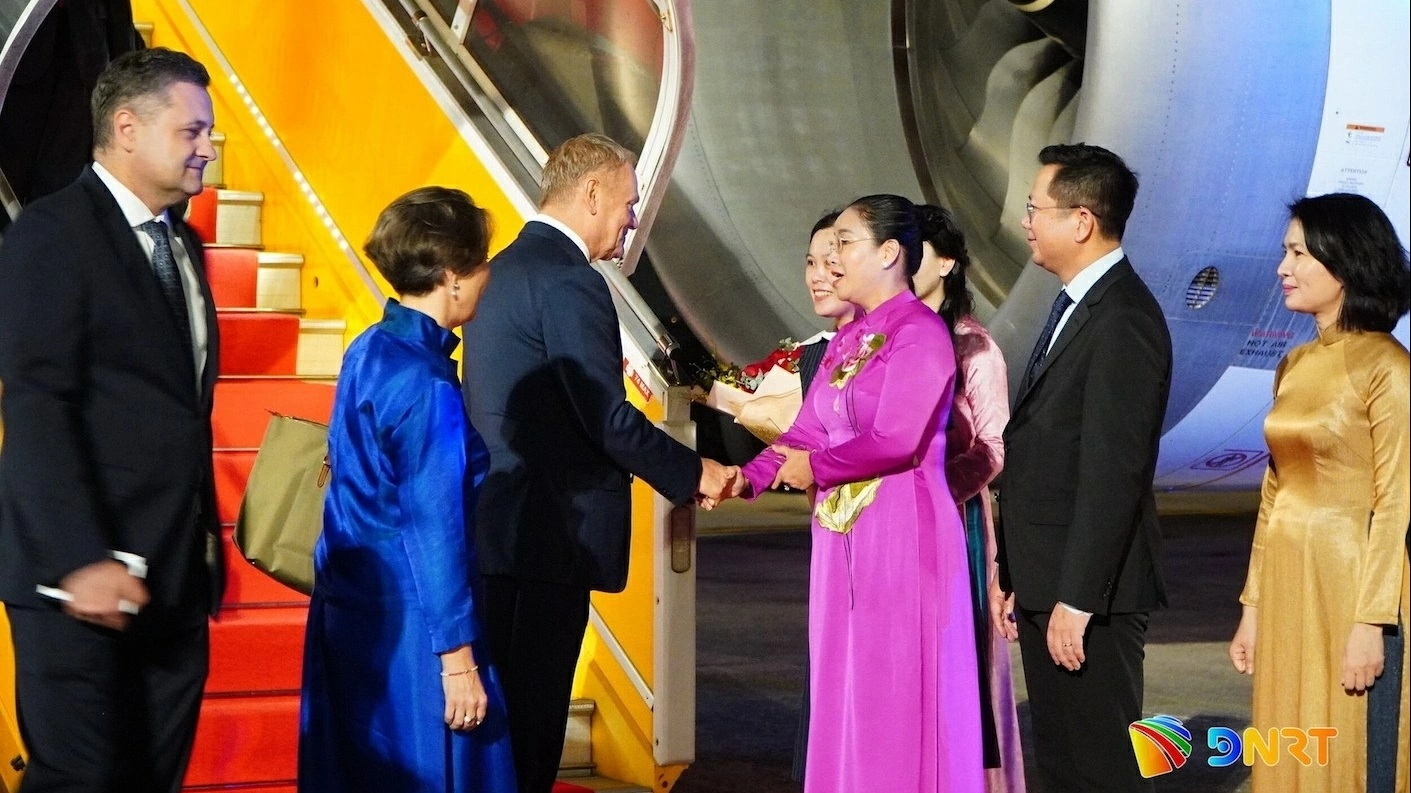
| Vice Chairman of the Da Nang City People's Committee Nguyen Thi Anh Thi welcomes Polish Prime Minister Donald Tusk at Da Nang International Airport on the evening of October 23. (Source: VNA) |
Ambassador, could you share the significance and key focuses of Polish Prime Minister Donald Tusk's visit to Vietnam this time?
Polish Prime Minister Donald Tusk's visit to Vietnam takes place in the context of the traditional friendship and multifaceted cooperation between Vietnam and Poland developing very positively, with many favorable conditions to elevate it to a new level after more than 75 years of diplomatic relations.
The visit holds significant political, diplomatic, and economic importance, reflecting the Polish government's regard for Vietnam – one of Poland's priority partners in the Indo-Pacific region and a leading important partner in ASEAN.
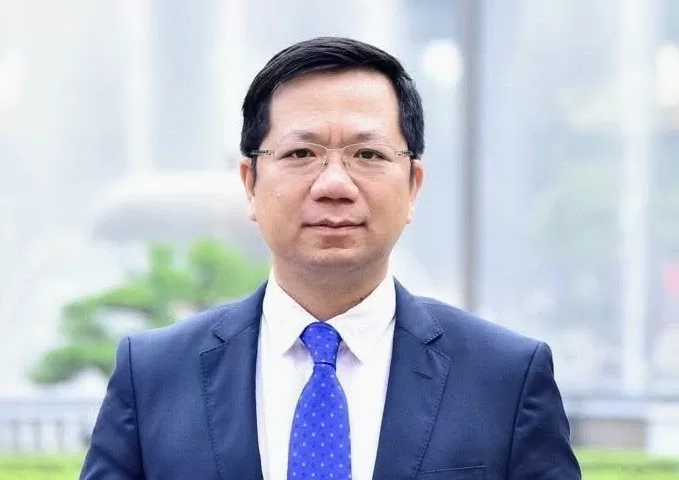 |
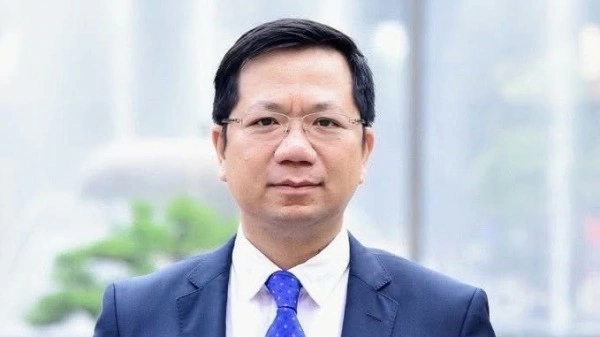
| Vietnamese Ambassador to Poland Ha Hoang Hai. (Source: Vietnamese Embassy in Poland) |
This is also an opportunity for both sides to further concretize the cooperation directions agreed upon during Prime Minister Pham Minh Chinh's official visit to Poland in January 2025, thereby creating new momentum for deep, substantive, and effective bilateral relations.
During the visit, both sides focus on promoting cooperation in key areas such as economy, trade, investment, science and technology, education and training, tourism, and people-to-people exchanges. Particularly, the two countries aim to expand market access opportunities, strengthen business connections, effectively utilize the Vietnam-EU Free Trade Agreement (EVFTA), and promote cooperation in new potential areas such as digital transformation, artificial intelligence, green technology, and high-quality human resource training.
Additionally, the anticipated signing of a new educational cooperation agreement and the organization of the third session of the Vietnam-Poland Joint Committee on Science and Technology Cooperation will provide an important basis for promoting practical cooperation programs and projects in the near future.
I believe the visit will mark a new milestone in Vietnam-Poland relations, while also contributing to strengthening Poland's connection with the ASEAN region, especially as Poland is actively diversifying its partners and expanding cooperation with the Indo-Pacific region.
In January 2025, the two countries adopted the Vietnam-Poland Joint Statement on elevating bilateral relations. Could you share the developments in cooperation between the two countries recently and the expectations for a new level of cooperation in the upcoming phase?
The Vietnam-Poland Joint Statement adopted during Prime Minister Pham Minh Chinh's official visit to Poland in January 2025 is of great significance, affirming the political determination and common orientation of the leaders of both countries to elevate the traditional friendship and bilateral cooperation to a new level.
Since then, the relationship between the two countries has continued to record positive developments in many areas. Political and diplomatic relations are increasingly consolidated, creating a favorable foundation to promote economic, trade, and investment cooperation. Both sides continue to focus on expanding markets, enhancing business connections, exploiting opportunities from the EVFTA, and emphasizing the potential for cooperation in education, science and technology, and innovation. Notably, by the end of 2025, Poland completed the final procedures to officially ratify the Vietnam-EU Investment Protection Agreement (EVIPA), with absolute support.
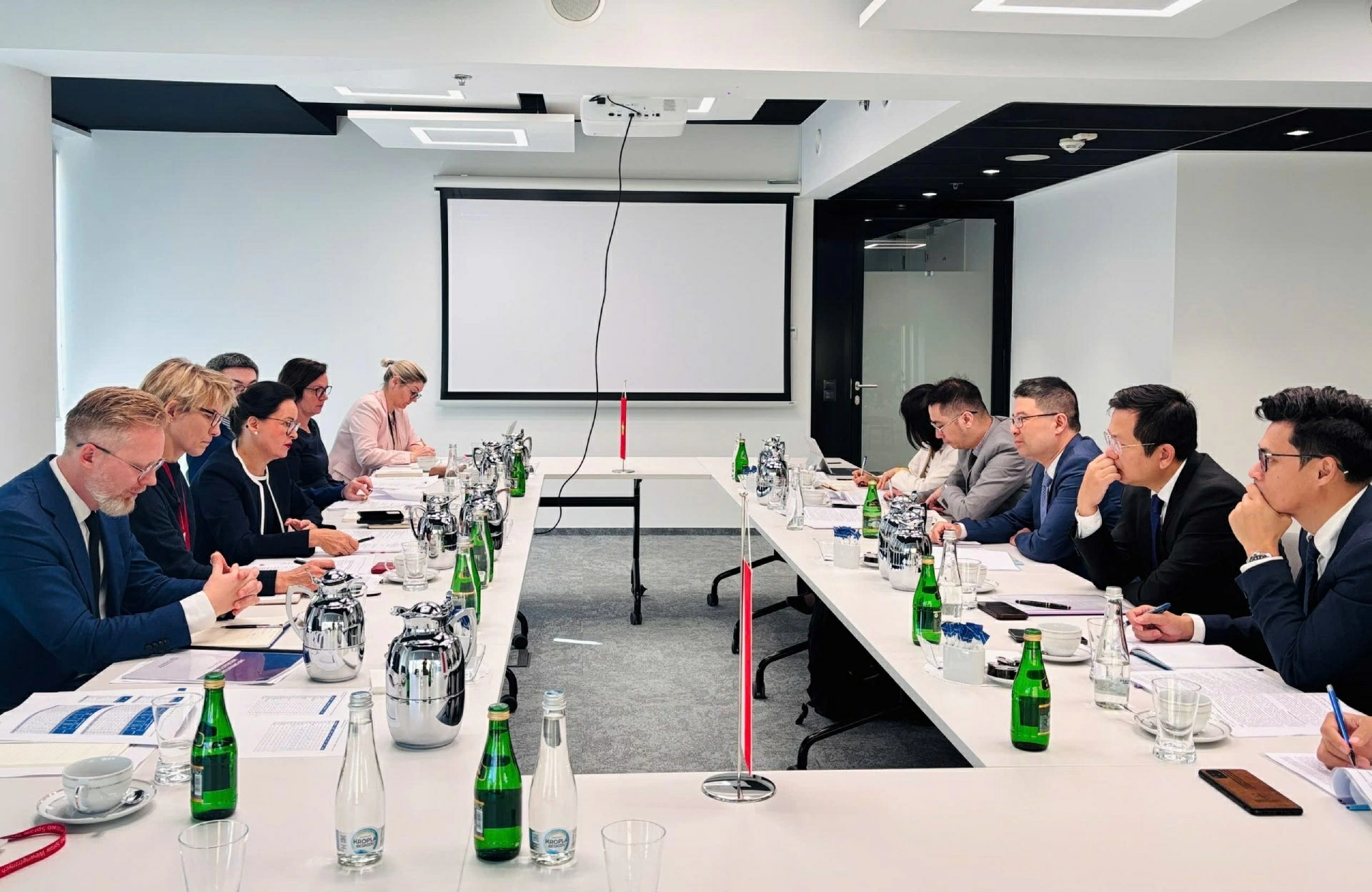 |
| Vietnam and Poland conducted the first consular consultation in Warsaw on September 18. (Photo: Chu Van) |
Tourism cooperation and people-to-people exchanges have also seen encouraging developments. The number of Polish tourists to Vietnam has increased significantly in the past two years. Vietnam's 45-day visa exemption policy for Polish citizens, along with the plan to reopen the direct Warsaw-Hanoi flight route from April 2027 by the Polish national airline (LOT), is expected to continue facilitating travel, business connections, tourism, and exchanges between the people of the two countries.
In the upcoming phase, we expect Vietnam-Poland relations to undergo more robust transformations, not only in scale but also in quality and depth of cooperation. The focus is on transforming political commitments and orientations into specific cooperation programs and projects; increasing two-way trade and investment; expanding cooperation in scientific research, technology transfer, human resource development, and innovation.
I am confident that, with the solid foundation of traditional friendship, increasingly consolidated political trust, and mutually complementary benefits, the two countries have all the conditions to build increasingly comprehensive, substantive, and effective cooperative relations, commensurate with the potential, strengths, and development needs of each side.
In the context of new development, according to the Ambassador, in which key areas can the two countries complement and learn from each other to serve the development goals of each side?
I believe Vietnam and Poland have many complementary strengths and great cooperation opportunities, especially as both countries are actively transforming their growth models, developing science and technology, promoting innovation, and enhancing the competitiveness of their economies.
Firstly, in terms of economy, trade, and investment, Poland has strengths in manufacturing, technology, logistics, food processing, and many high-value-added production sectors. Meanwhile, Vietnam has a dynamic economy, a rapidly growing market, abundant labor force, and a strategic position in regional and international supply chains. These are favorable conditions for the two countries to enhance investment cooperation, connect businesses, develop production value chains, and expand markets. Vietnam can serve as a bridge to help Polish businesses access the ASEAN market, while Poland is an important gateway for Vietnamese businesses to expand cooperation in Central and Eastern Europe as well as the EU market.
Secondly, in the fields of science and technology, education, and training, Poland has a solid scientific and technical foundation, a quality higher education and research system, and strengths in information technology, artificial intelligence, cybersecurity, quantum technology, engineering, and industry. These are also areas that Vietnam is particularly interested in and prioritizes for development. The two countries can strengthen research cooperation, technology transfer, and high-quality human resource training, while also enhancing connections between universities, research institutes, and businesses. Vietnam can learn from Poland's experience in industrial development, technology application, and human resource training; at the same time, opening opportunities for Polish partners to engage more deeply in Vietnam's rapidly developing innovation ecosystem and technology market.
Thirdly, in the fields of tourism, culture, and people-to-people exchanges, the two countries have much potential to further promote the traditional friendship foundation, enhance understanding, and strengthen ties between their peoples. Notably, the Vietnamese community in Poland and many generations of Vietnamese who have studied and worked in Poland are valuable bridges, contributing to promoting economic, educational, cultural cooperation, and people-to-people exchanges.
I believe the most important thing in the upcoming phase is for the two countries to effectively leverage their complementary strengths, combining Poland's experience, technology, and research capabilities with Vietnam's market potential, human resources, and development momentum. On this basis, both sides can expand cooperation into new areas, creating shared value and practical benefits, contributing positively to the sustainable and prosperous development of both countries.
Thank you very much, Ambassador!